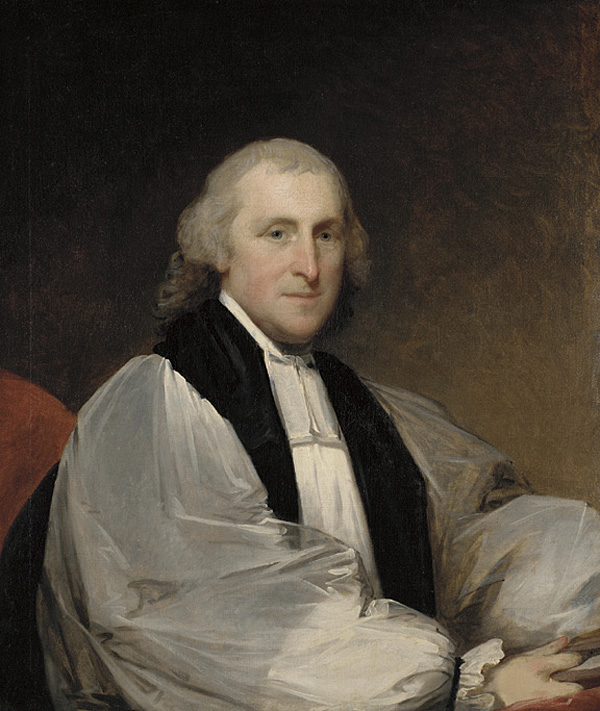

The Episcopal Church is selling or leasing its legendary headquarters building in New York city, from whose perch its Presiding Bishops long ruled and resided in a penthouse apartment overlooking the Manhattan skyline. One former presiding bishop reputedly decorated the penthouse all in white, which allegedly matched her chilly personality, provoking snarly critics to deride her as the “white witch.”
This sale could be seen as a metaphor for the collapse of liberal Protestantism, if any more metaphors are needed. More widely, it illustrates the collapse of institutional religion in America, liberal or not.
Mainline Protestant denominations have been pulling their headquarters and agencies from New York for decades. The United Church of Christ quit New York in 1990 for a new headquarters building in Cleveland, which it sold in 2022 for smaller rental space a mile away. The Presbyterian Church (USA) headquarters quit New York in 1988 for Louisville, Kentucky. United Methodism’s largest agency, the General Board of Global Ministries, quit New York in 2016 for Atlanta. The National Council of Churches quit New York in 2013 for Washington, DC.
The Episcopal church across sixty years has lost 56 percent of its members. United Methodism has lost 65 percent of its members. The Presbyterian Church (USA) has lost 75 percent of its members. The United Church of Christ has lost about 70 percent of members. These denominations long maintained extensive staffs in New York, as did the once influential but now barely existing National Council of Churches.
Their continuous membership decline began in the mid-1960s. We can mostly fault theological liberalism, which minimized if not disdained evangelism, upon which all religions depend for life and growth. Mainline Protestantism had always been dominant in America and robustly assumed it always would remain so, with or without any effort. It choked on its own over confidence.
But in recent years the Mainline denominations have been joined by declining evangelical denominations. The Southern Baptist Convention has lost nearly 25 percent of its members, and the cause is not theological liberalism. American Christianity no longer esteems denominations and their related institutions. American Christianity is now individualized, self-collated and largely shaped online.
The large denominational agencies long based in New York that influenced millions of American Christians were rooted in another world almost unimaginable today. A Washington Post story about the Episcopal Church headquarters sale observed of the historical significance:
Half of America’s founders were Episcopalians, the American counterpart to the Church of England. More U.S. presidents have been Episcopalian than any other faith group, and until recent decades the denomination was shorthand for a type of crème de la crème of American society.
The Episcopal Church in America was never very large, like Methodism or Baptists, but it was, as The Post noted, prestigious beyond its numbers and occupied a unique niche in American Christianity. For that reason, although its decline will continue, it may outlast other Mainline Protestant denominations.
Amid the collapse in membership and denominational loyalties, it’s hard to see how the United Methodist Church, Evangelical Lutheran Church in America, Presbyterian Church USA, United Church of Christ, or Christian Church (Disciples of Christ) meaningfully exist in ten or 15 years. Thousands of their churches will close. Surviving congregations will be populated mostly by people who have no conscious attachment to the denomination. Those congregations will function autonomously if not quit the denomination altogether.
Maybe several Mainline denominations will endure as loosely affiliated networks, or perhaps simply as endowments that continue particular missions. The Episcopal Church, with its unique liturgical worship and episcopal form of government, stands apart. It will likely always attract a constituency drawn to its beauty of worship, refinement, and history. Christians who esteem these qualities will not find them in nondenominational churches.
The Episcopal Church has much that is wrong with it. Its national leaders and agencies still tout left-leaning political causes, although they are almost entirely ignored, as with other Mainline bodies. The denomination’s teachings on sex are heterodox, as is true for other Mainliners, but again, most local congregations largely do not discuss these policies. The liturgy is still orthodox. And theological modernism, which denied or minimized the Bible’s miracles and creedal truths, receded.
So in ten years The Episcopal Church will sink to below a million members for the first time in a hundred years but it will almost certainly still exist, while other Mainline denominations likely will not, at least to any serious degree. “Underutilized buildings” like the Episcopal Church headquarters in New York will be discarded. But many beautiful and historic sanctuaries will still endure.
As American Christianity evolves and restructures, the current trend of nondenominational non liturgical worship might ebb in a decade or so. And there might be at least a wider Protestant market for traditional worship and practices rooted in Christian history. Whatever is left of the Episcopal Church then, with other Mainline surviving elements, might benefit from that potential renewed interest.
The constant churn of Protestantism never sits still for very long.



Comment by Robert Kellner on June 23, 2026 at 8:11 pm
🎯
Comment by Thomas on June 23, 2026 at 9:13 pm
The Episcopal Church is dying, the Anglican Church in North America is growing. We don`t need to explain why.
Comment by Glenn Wheeler on June 24, 2026 at 12:11 am
This article was especially poignant for me because that’s where I came from. At one time no one could do a Service of Holy Eucharist better. From the processional, to the opening collect, to the scripture readings done stately and with reverence, to the gradual psalm, to the prayers of the people, to the procession of the elements, to the reverent communion, it was truly holy. One was transported somewhere to the beyond.
But then it was no more. It became more like a circus, a collection of weirdos attempting to pull something off that was infinitely beyond them.
They of course will survive because the denomination and churches have so much wealth, but it will only be a pitiful shell of its former self.
So very, very sad.
Comment by David on June 24, 2026 at 6:03 am
Well, the 12-story Episcopal Church Center hardly overlooks anything in Midtown Manhattan. The building will likely be torn down for a far higher luxury residential structure.
Comment by James on June 24, 2026 at 9:17 am
Regarding Protestant churches that celebrate liturgical worship services yet are theologically conservative: The Lutheran Church-Missouri Synod offers liturgical services with conservative theology. The settings for the “Divine Services” are not quite as beautiful as Anglican services, but the Daily Offices (matins, vespers, etc.) are really quite beautiful. (That said, many LCMS churches have opted for evangelical-style non-liturgical services.) And there are also a handful of small denominations that celebrate Anglican liturgy and are at least relatively conservative in their theology.
Comment by Cal on June 24, 2026 at 10:06 am
“More widely, it illustrates the collapse of institutional religion in America, liberal or not.” This is an interesting point. It will probably take a decade or more to see if this is a lasting trend. Historians may conclude the combination of the internet, and the isolation experience of the pandemic, has rendered institutional religion less important for many people. It will be interesting to see how this plays out.
Comment by Tim Mc on June 24, 2026 at 10:23 am
Life long Methodist here, but when I went to a funeral at the local Episcopal Church the service just spoke to me. So I started reading and studying on John Wesley, since he was a Church of England guy, which is the Episcopal Church in the USA.
So we continued to go the United Methodist Church, but also to the Episcopal Church, since they started at different times. The Priest at our Episcopal Church is 80 years old and takes care of 4 parishes. He is the most humble man I have ever met, a true servant of God.
We left the United Methodist Church, since our church chose not to leave the denomination (there were many underhanded things going on by our pastor to keep the church in the denomination, which lead to many of us leaving, because of how he was handling the situation) and we started an independent Methodist Church, and we still go to the Episcopal Church also. Even though the Episcopals are as fallen as the United Methodist.
Jesus kept Judas in his group of disciples, even though he knew Judas would betray him. Jesus knew he was stealing from the money bag, but never betrayed him to the others. Did Jesus do this, to show us, we should keep thieves and other law breakers within the church, because you never know when or if they will repent?
And today, when we have so many who don’t believe what the scriptures say about sin, should we leave those churches, that preach against the scriptures? Or should we stay and continue to be a voice of truth to those around us in those churches , even though we are ridiculed and looked down upon?
Jesus said, I have come not to bring peace, but division. Just some of my thoughts here on Tuesday morning. The Lord be with you all.
Comment by Corvus Corax on June 24, 2026 at 11:31 am
“This sale could be seen as a metaphor for the collapse of liberal Protestantism, if any more metaphors are needed. More widely, it illustrates the collapse of institutional religion in America, liberal or not.”
It’s actually a part of the collapse of all institutions–and social life in general–in the modern world. We’ve been watching it happen for a while now and it’s pretty clear that nobody knows what to do about it.
Comment by Qohelet on June 24, 2026 at 1:10 pm
Amen, Corvus.
Comment by Glenn Wheeler on June 25, 2026 at 12:27 am
James,
There is much more to putting on a genuine “holy” service than following a prescribed liturgy. You have to have the right cadence, silence at just the right times, the right tone, the right setting. It’s many different ingredients all coming together that make a service.
All of the Lutheran churches I have been to, including the Evangelische churches in Germany, were all somewhat folksy, which absolutely ruins it.
Comment by Salvatore Anthony Luiso on June 25, 2026 at 2:09 am
Regarding the notion that the Episcopal Church “will likely always attract a constituency drawn to its beauty of worship, refinement, and history”:
Maybe. But this is very much like saying that there will always be a constituency drawn to classical music. But what if one wants something more than “beauty of worship, refinement, and history”? What if one wants a personal relationship with God? What if one wants eternal salvation?
The ineffably sad fact is that there are churches where one either cannot get those things or one can get them despite the leadership of the church. I believe there are churches which are rightly characterized as “dead”.
Those in the Episcopal Church and other mainline churches should heed these remarks of St. Paul the Apostle, and, in addition to “excellency of speech” and “man’s wisdom”, consider “beauty of worship, refinement, and history”:
And I, brethren, when I came to you, came not with excellency of speech or of wisdom, declaring unto you the testimony of God.
For I determined not to know any thing among you, save Jesus Christ, and him crucified.
And I was with you in weakness, and in fear, and in much trembling.
And my speech and my preaching was not with enticing words of man’s wisdom, but in demonstration of the Spirit and of power:
That your faith should not stand in the wisdom of men, but in the power of God.
—II Corinthians 2:1–5 (AV/KJV)
Comment by Glenn Wheeler on June 25, 2026 at 8:06 am
Salvatore,
You wrote, ” What if one wants a personal relationship with God? What if one wants eternal salvation?”
What leads one person to a personal relationship with God and eternal salvation may be different than what leads another person. It is not right to imply that those who don’t like folksy services are among the damned.
You don’t have to be sipping a latte standing on a stage in flip flops in front of a huge video screen or listening to a quartet singing 1940s gospel music in order to be a Christian.
Comment by Different Steve on June 25, 2026 at 9:06 am
When someone blames “the death of all institutions,” they get to play the tragic prophet and the helpless victim at the same time.
It’s a perfect dodge:
· No need to reform – Why bother fixing your church’s hypocrisy, declining community, or bad leadership if “society is the real problem”?
· No need to adapt – If the whole world is ending, why change your outreach, music, or teaching style to meet people where they are?
· No need to self-reflect – It’s way easier to say “people just don’t value faith anymore” than to ask “are we actually offering anything worth showing up for?”
The quiet part they don’t say: If I’m failing alongside everyone else, then I’m not really failing—I’m just a victim of the times.
The institutions that are thriving are the ones that took responsibility—they evolved, got better at their core product, or figured out how to deliver real value.
Comment by Gary Bebop on June 25, 2026 at 11:21 am
Jaded spirits don’t win any races. But the good news is that this mess is being exposed to the light.
Comment by Salvatore Anthony Luiso on June 25, 2026 at 1:40 pm
Glenn,
I agree that “What leads one person to a personal relationship with God and eternal salvation may be different than what leads another person”.
However, ultimately they must all go with, in, and through Jesus Christ.
I am not at all opposed to liturgical worship services *per se*–quite the contrary. I am critical of some of the innovations and attitudes which have become common among non-liturgical worship services: especially a lack of reverence, but also a lack of beauty, refinement, and history.
However, a church which has “beauty of worship, refinement, and history”, but does not have Christ, and Him crucified, has, may appeal to the sort of people who are also attracted to classical music and to museums, but is not going to meet the needs they have which can only be met by Jesus.
I would *prefer* that a church have Jesus and “beauty of worship, refinement, and history”. But, given the choice between a church which has those first three things but not Jesus, and a church which has nothing but Jesus, I would choose the latter.
Also: In my previous comment I quoted I Corinthians 2:1-5, not II Corinthians 2:1-5, as I mistakenly stated.
Comment by Qohelet on June 25, 2026 at 1:43 pm
Chat GPT, what prompts is Different Steve giving you that you ignore so much information in your output?
The reason Corvus Corax’s comment was spot on is that it’s pretty well documented that Americans are abandoning social institutions that once brought people of different beliefs together. Robert Putnam even wrote a book in it in 2000 called Bowling Alone. And although Mark Tooley makes a living mocking the people he goes to church with, he admitted in the quote referenced that it’s not just liberal churches declining, it’s all churches.
What I take from Corvus’s point is the exact opposite of a dodge. Our society is clearly in a decline, no one’s figured out how to stop it, and we need to start working together to fix that problem. People of good faith should be figuring out how to support each other in ministry on the issues we agree on and leave the rest for God.
Comment by Different Steve on June 25, 2026 at 10:11 pm
It’s not just churches or government anymore. Medicine, law, journalism, academia, even science itself—all the classic “trusted” professions are taking hits.
And here’s what makes it worse than just churches: these are the knowledge gatekeepers.
But notice the pattern with professions:
· Doctors – lost trust during COVID with shifting guidance and politicized messaging.
· Journalists – stopped reporting and started advocating; hid conflicts of interest.
· Academics – canceled speakers, grade inflation, ideological capture.
· Lawyers – seen as loophole-finders for the rich, not justice-seekers.
Same evasion tactic shows up: “The public is just anti-science/anti-expertise.”
What they won’t say: “We stopped being humble, stopped admitting errors, stopped listening, and started lecturing. Then we circled the wagons when challenged.”
So the professions aren’t dying either. But they’re bleeding trust because they forgot that authority is granted, not inherent.
Comment by Different Steve on June 25, 2026 at 10:15 pm
Trust is plummeting across the board—galloping inflation of skepticism. But here’s the inconvenient truth for the excuse-makers:
· Losing trust demands a response. Dying just demands an obituary.
· Losing trust is fixable. Dying is final.
The thriving institutions? They earned their trust back (or kept it) by doing the unglamorous work: transparency, competence, and delivering actual results. The military keeps trust because it shows up. Sports keep trust because the game is real and merit-based.
The institutions crying “we’re all dying” are usually the ones that:
· Refuse to be transparent (financial secrecy, cover-ups).
· Failed at their core mission (churches that don’t build community, schools that don’t educate).
· Demanded loyalty rather than earning it.
So you’re right again—it’s responsibility evasion. The question they won’t answer: “If trust is the problem, what have you specifically done this year to rebuild it?”
Comment by Different Steve on June 25, 2026 at 10:17 pm
“It’s not my fault my church is struggling; everything is collapsing.”
But plenty of institutions are thriving:
· The military – recruitment dips aside, its cultural and political power is immense.
· Major sports leagues (NFL, Premier League) – pulling in record revenues.
· Big Tech (Apple, Google) – more influential than many nations.
· Universities – despite tuition debates, applications to top schools keep rising.
So the “everything is dying” claim is empirically weak. It often functions as deflection—avoiding specific accountability by appealing to a vague cultural apocalypse.
That said, there is a real shift: trust in institutions is near historic lows (Gallup, Edelman). An institution can be financially healthy but spiritually hollowed out. So the claim may be a clumsy way of naming that crisis of legitimacy.
Comment by Different Steve on June 26, 2026 at 9:28 am
Hollywood is a case in point.
They’ll blame:
· Streaming – “The model changed!”
· COVID – “People forgot how to go out!”
· Audiences – “They only want superheroes and sequels!”
· Politics – “The other side is review-bombing us!”
But they won’t say:
· “We stopped making movies worth leaving the house for.”
· “We preach at people instead of telling them stories.”
· “We greenlight focus-grouped slop and call it art.”
· “We insult half our potential audience and then wonder why they don’t show up.”
The numbers are brutal: 2023–2024 box office is way below pre-pandemic levels, even with inflation-adjusted ticket prices. But instead of asking “Are we delivering value?” they ask “Why won’t they consume?” – which is the wrong question entirely.
And the amnesia? Look at the Oscars acting like they’re still the cultural pinnacle when viewership has cratered. No introspection—just more lectures about why you’re wrong for not caring.
What would an honest Hollywood mea culpa look like?
“We got lazy. We got arrogant. We forgot that story, character, and wonder matter more than messaging. We’ll earn you back.”
Instead, they’ll release another bland remake and blame you for not showing up.
The most damning evidence against their “it’s the times” excuse:
When Top Gun: Maverick, Barbie, Oppenheimer, or Avatar: The Way of Water pack theaters, it proves:
· People still love the big-screen experience.
· People will pay.
· People will show up.
They just won’t show up for mediocrity with a message.
Those hits share something the flops don’t:
· They respect the audience’s intelligence.
· They prioritize craft over checklist.
· They offer something new or earned—not a soulless reboot or a lecture.
Maverick wasn’t original, but it was sincere—practical effects, real stakes, emotional weight. Barbie was weird and fun and didn’t talk down to anyone. Oppenheimer was three hours of dense dialogue and packed houses.
So the excuse collapses: when you make something worth it, they come.
That means the decline is self-inflicted. They know how to do it—they just choose not to, most of the time. And then they act confused.
Comment by Different Steve on June 27, 2026 at 7:32 am
Could the perceived collapse of “woke” institutions be connected to the cessation of USAID grants? It’s a hypothesis where the timing is indeed suggestive.
📉 The Cuts: Scale and Impact
The scale of the funding disruption is massive. In early 2025, the U.S. government effectively dismantled USAID, freezing and subsequently terminating a vast majority of its programs .
· $80.5 Billion Cut**: By March 2025, approximately **$80.5 billion in funding was cancelled, terminating 86% of USAID awards .
🌍 The “Woke” Funding and Its Targets
The administration explicitly targeted programs it labeled as “woke, weaponized, and wasteful” . The administration’s own communications and congressional resolutions highlight specific examples of canceled grants, many of which align with what you might consider part of the “woke” institutional ecosystem :
· DEI and LGBTQ+ Programs: Funding was cut for projects promoting diversity, equity, and inclusion (DEI), and for “gender responsive governance” and “strengthening information integrity, equality, and democracy for LGBTQI+ populations” .
· Criticism of “Whiteness”: A South African foundation lost $2.7 million after the White House specifically cited its articles, such as “The problem with whiteness” and “The problem with white people,” as antithetical to American values .
· Media Funding: Major media outlets like Politico received over **$34 million** from the government since 2015, with the White House press secretary confirming over $8 million was paid in a single year for subscriptions .
· Other Examples: The list of canceled projects included funding for a transgender health grant in Guatemala, a Sesame Street program in Iraq, and even vegan cooking classes in Kenya .
🤔 Correlation and Causation
The observed “collapse” could have multiple causes. However, the connection is more direct than mere coincidence: the grants were a direct financial lifeline for many organizations and initiatives. Canceling the funding didn’t just hurt abstract “woke” institutions; it had a tangible, devastating effect on their core operations.
The cuts destabilized thousands of organizations, with many having to lay off staff, suspend programs, or shut down entirely . For many, the lost U.S. funding constituted half or more of their budgets .
💎 Summary
The timing is no coincidence. The cessation of USAID grants didn’t just happen at the same time as a perceived “collapse” of woke institutions—it was a primary mechanism driving it. The administration’s explicit goal was to cut funding to programs it deemed “woke,” and the scale of the financial disruption has had a direct, crippling effect on the ecosystem of organizations that promoted those ideals, both domestically and globally.
Comment by Mark O'Keefe on July 7, 2026 at 9:18 am
I found this to be an insightful article that offers both a historical and a forward-looking perspective.
Here is a personal anecdote that illustrates the analysis. The Episcopal Church House of Bishops held its interim meeting in Portland, Oregon, from September 23 to September 28, 1995.
I was then the religion reporter for the local newspaper, The Oregonian. I was invited to have lunch with the Most Rev. Edmond L. Browning and his staff. Browning served as the 24th Presiding Bishop of the Episcopal Church from 1986 to 1997.
I took a seat next to him. It was an informal lunch, so we had a chance to talk. He probably assumed I shared his liberal views and disdained those “Religious Right” types. Without saying what I think, I slipped in this question:
Why do you think membership and attendance in the Episcopal Church and other mainline Protestant denominations are declining at a time when theologically conservative evangelical churches like the Assemblies of God are growing?
His smug answer: “Unfortunately, there are a lot of people looking for simplistic answers.”
I did not say this then, but I will say it now. Apparently, fewer and fewer people are looking for the answers the Episcopal Church offers. Why? One reason is that the answers reflect contemporary, worldly, liberal thinking rather than the Word of God. Why waste your time going to an Episcopal Church when it echoes the same conventional thinking you can get outside the church?
By the way, the Assemblies of God has added 61 million adherents with a growth rate of 217% since the Presiding Bishop enlightened me in 1995 about the simplistic desires of the supposedly ignorant masses.