“And forgive us our sins; for we also forgive every one that is indebted to us.” -John Wesley’s translation of Luke 11:4
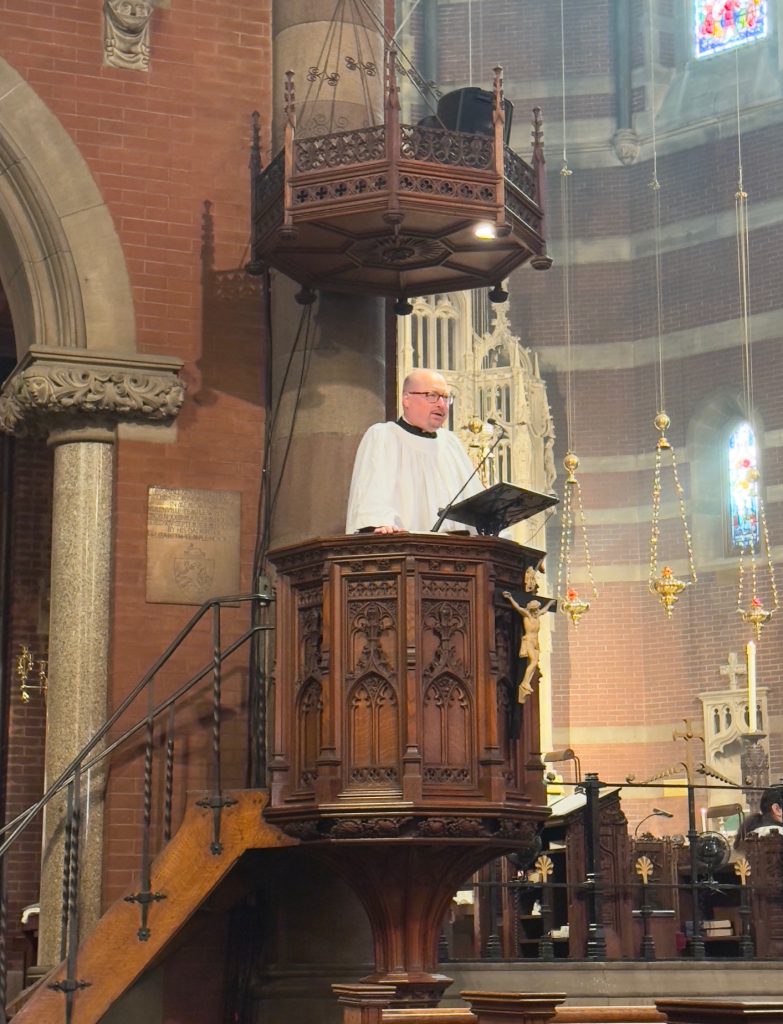
This Sunday, I will be preaching at the Church of the Advent in Boston. So a few days ago, I told a friend here in DC what I was planning to preach about. He likes the topic of the sermon, but it led to some questions.
Among the questions was a very important one, “what does it mean to forgive?”
Forgiveness is a fundamental part of the Christian faith. God’s offer of forgiveness in Christ, the forgiveness that leads to our healing and wholeness, is central to the whole message. And just look at the lengths that God went not only to reach us, but to make the forgiveness of sins possible! This is love beyond bounds.
In the Lord’s Prayer we see forgiveness prominently when we ask that God will “forgive us our trespasses, as we forgive those who trespass against us.” There is an imperative here, that as God forgives us, so we are to forgive others.
In Wesley’s Notes on Luke 11:4 where we find the text of this prayer, he describes this as continual forgiveness. He adds, though, so that we don’t start to think that our forgiving others is the cause of our own forgiveness “this does not denote the meritorious cause of our pardon; but the removal of that hinderance which otherwise would render it impossible.” The meritorious cause is the sacrifice of Christ.
But what does it mean for us to forgive? Are we called to be door mats, to be perpetual victims, or to pretend the wrongs done to us don’t matter? Can we forgive in the same way that God forgives?
A while ago, I heard a thoughtful presentation here in DC on the topic of forgiveness. And in the talk, the speaker highlighted the need for forgiveness, but also pointed out how we might know that we have forgiven. He said that we can know that we’ve forgiven when we desire good for those who have wronged us.
Note what’s missing from this. He didn’t say that we forget, or that we don’t learn from negative encounters, or that we embrace them. But if we honestly will the good of the other, we have forgiven them.
It is the clinging on to past hurts and the active disdain for another that is the problem. We don’t have to forget, and we can learn from past experiences, but a refusal to forgive is a hinderance to the full life that God calls us to. A lack of forgiveness is an internal anchor, an anchor that by grace we can let go of. And when we do, we grow more and more into the holy love of God.
To borrow from St. Paul in Philippians, “…reaching forward to those things which are ahead, I press toward the goal for the prize of the upward call of God in Christ Jesus.”
This is the full life that God promises. Forgiveness is a key part of it.
Ryan N. Danker is director of the John Wesley Institute, Washington, DC. This is adapted from a weekly JWI newsletter that can be subscribed to here.
P.S. If you feel called to support the JWI and our many projects to promote Wesleyan Christianity, pease consider a gift today here on our secure donation page or contact me directly. We are here to equip the Wesleyan family.
More from IRD:
Elizabeth Bruenig on Forgiveness & Atonement



Comment by Salvatore Anthony Luiso on July 31, 2026 at 2:50 am
Thank you for this thought-provoking article.
I think there’s at least an element of truth in the notion that “we can know that we’ve forgiven when we desire good for those who have wronged us”, but, with all due respect, I think that strictly speaking that may not be so. Why? Because if someone owes us a debt–for example, by borrowing money from us–we can desire good for him without forgiving the debt.
I would say, though, that if we do *not* desire good for those who have wronged us, then we have either not forgiven them, or we are sinfully indifferent about them.
Comment by Skipper on August 1, 2026 at 8:52 am
Before I left the United Methodists, there were people in my church that promoted same-sex relationships. even though the Bible says the immoral will not be part of the Kingdom of God. It is hard to forgive those who lead people to their doom, but Jesus prayed “forgive them, they know not what they do.” I can pray for them.
Comment by David Gingrich on August 2, 2026 at 6:46 am
C.S. Lewis believed the Lord’s Prayer was clear that we will not be forgiven UNLESS we forgive.
Comment by Wilson R. on August 4, 2026 at 12:05 pm
David, I think there is a lot of scriptural justification for Lewis’ view. The parable of the two debtors is one I would cite.