
Let’s admit it. Some of us are already listening to Christmas music. It’s not Thanksgiving yet, but the stores are filling with Christmas decorations, we’re making plans for the day, if not the season, and Christmas baking seems to be the theme of social media and television.
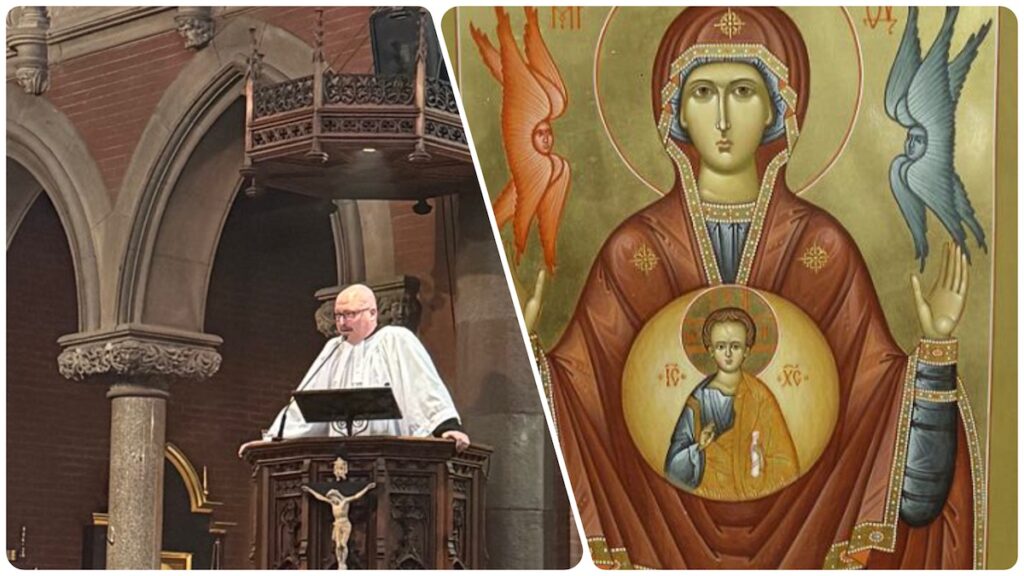
It’s not Christmas yet, nor Thanksgiving or even Advent, but with all of this taking place around us it’s a good time to think about the Incarnation, to ponder the awe-inspiring reality that God became one of us, lived with us, touched us, and continues to walk with us even now.
We’re in the calm before the storm, in other words, so let’s take advantage of it.
The Incarnation—something the Church celebrates in March, nine months before Christmas, which is the celebration of the Nativity—changed everything.
Ever since the Fall when humanity turned away from God and the corruption of that turning plagued creation itself, God never turned away. Throughout the Old Testament, we can see how God’s rescue plan unfolds. He calls Abram and Sarai, who become by the power of God Abraham and Sarah to establish a new people, a holy people who will be a beacon for all people.
I love the name changes in the Bible. These name changes signify a change not only in name, but in reality. When we encounter the living God we are transformed, made whole, and made a part of God’s work in the world.
But the history of Israel in the Old Testament is one of success and failure. God’s people were not always faithful and therefore they were not the beacon they were intended to be.
In the Incarnation of Christ, that mission is fulfilled, the calling of Israel meets the faithfulness of God himself as one of us. And as the true beacon who fulfilled the calling and even laid down his own life for the sins of the whole world, we begin to see just how far God will go, and has gone, to restore the fallen creation. This is a love worth pondering.
In this time before Christmas with its hectic schedules, and really before Advent (don’t forget this vital season), take the opportunity to ponder the love of God, a love that became tangible, that we might experience its full embrace, an embrace that changes hearts and lives even today.
Ryan N. Danker is director of the John Wesley Institute, Washington, DC. This is reposted from a weekly JWI newsletter that you can subscribe to here.



Comment by Salvatore Anthony Luiso on November 24, 2025 at 1:12 pm
Thank you for this article. I intend to tell others about it.
I have no criticism of it, but, knowing how the author esteems the observance of Advent, I recommend that Christians who observe Christmas make pondering the Incarnation a priority for the seasons of Advent and Christmas.