
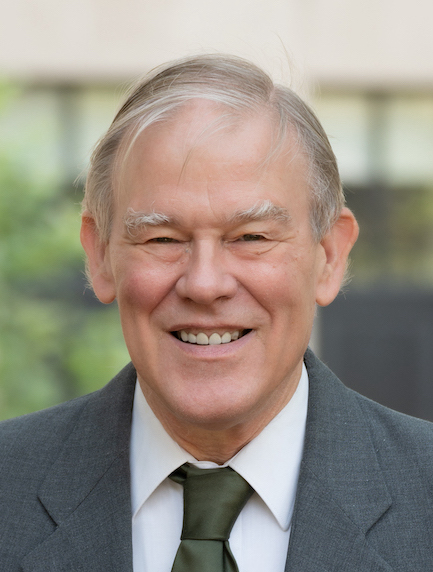
Richard Bradford, director of the Swiss branch of the L’Abri Fellowship, spoke at the annual L’Abri Conference on February 14 concerning the obsession with safety in the contemporary world, and especially among young people. Generation Z (born after 1995) is “the safest generation in history.” He said that research shows that “car accidents, crime, drinking related accidents, and most other things that are a source of physical danger” are less for this generation than for previous generations. Yet the current generation “experiences higher levels of anxiety and depression than any generation that we know of.”
A growing issue for this generation “is the issue of safety.” Indeed, he believes it to be an “idol.” Safetyism makes safety the supreme value in life. This is contrasted with the “Christian vision of security.” Safetyism has a “detrimental effect” on Generation Z, he believes. People feel they are oppressed by ideas they disagree with, ideas found in books, blog posts, conversation, etc. As an example, people who came in recent years to the Swiss L’Abri branch objected to books shelved there which made them feel unsafe.
“Christianity doesn’t promise safety, but it does promise security,” i.e., that God will be with us, Bradford said, and Scripture clearly states he will cause our good to prevail in the end. But we are warned in the Bible of “hardships and trials” if we are faithful to God. He proposed that risk is “something valuable” in our lives. We should not, as many do today, regard safety as essentially a human right.
Three Untruths of Safetyism
“Anxiety and depression are on the rise” among young people, but also among adults. Experience at L’Abri has shown that this has become normalized. One reason is that young people have access to social media from an early age. They want safety, but this includes “emotional safety.” Kids today are not more “spoiled” or “lazy,” rather they are “overprotected.” In The Coddling of the American Mind, the authors Jonathan Haidt and Greg Lukianoff identify “three great untruths” that people (with especial emphasis on young people) hold today:
- “What doesn’t kill you makes you weaker” (“the untruth of fragility”)
- “Always trust your feelings” (“the untruth of emotional reasoning”)
- “Life is a battle between good people and evil people” (“the untruth of us versus them”)
The shift on college campuses occurred about 2013, when demands to remove “triggering” material from course syllabi began to be heard. “People began to talk about feeling unsafe and their ability to function being interfered with” by disturbing ideas.
What’s new in the first point is that “students are fragile.” This, it might be added, is the opposite of the historic association of youth and strength. But today there is no recognition that “hardship might make somebody stronger.” There is indeed more diversity that has to be faced on college campuses. People will be confronted with ideas that do not agree with the cultures they have come from. Students ought “to come face to face with ideas that might be offensive, or even hostile.” The concept of “fragility” results in students “unable to live in world of difference.” Referring to New York University Risk Engineering Professor Nassim Taleb, Haidt and Lukianoff distinguished between fragility (easily broken), resilient (able to withstand shocks), and antifragility (made stronger or sustained by adversity, as with an immune system). Children are antifragile, Teleb maintained. They must be challenged to become strong. Haidt and Lukianoff say that parents should “prepare the child for the road, not the road for the child.”
Bradford observed that great strides have been made over the last century in making people safer, but now the idea of safety, as noted above, “has expanded beyond just physical safety to include this idea of emotional safety.” Faculty guidelines began to change around 2014 to direct professors not to say anything that might “make students feel unsafe … [the] meaning of words like ‘trauma,’ ‘bullying,’ ‘abuse,’ and ‘prejudice’ have changed, have evolved.” These words “have gradually come to apply to less severe instances, and to new but conceptually related phenomena.” This is a matter of what is called “concept creep.” “Trauma” used to refer to some type of physical trauma (such as torture) as well as what results from Post-Traumatic Stress Disorder (PTSD). Such things as divorce were not considered trauma. Emotional distress was considered a normal experience, and normal experiences were not considered trauma.
But in the early 2000s, trauma came to mean “anything experienced by an individual as physically or emotionally harmful, with lasting diverse effects on a person’s functioning and mental, physical, emotional, social, or spiritual well-being.” This, however, moves trauma “from an objective standard to a subjective one.” Anything which “feels like trauma, or bullying, or abuse,” in fact is trauma (or bullying or abuse).
Regarding the second untruth (emotional reasoning), Bradford said that “wise men throughout history” have understood that although our feelings “are always compelling, they are not always reliable.” They can, in fact, “distort reality.” He noted that one of the authors of the book, Lukianoff, experienced a very deep depression, but recovered. He spent three years in cognitive behavioral therapy, “in which people learn to question their automatic thoughts and feelings about what’s going on.” People must learn to challenge “cognitive distortions.” Personal claims must be connected to “reliable evidence.”
In this regard, an important problem has been the acceptance of a subjective criterion called “microaggression.” This is the concept of daily, regular slights or indignities toward an oppressed group. Originally it referred to racial slights but now has come to mean anything anyone finds oppressive. The claim of offense is proof that an offense has occurred. Unintended slights are nonetheless slights. But Bradford said that an act must be intentional to be an act of aggression. This is not to say that people do not need to be careful about what they say. But the meaning of aggression must be dependent on intent, not impact. Yet the shift from judging aggression by the intent of words to their impact is exactly what has happened in the cult of safetyism. Prejudice is now “defined by the victim,” not by the intent of the accused. The result is “an environment of perpetual anger and conflict.”
Regarding the “third untruth” (“life is a battle between good and bad people”) the effect of this is to make people become “extra attentive to signs that reveal which side a person is on.” Haidt and Lukianoff turn to Martin Luther King, Jr. for “a common human identity politics.” King appealed to “shared morals and identity by using the language of religion and patriotism” to recognize a “common human identity.” This is now being replaced, Bradford said, “by a common enemy identity politics.” This kind of identity political appeal will “mobilize large groups of people, motivate one’s tribe.” This has resulted in “a call-out culture” in which “people gain prestige by identifying small offenses … and then publicly calling out those offenders.” The result is people “walking on eggshells.” It also “creates an atmosphere that’s ripe for intimidation.” In this atmosphere of fear “professors are afraid, and so are students.” But people should be encouraged “to read others more charitably.” This and the other untruths identified reasonably contribute to today’s anxiety and depression.
Causes of Anxiety and Depression
Bradford asked, “how did we get here?” He pointed to six interacting threads leading to anxiety and depression cited by Haidt and Lukianoff, noting that students who graduated as late as 2012 claim to have seen few of these things:
- Rising political polarization and cross-party animosity. There is worse and worse division in the U.S. and other countries.
- A rise in anxiety and depression among teens. Bradford asked if this is “a consequence of being overprotected or is being overprotected a reaction to the rise in anxiety?” He cited the book IGen, by Jean Twenge, which says that overprotection is in large part due to social media and technology.
- “Changes in parenting practices.” Crime rates in the youth of the generation of today’s parents were higher than they were at the beginning of the twenty first century “and missing children began to have their faces plastered on milk cartons, we saw the creation of 24 hour news channels … [yet] by 2013 the murder rate had dropped to the level of 1950, but the fear of being murdered was higher than ever, and new habits of fearful parenting started to emerge.”
- “Decline of free play.” Bradford explained that “kids aren’t allowed to play without constant adult supervision.” This means that independent thought and conflict resolution skills are not developed. He said that playgrounds advertised as “safe” are actually becoming more dangerous.
- “Growth of a bureaucracy of safetyism.” Increased demand for safety means that there must be more administrators. This, in turn, is an enormous expense. “In response to the demands for safety, schools are having to add administrators to deal with it, so this money has got to come from somewhere, so it’s coming at the expense of the faculty, cuts are being made left, right, and center, and positions are needing to be added to the administrative side of colleges in order to deal with the growing issues.”
- Finally, there is “a rising passion for justice, but a changing notion of what justice requires.” As noted above, it might now be held that justice requires equality of result in society rather than equality of opportunity. Bradford said that the desire for justice is a good and hopeful thing. But he offered a Burkian caution that young people have come to believe that to achieve what they understand to be justice, any means they use is justified by the end.
The Necessity of Risk
Bradford then talked about “the necessity of risk.” People have become more averse to risk. Particularly with “emotional safety, people seem less willing to put themselves in harm’s way.” He said that “young people need to leave the nest and move out into the world. It’s full of things that carry risk.” Parents want “to extend the safety of the home as far as possible.” This has meant that “parents are one of the causes of the growth of the campus bureaucracy and the expansion of its protective mission.” Additionally, “students have come to be seen as customers.” On the part of schools, there is the fear of litigation. Usually, however, adversity makes people more resilient. They “learn how to deal with difficult situations with people. We learn how to deal with failures … By clearing the road ahead for people, we’re stunting their growth … Difficult situations usually make us stronger.”
Bradford said that people who work with victims of PTSD know that healing does not come by avoiding the source of the trauma (as is attempted with trigger warnings) but by “confronting and overcoming the source of their fear.” People are not fragile, but “antifragile,” he said.
He denied that he is advocating “unnecessary risk.” In the case of a business, risk is inevitable and necessary for success, but it “needs to be managed.” He does believe that “emotional safety” is a proper concern, and that there is “such a thing as hate speech.” This writer would caution, however, that this should not be a category in law. If the law makes emotional wounding a crime, the state must decide what feelings may not be hurt, and particular ideologies are effectively written into law (in our day, those of the Left). Kindness may be mandatory for Christians, but it should not be a legal requirement, and even Christians must condemn sinful behavior. Bradford did say, however, that mere disagreement is being interpreted as hate speech. He pointed out that L’Abri, the name of which means “shelter,” does not mean anything like “a safe space on a college campus.” It is in fact a place to be challenged, to possibly be made uncomfortable.
Bradford distinguished between safety and security. Safety “is the freedom from emotional or physical discomfort, loss, or harm. Security is being loved and cared for whether bad things happen or not.” Risk is particularly necessary in Christian life. Love for God and man means that risk will be involved. Living all our lives at home or in church, where people will be nice “is not the life that Christians are called to.” He said that “Christians, like kids, are antifragile.” Indeed the Bible predicts persecution. “True followers of Jesus will not be safe; life will be a struggle.” He observed that Christianity appears strongest, and indeed in some cases is growing, in areas where the church faces adversity, while it is declining in the historically tolerant West. Today, parts of the West are becoming increasingly intolerant of Christianity. We should regard this as “evidence of the truth [i.e., persecution] that Jesus promises.”
In answer to a question about Christians who feared a different outcome to the recent election, Bradford said that Christians must first “lean on the promises” of God as ultimate security. An antidote to safetyism that he recommended to believers is to “cut back on your screen time, cut back on the social media time, cut back on the amount of time you spend reading the news … [We must] learn to balance our fears or challenge our fears with reality. And also, again with the promises we have from God.” He believes that Christian growth through adversity is part of what God promised in the beloved verse of Romans chapter 8 that all things work for the good of the redeemed.
More from IRD:
The Postmodern Crisis of Meaning
Attacking Biblical Morality to the Same Tune
Secularization and Political Polarization



Comment by John on May 12, 2025 at 10:52 am
No offense, but the right is banning books from libraries and classrooms that they fear will cause children to feel uncomfortable anyway or make them question their beliefs or that of their parents in any way. Even books as harmless as “Hacket” by Gary Paulsen or “Sylvester and the Magic Pebble” by William Steig because the characters experience brief moments of depression and despair. Your side is no stranger to censorship of the Cult of Safety. Should you really be giving the rest of us a lecture on the need let children and young people take more risks and broaden their minds?
Comment by Douglas E Ehrhardt on May 12, 2025 at 3:41 pm
It’s called brainwashing John.
Comment by Corvus Corax on May 12, 2025 at 4:00 pm
John, you didn’t even try to engage in the substance of the article. There is finite shelf space and finite classroom time and yes, in a democracy, the content of public education will be politically contested. This is not “censorship.” Get over it.
Comment by Tim Ware on May 13, 2025 at 12:46 am
In response to John,
Parents have the right to determine what influences their children are exposed to in the public school system. There is no right of any group to come in and engineer and undermine society through insidious influences on children in the public school system. In other words, whether you like it or not, neither you nor anyone else has the right to poison my children’s minds with society- and culture- destroying propaganda disguised as “education.”
Comment by John on May 13, 2025 at 9:04 pm
How was Hacket or the Caldecott-winning works of William Steig poisoning children’s minds? It’s a wonder they haven’t tried to ban alphabet soup because it contains the letters DEI.