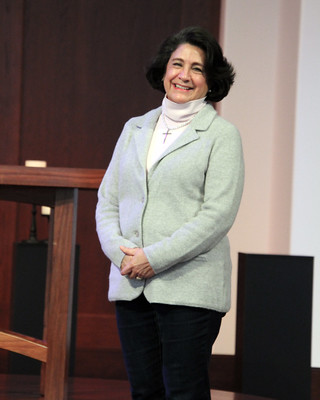
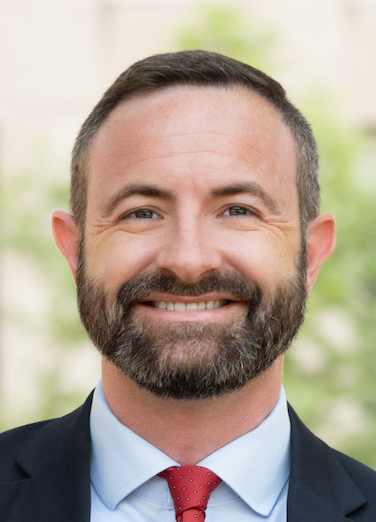
Ahead of next week’s National March for Life I had the opportunity to speak with The Rev. Canon Georgette Forney of Anglicans for Life. She is an experienced voice upholding the sanctity of human life in our churches and communities. Amidst ongoing crises of abortion, suicide, and euthanasia, Anglicans are not without resources to educate our fellow parishioners and neighbors about what the church has historically understood in our calling to protect the vulnerable. I hope that you find our conversation and the resources that Forney shares to be of benefit.
Jeff Walton: Hello, this is Jeff Walton from The Institute on Religion and Democracy in Washington, DC. I’m joined today by Canon Georgette Forney, an Anglican deacon who serves as head of Anglicans for Life, an organization that has existed across several decades giving witness to Sanctity of Life causes within the worldwide Anglican Communion. Thanks so much for joining me, Canon Georgette.
Georgette Forney: I appreciate it, great to be with you and your guests and listeners.
JW: A lot of people aren’t necessarily aware of the work that Anglicans for Life does, not just in the advocacy space but also in the local ministry space. You’re an organization that prepares Anglicans to witness within their local communities and prepare their congregations. Tell me about what that looks like in churches on the local level.
GF: We have chapters in churches throughout the country. On the one hand we try to equip the chapter to do local ministry, but the key thing for us is that it has to be based on what the chapter wants to do. We don’t try to dictate to them what we think they should be doing because we don’t know their community.
One chapter might be ministering to university students that face unplanned pregnancies and need help living on campus as a pregnant student.
Another chapter might focus on the local nursing home and how they can augment some of the services, whether a worship service or coming alongside some of the residents in that nursing home to encourage them, pray with them. Every chapter is going to be its own identity, have its own particular focus.
We focus on five particular topics with tons of subtopics in there. Obviously, abortion is our number one topic, but we also are very much interested in preventing assisted suicide, euthanasia. We also recognize the importance of engaging our youth, abstinence or “Sexual Risk Avoidance Behavior” as it’s now called. Also, biotech issues: looking at ethical ways to do research versus unethical ways. So we have our eyes and ears open to the biotech issues and then, finally, the adoption issue is critical. Not only do we have a specialist on our staff that focuses just on adoption, whether it’s international adoption, foster care, but we also have a donation fund that people can give to and receive grants from for adoption costs. We cover a big field of topics.
JW: That gives a good context to your ministry’s work. A lot of people of course have been talking in regards to abortion policy, which you reference as a major focus of Anglicans for Life’s ministry. Obviously, in the Dobbs decision which removed abortion policy from the Federal level and brought it down to the state level, there have been significant changes in a number of states regarding abortion. In those states that have changed their laws, what are you hearing from local pregnancy centers, and what are some of the new challenges and the new opportunities that are being reported?
GF: On what we’re hearing from pregnancy centers, the Charlotte Lozier Institute just finished a a study released two weeks ago on the increase in services and support that they provided women last year. 2023 was substantial: last year, we hosted the world’s largest baby shower and I think almost 40 Anglican churches participated. They collected at the local level and then donated to the local pregnancy center. It was really kind of fun. Without knowing it, but intuitively figuring that more women were going to need services, we created a campaign, a plan, a fun activity so all of our chapters were able to jump in. I want to say we donated, across all of those churches, almost 30,000 diapers. The whole list is really quite fun to go through and look at – a great deal of resources.
We are continuing to encourage churches to partner with pregnancy centers and see that helping women at a basic level is ensuring they have the necessities to care for their child. Not only are those things material items, but the churches are offering mentoring and discipleship, again in partnership with the pregnancy centers.
I would say the second part of your question relates to something that’s harder to – it’s almost like talking about Jello being pinned to the wall. Right now there’s this misconception that when Roe was “overturned” and went back to the states that “we’ve won the battle and we’re done.” There’s really nothing further from the truth, because we’ve just changed the location of the battle, but in some ways we’re seeing numbers of abortions increasing in many states. Here in Pennsylvania, where I live, I think the number was 5,000 more than last year and that is, in part, due to the fact that people are coming from other states. Given the economy and everything, I believe that there is a greater concern.
The harder way to answer your question is that we’re seeing people disengage when, in reality, we need to actually engage at a more intense level. I know maybe some people shy away from being intense, but we’re actually in the midst of unveiling a list of strategies that we believe people need to be doing locally. I’ve written nine strategies all focused on abortion. Each strategy has three to five tactics or subtopics. My vision, what I feel like the Lord showed me, was what people end up doing when we talk about abortion is that they talk about the legality of it, the politics of it, but nobody talks about what an abortion procedure really does, or what is the humanity and development of the child really all about.
With this new strategy system that we’re developing, we’re calling it “Speak Up for Life.” We’re encouraging people to take one strategy and one subtopic of that strategy and we’re giving them some information and a lot of resources and links to other articles so they can become an expert on simply one subtopic. Something as simple as the 60% of abortions now being done with abortion pills. That is a big topic but one point is that, environmentally, these abortion pills are getting into our wastewater systems: not only in the chemical of the pill but because we’re flushing human remains down the toilet. So, if somebody’s interested in environmental issues and life issues, becoming an expert on one point is what we need. We need a bunch of people to become an expert on one point and then make a commitment that, every day, they tell one person their point. Think about how we could educate, engage, and reverse the misinformation that the mainstream media keeps putting out there.
JW: I was looking at the most recent newsletter – this is the quarterly newsletter from Anglicans for Life, Carpe Diem – and you had written that in the United States about 30% of pregnancies are unintended. Of those, about 40% are terminated by abortion and the number you gave was between 1,500 to 2,200 abortions per day in this country which would be about 20% of all pregnancies in the U.S. ending in abortion. That’s a dramatic figure.
In regards to the judicial and legislative landscape, it’s obviously changed as we’ve mentioned. That’s one thing someone can focus on. You mentioned the environmental issue as one, what are a couple of the others that people could potentially learn more about that could be helpful in advancing the sanctity of life?
GF: There’s a variety of points that we’re pushing to make about the humanity of the baby, the development of the child, something as simple as, “did you know that unborn babies start to be able to hear in utero?” I mean helping people to appreciate the humanity that there is in a 14-week old baby in your womb, that we’re not just cutting out a bunch of tissue. This is a human being, created in God’s image, so the idea of focusing upon the development of the child is a simple point. Another one that I think is really a tough one to do but talking about the actual abortion procedures. We use that word, abortion, we talk about it but what do you know when you think about abortion – what do you actually mean by that? Do you realize in an abortion procedure that a doctor takes a scapula and literally pulls that child apart limb by limb? I can’t even say those things without getting emotional because it just floors me that we do this day in and day out. If we could talk to our neighbors and just tell them that simple point, would they still think it’s no big deal? Would they understand a little better why abortion is wrong? Maybe it’s talking about women who have had abortions and the grief that they live with, the insomnia, the nightmares.
Forty-seven percent of women who have abortions consider suicide, think about it. They’re thinking about it, they’re dreaming about it, they’re trying to be reunited with their child – ideation – that’s the word. There’s lots of those topics you know if you’re into legislation maybe given the fact that we’re dealing with a number of challenges in the courts and if you have a legal background and you’re retired, maybe help write amicus briefs for nonprofits representing the sanctity of life. I mean everybody can pick a topic that connects with their passion and I think we really have to be doing that because if we don’t, we know the other side doesn’t have any hesitancy about killing, about ending the lives of children. If they can’t do it in the womb they’re going to do it somewhere along the way with drugs, hormones – there is a part of our culture that is undermining the humanity and sanctity and value of every human being. And then there are God’s people that have to be the voice of truth.
JW: Speaking about being the voice of truth, Anglicans for Life has been sounding the alarm for years about something that’s become known as “Medical Aid in Dying” both in Canada and several U.S. states.
GF: 10 of them.
JW: How has this changed perception of euthanasia among the public, and what can we as Christians do to protect vulnerable people within our congregations?
GF: There’s a couple of things that we need to recognize and again this kind of goes back to your previous question because one of the key things that we have to do is we have to take back control over the words that we’re using versus the propaganda they’re using. So when you say “Medical Aid in Dying” what you’re really talking about is injecting grandma with a lethal concoction to kill her. Do you really support doing that? Why do we want to hasten death? Why can’t we not fear death but see it as a sacred part of life? I’ve walked with a number of folks now who have died and in my family as well, dear friends, it is critical to me that we help them die faithfully by living to the end of their purposes that God created them for. I think the key to fighting “Medical Aid in Dying” is to not refer to it as that but to refer to it as physician assisted suicide where the physician is writing the prescription and giving the person the medication. But I also think that not letting them use “Medical Aid in Dying” but euthanasia. When I started this job in 1998, euthanasia was like something out of science fiction and nobody would believe it. Now, Canada has euthanized over 30,000 people in less than, what, eight years? I think changing the words and making sure we’re in charge of the words again and – I’m going to do a shameless plug here – having churches do a class on aging and dying where they bring up these issues, they put this topic on the table.
I have a standard line I use in a lot of my presentations where I ask people “when’s the last time you heard a sermon on death?” and the reality is we don’t preach on death. Now, there was a great exception to that and it was when I was with a group of Army and armed forces chaplains and that group of people said we preach on it almost every week because those folks are facing it. It taught me a great lesson about the fact that they were able to be honest about death because they knew people were facing it. We think we can just kind of put death in a closet and keep avoiding it, but the reality is we’re all going to die. If we prepare ourselves and one another and our families it can be a sacred experience for everyone.
Anglicans for Life produced a curriculum a couple of years ago called “Embrace the Journey” and – I’ll be honest with you – I wrote it partially because my parents were getting to the point where they were aging and I was aware their death would be coming in years to come. The irony was my mom died before I got to show it to her. She died six weeks later, so I always say that I was the first student of Embrace the Journey because I don’t think I would have survived her death had I not done the preparation in writing it. Even talking about how to plan a funeral, what happens when you die, what is grief, why we grieve. We also talk about assisted suicide, euthanasia, hospice, advanced care planning, how do we want to finish our lives faithfully. The more that we take the the the blinders off, reveal and pull back the cover on the discussions about death, the more we feel empowered to not fear it and know that we’re prepared to handle it. I would say the key is always having wonderful and important conversations with family members so everybody’s on the same page and everybody understands the priorities the aging family member has so that they can die faithfully and gracefully instead of hastening it through a lethal injection.
JW: Those are great words, thank you for sharing them. Let’s tell those who are watching and listening where they can access resources like the curriculum that you mentioned.
GF: Embrace the Journey and our new Speak Up for Life (still literally being written right now) that will be on our website: anglicansforlife.org.
JW: Just so folks know: there is a big event coming up here in my area, Washington, DC: Anglicans for Life co-hosts with the Anglican Diocese of the Mid-Atlantic a Life Summit that’ll be taking place at the end of next week to coincide with the national March for Life.
GF: You can still get virtual tickets and there’s still in-person tickets available, so if somebody’s local and wants to attend in person we’d love to have you join us, but virtually you can also attend. We’ve got a great lineup of speakers as well as unveiling our new Speak Up for Life.
JW: Great and I’ll include a link to that in the show notes below. Thanks so much for sharing time with me, Georgette. I appreciate it and appreciate the ministry that you do to speak up for the vulnerable and to prepare those of us that are in the pews to do the same. Thank you very much.
GF: My pleasure. Blessings to you, thanks.
Notes:
Anglicans for Life: https://anglicansforlife.org/
“Embrace the Journey” curriculum: https://anglicansforlife.org/2018/05/anglicans-in-action-embrace-the-journey/
“Speak Up for Life” initiative: https://anglicansforlife.org/speakupforlife/
Life Summit January 18-20 “Beyond Dobbs”: https://www.afllifesummit.org/


Comment by Thomas on January 17, 2024 at 10:45 am
I`m curious to know if there are still some “life affirming” churches in the Episcopal Church. I do remember that some years ago there were some. Despite the fact that some parishes and even some dioceses have taken the pro-life stance, like the Episcopal Diocese of Dallas, I think these days they rather be silent because this is against the radical pro-abortion stance that has been taken by the Episcopal Church.
Comment by Jeffrey Walton on January 18, 2024 at 2:46 pm
Albany still has pro-life canons on the books, although we’ll see how long those last with the incoming bishop (I’m not optimistic). Central Florida has a good track record with this, too.
Comment by Thomas on January 19, 2024 at 11:55 am
Thanks for your answer, Jeff. But the sad true is that despite the fact that Anglicans for Life started as Episcopalians for Life, there isn`t anymore an Episcopalian pro-life ministry. I don`t think that in recent years there has been a pro-life Episcopal bishop in any March for Life in the United States.