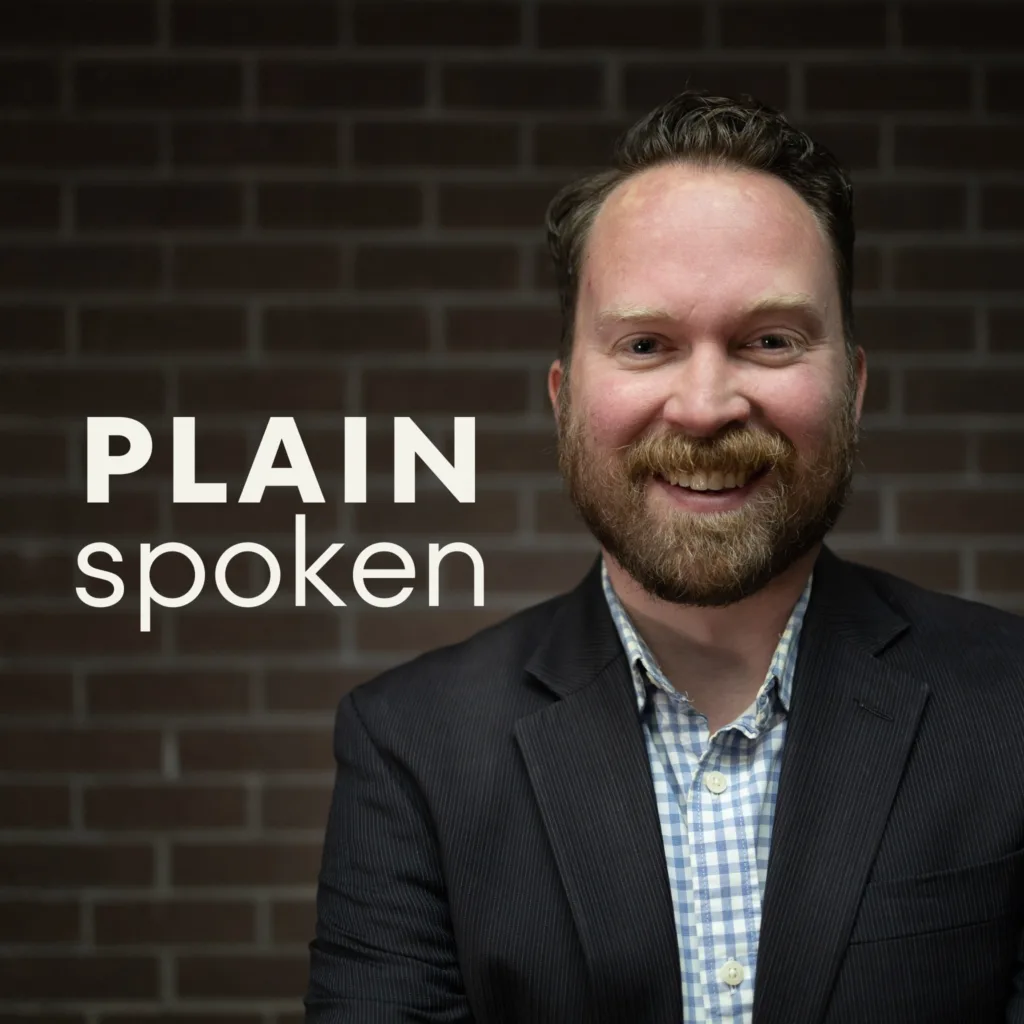
Rev. Jeffrey Rickman is a Global Methodist elder serving Nowata & Delaware Methodist Churches in Oklahoma. He also hosts the PlainSpoken podcast, on which he reports on pressing issues pertaining to Wesleyanism from a conservative standpoint. The following guest post is adapted from an appeal he wrote to fellow disaffiliated Methodists on his personal blog, about “Moral Concerns for Those Disaffiliated.” Adapted and re-posted with permission.
Methodist Voices (formerly UM Voices) is a forum for different voices within the United and Global Methodist Churches on pressing issues of denominational concern. Methodist Voices contributors represent only themselves and not IRD/UMAction.
I seem to have a somewhat different take on how it is that believers are expected to submit to authorities than most. Within the United Methodist sphere, there are those who submit gladly, those who are cowed, and those who have been able to disaffiliate and move on with their lives. I have a problem with folks who fall into any of these three categories. I agree with those who submit, as we are called to submit to those given authority over us, whether inside or outside of the church. Even so, to submit with any gladness when the UMC leadership so blatantly and regularly governs based on worldly concerns at the expense of faithful local churches, is wrong. Believers should always submit, but they should also always have something to say about it. Cowed conservatives are generally silent, keeping their heads down so as to avoid having them chopped off. This participates in the delusion on the part of progressives and institutionalists that everyone is basically happy. The peace they have is a lie. We are not called to lies, but to truth. We are not called to avoid conflict, but to trust God while drawing the ire of those who hate Christ. Truth requires speech and action. When we are no longer under the authority of unfaithful rulers, it is morally incumbent upon us to speak the truth so as to help others who are still under their authority. Yet so many churches and leaders who have gotten free from the UMC have chosen to simply move along, leaving behind those who haven’t been so fortunate as to move as quickly.
Humans are, of course, very good at justifying ourselves and the actions or inactions that we do or do not make. I try to guard against that tendency towards self-justification every day. Even so, it seems that the scriptural way to be in relationship with unjust forces in the world is to submit to them truthfully while under their authority, only insofar as it does not require us to sin, and to speak and work against them when outside of their authority. Is this a self-serving or self-justifying way to go through life? I do not see how it could be. Ego isn’t willing to lose, nor does it accept that faithfulness comes at a cost. Faithfulness does not negotiate, nor does it remain silent in the face of what is clearly wrong. We speak, even when it makes others uncomfortable, even when it might draw the ire and wrath of petty tyrants. Because the price of silence will exact a much greater cost in the end.
I’m choosing to speak now that I’m outside of The United Methodist Church. It isn’t because I am angry, harboring resentment, or wishing ill for those who bear the name of Christ and the heritage of the early Methodists in order to mock them. These folks whose actions and beliefs I speak against are made in God’s image and due the love of Christ that he shows us in the scriptures. That means I am morally obligated to speak the truth in love to them. The truth is that I liked and still like a lot of them, I saw and appreciated the many ways in which they chose not to hurt me when they could have, BUT I think they are still immoral and wrong in their disposition towards traditional believers like me and the denomination they took over. There are currently still thousands of churches trapped in the UMC who would like to get out. Unless something big happens, they will be trapped either because they cannot muster the funds needed to exit or because they cannot convince their conference staff or annual conference delegates to let them go. “This is our conference trustees’ disaffiliation policy. Our hands are tied.” Will we really accept this conclusion?
There has to be a response to this beyond a shrug. As I read my scriptures, I never read any stories about Jesus that lead me to believe that he shrugged. As pastors and churches leave for greener pastures, surely there is a moral obligation for them to do what they can with the short time that is left to use their freedom for the benefit of others who are not so fortunate.
Several things could happen if those who had gotten freedom were so inclined. Free churches could organize to create contact lists of local churches in their former conferences to make sure they had gotten good information on disaffiliation in their conferences, facilitating efforts to educate them while there is still time. They could collectively advocate with the conferences they left to represent the needs of those left behind. They could establish funds for helping less fortunate churches pay their way out, or to provide for legal fees for those that choose to file suit. Whistleblowers could come forward to tell their stories about working with those who are withholding the freedom of local churches. Some of this is happening, but not nearly enough, by my estimation.
If things continue at this pace at this trajectory, this year will end with probably around 12,000 churches remaining within The United Methodist Church when they would really rather be out. That hurts me. It should hurt you, too. I get that everyone wants to be excited about the formation of the Global Methodist Church, to focus on the positive, to focus on the future. I’m just not sure the future looks very bright if we walk away from the past too quickly. Why do we think we have learned the hard lessons necessary to guard a new institution when we cannot even effectively address that which we left behind?
I don’t think we should be bitter. I just think we should speak the truth in love, especially to those who have authority over others who cannot advocate for themselves. I guess I’m not sure what we imagine our role to be if not naming injustice. How can we be the saving hands of Jesus if we cannot address those powerful forces that are warring against the lowly?
Those left behind at this point are generally not larger, richer urban and suburban churches. They are largely poor and rural, with part-time or theologically-hostile clergy. A huge number of them are conservative black churches, Korean churches, nonwhite churches. They are not in conferences that have given freedom and latitude. They are in conferences that have erected impossibly high barriers, always holding in their back pocket the means to disenfranchise them of their buildings and funds, intimidating them into silence and compromise.
Those speaking up and decrying the situation are generally conservatives of little status, alongside people in paid coalition leadership positions. I’m personally not seeing too much from established conservative leadership. Instead, I have largely seen many former conservative United Methodist leaders completely moving on, as if they do not have a role to play anymore among the left behind. I disagree. This fight isn’t over yet. I, for one, would have you come back into the fray until we have gotten everyone out who wants out. And then, yes, let’s build something better together.
A final thought: I’m not sure we learned the lessons that this experience should have taught us. Namely, that it is better to speak the truth clearly and loudly in the moment than to let falsehood metastasize and fester over time. It is better to have earnest and decisive conflict than the prolonged satellite warfare of coalitions and agencies. If we do not learn to repent of our complicity in evil, then we will soon reproduce it wherever we go. If we imagine that we can create a structure that is somehow impervious to drift and rot without also a reforming of our characters and culture, then we are living in a fantasy land. Those who have gone through a divorce are statistically much more likely to get more divorces when they get married. Likewise, churches that split are much more likely to see more split in the future. Now is the time to repent, to resolve to be better, to learn how to fight the way Christ calls us to. My deepest fear is that those who have left are convinced in their own minds that Christ doesn’t require us to fight. They self-identify as civilians rather than soldiers in an era of spiritual warfare. This directly benefits the evil one. We are called to fight, faithfully and well. We are called to contend for the faith that was entrusted once and for all for the saints. We have fightings without and fears within. Christ will put the steel of the Holy Spirit in our spines as we put on the armor of God and go forth to righteous battle.
I’m asking that we resolve to learn to fight well. To be fair, but to be firm. Let’s build something worth protecting upon the foundation of Christ himself, something that stands the trying fires of history and lasts to all eternity…



Comment by David on July 19, 2023 at 9:16 am
I seriously doubt that there are many who “hate Christ.” They may regard him with indifference or consider him mythological while acknowledging his possible existence. Do Christians “hate Buddha?”
An article today in the NYT on political polarization mentioned how opposing camps increasingly view each other as immoral.
“Weiler cited poll data showing that
‘In 2016, 35 percent of Democrats said Republicans were more immoral than Democrats and 47 percent of Republicans said Democrats were more immoral. In 2022, those numbers had jumped dramatically — 63 percent of Democrats said Republicans were more immoral, and 72 percent of Republicans said Democrats were more immoral.'”
These same attitudes spill over into religious debates with each side claiming “God is on our side.”
Comment by Mike on July 19, 2023 at 11:15 am
David, you should recall the words of our Saviour when He said, “He that is not with me is against me; and he that gathereth not with me scattereth abroad.” That is according to the King James Bible. The New Living Translation is even more to the point: Anyone who isn’t with me opposes me, and anyone who isn’t working with me is actually working against me.” From Christ’s standpoint, anyone who is working against him could be said to “hate” Him.
Comment by Dan W on July 19, 2023 at 12:45 pm
Pastor Rickman has a really interesting YouTube channel. I love his interviews with local clergy and lay leaders navigating the disaffiliation process.
We should all learn one really important lesson from this mess. The Church is not about real estate. It’s not about property. If we all need to meet in tents for a few years – hopefully with a little air conditioning this time of year – it would be OK.
Comment by Jennie Ehrmann on August 5, 2023 at 10:53 am
Apparently, everyone who disagrees with this fellow “hates Christ”. Perhaps ge should “submit” to loving and accepting everyone. I do agree it’s a shame when Conferences make it harder than they need to when setting disaffiliation requirements. Perhaps the rich conservative churches can help the poor ones out. Also, pastors mis-matched with congregations goes both ways.
Comment by Dee Jenkins on August 7, 2023 at 4:00 pm
Amen brother