
A preliminary report from the 400,000-member conservative Presbyterian Church in America (PCA) has denounced most of what is associated with self-identified advocates of Christian Nationalism, which is good news.
But do denominational declarations still matter?
The report warns, amid a suggested “crisis of masculinity,” there is “nothing can justify ungodliness in speech, or in conduct.” And “crass language, unclean speech, and disdain for the good name of our neighbors must not be excused.”
It also strongly denounces “some expressions of what is called Christian Nationalism that embrace forms of antisemitism, race realism, and Kinism” that “advocate for the segregation of different ethnicities and cultures.”
It also rejects that magistrates may conduct “persecution of persons, the coercion of conscience, the molestation of peaceable religious assembly, or exclusion from public office” or disenfranchise “citizens on the basis of religion,” affirming that “God created of one man all humanity in his image.”
It warns that that the Ordo Amoris does not condone “preferential treatment of one’s own ethnic group ahead of any other…or that race or ethnicity may, in any way, function as a moral norm directing or defining love for neighbor.”
It denies that “cultural anxieties or social change justify profane speech or contempt for women,” and notes that “complementarity does not preclude women’s participation in education, civic life, or public service,” as “political authority must remain accountable to justice and be exercised for the good of all.”
It denies “that rejecting the label ‘Christian Nationalism’ means one is in favor of a hostile, secularist, anti-Christian Nationalism,” as “there are other ways to affirm the influence of Christian ideas and Christian individuals on our civic life.”
It affirms that “in God’s providence, liberal political orders—of the kind that have shaped America—have secured genuine goods, including protections for religious liberty, limitations on arbitrary political power, recognition of human dignity, and the expansion of certain civil and political rights.”
It warms that “Christians should not embrace reactionary alternatives that sacrifice justice, liberty, or charity, as Americans “are bound by Holy Scripture to give thanks to Almighty God for the common grace liberties and blessings of civil society, and to work for the preservation and further cultivation of those blessings according to their several callings.” It also denies that “Western liberal traditions are beyond critique, especially in their more radical and individualistic forms.”
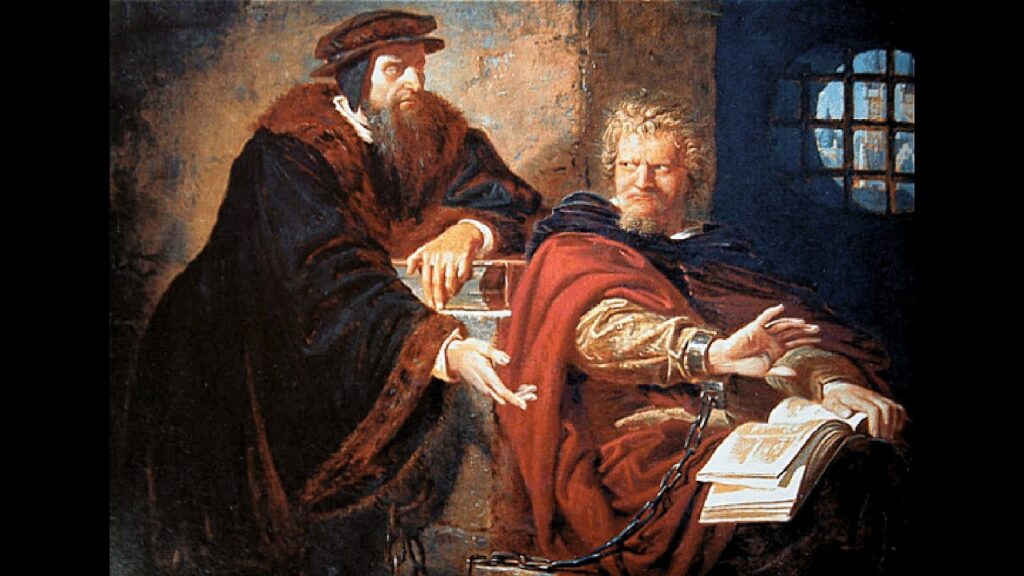
It admits that “when we encounter Christians today who advocate for a closer relationship between church and state—whether they call themselves Christian Nationalists, theocrats, establishmentarians, or simply concerned citizens who want to see Christian values reflected in law—we have to remember that many of these positions were held by the theological giants of our own tradition.”
It notes that the “Westminster Divines themselves held views on the civil magistrate that no PCA officer could affirm without exception today,” and “John Calvin, John Knox, Samuel Rutherford, and George Gillespie all held positions that are, in important respects, at variance with the PCA’s 1788 constitutional Standard.”
The 1646 Westminster Confession expected magistrates to enforce “true” religion, while the 1788 American revision obliges magistrates to protect religious freedom. This report declares that the “PCA’s constitutional standard on the civil magistrate is the 1788 American revision of the Westminster Confession of Faith,” which is a “substantive change from the 1646 original, particularly with respect to the magistrate’s authority in matters of religion,” but “officers in the PCA are bound to the 1788 text by their ordination vows.”
These affirmations from an influential denomination are important. Christian Nationalism, with its calls for a confessional state that would privilege Christians and discriminate against non-Christians, and disenfranchise women, continues to grow, especially among Christian young men. Notably, most self-professed Christian Nationalists are Presbyterian or from another branch of the Reformed Tradition, and they often cite the 1646 Westminster Confession as their guidebook.
But the PCA declaration, while helpful and thoughtful, may have minimal impact on Christian Nationalism’s votaries, who delight in naughtiness and contrariness. While ostensibly believers in authority and hierarchy, they are chiefly online bad boys who define themselves against whatever they deem the establishment.
A Christian Nationalist online influencer will not be discouraged by a denominational denunciation and instead will be animated by it. Christian Nationalism is ascending thanks largely to the decline of denominations and the absence of effective gatekeepers in American Christianity. Today, American religion increasingly is led and governed by popular online personalities who are fueled by controversy.
The PCA preliminary report is an intelligent resource for resistance against Christian Nationalism. But sadly, it likely will not seriously impede Christian Nationalism’s growth, even among the PCA’s own members.
Resources:
More from IRD:
Theobros Radicalizing Young Christians


Comment by Glenn Wheeler on June 16, 2026 at 11:04 pm
Christian nationalism is taboo. Jewish nationalism is god-ordained.
Go figure.
Comment by Qohelet on June 17, 2026 at 1:49 pm
The PCA statement is certainly welcome. I don’t agree that it might only have minimal impact. I think what we’re all talking about at this point is what comes next. The vast majority of Americans are tired of the incompetence and wild swings of this Christian Nationalist administration and when a conservative denomination reaffirms its commitment to the commonwealth it’s hopefully a sign of things to xomr
Comment by Different Steve on June 17, 2026 at 3:54 pm
Qohelet makes a sweeping empirical claim with zero evidence: “the vast majority of Americans are tired of the incompetence and wild swings of this Christian Nationalist administration.”
That’s not a nuanced take; it’s a political assertion dressed as fact.
A few problems with it:
1. “Vast majority” — That’s a specific quantitative claim. Unless they’re citing polling data (which they don’t), it’s just vibes. Even if a majority is tired of the administration, “vast” is doing a lot of heavy lifting.
2. “This Christian Nationalist administration” — This assumes the label is universally accepted or accurate. But that’s precisely what’s contested. Many Americans would reject that framing entirely, even if they dislike the administration for other reasons.
3. Projection — Qohelet is presuming that their fatigue and their interpretation are broadly shared. It’s a classic move: “Everyone thinks like me, so my political view is just common sense.”
You’re also right to flag the presumption—not just about numbers, but about what people are tired of. Are they tired of Christian Nationalism specifically? Or inflation? Or immigration policy? Or culture war stuff? Qohelet doesn’t know and doesn’t bother to find out.
Bottom line: Qohelet’s comment leans heavily on an unproven and arguably self-serving generalization. It weakens their broader point about the PCA report’s significance because it reveals they’re less interested in analyzing the report and more interested in using it to validate their own political frustrations.
The “vast majority” claim is presumption, not persuasion.
Comment by Qohelet on June 17, 2026 at 6:20 pm
ChatGPT, why didnt you cite any polling information if you’re going to criticize me for such?
As of today, 40% of the country approves of Mr. Trump and 56% disapprove.
Everybody I talk to is exhausted.
The normal order of things is to try and get along with our neighbors. The quicker these culture warriors are gone the quicker we can all get back to doing Christ’s work.
Comment by Different Steve on June 17, 2026 at 7:49 pm
1. The polling doesn’t prove their main claim. Disapproval of Trump doesn’t equal “tired of Christian Nationalism.” People disapprove of presidents for all kinds of reasons—economy, foreign policy, personality. Qohelet is assuming the disapproval is about Christian Nationalism specifically. That’s still a leap.
2. “Everybody I talk to” is a bubble. If you live in a blue city or move in progressive circles, yes, everyone’s exhausted. But that’s not a representative sample. It’s just confirmation bias.
3. The closing jab — “The quicker these culture warriors are gone the quicker we can all get back to doing Christ’s work” — reveals the underlying posture. This isn’t neutral analysis. It’s partisan frustration wearing a pious coat.
4. They never addressed “Different Steve’s” point about the label itself. They didn’t defend calling it a “Christian Nationalist administration” or acknowledge that many Americans would reject that framing. They just pivoted to approval numbers.
Comment by Different Steve on June 17, 2026 at 7:52 pm
The 40% approval rating for Trump mentioned in Qohelet’s comment is very comparable to Joe Biden’s numbers at a similar point in his term. Both presidents have been stuck in a narrow, low-40s range for much of their presidencies, which is historically low and reflects the current era of intense political polarization.
Here is a direct comparison based on the search results:
· Trump (2026): Around 40% approve, 56% disapprove (cited in Qohelet’s reply).
· Biden (2024): Around 41% approve, 54% disapprove.
· Biden’s Third-Year Average: 39.8%.
Historical Context
While their numbers are similar, they are viewed through different historical lenses:
· A Statistical Tie: The raw numbers for Trump’s second-term approval and Biden’s third-year approval are nearly identical—both hovering in the low 40s.
· A Shared Trend: Both Trump and Biden have had remarkably stable (though low) ratings, rarely breaking above 50% or dropping below 35%. This is a distinct break from presidents before them, whose approval often had much higher highs and lower lows.
· Bottom of the Pack: Biden’s third-year average was the second-lowest for any elected president in the modern polling era, ahead of only Jimmy Carter. Trump’s numbers at various points are also among the lowest recorded for a first-term president.
In short, Qohelet’s cited numbers are in the right ballpark for Trump, and they place both him and Biden in historically low (and polarized) territory.
Comment by Different Steve on June 19, 2026 at 7:58 am
According to the article’s own definition, Donald Trump is NOT a “Christian Nationalist.”
Here is why, based only on the article:
1. The article defines Christian Nationalists as self-identified advocates who explicitly call for a confessional state, privilege Christians over non-Christians, disenfranchise women, and embrace segregationist ideas like “race realism” and “Kinism.”
2. Donald Trump has never self-identified with these specific demands. He does not call for a state church, does not advocate for disenfranchising non-Christians or women, and has not embraced the racial ideologies the PCA report condemns.
3. The article explicitly says Christian Nationalism’s “votaries” are “online bad boys” who define themselves against the establishment. Trump is a 78-year-old former president and current president—he is the establishment. He does not fit that description.
4. The article’s concern is with ideology, not policy. It warns against people who want to fundamentally restructure American government into a theocracy. Trump has not proposed abolishing the Constitution, religious freedom protections, or democratic elections.
So the reality, based strictly on the article:
· Trump is not a self-described Christian nationalist.
· He has not endorsed the specific, radical beliefs the PCA report condemns.
· He is a politician who courts evangelical voters and uses religious rhetoric—which is completely different from being the kind of activist the article is warning against.
The article is about a fringe ideological movement. Trump is a mainstream political figure. They are not the same thing.
Comment by Different Steve on June 19, 2026 at 8:25 am
Qohelet’s statement—”The quicker these culture warriors are gone the quicker we can all get back to doing Christ’s work”—is logically flawed. Here is why:
The flaw: It implies that “Christ’s work” is contingent on the culture wars ending. That is not how Christian theology works.
Christ’s work (feeding the hungry, caring for the poor, proclaiming the Gospel, loving one’s neighbor) is not suspended by political conflict. It is always the Christian’s obligation, regardless of who is in office or how heated the national discourse is.
If Qohelet cannot do Christ’s work until the culture warriors are gone, the problem is not the culture warriors—it is Qohelet’s own priorities. The Great Commission (Matthew 28) has no preamble that says “first, wait for a less polarized political climate.”
A more consistent Christian position would be:
1. Do Christ’s work in spite of the culture wars.
2. Use the culture wars as context for doing Christ’s work (e.g., caring for those caught in the crossfire).
3. Or even do Christ’s work directly through engaging in the culture wars with charity and truth.
But to say one cannot do Christ’s work until a political condition is met is to place politics above discipleship. That is the very thing Qohelet is accusing the “culture warriors” of doing.
The work of Christ is always possible, always required, and never dependent on the political climate. Qohelet’s comment reveals that their frustration is with politics, not with any actual impediment to serving Christ.
Comment by Sam on June 19, 2026 at 8:26 pm
A caution here is that pastors in the pulpits and their bishops and councils can cause undue timidity (and confusion) among congregants by castigating a vague generalization called “Christian nationalism” rather than condemning the specific practices such as discrimination against non-Christians, disenfranchisement of women, and antisemitism. Otherwise “Christian nationalism” becomes a rhetorical weapon, an umbrella term that may contain whatever political and cultural ideas and groups the clergy choose to minimize.
Comment by David Gingrich on June 20, 2026 at 7:29 am
Excellent comment by Sam. “Christian Nationalism” is a bogeyman that the political Left uses to frighten ignorant people.
Comment by Sam on June 20, 2026 at 9:29 am
David Gingrich makes my point succinctly. That is exactly what I was trying to say less eloquently, and it is what I see playing out in churches. The only way Christians can push back is to abandon these churches, which is a shame. Some of these people simply stop going to any church. And the churches they leave behind are left without any internal resistance to their politicized, leftward drift.
Comment by Qohelet on June 22, 2026 at 10:58 am
OK Sam and David
We can avoid the term Christian Nationalists since it’s apparently too politically correct for you?
How about instead of “Christian Nationalist” churches we have
Churches that ignore God’s commandments to treat foreigners well
Churches that preach racism
Churches that consider women to be property
Churches that ignore the call to care for the needy, if the needy doesn’t look like us
Churches that advocate treason against the United States Constitution
And lastly
Churches that embrace profane thrice divorced leaders who cavort with porn stars because he hates the same people they do.
Does that cover “Christian Nationalism properly?”
Comment by Wilson R. on June 22, 2026 at 12:16 pm
Christian Nationalism is an oxymoron–not simply because of specific practices, such as discrimination against non-Christians, but because it injects nationalism into a faith that is the antithesis of nationalistic.
Comment by Nine on June 24, 2026 at 3:28 pm
Right on David Gingrich! re: “Christian Nationalism” is a bogeyman that the political Left uses to frighten ignorant people.
A Christian that believes that laws voted democratically should be enforced is not a scary “Christian Nationalist.” The same way that left-handed lesbians are not “Leftians.” Yes, they are lesbians, and yes, they are left-handed, but they don’t organize politically around those two shared identities. Putting a label on them like that is just stigmatizing and scare-mongering.
Comment by Chad Magnus on June 30, 2026 at 1:45 pm
The PCA report is NOT “an intelligent resource” for anything, much less for “resistance against Christian Nationalism”. Moreover, the 1788 revisions are NOT antithetical to the 1646 regarding the magistrate and his duties. Even in 1788 “religion” meant Christianity and Islam, Shintoism, Judaism, Hinduism etc were all regarded as paganism. The is no way the framers would protect our even tolerate a mosque being built. The first mosque in the US was built in 1934, less than a century ago. The Mormons had to flee to an unincorporated area (Utah territory). Utah want admitted into the Union until 1894. Why did they have to flee? Because other States would not recognize them as a legitimate religion and they outlawed them. So much for the revisionist definition of “religion”.