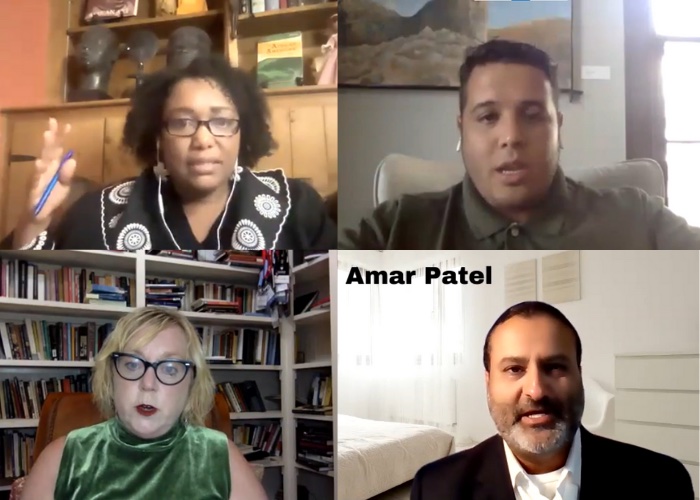
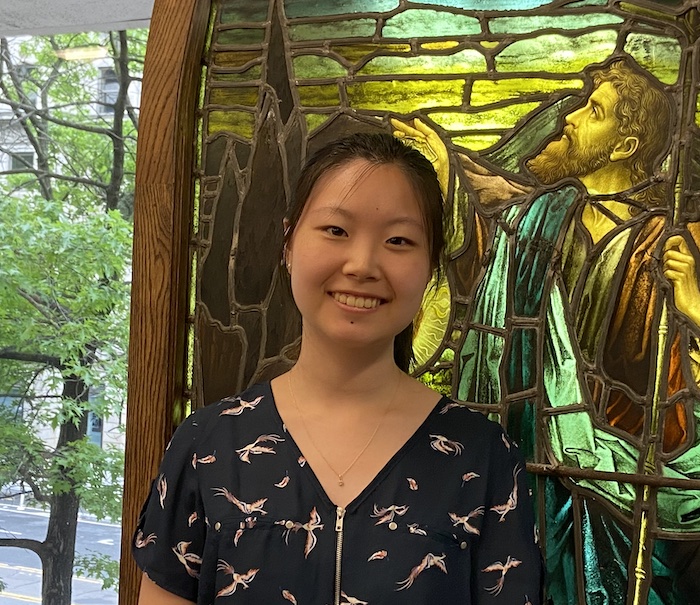
Freedom is not “doing whatever you want,” said Gloria Purvis, a Catholic speaker, author, and former radio show host, on a Faith & Politics panel hosted by the American Solidarity Party. “Freedom is the ability to do what is good.”
This concept is familiar to many Christians as the Apostle Paul wrote in 1 Corinthians 9:19: “Though I am free and belong to no one, I have made myself a slave to everyone, to win as many as possible.”
In the political realm, what does it look like to limit one’s freedom to do what is good?
The American Solidarity Party invited Purvis, along with Southeastern Baptist Theological Seminary Professor Dr. Karen Swallow Prior and Immigration Coalition Director Rondell Treviño, for a discussion on June 26 as part of its virtual 2021 Convention. Founded in 2011, American Solidarity is a third party “committed to addressing the needs of the human family and the earth that sustains us with prudent policies informed by Christian democratic values.” In the 2020 election, Presidential Candidate Brian Carroll won 39,230 votes, or approximately 0.02 percent of the total popular vote.
When it comes to issues that combine faith, freedom, and politics, religious liberty often takes center stage. Prior noted that there is a tension in honoring religious liberty and following one’s convictions.
“As Southern Baptists, we have strong convictions about human life, about anything related to what it means to be a human person… yet at the same time, because we also believe in religious freedom, we have to advocate for what we believe contributes to the most human flourishing, but also know that we can’t compel those beliefs on other people,” Prior explained.
Even if Christians want to enshrine their beliefs in law, there are limits to the efficacy of legally prescribed morality, as Purvis noted: “passing laws is not converting a human heart.” She cites racism as a prime example.
Allowing others the freedom to practice their beliefs can actually do more in the way of spreading the Gospel message, as Treviño has experienced. He is an associate pastor at Hope Community Church and founder and director of the Immigration Coalition, an organization that provides clean drinking water to migrants at the U.S.-Mexico border.
“When we don’t protect religious freedom, then we can’t show Biblical kindness alongside someone who might not believe the same way but cares about providing water,” Treviño insisted. “I have brothers and sisters of the Muslim community, Southern Baptists, Catholics who come alongside and want to do work with us, and Biblical kindness says I disagree with you maybe on some of the theological aspects or even religiously, but I still want you at my dinner table and I still want to serve with you at the border.”
This mutual respect allows Treviño to “graciously build relationship with [non-Christians] over time and to show them the work of mercy that Jesus would have us do.”
Panelists also stressed the importance of guarding one’s faith against political opportunism.
“I started to see… a decided turn in discussions about winning and jettisoning a lot of our values because this person, they thought, could win,” Purvis pointed out about the election of former President Donald Trump. “What I saw was people willing to jettison their values for temporal power, and I knew that was a seduction.”
However, the panelists agreed that there is no need to completely extricate faith from politics. Rather, there is a tension that needs to be lived in, according to Treviño, who advocates a “pro-life from the womb to the tomb for all humans” position.
“No matter if someone has documentation or not, they need food, they need water, they need the Gospel, and it is my duty to go to them in proximity and to love them in that way,” Treviño said.
However, the tension, Treviño explained, lies in understanding that “we do need a multi-faceted approach to border security, but we also need to show deep compassion to asylum seekers, migrants, and undocumented immigrants.”
The tension between advocating our beliefs and giving others the freedom to practice theirs, between living out the gospel of love and recognizing legitimate political and practical constraints—between faith and politics—is an inextricable part of living in the “already but not yet.”
But it is okay, Treviño proposed, “to rub shoulders with folks who might disagree with me.” The important thing is “for us to get a seat at the table together and to come across with our differences,” and to “have these conversations in a kind and gracious way so that… we can see a revival in what needs to happen in America.” Although that may not usher in the Kingdom, it will help Christians navigate life as “sojourners and exiles” in this world.



Comment by Timothy on July 5, 2021 at 8:25 am
Good article with good quotes. My grandmother told me if was ok to disagree; but don’t be disagreeable. Nowadays, the angry, almost violent apostates make it nearly impossible to have a civil discussion. The hateful images seen on tv are misleading propaganda to further tensions and divisiveness. Don’t fall for it.
Comment by Loren J Golden on July 5, 2021 at 4:35 pm
“In the 2020 election, Presidential Candidate Brian Carroll won 39,230 votes, or approximately 0.02 percent of the total popular vote.”
One of those was mine.
Comment by Read more Philosphy and Ethics... on July 6, 2021 at 9:21 am
“Liberty is not the power of doing what we like, it is the power to do what we ought.”
John Dalberg-Acton (Lord Acton), 1834-1902.