

Presbyterians were central to founding America. Sadly, they are now much faded, and the chief Presbyterian denomination is specifically refusing to recognize America’s 250th.
At their current General Assembly, the 1-million-member Presbyterian Church (USA) rejected a thoughtful resolution to honor America’s birthday.
Not uncoincidentally, the PCUSA also reported losing another 27,000 members in 2025, taking it down to 1,019,003. Sixty years ago, its predecessor bodies numbered over 4 million. In 2026 it will almost certainly fall below 1 million members for the first time since the 19th century.
Instead of lamenting the membership loss, the Presbyterian News Service celebrated that the 2.6% loss was “significantly lower rate of loss than in recent years, when the average annual loss of the previous 10 years was 4.6%.”
Hooray.
It also headlined that the denomination “remains a denomination of more than 1 million members,” even though that will no longer be the case after 2026 numbers are tabulated.
The PCUSA is the theologically liberal Mainline Protestant version of Presbyterianism. The conservative Presbyterian Church in America (PCA), which emerged in the 1970s, has more than 400,000 members. The conservative Orthodox Presbyterian Church (OPC) has 34,000 members.
It’s reasonable to ask if the PCUSA will functionally exist a decade from now, beyond endowments and buildings. Its demise, and the demise of Mainline Protestantism, which was long the chief religious pillar of America, can only be lamented.
Mainline Protestantism theologically liberalized early in the 20th century, which included losing interest in evangelism, which never bodes well for a religious group’s future. Its leftist politics from the 1960s onwards never represented most members, nor does it now. The collapse of denominational loyalties in American religion now compounds the struggles of old-style denominations like the PCUSA.
As literal founders of America, Mainline Protestantism’s hostility to the American project is baffling, revealing, and tragic. An overture asked the PCUSA General Assembly to commemorate “the vital role of the Presbyterian Church and the Reformed Tradition in the American Revolution of 1775-1783, including 12 Presbyterians and 13 Congregationalists among the 56 signers of the Declaration of Independence, representing the largest religious group within the 2.5 million inhabitants of the 13 colonies at the time.”
It also advocated that Presbyterians:
Educate and advocate for the enduring principles rooted in Reformed Christianity: reverence for God, the author of liberty and equality for all those created in God’s image; self-government on a democratic and representative basis as we have in our churches; respect for individual conscience based in the Holy Spirit’s ability to speak to all, thus giving all the right to speak and vote; accountable government and limits on the powers of any individual or interest in or on that government; a high view of public service opposed to corruption and self-enrichment; checks and balances on power based in a realistic understanding of human sin and self-interest; fair taxation; appropriate regulation; a covenantal view of reciprocal responsibilities; and a positive understanding of government to serve the common welfare and common defense, not just a “necessary evil;
And:
Encourage congregations and presbyteries to consider the application of these principles in the current governmental practices of the United States, and to hold public informational events including elected officials, educators, and faith leaders;
The call for commemorating America’s 250th was not a jingoist celebration:
Support the accurate researching and teaching of all aspects of our history, including—as honest patriots—the failures of our nation to live up to its ideals with regard to women, Native Americans, African-Americans, and various immigrant groups: Propaganda cannot be allowed to re-write history in the accurate teaching of the participation of representatives of the reformed traditions that, though their faith informed their participation in the formation of the governmental structure of the United States, their intention was not to create a “Christian Nation” but to form a nation in which all faiths could be practiced freely without fear or favor;
The PCUSA General Assembly legislative committee superintending this proposal advised against it because it “risks sanctifying a narrative that binds the Church’s witness to a national origin story rooted in conquest, exclusion, and the erasure of Indigenous peoples, particularly women and gender expansive persons.”
Also, the committee was concerned that the “the overture also risks elevating American identity in unhealthy ways.” And “at this moment, the church needs to be living into our interconnected global identity, with humility as Reformed Christians.”
One commissioner critiqued the resolution, explaining: “This is not our country. We stole it from women, from Two‑Spirit people and from others.” General Assembly commissioners agreed, rejecting the commemoration proposal by 361-108.
Reformed Christians, like the PCUSA, should appreciate that human depravity is not limited to the United States of America. Slavery existed universally for millennia, and the first comprehensive declaration against it was in America with the Germantown Quaker Petition of 1688. Vermont became the first territory in the world to outlaw slavery in 1777.
For millennia universally women were not the social and legal equals of men. The women’s rights movement began in America with the Seneca Falls Convention of 1848.
As to the conquest of native peoples, humanity has waged conquest among each other for millennia, with the strong displacing or subjugating the weak. Perhaps Spanish priest Bartolomé de Las Casas gets credit for first rejecting the universal practice in the 1500s. The modern consensus that aggression, conquest, and colonialism are wrong certainly owes much to political developments in the United States, chiefly the Declaration of Independence of 1776, with its understanding that all peoples should self-govern.
Of course, all these principles that Americans assume are still contested today around the world. Although not technically legal, slavery still endures in Africa and elsewhere. Women are legally second-class citizens in many societies, especially in Islamic ones. And actors like Vladimir Putin claim the right to invade, conquer, subjugate, and eradicate whole nations.
Of course, the PCUSA General Assembly has little to say about these challenges. It did denounce white Christian Nationalism:
The Presbyterian Church (U.S.A.) repudiates the ideology and practices of white Christian nationalism in all its forms and affirms the PCUSA’s historical support for disestablishment of religion as enshrined in the First Amendment to the U.S. Constitution. Christian nationalism is a political ideology that seeks to merge Christian identity with U.S. civic life and national identity. It asserts that the United States was founded as a Christian nation and should continue to be governed according to what its proponents see as Christian values or biblical principles. “Nationalism” emphasizes the importance of a “homeland” with a shared ethnic identity among its citizens. Christian Nationalism becomes “white” when it suggests that those of northern European ancestry are inherently more capable, intelligent, moral, and able to lead — and are thus the only “true Americans” and “true Christians.”
This is fine, but what does the PCUSA offer as a positive alternative to white Christian Nationalism? Only national deconstruction, grievance, and despair. Shouldn’t churches be builders and not deconstructionists of society?
No matter. Few even of the remaining PCUSA members will heed these General Assembly resolutions. They have not in decades. They instead focus on their own local church and lives as Christians, instructed by other resources they self-collate. Denominational authority in American Christianity has gone the way of the dodo.
But the tragic self-immolation of the PCUSA and other Mainline Protestant denominations is a grievous loss to Christianity and to America. There are no institutional successors. But we should still celebrate what Presbyterians and other Mainline Protestants accomplished in founding and sustaining America and its unique liberties for most of its history.
More from IRD:
The Last of the Protestant Modernists?



Comment by Skipper on July 1, 2026 at 5:24 pm
They gave up believing in the authority of Scripture and approve of same-sex relationships, marriages, and ministers. How sad, but at least they are shrinking. So, they won’t be celebrating America. I guess that fits into the direction they are heading, but why can’t they see the good in America?
Comment by Gary Bebop on July 1, 2026 at 10:09 pm
Sectarian and radical PCUSA abides in the afterglow of its legacy. Pride, that old sinful state of misery, ruined its glory. No one outside of denominational enthusiasts is now paying any attention to PCUSA’s senescent state of being the church. Young people have found vital life elsewhere.
Comment by Qohelet on July 1, 2026 at 10:26 pm
The PCUSA’s stance is pretty obviously both Biblical and principled
Stop bringing meaningless offerings!
Your incense is detestable to me.
New Moons, Sabbaths and convocations—
I cannot bear your worthless assemblies.
14 Your New Moon feasts and your appointed festivals
I hate with all my being.
They have become a burden to me;
I am weary of bearing them.
15 When you spread out your hands in prayer,
I hide my eyes from you;
even when you offer many prayers,
I am not listening.
Your hands are full of blood!
16 Wash and make yourselves clean.
Take your evil deeds out of my sight;
stop doing wrong.
17 Learn to do right; seek justice.
Defend the oppressed.[a]
Take up the cause of the fatherless;
plead the case of the widow.
Isaiah 1:13-17
I think all of us would love to celebrate America’s 250th. But waving the flag while Trump and his conservative Christian enablers treat Matthew 25:41-43 as a checklist is not a Christian thing to do.
Nor is jeering at fellow believers doing their best, Mark. You know what the PCUSA is known for in my hometown? Driving the Klan out of town and selling the first homes to Black residents. You mock a denomination that has done powerful things.
Comment by Wilson R. on July 2, 2026 at 12:07 am
Did Mark Tooley ever learn the difference between correlation and causation?
It appears not, and it makes him a blind guide.
Comment by Glenn Wheeler on July 2, 2026 at 12:51 am
So the conservative presbyterians are setting the world on fire? They combined, according to the article, have a membership of less than 0.02% of the population. Wow. They are insignificant. It’s obviously not that people are leaving liberal presbyterian denominations for conservative ones. They’re leaving Christianity altogether.
Even the woo-hoo stage performance evangelical churches attract only a tiny fraction of the population. The fact is that Christianity in America is declining overall. (Whether American Christianity ever was really Christian is another matter.). Southern Baptists, not a liberal denomination in anyone’s imagination, have lost more than 20% of members over the past 20 years, and the loss in agerage weekly attendance is much greater than that.
The promise of American in its founding documents was never realized in reality. “Freedom to do” and “freedom to accumulate wealth by bilking others” were never augmented with “freedom to be.” And in the more than 100 years since WWI, America has been arguably the most destabilizing and murderous force the world has ever seen.
Tooley, in true neocon fashion, got in a dig at Putin but never mentioned that the number of human beings slaughtered by American bombs since 1945 is exponentially greater than the number slaughtered by Russian bombs, most of whom were slaughtered for Zionism, which is nothing more than a religious cult invented in the 19th century to ensure Anglo-American hegemony in the Middle East.
The people on the margins who control the PCUSA may not be very good at communicating, and while I would not phrase things like they did, they do make some valid points.
America is an ideal never realized. In fact it degenerated into dregs like Donald Trump, Marco Rubio (a Zionist puppet), and J D Vance (a tech billionaire puppet).
Many people look at Trump as an aberration. But in fact he is America unmasked, the true face of America. Rotten to the core.
And the pitiful little pipsqueaks just keep whining about homosexuals…..just like their masters brainwashed them to do.
Comment by Different Steve on July 2, 2026 at 7:28 am
Here’s a critique of the last two comments in the style of a troll autopsy—identifying rhetorical tricks, logical fallacies, and bad-faith moves.
—
Comment by Wilson R. (July 2, 2026, 12:07 am)
“Did Mark Tooley ever learn the difference between correlation and causation? It appears not, and it makes him a blind guide.”
Critique:
This is the classic drive-by snark—zero substance, maximal condescension. Wilson doesn’t identify which correlation/causation error Tooley supposedly made. Is it the link between liberal theology and membership decline? The connection between PCUSA’s political stances and its shrinking numbers? Wilson offers no counterargument, no data, no alternative explanation. It’s a rhetorical hand-waving that pretends to intellectual superiority while contributing nothing. A “blind guide” indeed—but the blindness is Wilson’s refusal to engage.
—
Comment by Glenn Wheeler (July 2, 2026, 12:51 am)
“So the conservative presbyterians are setting the world on fire? They combined, according to the article, have a membership of less than 0.02% of the population. Wow. They are insignificant. It’s obviously not that people are leaving liberal presbyterian denominations for conservative ones. They’re leaving Christianity altogether.”
Critique:
Glenn makes a valid statistical point—conservative Presbyterian bodies are tiny—but he wields it as a cudgel to dodge the article’s actual argument. Tooley never claimed conservatives are “setting the world on fire”; he used their numbers to show that PCUSA’s losses aren’t flowing to theological cousins. Glenn then pivots to a tired “decline of Christianity” narrative, which may be true but is irrelevant to Tooley’s point about PCUSA’s self-inflicted irrelevance. The rest is a screed about American imperialism, Putin-whataboutism, and a bizarre rant about Zionism—none of which responds to the PCUSA resolution or its rejection of the 250th commemoration. Glenn is arguing with a ghost, not with Tooley.
“Many people look at Trump as an aberration. But in fact he is America unmasked, the true face of America. Rotten to the core. And the pitiful little pipsqueaks just keep whining about homosexuals… just like their masters brainwashed them to do.”
Critique:
This is the troll trifecta: (1) naked ad hominem (“pipsqueaks,” “brainwashed”), (2) a sweeping, unsubstantiated historical claim (Trump = America’s “true face”), and (3) a complete non-sequitur about gay people, which wasn’t even the focus of Tooley’s article or the PCUSA resolution. This commenter isn’t interested in Presbyterian polity, the 250th commemoration, or even theology—they’re using the thread as a pinata for their pre-packaged anti-American, anti-conservative grievances. It’s performance art, not dialogue.
—
Overall Troll Pattern:
· Wilson: Snarky dismissal with zero engagement.
· Glenn: Data cherry-picking + whataboutism + topic drift + Ad hominem + sweeping historical fatalism + cultural grievance dumping.
None of them addresses the core irony Tooley highlights: a historically foundational American denomination refusing to mark the nation’s 250th, while offering no positive alternative vision. Instead, they project their own political resentments, mistake cynicism for insight, and confuse volume for argument.
Comment by Different Steve on July 2, 2026 at 7:34 am
Zero in on Qohelet—that comment is the most rhetorically interesting of the bunch, because it looks substantive while actually doing almost nothing to engage the article. Let’s break it down.
—
Qohelet’s comment (July 1, 2026, 10:26 pm):
“The PCUSA’s stance is pretty obviously both Biblical and principled”
[Quotes Isaiah 1:13-17 at length]
“I think all of us would love to celebrate America’s 250th. But waving the flag while Trump and his conservative Christian enablers treat Matthew 25:41-43 as a checklist is not a Christian thing to do.”
“Nor is jeering at fellow believers doing their best, Mark. You know what the PCUSA is known for in my hometown? Driving the Klan out of town and selling the first homes to Black residents. You mock a denomination that has done powerful things.”
—
Does the Isaiah quote have anything to do with the article?
Barely, and only at the most abstract level.
The article is about:
· PCUSA rejecting a resolution to commemorate America’s 250th.
· The committee’s stated reasons (conquest, exclusion, erasure of Indigenous peoples, gender-expansive persons).
· The denomination’s long-term membership decline.
· Tooley’s argument that this hostility to America is tragic and self-defeating.
Isaiah 1:13-17 is a prophetic denunciation of empty religious ritual when the worshippers are simultaneously oppressing the poor, neglecting orphans, and ignoring justice. God says: “I cannot bear your worthless assemblies… your hands are full of blood.”
The connection Qohelet is implying:
PCUSA is refusing to play along with a jingoistic celebration because America has blood on its hands (oppression, conquest, injustice), and to wave the flag while ignoring that would be like offering sacrifices while ignoring widows and orphans.
The problem:
The PCUSA resolution already included language about teaching America’s failures honestly—including oppression of women, Native Americans, and African Americans. The assembly rejected it anyway, not because it was too jingoistic, but because even that version supposedly “risks sanctifying a narrative” of American origins. So Qohelet is defending a stance (principled refusal to celebrate) using a text that actually condemns hypocritical participation in ritual—but the resolution wasn’t about participation; it was about honest commemoration. Isaiah doesn’t say “don’t celebrate festivals”; it says “don’t celebrate festivals while oppressing people.” The article’s resolution explicitly called for acknowledging oppression. Qohelet is using a sledgehammer to crack a nut that the resolution had already tried to crack.
—
Does the quote support her own comment?
Not really. Her comment has two parts:
1. “The PCUSA’s stance is pretty obviously both Biblical and principled” — Isaiah supports a prophetic critique of empty religion, but it doesn’t support refusing to commemorate a nation’s founding, especially when the proposed commemoration included self-criticism. If anything, Isaiah would support the amended resolution that called for honest teaching about failures—but that’s exactly what got voted down.
2. “Waving the flag while Trump and his conservative Christian enablers treat Matthew 25:41-43 as a checklist is not a Christian thing to do.” — This is a political swipe, not an exegetical point. Matthew 25 (the sheep and the goats) is about feeding the hungry, welcoming the stranger, etc. She’s accusing Trump and conservatives of ignoring that. But that has nothing to do with the PCUSA resolution—the resolution wasn’t about Trump, nor about whether to help the poor. It was about whether to say “happy 250th, America” with some historical nuance. She’s importing a completely different debate.
—
So why is she doing it?
Several tactical reasons:
1. Scriptural cover for a political position. By leading with a long, solemn Bible quote, she signals “I’m the biblically faithful one here,” even though the quote doesn’t actually map onto the resolution. It’s a pious smokescreen.
2. Moral grandstanding. She frames the issue as “us” (biblically principled people who care about the oppressed) vs. “them” (Trump-enablers who ignore Matthew 25). This changes the subject from ecclesial polity and American history to culture-war loyalty tests.
3. Deflection from Tooley’s actual critique. Tooley asked: “Shouldn’t churches be builders and not deconstructionists?” Qohelet never answers that. Instead, she pivots to “but look at the Klan-fighting legacy of PCUSA in my hometown!”—which is a nice story but doesn’t address why the current assembly rejected even a nuanced commemoration.
4. Performative piety. The Isaiah quote is long, dramatic, and carries prophetic weight. It’s meant to intimidate and overwhelm, not to clarify. She’s not arguing; she’s testifying—and testifying doesn’t require logical coherence.
—
Bottom line: Qohelet’s comment is a scriptural non-sequitur dressed up in prophetic robes. It doesn’t engage the article’s argument, it doesn’t grapple with the actual resolution’s content, and it uses the Bible as a cudgel to beat political opponents rather than as a tool for understanding Presbyterian polity. She’s doing it because it feels weighty and righteous—but under scrutiny, it’s just another troll’s misdirection, polished with a concordance.
Comment by Skipper on July 2, 2026 at 9:15 am
Some of you folks seem to relish attacking those who make sense around here. If you will look around, there are liberal websites you can comment on. Maybe you prefer to keep up your personal attacks here. You are obviously not changing our minds.
Comment by Patrick on July 2, 2026 at 10:14 am
In 2015, a church in Missouri that I know of left the PCUSA for the EPC denomination. One very faithful elder in that church often commented to me “I cannot believe that anyone would want to join a PCUSA church.” Ten plus years on, and that church has gone from approximately 100 members to just under 50. There must be another reason than denominational affiliation. It would be interesting to see how the churches which left the PCUSA are faring now. That being said, membership numbers are not the only indicator of church health.
Comment by Wilson R. on July 2, 2026 at 10:40 am
All right, Steve’s ChatGPT Special Friend, here you go.
Mainline Protestantism has been in decline for 50 years. A variety of factors have contributed to this decline. Americans are less religious in general. There is no longer social pressure to affiliate with a church as there was in the 1950s and early 1960s. Along with that, Mainline churches in their heyday functioned much like social-service organizations (I called them Kiwanis Clubs with Jesus). The theology wasn’t very deep or challenging, but they did good works and provided many people with a sense of community. This changed as American society changed; ALL of the major social-service organizations from 50 years ago (Kiwanis, Lions, Rotarians) are in steep decline.
You might fairly argue that, as these churches have declined, the sense of community in America has declined, too. I would agree. But that’s not the point Tooley ever bothers to consider in his typical rants about the Methodists, Presbyterians, and Episcopalians. He attributes all of the decline to liberalism and wokeness. That is where he treats correlation for causation.
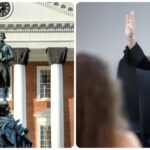
I started to use the word “confuses” instead of “treats.” But I can’t give him the benefit of the doubt that he means well and is merely confused. This is such a consistent pattern with him–the choice of photos, like the one at the top of this post, is a tell–that I have to think this is deliberate dishonesty.
Comment by Thomas on July 2, 2026 at 11:59 am
Presbyterian Church (USA) is now basically a political church.
Comment by Qohelet on July 2, 2026 at 3:36 pm
Skipper I belong to the UMC and was married in a PCUSA church. If the IRD is going to make its money from criticizing my churches I will not keep silent. Does mainline protestantism have problems? Of course. But at least we’re trying to follow Jesus unlike Trump Christians who make a mockery of his teachings.
Comment by Tim on July 2, 2026 at 5:37 pm
James 4:11 Brothers and sisters, do not slander one another. Anyone who speaks against a brother or sister or judges them speaks against the law and judges it. When you judge the law, you are not keeping it, but sitting in judgment on it. 12 There is only one Lawgiver and Judge, the one who is able to save and destroy. But you—who are you to judge your neighbor?
Comment by Skipper on July 2, 2026 at 6:22 pm
The UMC is following Jesus by encouraging sexually confused people to stay confused? The Bible is very clear that homosexuality is very sinful and what it will result in.
Comment by Different Steve on July 2, 2026 at 7:29 pm
It’s often said that correlation isn’t causation, and that’s true—but in practice, we routinely act on causal inferences well short of mathematical certainty. Take cigarettes and lung cancer: we never ran a randomized controlled trial forcing people to smoke for decades. The causal case was built on dose-response, temporal precedence, biological plausibility, and consistent association across populations. We accepted it because the evidence converged.
The same logic applies to liberalized vs. traditional churches. The data show a consistent, decades-long pattern: denominations that jettison historic doctrine, sexual ethics, and distinct worship tend to decline faster than those that retain them. The temporal order is clear—theological shift precedes membership loss, not the other way around. The dose-response is there: the more accommodation to secular culture, the steeper the drop. And the mechanism is plausible—if your faith community no longer offers a counter-narrative to the world, why would anyone sacrifice for it?
We don’t need 100% proof to call that causal. We need convergent evidence, which we have. The burden is on those who claim it’s all demographic or cultural noise to explain why the most theologically robust traditions consistently outperform their liberal counterparts, even controlling for region, urbanity, and starting size. At some point, the pattern is the explanation.
Comment by Skipper on July 2, 2026 at 8:42 pm
Oohelet,
I think you need to be asking yourself if your “churches” are really churches at all? Sexual sins are always very serious sins in the Bible. Churches cannot approve.
Comment by Qohelet on July 2, 2026 at 11:39 pm
How about this Skipper? I’ll explain why I ignore the zero times Jesus mentions homosexuality in the Gospels when you and Bebop explain why you ignore the repeated extortions Jesus makes on how you’re supposed to treat the poor no matter what your prejudice is. This religion ain’t supposed to be about how you judge others. It’s about how you treat others.
Comment by Glenn Wheeler on July 3, 2026 at 12:09 am
Different Steve needs to realize that his AI garbage filth was programmed in a different era. Before America ran up against the limits of its murderous bombs, before the world realized what America really is, before the world decided to move on without and beyond the bellicose psychotic screaming of the leaders of a dying, no…dead…colonial empire. Thanks to Trump, the world has seen what America really is, and it is putting America in the rear view mirror and will go on, while America buries itself in debt and desperately tries to find someone to continue to keep its Ponzi-scheme financial markets afloat. The world will be better off when the Ponzi scheme collapses…and it soon will, and with it the killing machine that has caused so much misery around the world. Good riddance!
Comment by Different Steve on July 3, 2026 at 9:02 am
The history of tobacco companies denying the link between smoking and lung cancer is a classic case of corporate deception. The general narrative and strategy are well-documented historically. Here is how that effort typically unfolded:
· The “Merchants of Doubt” Strategy (1950s-1960s): When epidemiological studies in the 1950s firmly linked smoking to lung cancer, the industry could not refute the science. Instead, they adopted a public relations strategy to “create doubt” about the science without actually proving it wrong. They framed the issue as a “controversy” requiring “more research,” even though their own internal research confirmed the risks.
· The Role of “Independent” Experts: The industry funded the Tobacco Industry Research Committee (later the Council for Tobacco Research) to appear scientific. They paid respected scientists and physicians to act as spokespeople or serve on advisory boards, often presenting them as independent voices questioning the “hasty” conclusions against smoking. These experts often testified that the evidence was “statistical” and not “clinical” proof, and they promoted alternative hypotheses, like genetics or viruses, as possible causes of lung cancer.
· Leveraging the “White Coat”: These experts were often featured in advertisements (the “Tobacco and Health” ads) and press releases. They used their credentials to reassure the public that smoking was “not proven” to be dangerous, arguing that animal experiments had failed to produce lung cancer and that correlation did not equal causation.
· The Shift (1970s-1990s): As the evidence became undeniable, the strategy shifted. The industry still used expert testimony to fight regulation, but internal documents later revealed they were actively suppressing their own research that confirmed the link. The focus turned to “filter” cigarettes and “low tar” as solutions, often using the expertise of chemists and engineers to promote these “safer” alternatives.
This campaign eventually collapsed under the weight of internal documents released during litigation in the 1990s, which proved the companies knew the truth for decades.
Comment by Skipper on July 3, 2026 at 9:25 am
“Why you ignore” – not so.
A church can’t call good evil and evil good. I Corinthians 13:6 ” Love does not delight in evil but rejoices with the truth. “
Comment by Skipper on July 3, 2026 at 9:32 am
“Why you ignore” – not so.
A church can’t call good evil and evil good. I Corinthians 13:6 ” Love does not delight in evil but rejoices with the truth. ”
Jesus certainly did not approve of sexual perversion. “Go and sin no more” was all about sexual sin. And Jesus was serious.
So, you will keep up the personal attacks until someone agrees that evil is good? That’s going to be a long time.
I guess you know you are way off the subject here.
Comment by Herb on July 3, 2026 at 9:56 am
For more context, Tooley could have included the numbers for the Presbyterian Evangelical Covenant Order. They split from the PCUSA in 2012 and now have over 400 churches with more than 130,000 members. Though obviously a small denomination, it appears they are continuing to experience modest growth in comparison to PCUSA’s continued decline.
Comment by Thomas on July 3, 2026 at 10:16 am
Thats true, Herb. The same can be said of the Anglican Church in North America and the North American Lutheran Church, for example.
Comment by Skipper on July 3, 2026 at 10:31 am
Oohelet,
You are happy approving of sexual perversion regardless of what the Bible says. We are convinced that followers of Christ cannot do this. I see no point in discussing this further.
Comment by Wilson R. on July 3, 2026 at 11:04 am
Steve:
I challenge you to think for yourself instead of simply feeding information into ChatGPT.
One thing you forgot to tell your robot friend: I am not arguing that other demographic and cultural factors are the only reasons why mainstream denominations have lost members. (Ask Chat to explain a straw-man argument to you.)
There is no doubt that the more liberal stance of the UMC and the Episcopal Church toward same-sex marriages and LGBTQ pastors and bishops have led to the loss of members and congregations, as some in the UMC left for the Global Methodist Church and some Episcopalians became Anglicans.
BUT:
Dishonest Mark Tooley never bothers to consider any of the other factors that also have led to a decline, even though a pretty good argument could be made that the demographic and cultural changes have played a larger role than “liberalism.”
He never attempts to reconcile his thesis with the fact that the Southern Baptists are also experiencing a long and dramatic decline, even though they remain the most staunchly conservative of all mainstream denominations. They lost over 450,000 members in 2022 and another 241,000 in 2023. By their own reporting, the SBC lost 1,200 congregations in 2022; of those, nearly 1,000 simply closed.
And when congregations close, not everyone stays in the denomination. I saw this happen in a small-member United Methodist Church in an inner city. The building was 125 years old and expensive to maintain. The UM conference, which owned the property, decided to disband the congregation and sell the building (it’s now a wedding venue). The conference made no effort to help the members find new church homes in other UMC congregations. Some did this on their own, but the majority either joined another denomination or are no longer part of any church. This had nothing to do with people disgruntled over “liberalism,” as most of the members of this congregation were liberals. The same scene is being repeated in hundreds of other small UMC congregations, both urban and rural. The rural ones tend to be much more conservative, but they’re closing not because of politics but because of unsustainably low numbers in areas that are losing population every decade.
Mark Tooley won’t even mention factors like this because they don’t fit into the story he wants to tell. And the result is that he tells a story that is false because it is deliberately incomplete.
Comment by Qohelet on July 3, 2026 at 12:06 pm
Of course you don’t Skipper. You always want to talk about why gay people are bad and never about why Trump can literally do everything Jesus said not to do and pretend that we have good Christians running the government.
Here’s a news flash for you. I care about gay people for the same reason I care about refugees : Jesus. Told. Us. To care. About. Everyone.
What I’m looking for in a reply from you is not more insults or quoting St Paul out of context and pretending it’s the Gospels. Explain why, say, Mike Johnson is a good Christian when he works against the Gospel.
Comment by Skipper on July 3, 2026 at 12:55 pm
The Bible plainly says immoral people are not part of the Kingdon of God. That means they are headed for hell. United Methodists don’t want to hurt their feelings, but not concerned that they are headed for hell. Bye.
Comment by Wilson R. on July 3, 2026 at 2:20 pm
LOL on sexual immorality. Jesus has more to say about divorce than on any other topic related to sexual morality. I hear nothing from “Biblical conservatives” about tolerance for divorce, even as the majority of self-described evangelicals support a national leader who is divorced several times over, committed infidelity against his present wife, and has bragged about sexually assaulting women. (And we haven’t even gotten into the Epstein Files!) Yet no complaints from the likes of you and Mark Tooley about all the “Christians” who look the other way.
Meanwhile, amid evidence of rampant sexual abuse of female parishioners by Southern Baptist pastors, the denomination continues to cover up the problem and blames women for their unwillingness to forget that this happened to them. But not a peep from you or Mark Tooley.
Save your fake outrage for somebody else.
Comment by Qohelet on July 3, 2026 at 2:46 pm
LOL Skipper. To be fair, I guess I gave you an impossible task (defending Trump and Johnson’s behavior from a Christian perspective.) But I thought you might at least try.
Still I wish you’d take the time to learn what Christianity is before you feel so confident in telling others what it isn’t.
Comment by Kerry Bowers on July 3, 2026 at 7:55 pm
To avoid apparent hypocrisy, I assume the PCUSA will be turning over all their lands and facilities to native American tribes and surrender all financial resources exclusively to black Americans. That would be a nice gesture in this 250th year of American independence.
Comment by Wilson R. on July 3, 2026 at 8:44 pm
I thought conservative Christians had rendered hypocrisy obsolete.
Comment by Glenn Wheeler on July 4, 2026 at 12:45 am
In other words, Herb, all the wonderful so-called “conservative” Presbyterian denominations, all added together, don’t even begin to come close to the membership of the “dead” PCUSA.
Interesting, isn’t it?
Comment by Skipper on July 4, 2026 at 9:33 am
Perhaps the liberals disrespect America because they often seem to look for the worst in anything. I heard this yesterday: False doctrine leads to false living.
Comment by Patrick on July 4, 2026 at 9:44 am
Kerry Bowers: Did you know that the Eastern Oklahoma Presbytery of the PCUSA did in fact return a church camp to the Cherokee nation? It is a start at least.
Comment by Wilson R. on July 4, 2026 at 1:20 pm
Here’s someone dissing the birthday of the US whom you can’t depict as an overweight, “woke” woman with tattoos. When Frederick Douglass wrote his famous piece on “What is the Fourth of July to the slave?” he included this stinging critique of US churches and US Christians:
“…But the church of this country is not only indifferent to the wrongs of the slave, it actually takes sides with the oppressors. It has made itself the bulwark of American slavery, and the shield of American slave-hunters. Many of its most eloquent Divines, who stand as the very lights of the church, have shamelessly given the sanction of religion, and the bible, to the whole slave system. They have taught that man may, properly, be a slave; that the relation of master and slave is ordained of God; that to send back an escaped bondman to his master is clearly the duty of all the followers of the Lord Jesus Christ; and this horrible blasphemy is palmed off upon the world for Christianity.
“For my part, I would say, welcome infidelity! welcome atheism! welcome anything! in preference to the gospel, as preached by those Divines! They convert the very name of religion into an engine of tyranny, and barbarous cruelty, and serve to confirm more infidels, in this age, than all the infidel writings of Thomas Paine, Voltaire, and Bolingbroke, put together, have done? These ministers make religion a cold and flinty-hearted thing, having neither principles of right action, nor bowels of compassion. They strip the love of God of its beauty, and leave the throne of religion a huge, horrible, repulsive form. It is a religion for oppressors, tyrants, man-stealers, and thugs. It is not that “pure and undefiled religion” which is from above, and which is “first pure, then peaceable, easy to be entreated, full of mercy and good fruits, without partiality, and without hypocrisy.”
“But a religion which favors the rich against the poor; which exalts the proud above the humble; which divides mankind into two classes, tyrants and slaves; which says to the man in chains, stay there; and to the oppressor, oppress on; it is a religion which may be professed and enjoyed by all the robbers and enslavers of mankind; it makes God a respecter of persons, denies his fatherhood of the race, and tramples in the dust the great truth of the brotherhood of man.
“All this we affirm to be true of the popular church, and the popular worship of our land and nation—a religion, a church and a worship which, on the authority of inspired wisdom, we pronounce to be an abomination in the sight of God. In the language of Isaiah, the American church might be well addressed, “Bring no more vain oblations; incense is an abomination unto me: the new moons and Sabbaths, the calling of assemblies, I cannot away with it is iniquity, even the solemn meeting. Your new moons, and your appointed feasts my soul hatest. They are a trouble to me; I am weary to bear them; and when ye spread forth your hands I will hide mine eyes from you. Yea! when ye make many prayers, I will not hear. YOUR HANDS ARE FULL OF BLOOD; cease to do evil, learn to do well; seek judgment; relieve the oppressed; judge for the fatherless; plead for the widow.”
Comment by Glenn Wheeler on July 4, 2026 at 11:53 pm
WilsonR,
Your comment is profound. It underscores how America is the most murderous, destabilizing, oppressive, lying, fake entity the world has ever seen.
Comment by Td on July 5, 2026 at 11:01 am
All politics; no God. I wonder why mainline religious institutions are collapsing?
We must recognize that they think taking a stand against God’s divine revelation and natural law is taking a stand for justice.
Comment by Glenn Wheeler on July 5, 2026 at 11:49 pm
Td,
You need to actually read your Bible instead of just depending on what your screaming preachers say. If you did that, you’d see that God does actually have plenty to say about murder, the slaughter of human beings, treating others like dirt beneath your feet, lies, duplicity, and judgmentalism. There’s more to being a Christian than just following a certain code of sexual ethics and “accepting Jesus.”