Running in orthodox Catholic circles, I am never lacking in reminders about Holy Days of obligation. Self-consciously sarcastic images will pop up on facebook reminding me: “Tomorrow is the Feast of … now you can’t say you forgot.” It is a sin (albeit a venial one) to miss Mass on a Holy Day of obligation. But the culpability of the person is rendered highly questionable if they honestly forget. I now perhaps wonder if particularly scrupulous yet lazy Catholics have taken to avoiding facebook on the eve of the Holy Feasts in order to avoid the inconvenient reminders. I hope I never hear a positive answer to this question.
Contrary to the Holy Days, I am left almost completely in the dark concerning anniversaries, birthdays and the all-important days of remembrance for the dead. So it was with a pang of guilt (though not potent enough to be called Catholic), that I discovered I had forgotten the second anniversary of the death of Christopher Hitchens. The rude awakening came in the form of an ‘On the Square’ column from First Things: “Christopher Hitchens: A Contrarian Remembered.” Two aspects of this piece further disgruntled me beyond the small guilt in my stomach. First, Hitchens hated to be called a “contrarian.” In his book Letters to a Young Contrarian, he famously began with a preface about how stupid the title was. Second, the First Things piece got the date of Hitchens’s death wrong. He died on December 15th, not the 18th, with his New York Times obituary running the following day.
I loved Hitchens, or “Hitch” as he preferred. I didn’t agree with him on most things, though a back-and-forth with Dr. John Lennox on the capitulation of Rowan Williams to Islamic cultural terrorism in England is entirely praiseworthy. Even when his content was questionable, on the question of God particularly, his rhetorical style and self-conscious moral indignation were too entertaining to ignore or condemn. When called out by a friend for reading Hitchens’s memoir in the living room of our Catholic Men’s House, I pointed to the fact that Fr. Robert Barron has also expressed a fondness for the late writer. My friend sneered that Fr. Barron’s opinion was irrelevant due to his enjoyment of the film Fargo. I shot back that my friend was already late for a class. Crisis averted.
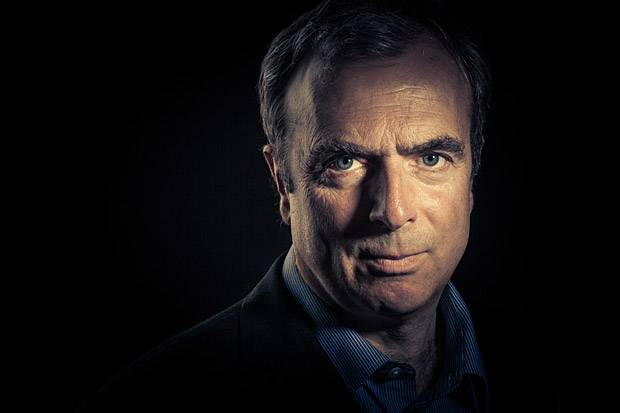
What hasn’t yet been averted is the crisis of finding a replacement for Hitchens. And it is here that I finally turn to my subject. His brother Peter famously wrote a book called The Rage Against God: How Atheism Led Me to Faith. I took it up after hearing Fr. Barron’s appraisal of it as a worthy successor (and more spiritually sound replacement) for the work of Peter’s brother. It is a taxing volume. While it at times strays into actual reflection on the question of faith, as in the episode where Peter encounters a painting of the souls of the dead being sent down to hell, the book spends far too long summarizing the history and decline of England and I had to put it aside out of boredom.
The tone of the volume became understandable only after I viewed a more recent interview with Peter on the question of his intellectual project and his legacy. “I want this country to have an accurate obituary when it dies, won’t be long now.” Peter told Chat Politics. “For the most part I regard myself as recording the collapse of a great civilization, the willful voluntary suicidal collapse of a great civilization. I think someday, someone might be interested to find out how it was that one of the happiest, freest, most orderly societies in human history did away with itself.”
Peter’s most recent book, for which he expected to be ridiculed and rejected (somewhat of a self-fulfilling prophecy) is The War We Never Fought: The British Establishment’s Surrender to Drugs. He argues against the decriminalization of drugs in England, and gives the history of the government’s surrender to the cannabis lobby. Since the book’s publication, he has claimed the de facto legalization of drugs as the reason for England’s demise.
This project is completely wrong-headed. Some time ago, I chanced upon a conversation with a priest about the collegiate triple crown of over-indulgence: sex, drugs and booze. Your average college male will stumble into these roadblocks inevitably in their time. What the priest told me was that the drugs or the sex or the booze are not the problem, just as a pale complexion and a flop sweat aren’t the problem, the heart attack is. Both Christopher Hitchens and G.K. Chesterton warned against drinking while one is sad. Sadness then, came before the drink. To ask why a man is drinking or taking drugs will lead to the fact that he is sad. What then made him sad? My priest friend assured me that if the source of sadness can be eliminated, the drugs and the booze and the sex will fade away, just as paleness fades into color after CPR and aspirin. To point out that a country has surrendered to drugs is to point out that a country desperately wants to get out of its own head. That probably is because even the head is still too close to that part that is really sick- the heart.
Oddly enough, Chat Politics did ask Peter about another lobby which has set its sights on the core of the civilization. His response is cringe-worthy.
Same-sex marriage is such a trivial issue I really can’t be bothered with it. Engaging in it is simply a way of getting yourself falsely portrayed as a bigot who hates homosexuals. I say to Christian friends who get involved in campaigns against it, ‘You’re wasting your time. You’re making fools of yourselves. You will be beaten. It doesn’t really matter and at the end you’ll have gained nothing.’
With his obvious skill for rhetoric as exhibited during his numerous appearances on the BBC program ‘Question Time,’ Peter would be a powerful voice for the position that one needn’t hate homosexuals while being against gay marriage. He certainly wouldn’t fall into the Phil Robertson trap and say, “It seems like, to me, a vagina—as a man—would be more desirable than a man’s anus. That’s just me. I’m just thinking: There’s more there! She’s got more to offer.”
What Phil needs to learn is the value of poetry. To describe a woman biblically, one needn’t even refer to reproductive organs. The Song of Songs refers to a woman’s hair as like a flock of goats frisking, down the slopes of Gilead. “Thy lips, O my spouse, drop as the honeycomb: honey and milk are under thy tongue; and the smell of thy garments is like the smell of Lebanon.” Phil’s American problem is that he lacks a poetic sense of the beautiful. Peter’s English problem is that he has a poetic sense only of decay. On ‘Question Time,’ Peter recited the following poem by A.E. Housman:
Into my heart an air that kills
From Yon far Country blows
What are those blue remembered hills,
What spires, what farms are those?
That is the land of lost content,
I see it shining plain,
The happy highways where I went
And cannot come again.
There is something to be said for losing a battle yet winning the war. The battle on that particular hill off Golgatha was lost so that the war against death itself might be won. Peter’s error is the inversion of this common sense strategy. He has given up the war for God and the family to fight the battle for the rejection of weed. It is foolish to think that a great society may be preserved without a spirited defense of the smallest and most important part of its foundation. Legalizing drugs crumbles the facade. Redefining marriage crumbles the edifice. American conservatives, to their credit, have recognized the centrality of marriage and the family to the life of a society. What we can learn from Peter Hitchens is that no matter how stark our surroundings may seem, no matter how hopeless our cause may appear, we cannot resign ourselves to cataloging collapse. Ours is a calling to build and rebuild.
At the end of his memoir, Christopher Hitchens shares a small letter given to his mother Yvonne concerning the younger Peter.
At Mount House Peter was called before Mr. Wortham for some misdemeanor and said to him: “You may be in command now but you will never quell the fires within me.” (You probably know this tale.) We have all dined out on it for years… Whenever I see or hear him on TV or radio I am aware that that passionate little boy was the father of the man.
Saint Paul confessed that he had put off childish ways in his old age. Peter hasn’t put off the sharpness of a contrarian in favor of the saltiness of the Christian. Salt kills weeds, but also improves flavor. Even if I accepted that England was dying, or that America was dying, the salt of Christianity can still transform. Every steak I have eaten has been a dead cow, but thanks to Morton’s most popular condiment, the best parts were resurrected.
No comments yet


Leave a Reply