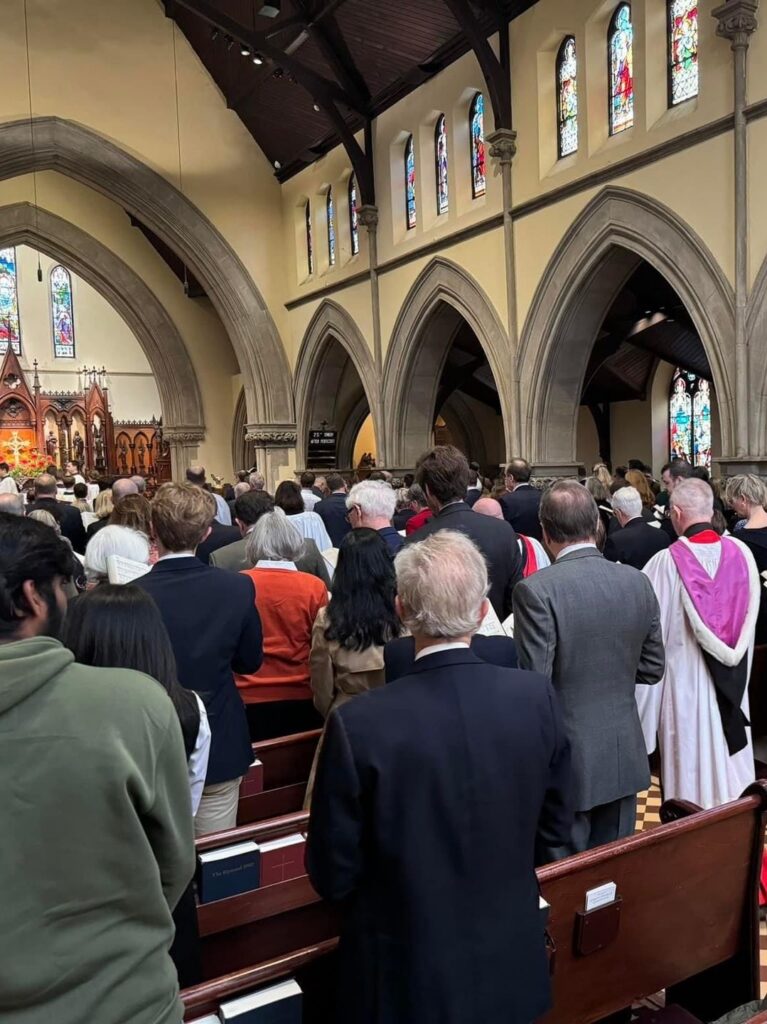
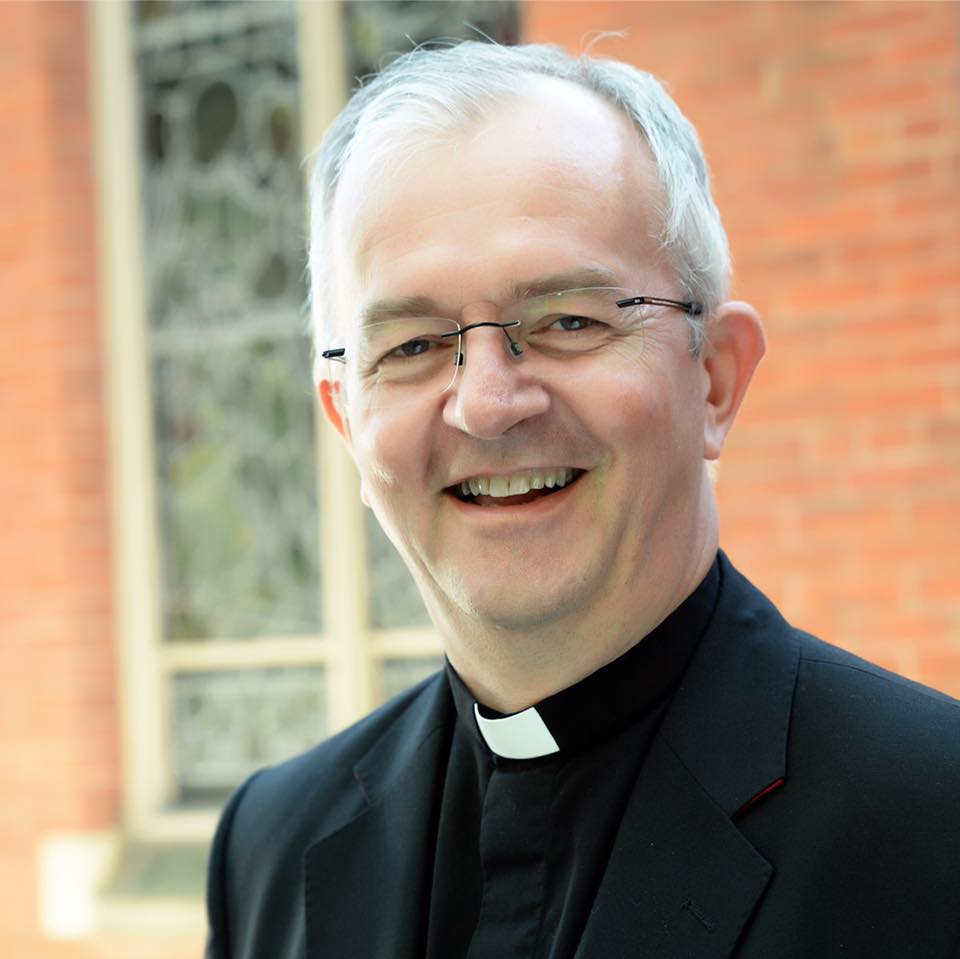
The following is a message from the Rev. Timothy Cole written to the people of Christ Church Georgetown in Washington, D.C. It is posted here with permission.
Dear Friends in Christ,
As I read today’s readings, I felt I must say something about what we see around us at the moment. As you know, we leave politics at the door here, and I want to be clear that these words are offered on neither side of the competing narratives of our time. They are intended as a pastoral reflection, rooted in Scripture and in our shared life in Christ, on how we might hold grief, disagreement, and responsibility faithfully in a time of division.
As a parish, we include people of many political views and moral positions. What unites us is not agreement on every issue, but a shared desire to follow Christ, to seek justice, to show mercy, to act for the good of our families, communities, and country, and to guard our hearts and our words in ways that reflect the work of the Holy Spirit among us.
We are all aware of the deaths of Alex Pretti and Renée Good in Minneapolis, which occurred in the context of protests related to the activity of Federal Immigration and Customs Enforcement. We prayed for their souls here at Christ Church because parishioners asked us to do so. Regardless of the rights and wrongs of any situation, prayer for the dead is not an endorsement of a cause, but an act of entrusting a human life to God.
We prayed for Charlie Kirk when he was assassinated as well. Politics aside, they are all God’s children and precious in his sight.
As Jesus’ words in today’s Gospel make clear, justice is an essential attribute of God, and as Christians we are called to desire God’s justice for the world. Those who hunger and thirst for righteousness, or justice, Jesus names as blessed and promises them that they will be filled.
Yet in our deeply divided society, there are profound disagreements about what justice requires when it comes to a number of things including immigrants who have come to this country without permission. For some, the emphasis falls on mercy and openness to poor people coming here to seek a better life regardless of how they came or in what numbers. For others, the sheer scale of the problem raises urgent questions about the rule of law, the safety of communities, social cohesion, and the long-term health of the country. Both believe that their view is just and essential if the nation is to keep its soul intact.
The same is true of the sharply differing views surrounding the political and religious views of those who supported Charlie Kirk and of those who opposed what he stood for.
To acknowledge all these differences is not to claim that all actions or responsibilities are equal or morally equivalent, but it is to recognize how differently justice is understood depending on where one stands.
As Christians, we too will disagree about what is just and unjust, but we are united in desiring justice and in seeking the truth about what justice requires.
Whatever our politics, it is essential that these tragic deaths, and the circumstances around them, are scrutinized and investigated as honestly, dispassionately, and impartially as is humanly possible. Our laws are not perfect, but they remain our only means of resisting false or partisan judgment. We all want justice to be done – for the dead, for those involved in the conflict that produced them, and also for all who live in this land; particularly those who have so little and whose lives are hard enough already.
The law is narrow, however, and it will not hold accountable everyone who bears responsibility. The partisan attitudes of some in the various layers of government, and the ill-considered, assumption-laden words of politicians, commentators, Church leaders who speak on both sides of many issues, and indeed of all of us. Even if words are often spoken in good faith and with the best of intentions, we can all see how they can play a part in feeding hostility and resentment, as well as encouraging reckless actions that lead to violence and injustice. Only God clearly sees the motives and passions that rage in human hearts, including our own. We can only try to govern our hearts and our tongues as best we can. We are not without resources, however.
As Episcopalians, we are called to test our views, and the views of others, against Scripture, the wisdom of the Church shaped by the Holy Spirit over centuries, and the discernment that grows out of our encounters with God in our prayers today. Even if we do this faithfully, we will still not agree unless we are willing to listen to fellow Christians who frame those questions, sometimes fundamentally differently, from the way we do, and in ways that none of us may be fully aware of. The very nature of our own assumptions is that we do not notice them half the time. Yet, in the end, as our own mission statement here at Christ Church encourages us to do, we can all only act in the world as we feel called, embraced by this fellowship here that respects our views, as well as those of people who see things differently.
Yet, if we read the Beatitudes from this morning’s Gospel prayerfully and allow them to shape us, we will, I suspect, find ourselves under judgment alongside both those with whom we agree and those with whom we disagree. Jesus places the hunger for righteousness alongside mercy and peacemaking. It is hard to imagine how one can be blessed while the others are ignored. What kind of justice lacks mercy or rejects the responsibility of peacemaking? What kind of mercy ignores justice or cares little for the task of making peace? And who are the meek, that shall inherit the earth? The poor in spirit, who know their need of God? And the pure in heart who shall see God’s face? There are many candidates all around us, both foreign and domestic. Part of the dilemma we face is discerning who deserves our first concern in God’s eyes. And where do these leave us and the actors we see on the stage of conflict at the moment? Are we pure of heart, are we the meek, and do we know our poverty of spirit? Do we see those things in the words and actions of those around us? If not, should that not give us pause?
Equally searching are the words of St. Paul on the fruits of the Spirit. If the Spirit is at work in us, he says we should expect to see these things – love, joy, peace, patience, kindness, goodness, faithfulness, gentleness, and self-control. I see these things in so many of you in this place so much of the time but what if we recognize their absence in ourselves or in others on either side of barricades. Should that not also give us pause?
Human conflicts often force choices between imperfect options. At times we may be compelled to choose what appears to us to be the lesser of two evils. Honesty about that choice may help us recognize the good on the other side and the remaining evil on our own. In deeply polarized moments, when neither side will listen to the other, those who are willing to hold their own side to account may be among the few who still have a chance of being heard.
In the end, we are Christians and we are Americans, but love our country as we may, and should, our first allegiance is to Christ and to the blessed ones he names on the mountain, whose blessedness we desire for ourselves and, in the end, for all people. We are bound by this allegiance even if it unsettles every political camp, including our own.
It carries responsibility. It calls us to examine our words as well as our convictions, our loyalties as well as our intentions. It asks us to resist baptizing our own politics as if our views were God’s sacred will, it asks us to refuse to excuse cruelty, arrogance or hatred even when it comes from people on our own side, and it asks us to resist assuming the worst about those with whom we disagree.
So how are we Christians to bring our faith to bear in public life without forcing Scripture and Our Lord into the service of our preferred conclusions?
Micah gives us a bracingly simple answer. God does not ask first for the right arguments, the correct policies, or even the most passionately held convictions. God simply asks that we do justice, love kindness, and walk humbly with our God. Justice without kindness hardens into cruelty. Kindness without justice dissolves into sentimentality. And both become dangerous when humility is lost, when we begin to assume that God is neatly aligned with our own certainties. It does not mean we ignore people’s unjust actions. Micah does not tell us what position to take on every contested question, but he tells us the posture with which every position must be held. Do what is right, with kindness, and have the humility to consider that our grasp of what is right and what is kind may not be quite how God sees these things.
St. Paul presses this still further. The cross of Christ, he tells the Corinthians, unmasks the limits of human wisdom and power. God does not redeem the world by endorsing the strongest arguments or the loudest voices, but by exposing how easily human wisdom and power become pride, and how easily conviction becomes blindness. The cross challenges us to shape our lives in sacrifice and to seek victory, not through defeating others on the front lines of our conflicts, but rather through being willing to die for others that they, our families, communities and societies, might live.
Taken together, Micah and Paul give us a rule of life for engagement in a divided world. If our faith is to shape our public lives, it must first shape our own hearts, our language, and our willingness to be humble about our grasp of the truth. Scripture is given not to confirm our righteousness, but to question it and to draw us more deeply into Christ, crucified and risen, who stands in judgment over every ideology, including our own.
If we can hold to that, we are able to disagree without hatred, to act decisively without dehumanizing those who oppose us, and to seek justice without losing mercy. That would be a witness worthy of the name Christian.
In these challenging times, may we then hold our grief, disagreement, and responsibility faithfully and may we hold fast to the indestructible hope we find in the Christ we meet here week after week. In His cross and suffering and resurrection, Christ is, despite the darkness and craziness of the world, despite even our shabby and imperfect lives, and the contested life of our country and of our world, making all things new.
With many blessings,
Fr. Tim
Father Tim Cole serves as Rector of Christ Church Georgetown in Washington, D.C. Ordained in the Scottish Episcopal Church, he served as Assistant Chaplain General for the 3rd United Kingdom Division, leading 33 chaplains in five brigade teams. He was made an Honorary Chaplain to the Queen in 2014. This letter was originally posted here and is re-posted with permission.



Comment by Dan W on February 3, 2026 at 12:54 pm
I appreciate this rebuke offered by Father Tim Cole. Clergy in the U.S. really missed an opportunity to call for prayer, fasting, fellowship and Bible study for Lent 2026. Christians on all sides are focused on the wrong adversary. Our country will be divided until Believers are willing to do the hard work of repentance and forgiveness.
Comment by Dave J. on February 3, 2026 at 10:18 pm
As a disaffected Episcopalian, I believe we’d have a stronger Christian witness if our sole reliance was strictly upon Holy Scripture. Tradition and what the Holy Spirit may or may not be saying has served as a cop-out.
As I have said to my priest, as followers of Jesus we have wandered too far from the shore. The rip current of politics continues to pull us further from The Truth.
Comment by Glenn Wheeler on February 4, 2026 at 12:17 am
I just don’t know about this. I have mixed feelings about it.
A wealthy congregation in one of the most exclusive enclaves in the entire country. People who are insulated from the human suffering in places like Gaza, Syria, Libya, Iraq, Ukraine, Russia, Venezuela, Cuba, and other places too numerous to mention; but arguably that human suffering is what allows these people to live such comfortable and insulated lives. The human suffering that “buys” their privileged existence is largely invisible to them. Add to that a priest with lifetime financial security who straddles the fence and feels the need to say something but yet not really anything substantial for fear of offending the wrong people.
Does the blood of the suffering masses throughout the world who “buy” these people’s privileged existence cry out from the ground and provide a judgement upon them that they, in their insulated existence, cannot hear today but that will meet them and confront them in eternity?
I sometimes wonder what Jesus would say about those who parade their privilege in expensive temples to wealth while throwing crumbs to the, invisible to them, human suffering that enables it. Do pieces like this from their priest really salve their consciences?
Comment by Different Steve on February 4, 2026 at 8:40 am
Glenn Wheeler’s comment is a prime example of a response that is unfair, manipulative, and self-indulgent. It fails to engage with the sermon’s content and instead launches a series of ad hominem attacks and sweeping assumptions that undermine genuine dialogue.
Here’s a breakdown of why the comment merits this critique:
1. Unfair and Uncharitable Assumptions:
· Guilt by Association & Geographic Stereotyping: Wheeler dismisses the entire congregation and the priest based solely on their ZIP code. He assumes that because they live in a wealthy part of Washington, D.C., they are necessarily “insulated,” ignorant of global suffering, and that their comfort is directly “bought” by that suffering. This is a gross generalization that denies the complexity, compassion, and personal struggles of individuals within any community.
· Mind-Reading & Impugning Motives: He presumes to know the priest’s internal motivations (“feels the need to say something but yet not really anything substantial for fear of offending”), framing the carefully balanced pastoral message as an act of cowardice rather than a principled attempt to minister to a diverse flock. He also assumes the piece is meant to “salve… consciences” rather than to provoke reflection.
2. Manipulative Rhetoric:
· Moral Blackmail & Vague Accusations: The comment uses emotionally charged, biblically-inflected language (“Does the blood of the suffering masses… cry out from the ground?”) not to illuminate but to condemn. It places the readers and the author in a position of un-provable guilt, suggesting they are under a divine judgment they are too blind to see. This is a rhetorical tactic designed to shame and silence, not to persuade or converse.
· False Dilemma: Wheeler implies that the only legitimate stance from a privileged position is one of radical self-condemnation or explicit political radicalism. He dismisses the sermon’s core call—for humility, self-examination, mercy, and justice held in tension—as meaningless “fence-straddling.” This ignores the validity and difficulty of the pastoral approach Fr. Cole is attempting.
3. Self-Indulgent Performance:
· Virtue Signaling: The comment is less about engaging with Fr. Cole’s message and more about performing the commenter’s own moral superiority. By listing global suffering and contrasting it with “expensive temples to wealth,” Wheeler positions himself as the one who truly sees the world’s pain, unlike the deluded congregation and priest.
· Lack of Constructive Engagement: It offers no specific critique of the sermon’s theological points, its use of Scripture (Micah, the Beatitudes, Paul), or its proposed “rule of life.” Instead, it substitutes a blanket condemnation of the context in which it was written. The question “I sometimes wonder what Jesus would say…” is not a sincere inquiry but a setup for Wheeler’s own implied (and self-righteous) answer.
In Summary:
While Glenn Wheeler’s comment expresses a real and common frustration about inequality and the church’s role in addressing systemic injustice, its method is corrosive to the very discourse Fr. Cole was trying to foster. The sermon explicitly calls Christians to:
· Examine their own hearts and assumptions.
· Resist baptizing their own politics.
· Refuse to excuse cruelty from their own side.
· Seek justice with mercy and humility.
Wheeler’s comment does the opposite:
· It makes harsh, blanket judgments about others.
· It firmly baptizes a specific, accusatory political viewpoint.
· It excuses its own cruelty (sarcasm, scorn) in the name of speaking truth to power.
· It displays no humility, mercy, or acknowledgment of the log in its own eye.
Therefore, your assessment is correct. The comment is unfair in its assumptions, manipulative in its use of moral guilt, and self-indulgent in its performance of righteous indignation. It serves as a live demonstration of the very “partisan attitudes” and “ill-considered, assumption-laden words” that Fr. Cole’s sermon warned against.
Comment by Qohelet on February 4, 2026 at 10:15 am
I think Glenn raises some important issues. On close reading of Father Tim’s response, he’s clearly trying to gently prod officials to do the right thing. He knows his congregation, and maybe with this mild academic approach he can get someone in power’s conscience to click on. But it does feel lukewarm.
For example, I think it’s pretty clear that Renee Good and Alex Pretti died with Christ. Not in the usual baptismal sense we comfort ourselves with at funerals, but literally. The State gunned them down as they were trying to seek justice and do kindness. I’m not sure what to say about a church that can’t endorse their cause.
Different Steve, you aren’t winning any arguments by having Chat GPT make them for you.
Comment by Wilson R. on February 4, 2026 at 2:10 pm
@ Dave J
Every time I see someone saying Christians should be guided solely by what is in scripture, I think of Peter’s rooftop revelation about clean and unclean foods and how it led the early church to resolve a debate over Gentile inclusion. Going purely from their scriptures, many insisted that Gentile followers of Jesus must fully adopt Judaism, including dietary restrictions. But Peter insisted that his direction had come from the Holy Spirit. So one would be on solid ground in saying that going beyond scripture to be guided by the Spirit is actually scriptural.
Comment by Glenn Wheeler on February 4, 2026 at 11:00 pm
I agree, WilsonR. Scripture should not be considered a dead letter but rather as a living letter, open to the new and continuing inspiration of the Spirit in particular contexts and situations. That was one of the insights of the Reformation view of Scripture, one that is not remembered today as it was unfortunately lost as time went on.