The Catholic Church has an influencer problem. Evangelism, long the realm of priests and bishops, has become the domain of a lay community of commentators, apologists, and activists who communicate the Church’s teaching to digital masses. In some cases, this benefits the faith. Many today credit their conversion to engagement with apologetic materials online.
Yet there is also peril in entrusting evangelism to the internet laity. Without ecclesial input, viewers can’t discern between personal opinion and dogmatic teaching. Even the Church’s most dearly held beliefs are left open to interpretation without an institutional check.
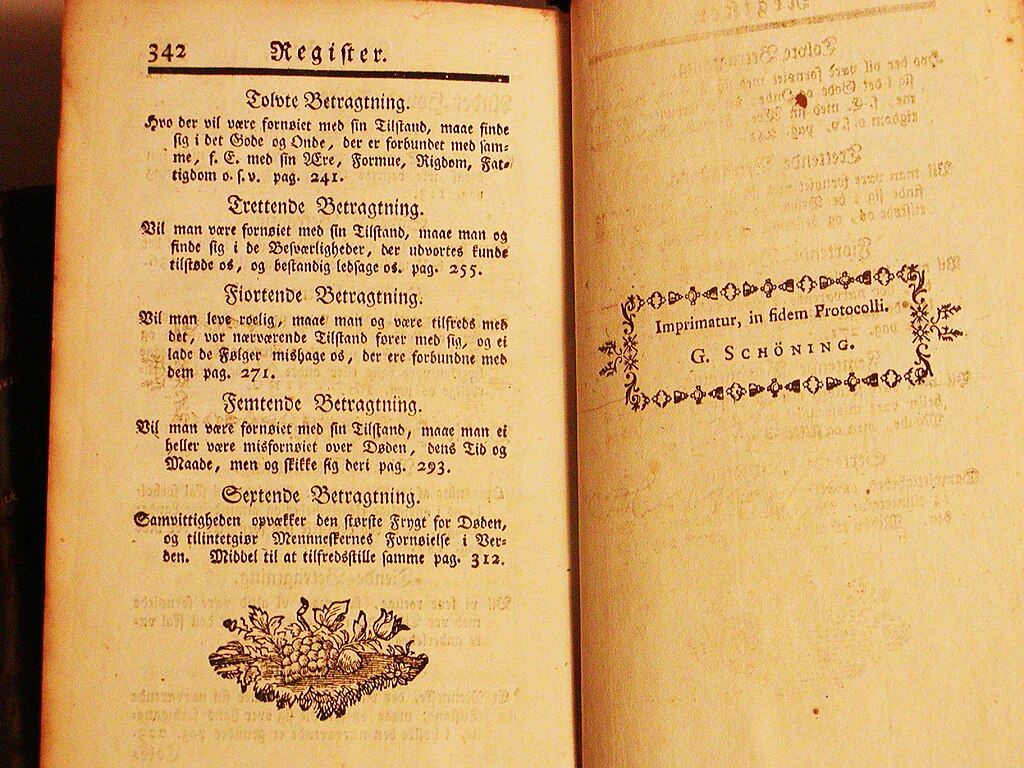
As the influencer market grows, some Catholic influencers have also tied their apologetics work to secular outlets, like Pints with Aquinas’ Matt Fradd, now affiliated with Ben Shapiro’s Daily Wire, straining the distinction between religious and generally conservative political content, a potential impediment to evangelization. To address the proliferation of Catholic content online, bishops should consider expanding the scope of the imprimatur.
The imprimatur, which comes from the Latin “let it be written,” refers to the stamp of approval that bishops can place on books, indicating that the text does not contain moral or doctrinal errors. As the Canon Law reads, the bishops have the right to review “writings to be published by the Christian faithful which touch upon faith or morals be submitted to their judgment and have the duty and right to condemn writings which harm correct faith or good morals.” The bishops are also permitted to appoint deputies, called censors, either priests or laypeople, to do this work on their behalf in their diocese. When a censor provides this distinction, it is called nihil obstat, “nothing stands in the way,” also indicating that nothing in the text violates Catholic moral or theological teaching.
Extending the imprimatur to digital materials has been experimented with over the past few decades. In the early 2010s, Bishop Kevin Rhoades of Fort Wayne-South Bend approved an app, “Confession: A Roman Catholic App,” that offered materials to help examine one’s conscience for Confession. Another app, iMissal, which gives users access to daily liturgical readings, has also received an imprimatur from a member of the hierarchy.
Yet the imprimatur has faced pushback since the Second Vatican Council, with some dismissing it as overly censorious or arguing there are too many Catholic texts for bishops to keep up with. The internet has only worsened this: for each Catholic book published in a given diocese, there are likely hundreds of videos, interviews, and reaction clips. Ironically, this is why the imprimatur is needed now more than ever. If bishops are overwhelmed by content and unable to sift out the most worthwhile materials, how much more so is the laity? Bishops, as teachers of the faith, must help the faithful avoid error or moral laxity. By extending the imprimatur to digital content, bishops can better distinguish valuable resources, making it easier for the faithful to find what benefits them and avoid what doesn’t.
Expanding this somewhat arcane practice would require bishops to change how they exercise their office, but that might be positive. Few U.S. dioceses employ censors to review texts. As the synodal movement seeks new ways for the faithful to participate in Church life and administration, perhaps the censor could be revived to increase engagement among the sober-minded, theologically orthodox laity, of course, under the bishop’s guidance. Canon Law also states the censor must give “his or her opinion in writing” on reviewed texts. For those seeking greater opportunities for women in the Church, the censorate seems a natural fit, as it is open to women by nature.
The Church has always known that words matter and that the content one takes in has profound implications for the state of the soul. In a world where platforms and personalities increasingly mediate Catholic teaching, the imprimatur offers a simple act of pastoral care: a reliable marker of fidelity amid the noise.
More from IRD:

Comment by David on December 24, 2025 at 7:36 am
We are entering the realm of AI and virtual bishops could review webpages and issue Nihil Obstats.
Comment by Tim Mc on December 24, 2025 at 9:28 am
The Protestant Churches don’t have this and maybe that is why there are thousands of different denominations of Protestant Churches, if you count the independent churches.
Both Protestant and Catholic churches can become man centered, with man made up rules.
We tend to forget how simple, The Way was, in the beginning. Yet so difficult to change ourselves and follow in His footsteps.
John 6:53 So Jesus said to them, ‘Very truly, I tell you, unless you eat the flesh of the Son of Man and drink his blood, you have no life in you. 54 Those who eat my flesh and drink my blood have eternal life, and I will raise them up on the last day; 55 for my flesh is true food and my blood is true drink. 56 Those who eat my flesh and drink my blood abide in me, and I in them. 57 Just as the living Father sent me, and I live because of the Father, so whoever eats me will live because of me.
Most Protestants don’t believe this and neither do many of the Catholics, according to research polls.
John 6:66 From this time many of his disciples turned back and no longer followed him.
Interesting isn’t it, 666, those who no longer believe.
Comment by Glenn Wheeler on December 25, 2025 at 9:03 am
If the UMC had had that, it would have stamped everything put out by the less-leftists as “doctrinally unsound.”
I have about as much faith in these Catholic bishops to know truth from error as I have in U. S. politicians to do what’s best for America.
Just keep them away from your 10-year old sons…
Comment by Qohelet on December 25, 2025 at 10:57 am
@ Wyatt Flicker
This is an interesting idea. I wonder if it’s time to invert the imprimatur though, so that it’s not a declaration of nihil obstat and rather an affirmation of “haec est via” or “this is the way” by an individual bishop.
The Catholic Church has always been a many handed organization, and sometimes the many hands of the organization struggle against one another. It might be more helpful to have individual bishops endorse texts rather than simply declare them error free.
@Glenn
If a man divorces his wife, does he continue to control her direction?
If Global Methodists wanted to continue to lecture United Methodists about our values and beliefs, maybe they shouldn’t have quit en masse. Those of us still in the church are in charge of our vision, not our external critics.
Comment by Glenn Wheeler on December 26, 2025 at 12:12 am
Qohelet,
Don’t misunderstand. I’m not a part of or a supporter of either Global or UMC. I’m not saying that I support Global’s present positions. In fact I certainly do not support their positions.
Just wait 15 years. By then, Global will affirm and support the same positions you have today. They’ll come around to your positions, it will just take them a little longer, but they’ll come around. They always do. That’s the thing about American Christianity… it’s so predictable. They believe nothing; rather, they take whatever position is current in society. It just takes some longer to come around than others.
Comment by Qohelet on December 26, 2025 at 10:17 pm
I’m not quite as nihilistic about these churches… for a long time when you thought Methodist you thought “oh that’s the church with the….” (insert essential community service like soup kitchen, food pantry, clothing closet, AA group) not to mention UMCOR or in the Indian missionary conference things like language preservation.
For me the great tragedy of the divorce has been all the wasted effort, money, and time over the question of who would God exclude. Jesus’s ministry to those on the margins answers that question. But at the end of the day, God had bigger plans for us and maybe now we can all get back to them. Reconciliation might come through our working together on disaster relief or feeding the hungry.
Comment by Glenn Wheeler on December 27, 2025 at 12:43 am
Qohelet,
God did not incarnate on earth, suffer and die, and rise from the dead in order to get people to work in disaster relief and to aid the hungry.
But of course, neither did He do all that to condemn and exclude people , either.
Comment by Qohelet on December 28, 2025 at 10:25 am
Glenn, I’m pretty sure He did!
Matthew 25 is obviously the place that it says this directly, but the whole of Jesus’s ministry seems to send the message that there’s no one who doesn’t matter to God, so we’d better not leave anyone behind.
Comment by Glenn Wheeler on December 29, 2025 at 12:13 am
Qohelet,
Go back and read my previous comment. Take a minute and think about it .
By your response “I’m pretty sure He did,” are you stating that you believe Jesus came to condemn and exclude people?
Sure seems like that’s what you’re saying.