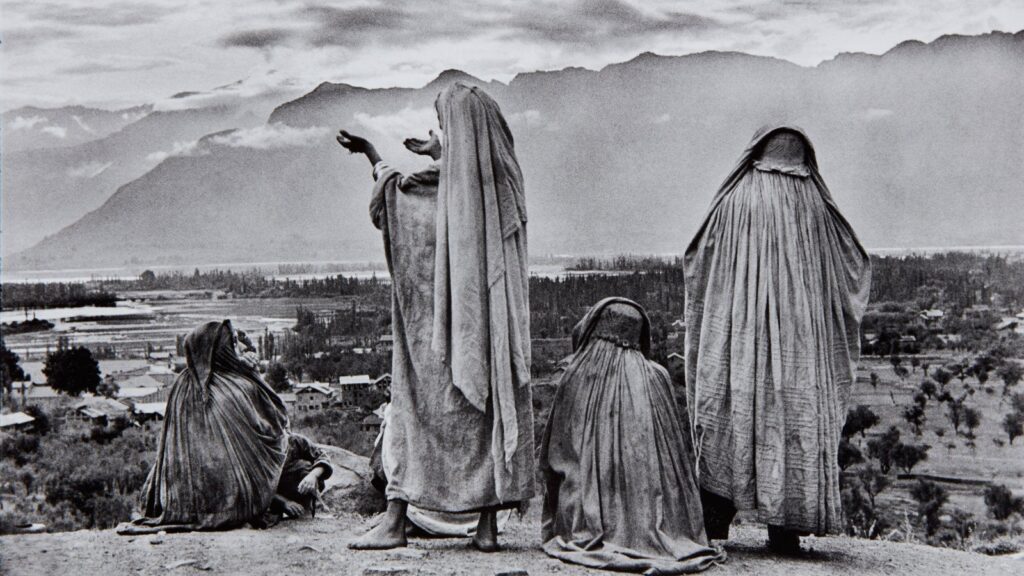

In Luke 18, Jesus tells the parable of a persistent widow pleading her case before a powerful judge. Her request was clear: “Grant me justice against my adversary.” (Luke 18:3) A story about faith, perseverance, and justice, we should take inspiration from it to pray and advocate for anyone facing religious persecution, regardless of beliefs.
At the time when Jesus told this parable, judges were meant to be impartial and yield to God for ultimate judgment. Jewish law even demanded special protection of widows. Yet the judge here was not only unjust, but worse— he did not fear God and thus continuously ignored the widow’s request. That was until one day, when her consistency, or nagging, brought about a result. The judge relented: “Though I neither fear God nor respect man, 5 yet because this widow keeps bothering me, I will give her justice, so that she will not beat me down by her continual coming!” (Luke 18:4-5)
Though largely about persistence, Jesus also told this parable to speak about God’s listening ear (and just response) to the requests of those who are persistent in their plea to him. It highlights the power of personal, and collective, prayer.
This kind of bold commitment is needed as we go before our Righteous Judge today in prayer in order to confront global persecution as it threatens hundreds of millions of people, each of whom risk violence, imprisonment, or exile on a daily basis because of their faith.
And Christians Against All Persecution (CAAP) Network exists precisely to help foster this kind of shared commitment to prayer, encouraging believers of our responsibility in prayer and advocacy. More specifically, that it must not be limited to fellow believers alone but should extend to all people of faith who suffer for their beliefs. When we practice this kind of obedience, we reflect the love, mercy, and justice of the God who made every person in His image.
Admittedly, it can be tempting for us as believers to narrow our circle of concern only to those who share our faith. Indeed, it is not wrong. After all, Galatians 6 calls us to care especially for “the household of faith.” But the Gospel widens our perspective beyond the four walls of our churches. Jesus taught His disciples to love their enemies, pray for those who persecute them, and recognize the dignity of the Samaritan, the foreigner, and the stranger. Christ’s command to “love your neighbor” does not have geographical or religious boundaries. It is a call to love and serve all.
Moreover, when we do this, we are making a profound theological statement: human dignity is universal because it is God-given. And this conviction does not dilute our faith. In fact, it deepens it. To pray for a persecuted Yazidi, Baha’i, Jew, or Uyghur Muslim—to name only a few—embodies the compassion of Christ. Yes Christ, who healed the Roman centurion’s servant, who spoke with the Samaritan woman at the well, and who defended the woman caught in adultery.
To encourage Christians to persistent prayer and advocacy for not only our persecuted brothers and sisters but also their neighbors who suffer, we are marking “Day of Prayer for All the Persecuted” on Saturday, November 1st. The goal is simple: inspire both the American and global church to action, understanding persecution in its various contexts through theological and practical lenses. Notably, the following day, Sunday the 2nd, is the globally recognized International Day of Prayer for the Persecuted Church (IDOP). Together then, it will become a weekend focused on all the persecuted.
Indeed, in a world increasingly divided by ideology and identity, we can show a new movement of Christians praying for persecuted people of all religious backgrounds. Doing so demonstrates a countercultural witness, affirming that our concern for religious freedom is not only about evangelism, but also dignity, service, and love.
Like the widow from Jesus’ parable, persistent prayer is never passive. It is a clear stance against injustice. Thus, interceding for the persecuted should become part of our daily devotions, daily prayers, and especially our posture as a people who submit to a just, holy, and merciful God.
And in the same way faith without works is dead, prayer without advocacy risks becoming hollow. Advocacy is, in one way, the public face of prayer—the way our persistence manifests in our communities, legislatures, and international institutions. Thus, November 1st is only the beginning. We hope it will ignite faithful actions by local church communities in the year ahead.
At the end of the parable, Jesus articulates the difference between the unjust judge and God the Father: “And will not God bring about justice for his chosen ones, who cry out to him day and night? Will he keep putting them off? I tell you, he will see that they get justice, and quickly.” We serve a faithful, loving, just God who hears our pleas. Do we believe this?
Let us strive to be like the persistent widow who was tireless in prayer, steadfast in hope, and unyielding in her demand for justice. And let us do so not only for our own household of faith, but for all who bear the weight of persecution. This is a powerful way for us to reflect the heart of Christ. Christ, who came to serve, save, and redeem the world—all of it, everyone.
Emily A. Cole is a human rights lawyer focused on religious freedom advocacy and community engagement with law in Latin America and serves as the outreach coordinator for the Christians Against All Persecution (CAAP) Network. She also serves as a researcher for Pepperdine University’s Program on Global Faith and Inclusive Societies and co-chairs the new Latin America Working Group at the IRF Roundtable on the Hill. A former Fulbright scholarship recipient to Ecuador, she received her J.D. from the University of Wisconsin Law School and B.A. from Eastern University.
More from IRD:
Fear and Hope as Indian Christians Face Rising Persecution
Christian Leaders Urge State Department: Address India Christian Persecution
An Upsurge of Terror in Nigeria – Part I
No comments yet




Leave a Reply