
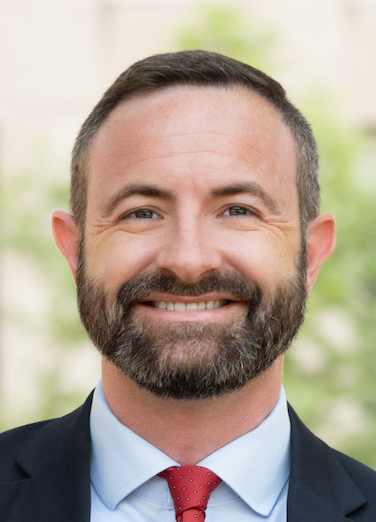
Last week at the national March for Life, I walked with an evangelical pastor co-leading a successful church plant. Raised in a United Methodist (now Global Methodist) congregation in Tennessee, this pastor chose to plant a non-denominational congregation in Washington, DC. The church is overwhelmingly composed of young, early career congregants. They rent space from a mainline Presbyterian church with a beautiful traditional building but a much smaller congregation.
Readers of this blog are familiar with Mark Tooley’s observation that large denominations, revisionist and orthodox, are seemingly locked in decline in the United States. Non-denominational Christianity is the only large religious category presently growing.
Even the vibrant Assemblies of God has plateaued with the noteworthy exception of some Spanish-language districts. The Presbyterian Church in America (a medium-size denomination) and my own Anglican Church in North America (a small denomination) report multi-year growth, but these are far smaller than the denominations of nationwide reach that are rapidly shedding members, such as the Southern Baptist Convention. There has also been recent buzz about Eastern Orthodoxy drawing young male converts, but, again, these converts nearly all seem to be from a small caste of highly educated post-Evangelicals amidst a pendulum swing in the opposite direction of (mostly functionally Baptist) non-denominational churches. It is an exception that proves the rule.
But not every non-denominational church is functionally Baptist. In a surprising development, a few even use Anglican liturgical materials, such as the Book of Common Prayer, in their worship. As denominations themselves decline, some denominational distinctives appear to be spreading outward to a larger number of practitioners. Evangelicals are encountering and using the ACNA’s 2019 Book of Common Prayer in a way that they might not have with the Episcopal Church’s 1928 and 1979 versions. Study and use of the ACNA catechism also appears to have spread beyond the denomination. Evangelical seminaries with Anglican studies tracks, such as Gordon-Conwell or Beeson Divinity School at Samford University, can expose students with backgrounds in other traditions to Anglican worship (IRD’s Sarah Carter wrote about this phenomenon at Wheaton College).
Anglican Roots
My Anglican friends will rightly point out that Anglicanism, by its very nature, requires the oversight of a bishop. Anglicans believe the Church universal to be a divinely chartered institution that has a corporate relationship with God; not merely a collection of persons with their own individual relationships with God.
The idea of a non-denominational Anglicanism isn’t new, however. Atlanta’s Church of the Apostles is among the more prominent with a congregation of more than 3,000. Founded in the late 1980s, it describes itself as “an independent non-denominational church with Anglican roots.”
Apostles has local governance, but also an organized vestry and practices infant baptism, characteristics that are less common, if not altogether rare, among most American nondenominational churches. Founding Pastor Dr. Michael Youssef was ordained in the Diocese of Sydney, Australia in 1977. Apostles’ website states that “We stand in the Anglican tradition, specifically in the pattern of church government as well as various practices of worship.”
Holy Trinity Church in McLean, Virginia outside of Washington, D.C. is a nondenominational church with Anglican elements. Founded in 2010 by Anglican clergy connected to Holy Trinity Brompton as an experimental project for planting a church centered around the Alpha Course, Holy Trinity’s statement of faith says that it is “an independent non-denominational church rooted in the teachings and traditions of the Church of England.” Notably, this is seen in how the church confesses “the historic faith of the Christian Church as expressed in the Nicene and Apostles Creeds and the 39 Articles of the Church of England.”
The church is sacramental, allows for the baptism of infants, and has an organized vestry.
“Our services include liturgical elements that harken back to our Anglican roots,” HTC’s website explains. “Yet, we are non-denominational and draw as heavily from contemporary praise & worship songs as we do from hymns.”
Spirit-Led
Christ Church at Grove Farm, outside of Sewickley, PA near Pittsburgh, is “an evangelical, non-denominational church with roots in the Anglican tradition evidenced by our adherence to the 39 Articles of Faith, the Apostles’ Creed, and the Nicene Creed.”
“These elements,” the church website explains, “not only align with Anglican beliefs but also connect us to the historic and global fellowship of believers.”
Much like HTC in Virginia, Christ Church has charismatic elements and services are “spirit-led.” The church emphasizes the primacy of scripture, as is customary among low-church Anglicans emphasizing traits of the English reformation.
Each of the churches above features at least one contemporary worship service, alongside evangelical staples such as small group ministry and a significant externally-facing community outreach component. Redeemer Church in La Mirada, CA, blends liturgical and free church styles. Churches are also taking Anglican characteristics outside of worship services: Redeemer offers spiritual directors.
Interestingly, Redeemer is associated with a baptistic group of churches (ASPIRE NETWORK) yet follows the liturgical calendar, a rarity among Evangelicals.
Separately, there are also more instances in recent years of ordained Anglican clergy serving at non-denominational churches. Sam Allbery, who serves as a Canon Theologian for an Anglican Church in North America diocese, is on staff at Immanuel Church in Nashville, TN, where Christianity Today Editor-in-Chief Russell Moore teaches.
A note of caution: just as I earlier observed that young male converts to Eastern Orthodoxy probably represent a small elite, I can identify a related pattern in the churches I’ve listed above. McLean and Sewickley are leafy, sought-after suburbs and Buckhead is among the most affluent communities in Atlanta. In short, there may be an educational or economic class aspect here, where those of significant means are more drawn to liturgical structure.
Non-denominational churches employing Anglican elements may spread beyond this, but I’m authoring this story to begin a conversation about what may be occurring, and wish to not overstate what could be a niche trend. Have you seen non-Anglican churches using Anglican materials or incorporating historic, liturgical practices into their worship? Let me know in the comments below.



Comment by Tim Ware on January 27, 2025 at 7:37 pm
In the past, it was mostly assumed that nondenominational churches would be contemporary, evangelical, or both. Today, however, more and more Christians are rejecting denominations, and that includes those people who prefer a more formal, liturgical service and who are not Evangelicals. Not everyone who leaves denominations is an Evangelical who wants to go to a stage performance church.
I know of nondenominational churches that have only formal, liturgical services. One in particular has a service that blends elements of Anglican and Orthodox traditions. The congregants come from many different denominational backgrounds as well as various socioeconomic backgrounds but for various reasons no longer wish to be part of institutional Christianity. My personal opinion is that there is great opportunity for churches like this, and I hope more are developed. Not many of them get started though, because conventional wisdom is that everything now “has” to be stage performance.
I guess it is a niche movement, but the way the denominations are declining, one could argue that they themselves are also niche. They just haven’t realized that yet.
Comment by Josh on January 27, 2025 at 7:45 pm
I went to one while in college at Union University in Jackson, TN. It is called Christ Community Church as self-labels as a “liturgical Baptist community.” Some of the professors from Union used to serve there. It was (still is I guess) Calvinistic in theology and some practices. The leaders were called “elders.” It sounds more Presbyterian but one of the elders went on to join the ACNA church in Jackson TN and eventually I think he became clergy.
These sorts of Anglo-Baptist churches do exist and, as you noted, they are mostly in places with colleges and affluent culture. In the rural and smaller cities, the main places you’ll find traces of Anglicanism are in Methodist churches.
The movement of younger folks towards a faith and worship that is more substantial has been going on for a long while. Revivalism lives on in the non-denominations that spring up, largely because of a very passionate pastor or team. They usually do not last much longer than their pastor though. I am a GMC pastor and when my churches were leaving the UMC, there was actual fear that we would go non-denominational. One guy remarked that he had noticed that the oldest and most long-running churches in the state were those that had oversight. He said, “I believe everyone needs a boss.” I would not call a bishop a “boss” but I get what he was saying. And agree.
A lot of this movement, probably the majority of it, away from revivalistic, Baptist life began during the Emerging/ emergent church thing. Sometimes folks lump it into one ball and call it a “bad thing” but really, it was a lot of us who were not satisfied with the showy, personality based, politically intertwined popular Christianity that was prevalent in the 90’s/ 2000’s. The rise of the internet gave us a place to talk and we found out that we were not alone. It eventually divided and spun off into different directions. Some went into the New Calvinism movement (which really fizzed and had some nastiness ala “Mars Hill” and stuff), some went into the progress Christianity bent and that, of course, was a “cloud without water” as Jude says. Lots of us just expanded our thinking through conversations, kept on following Jesus through it all – coming to the Table of the Lord, praying without ceasing, worshiping, ministering in the power and leading of the Holy Spirit, etc.
Some did try to create new communities that were simple and based around the Lord’s Table and the Apostle’s Creed. I was really interested in these back in the day. Most of them folded. Now, after 25 years plus in ministry, I see why. You have to have the nuts and bolts of order, organization and networking to keep it all together. It’s not “fun stuff” but it prevents abuse, “blow ups” and deterioration to a greater degree. All this commentary is probably more than you asked for but I hope I could provide some context for these sorts of churches and trends.
Comment by Will on January 27, 2025 at 10:10 pm
I think Eucharist Church in San Francisco hosts an Ash Wednesday service for Reality SF.
https://www.instagram.com/realitysf/p/C3T-MsANQn3/
Comment by Tim Mc on January 27, 2025 at 10:46 pm
The book to read is ‘Evangelicals on the Canterbury Trail’ by Robert Webber & Lester Ruth. Great book.
I used to go to a UMC church. But we did not disaffiliate, so about 35-40 of us left and started an independent church. We call ourselves Methodist. We follow a loose liturgical pattern. We say the creed, we sing the Glory Be, we have a responsive reading. We have a piano and sing two songs, we stand for the Gospel reading and say after, “The Word of God for the people of God”, and the response, “Thanks be to God.”
We have no pastor, so members take turns speaking. We have had 7 different speakers. When I speak, I have quoted from the Catechism of the Catholic Church and from the new Anglican Catechism ‘To be a Christian’.
I personally would love to be in an Anglican Church, but the closest one is 4 hours away. They have not made it to rural America.
As a side note an Anglican Priest, who now works for a large company in a town a few miles away, who I met at the old UMC church, joined the Roman Catholic church. He said the UMC and Episcopal Church had lost their way. Since no local Anglican church, he joined the Catholics.
Comment by Rev Dr Tom Russell on January 27, 2025 at 11:29 pm
I am an ACNA Pittsbugh priest and a cradle Episcopalian. I helped found and helped lead a Nashville non denom church that stated life as a C4SO plant. Today Westside Fellowship uses the BCP and is probably more Anglican than others.
Comment by Lunatic Instrumentals on January 28, 2025 at 11:23 am
It’s not advertised as such, but St. Andrews City Church (a plant that’s effectively under the thumb of none other than Steve Wood) is functionally a non-denom service with Anglican liturgical elements. The priest there is an Anglican convert from a local non-denom.
As someone who grew up Anglican it wasn’t for me, but it looks like it’s found its lane.
Comment by Dan on January 28, 2025 at 3:18 pm
I hope the other churches mentioned here are not like Church of the Apostles in Atlanta. While I like Dr. Youssef and agree with most of his sermons, it saddens me that his services contain no confession and absolution, no recitation of any of the three ancient creeds, and their Holy Communion seems more Baptist than Anglican.
For those seeking a liturgical home who are not denomination averse, may I put in a plug for my own denomination; the Lutheran Church – Missouri Synod. In my congregation, our contemporary worship service, while using contemporary music, still has an altar with cross and candles, the clergy vest in traditional albs and stoles, and the order of worship always contains confession and absolution, the Nicene or Apostles Creed, along with Holy Communion using traditional LCMS liturgy.
Comment by Tim Ware on January 29, 2025 at 12:14 am
This article, and the comments to it, made something clear to me…and that is that for many years, the denominations were successful in convincing people that they, and they alone, held the keys to the kingdom of heaven and that their services, and the elements therein, were the only true way.
But today, more and more people are rejecting that. There are, however, a few who still cling to it.
But the fact is that the denominations are dying, bleeding out. The left wing ones are the first to go, but the so-called conservative ones are not far behind.
The contemporary and stage performance churches, with their syrupy soft-rock love songs, are a dying gasp, a fad that will pass. Upon their eventual ashes will arise something worthy and valuable.
I’m excited for the future, to see what new things God is bringing about, after the fetters of denominationalism have been finally thrown off.
Comment by MJ on January 30, 2025 at 10:02 am
Interestingly, Church of the Apostles Atlanta was a mission of the Episcopal Diocese of Atlanta. It was not “founded” as non-denominational.
Comment by Jack Stapleton on January 30, 2025 at 10:40 am
Fascinating article! Over forty years ago, after being interviewed by an Episcopal college group for a role as Vicar for University Ministry and Associate Rector of the local Episcopal church, they reported back to the church’s campus ministry board that I was a) acceptably non-toxic and b) a Bapto-Catholic. I got the job. My rector was a former campus minister who went on, years later, to be the founding archbishop of the Anglican Church in North America. In the last 20 years, and in the past six since retiring, I’ve found a number of Baptist, evangelical, and/or charismatic pastors who may not be importing elements of Anglicanism into congregational worship, but who anchor their daily prayer practices in the Morning Office of the Book of Common Prayer (both the TEC 1979 and the ANCA 2019).
Comment by Fr Kevin Seaver on February 5, 2025 at 1:36 am
The Communion of Reformed Evangelical Churches (CREC) church that hosts my ACNA mission in Tokyo uses the Japanese version of the Book of Common Prayer for their weekly Eucharist (although bread and wine is distributed in single-serving portions to communicants at their seats) and CREC as a denomination recognizes the 39 Articles as a valid statement of faith. They’ve recently introduced vestments, and a dozen or so of their young adults faithfully attend the afternoon Anglican Eucharist I celebrate, complete with smells and bells.