The following keynote address and respondents were made at the IRD’s Carl F.H. Henry Conference on November 9, 2022 in Washington, D.C.
MARK TOOLEY: Good evening, everyone. I hope you are comfortably seated with your heavy order of d’oeuvres and appropriate drinks. We’re delighted that you could join us this evening, which should be the start of a very stimulating evening and day’s worth of conference. I am Mark Tooley, president of the Institute on Religion and Democracy. Welcome to all of you here with us physically and to those of you who are watching online for this gathering of reflection.
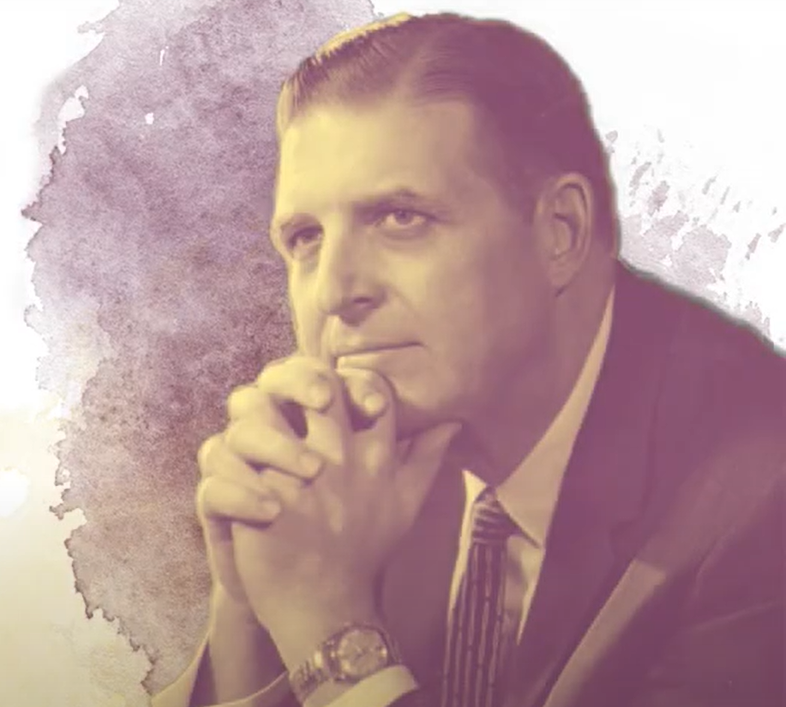
We are marking the 75th anniversary of the book by the great evangelical theologian Carl F.H. Henry, The Uneasy Conscience of Modern Fundamentalism. As all of you know. Carl Henry was one of evangelicalism’s greatest and most important theologians throughout the second half of the 20th century. He lived a long and active life and was one of the founders of our organization, the Institute on Religion and Democracy, on whose board he sat for 25 years, long enough for me to have met him several times in the 1990s. He was formidable until the very end. He was one of the great architects of our work. This conference will be reflecting on the state of evangelicalism 75 years after Henry’s lament and warning.
We want to thank our friends at the School of Public Policy at Pepperdine University for their support and partnership with us on the conference. And we’re grateful that this conference was organized by Joe Loconte, our Senior Fellow and a Distinguished Visiting Professor at Grove City College.
JOSEPH LOCONTE: Thank you, Mark, and thank you, everybody, for coming. And thank you, especially to those who traveled long distances to get here. Great to have you. We have a nice, intimate setting, which is going to allow for a real conversation.
If we are looking for models of Christian cultural leadership, we have one in Carl F.H. Henry. He was a remarkable example of what it means to be salt and light in our society. And it was precisely this obligation that moved Henry to warn fellow believers to change course. As Henry put it in The Uneasy Conscience, “for the first protracted period in its history, evangelical Christianity stands divorced from the great social reform movements. But there is no room here for a gospel that is indifferent to the needs of a total man, nor of the global man.”
That last phrase is worth repeating: “There is no room for a gospel that is indifferent to the needs of the total man, nor the global man.” That was 75 years ago. Well, our speaker tonight has taken those words to heart. She is not content with a narrow or punitive or pugilistic Christian faith—and there is a lot of that going around today, isn’t there?
Anne Snyder is the editor in chief of Comment magazine, which is far less interested in waging a culture war, and as you put it, Anne, and more interested in how we actually get down to the difficult work of being faithfully present in culture. And toward that end, Anne and her co-editor, Susannah Black, published in 2020 Breaking Ground: Charting Our Future in a Pandemic Year. This book is a remarkable collection of essays reflecting on some of the deepest questions we ask ourselves in moments of crisis. And what have the last two years been but crisis?
By bringing together, through the digital commons, dozens of thinkers and practitioners to seek answers rooted in the riches of the Christian tradition, Anne has performed an immense act of service: yes, service, because she has set an example of what it means to bear witness to the truths of the Gospel, against the storms of doubt and disillusionment in an age of rage. And, in doing so, Anne has drawn our attention to the Prince of Peace. And that is an achievement, I am certain, that Carl Henry would applaud. Let’s give Anne a warm welcome.
View Anne Snyder’s lecture and transcript here.
JOSEPH LOCONTE: Thanks very much, Anne. That was what I expected: an analysis that was penetrating, provocative and hopeful. And you gave us something like an evangelical version of Alexis de Tocqueville and American civil society.
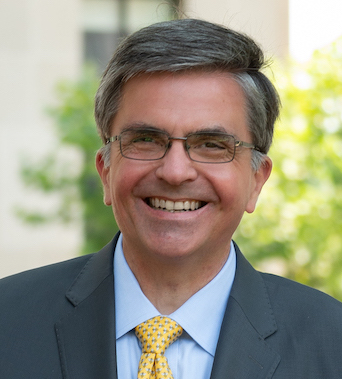
Well, I knew we were going to need at least a couple of respondents to your talk. And we have two wonderful gentlemen here, Thomas Kidd, research professor of church history at Midwestern Baptist Theological Seminary in Kansas City, a senior research fellow at Baylor University’s Institute for Studies of Religion. His books include Who is an Evangelical: The History of a Movement in Crisis, from Yale Press, and a book published earlier this year, Thomas Jefferson: A Biography of Spirit and Flesh. Also from Yale Press. I just ordered it today. I can’t wait to write a scathing review. Seriously, I know it’s going to be brilliant. We also have Jonathan Lehman joining us, the editorial director for Nine Marks, a ministry to equip church leaders with a biblical vision and practical resources for building healthy churches. Jonathan is also the author of the book How the Nations Rage: Rethinking Faith and Politics in a Divided Age.
THOMAS KIDD: Thank you, Joe. I really appreciate Anne’s survey of the landscape of those groups who were doing innovative work like that. One of my concerns about discussions about evangelicals is that they’re always keyed to politics. But there is always a lot more of that going on, especially within individual congregations. Unfortunately, it is of utterly no interest to the media. But the fact of the matter is that this engagement with civil society characterizes a lot of American evangelicalism and also world evangelicalism. So, just briefly, I’d like to make some observations about the dilemma of the church in our culture, especially with regards to politics and political engagement, but also broader cultural engagement. Anne, you have talked about what is the church supposed to be doing, those kinds of questions. And I looked again at the Westminster Confession of Faith to see what it said about this. What better place to start?
ANNE SNYDER: I can’t compete with that.
THOMAS KIDD: The Westminster Confession of Faith, as it relates to the church, is focused on the Gospel, that it be taught and embraced, that public worship be performed. That’s what the reformers said the church is supposed to be doing. It seems to me that the perennial problem with the church and political engagement, or cultural engagement, or social engagement is that such work was never meant to be the primary business of the church. It’s not just that the church or churches have taken wrongheaded political and cultural stances, which they have done regularly throughout history all the time. It’s that even when the church is right on such issues, the church is not primarily to be focused on its political and cultural stances. And when I say the church, I’m thinking specifically of individual congregations or parishes.
It seems to me that the American church, including the evangelical church, needs to work on two things that candidly may be impossible to do simultaneously in our cultural moment. But I still think they need to work on it. And that is, number one, to be more apolitical and focused on what makes the church the church. And, secondly, when they do take political positions or engage with social needs, they need to take positions or take actions that are in accord with the best historic Christian traditions of social justice and human flourishing.
But I think it’s also important to break this down and recognize that the church in general doesn’t really do these sorts of things, but they’re done by individual congregations, and denominations, and denominational public-policy arms, like the Ethics and Religious Liberty Commission of the Southern Baptist Convention. Virtually every major donor domination has something like this. Christians engage issue through publications like Christianity Today, or as individual believers as volunteers and aid workers, or as voters as participants on social media, etc.
If you think about that kind of breakdown about what the church actually amounts to, I think the local church should focus more on goal number one: being apolitical and focused on what the reformers said, teaching the doctrine of the Gospel. And agencies tasked with a worldly public concern should focus more on goal number two, partly because that’s what they exist to do. Evangelical beliefs have always had political implications, and even being withdrawn from temporal politics is a political stance. But the more that local churches become engaged with partisan politics or social issues or cultural engagement, especially partisan politics, the thinner ice that they’re on—in terms of the potential for corruption, the corruption of the church itself.
Let me cite the early Methodists in America as an exemplar of how to engage with the cultural and political implications of one’s beliefs without becoming unduly attached to partisan politics and individual candidates. And here I’m simply taking my cues from Mark Noll’ latest tome on the Bible in 19th century America, America’s God. Methodist leaders, including John Wesley, were adamant about the immorality of chattel slavery and really distinguished themselves in terms of engagement on that issue. When a lot of other evangelical leaders were either staying out of the issue or making the issue worse, it was the defining moral issue of their time. And the early Methodist leaders did a good job making their stance clear on that issue.
However, the Methodists were charmingly, I think, from a contemporary perspective, oblivious to elections and generally unimpressed by being around political leaders. And my favorite example comes from Francis Asbury, who was the key figure in the establishing of the Methodist movement in America. Asbury was one of the champions of a short-lived outburst of anti-slavery advocacy among white evangelicals in the 1780s.
Asbury met George Washington in 1789, while in New York City for the Methodist State Annual Conference in New York. And in his published journal, which Asbury used to mentor Methodists and to publicize their churches, he simply didn’t mention meeting the new president. Instead, he just talked about his sermon at the annual conference. It’s just wonderful. I mean, can you imagine a pastor or a priest today meeting the president and just simply not saying anything about it?
So, Asbury was right on the cultural issues, especially the issue of slavery. But for Asbury, partisan concerns really were subordinated to his spiritual mission. And he felt they were a distraction. Among rank-and-file evangelicals, I think, this is missed by many scholars today, especially as evangelical studies has become quite a bit more negative in the past five years or so. Some critics now seem to regard white evangelicals in American history merely as Donald Trump voters in waiting. But I think as a general rule, the louder and more outrageous the politics of a congregation or pastor, the more likely that will show up in the media or in the history books. The attention almost always focuses on the cranks and the bomb throwers on Twitter.
The temptations of politics are powerful ones. I’m an evangelical and I’m sure I’m biased about this. But I tend to think the most practicing evangelicals—which is a distinction you have to make in today’s media culture, as opposed to non-practicing evangelicals—are not evangelicals because of politics. As I’m going to discuss in my paper tomorrow morning, evangelicals are also disproportionately likely to be engaged in charitable work, such as ministries for the homeless or disaster relief, and all of the other things that Anne mentioned in her talk. So, in other words, what evangelicals are doing to fulfill Carl Henry’s vision of social engagement are also among the least likely of evangelical habits to make it into the news. And I think that this is instructive about how much our impression of what evangelicals are is shaped by media coverage and polling—it may not be the most reliable guide to what evangelicals are actually doing.
JONATHAN LEEHMAN: Thank you, Tommy. I’m grateful for this opportunity and grateful for the opportunity to respond to you. Thank you, Mark and Joe, for the chance to sit and reflect on these things together. I appreciated your remarks. I agreed with all of it. I might say some things in different ways. I might foreground some things rather than others. I share your lamentation concerning political idolatry, an ideology that invariably yields division and lamentation. I am deeply frustrated with what evangelicalism is as a noun. As you put it, it does seem like party politics as much as anything. I’m not sure I’d say I’m ready for its funeral. We can pursue that. Perhaps. I have an unlovely family. How do I love my family in their weakness, in their sin, pastorally? What does that mean? That’s maybe the question I’d want to push. I appreciate all the things that you said you drew from Henry. I like the idea of Christian humanism: I think it is biblically and theologically sound. Adam and Eve were made in the image of God and given dominion over creation. That’s a glorious picture.
Here’s what in some ways I feel was missing from Henry’s book, and what I feel is missing from evangelicalism. What I would want to foreground more than you did in your talk is the is the lack of presence, that is, beliefs embodied. It is what Tommy was just talking about, which is the local church.
What was interesting about Henry is that he was a very faithful churchman. He was a member of the church where I was a member for many years, Capitol Hill Baptist Church, previously Metropolitan Baptist Church. He taught a Sunday school class there with various U.S. senators. He also spoke about the evils of communism. Caleb Morell is going to talk about that tomorrow. So, he was a churchman. Yet the evangelicalism that he helped give to the world was founded more on parish church ministries, publishing houses and seminaries and magazines and a Christian music scene and so forth.
But what’s in the foreground in scripture? What’s strange about a post-1950s evangelicalism is it has tended to divide our Christian identity and discipleship from our local churches, from our church membership. It’s as if we have Christians out there as floating, self-defining Christians. The evangelicalism that Henry bequeathed, in some ways, teaches us to think of ourselves in this way: as voices, celebrities hovering in the air, as personalities. But not so much as church members.
The local church and its membership is an institutionally clunky thought. We identify ourselves as evangelical or post-evangelical before we do as members of a Baptist church, or a Presbyterian church, or something like that. The church may have shared the gospel with us, nurtured us in the faith, publicly affirmed our profession, fed and strengthened us, and corrected us when we veered off course. But we still view ourselves independently from it, like the child who goes off to college and forgets all about family and mom and dad.
What I want to foreground is that if Christians hope to address the world’s social ills, as Henry rightly says, we need to do a better job of locating our discipleship, first and foremost, inside of local churches, and second, of pursuing lives of righteousness and justice, personal and social. We need to live as a transformed nation before we try to transform the nation and redeem the culture, I think about the man going out lecturing on parenting while his wife and kids at home are in a terrible state. So, stop that: I’m not hearing from you.
Christian conversion makes us citizens as the Bible says, of Christ’s kingdom, and places us inside of the embassies of the kingdom in their collective life together. That, I think, has to be the witness to the nations that we’re calling for. And that, Henry lamented, was lacking.
Paul asked the Jews of his day, “You who preach against stealing, do you steal?” I’ve got a few questions of my own. You who call for immigration reform, do you practice hospitality with visitors to your church who are ethnically, nationally different than you? Or you who speak against abortion? Do you also embrace and assist the single mothers in your church? Do you encourage adoption? You who talk about welfare reform: Do you give to the needy personally? You, who are concerned about the economy and the job market: Do you obey your boss with a sincere heart? Not as a people pleaser, but as you would obey Christ? You who share your political opinions on social media: Do you gladly share the Lord’s Supper with the church member who has different opinions than you? And do you pray for his or her spiritual good?
The local church should strive first to live out the justice, righteousness, and love in our life together. And then we can commend that justice and righteousness and love to the nations. And the irony of Henry’s book and legacy is that his push into the public square, which was salutary and good for us, strangely coincided with a kind of push away from the church. And at one point in the book, he talks about his optimism about this particular moment being promising and auspicious to really make a difference. But the last 75 years haven’t borne that out. Why not? And could it be this is not the only thing, but one thing, a crucial thing, something worth foregrounding again. It is an elephant in the room. It helps explain why we’ve witnessed the idolatry and the tribalism and so forth that we’ve seen.
We should go back to the question: Is Scripture sufficient or not? Is it God’s wisdom or not? What would our conversations sound like if they were more like those among the Corinthians or the Ephesians of the first century? Or take the First Letter of Peter, about being aliens and exiles, what would our conversation sound like then? My own church, for instance, cares about welfare policy, and that means when church member Jane found herself homeless, we tried to place her in safe housing. But due to various mental difficulties, she refused help and chose to sleep in a park. So, church member ???? went to the park and slept on a nearby bench. She was concerned about her welfare.
We care about tax policy. Carlos has spent many evenings helping a family in crisis with their taxes. He’s worked with families, creditors and collection agencies because of their uncontrolled debt. My church believes it’s important to address America’s race problem.
So, one Sunday morning, (changing the names here) Patty came up to me because it had been announced I was going to give a talk on racial matters in the evening.She came up to me after church service in the morning, and said, “I’m so glad you’re going to be talking about this. I have a hard time with black people. I’m just really uncomfortable with them.” And I said, “Do you know, Joe and his wife, he’s African American.” And she said, “yes.” I said, “He’s a wonderful man. Why don’t you call him, invite yourself over to dinner and tell him exactly what you told me. And she said, “Are you serious?” And I said, “I’m not sure, but I think so.” Much to my surprise, she did. Not to my surprise, Joe and his wife responded wonderfully. And she repented a little bit of her racism in that particular encounter.
So, it’s right there inside the church. Well, we’re learning the rules of righteousness and justice and battling against the social ills Henry talks about in his book. Think of Jesus’ words, “a new command I give to you that you love one another. By this all men will know you are my disciples if you love one another,” and “as I have loved you, you must love one another.” What is that love like? What is a forbearing love, a forgiving love, a sacrificial love? It is in the local church where we show what His love for us is like. And that is what I understand to be our primary evangelism plan, and in some ways social engagement plan: the church.
I love all the little vignettes that Anne gave of the different individuals in the police department, in the school, and those are glorious. I want to say those are like step two. Step one is, let’s start that at home. So, are you willing to pick up an old lady on the way to church who is shut in and can’t drive? Because if you don’t, are you really interested in politics? This kind of engagement is very concrete, inconvenient, practical—a complement to the direction you took.
JOSEPH LOCONTE: Thank you, gentlemen, for those thoughts. Let’s give Anne a chance to respond.
ANNE SNYDER: I thank you both very much. I feel like you were more gracious than you needed to be. Those are extremely well-taken words. So I’m really grateful for them. I have three thoughts. The first is, if I can be transparent for a moment, I’ve been feeling a little displaced from a local church, in our case, going through quite a bit of leadership transition. I was talking the other day to someone I really admire and he said in passing, all these evangelical elites never go to church.
You talked about this floating along, detached from the church, and, in my case, none of that has to do with anything like celebrity, but more about what it is to really value the life of the Christian mind. And I think sometimes the avenues to really serve and to have communion with and to show hospitality sometimes feel to me freer and more fluid outside the bounds of a local church that is struggling. And that’s a human reality.
But that’s also my problem for being too prideful or independent or Protestant or whatever the word you want to say. So, I think part of why it wasn’t foregrounded was precisely because it’s present in my own life, and I desperately don’t that want to be true. To be honest, I feel like so much of local church life so often and so many places is so disappointing. I’m not talking about the people in the pews, I’m talking about the alternative reality that is not being preached to us. I don’t want to condemn pastors, because they have some of the hardest jobs on earth. But I’m hearing your description of the local church and I’m like, okay, I need to submit myself and obey a little more, and I also want to be part of your church.
So, I think we just need to recognize what’s going on. Why do some of us feel like the real McCoy is not there? And that’s part of what I was trying to get at in my critique and my plea. And then the last thing I’ll say is this: I think you’re absolutely right. Jesus only had 12 disciples and somehow that scaled into something to change the world. And that’s the Holy Spirit. That notion of the small, the local, the proximate, the unfashionable is vital to Christian witness.
I didn’t mention this at all in the talk, but part of my inspiration with this “breaking ground” project over COVID was learning about this group in the UK. It was a group of largely Christians who welcomed Jewish refugees. They were called Oldham’s Moot [??], men who met together 1937 to 1946, they were intellectuals, civic leaders. They were faithful church goers, but they were confronted with a crisis, with Hitler’s rise to power, with a sense that something deeply tumultuous was happening in history that was a real threat to the human person ultimately and to peace.
Especially after January 6, I found myself longing for a connective tissue, even locally, between all the different local churches in DC and the police department and the mental health facilities. And I was struck by how there wasn’t that connective tissue.
Evangelicalism was powerful because it was a movement, not an institution. If I am part of a local church, then I’m living out the life of a disciple in a local context. But there is also this evangelical tradition that has such riches to offer a very starved age. I feel a longing to see a different narrative puncturing our public discourse. And I wonder if we can do both: to draw the connections between the local churches and these other kinds of church initiatives I was invoking, and some larger, Martin Luther King Jr-style engagement or public theology. I’m trying to draw connective tissue between these two.
JOSEPH LOCONTE: Well, thank you, Anne for that unfailingly gracious response. The last point you made about the need for some kind of connective tissue between the commitment to the local church and the transformative way and changing the public narrative—let’s put that on the radar to think more about.
Thanks to everybody for coming, and for a splendid discussion. You have gotten us off to a terrific start.
***



Comment by Gary Bebop on December 28, 2023 at 7:52 pm
Thanks for this transcription. The conversation is worthy of an ongoing parley. Evangelicals are contrarian (or separatists) by historical nature. That’s a good thing. They came out or separated themselves to more keenly and recklessly proclaim Christ as Savior of the world. That’s the bottom line.
Evangelicals are still separating themselves from churches that have conflated the gospel of Christ with the social politics and Marxist dialectics of the modern era. Mark Tooley’s Methodism, convulsed by the politics of sexual revolution, is splintering as evangelicals seek refuge elsewhere in order to more faithfully and exuberantly proclaim the gospel of Jesus Christ.
Comment by Phil Hawkins on December 30, 2023 at 3:15 pm
I have my own observations about Christian movements, acquired over nearly 74 years, most of it being part of churches, with a degree in Bible and Theology and some years of preaching in my past. I have also been involved in an assortment of Christian “movements” over the years–praise and worship, charismatic, home schooling, servant evangelism, small groups (I couldn’t get too involved in the House Church movement, simply because it was nearly non-existent in my part of the US. But out of it all I have learned that Christian movements tend to have a useful life of about twenty to forty years; after that, they usually don’t disappear or go away. But they stop MOVING! They cease to learn anything new or break any new ground, and often backslide from their earlier course. A classic case of this is the group I grew up in, the Campbell-Stone New Testament Restoration movement. They began as a reaction to the intense sectarianism of the early 1800s, and sought to replace the fighting denominations of their day with a return to the simplicity of the New Testament churches. Many of their first-generation leaders would not take a salary from their local congregation; they supported themselves by choice, as the individual was able, through farming, writing, or teaching (They did believe in supporting missionaries.) But that movement had basically run its course by 1860. By the third generation, most of their churches had paid ministers. And it was those professional clergymen who did most of the fighting in the controversies that led first to the split over instrumental music in church services, leading to the rise of the acapella Churches of Christ; and later the split over liberal theology that gave rise to the Disciples of Christ denomination in the mid-20th century.
It’s not that I am soured on movements; they have their good things. But I now understand that they don’t go on forever. And I have taken a cue from John Wimber of the Vineyard movement. He died in 1997, and a year or so after that, I saw an interview with his widow, Carol Wimber. One of the things she said was that John was never worried about the future of the Vineyard; his hope was that the young people would figure out what God was doing next, and go there! I am not young anymore; but I am watching to see what God does next.