
Paragraph 101 of the 2016 Book of Discipline of the United Methodist Church speaks of the United Methodist Church (UMC) as a “worldwide denomination united by doctrine, discipline, and mission through our connectional covenant … Each central conference may make changes and adaptations to the General Book of Discipline to more fruitfully accomplish our mission in various contexts….” Keep para. 101 in mind as you work your way through this article.
The church is going through a painful time brought about by the disaffiliation so far of over 20 percent of its churches because of issues around sexuality. It is now time, we all want to agree, to look to the future. There is talk about a new burst of energy, a renewed vision, and other high-sounding hopes and dreams.
Optimism might be premature. It is probable that the 2024 General Conference will remove from the Discipline all negative references to homosexual practice and definitions of marriage as a covenant between a man and a woman. The UMC coming out of 2024 will supposedly be open, affirming, inclusive and loving, and, so we are told, free from the influences of racism, homophobia, literalism, and hate.
But what about the United Methodists in Africa and other parts of the world who would like to identify as United Methodist but are strongly committed to traditional understandings of the Bible in regard to human sexuality? No problem. Our institutional leaders have it all figured out.
The solution is Regionalization, another new word to add to UMC jargon. Regionalization would allow the United States and Europe to declare themselves a “region” and thus, loosely based on para. 101, to have their own Discipline, not subject to review or revision or input from an African perspective. The argument from “cultural context” is that we Americans, because of our progressive views on family and sexual practice in American society, will determine our own moral codes and our understandings of what sin is and isn’t. Africans, not nearly as advanced as Americans in such matters, will have freedom to go their own way.
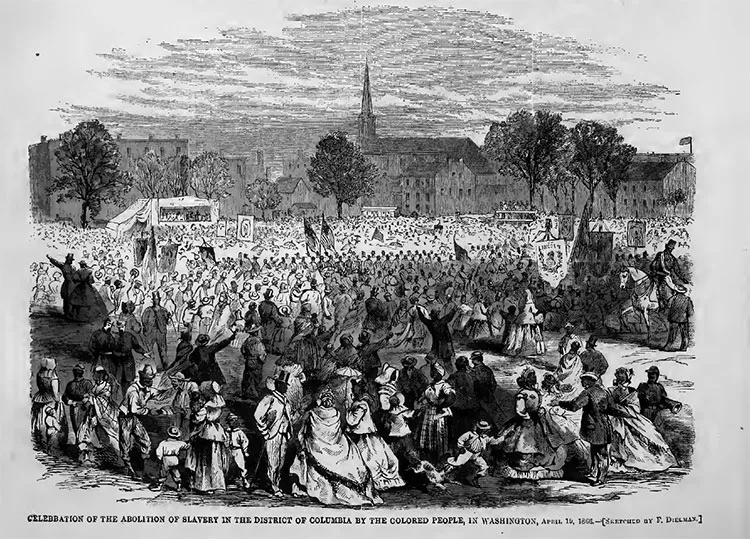
This article proposes to compare our present situation with what the Methodist Episcopal Church faced in the 1840s over issues around slavery, regionalization, and unity.
There is no question about where Methodists stood on slavery in the early days. John Wesley, Thomas Coke, Francis Asbury, and others were horrified at the idea that one human being could enslave another. The General Rules, the Disciplines, and early sermons made it clear that slaveholding was an abominable sin against God and human dignity and would not be tolerated among the people of God called Methodists.
Then Methodists got prosperous and, in the words of Orange Scott, the abolitionist, “aristocratic.” Along with the secular world, some Methodists, primarily in the South but in other places also, began to argue that it was not slavery as an institution that was so bad, but the mistreatment of slaves. Christian slaveholders had a responsibility to win their slaves to Christ, and maybe even offer a form of education, but were not under moral obligation to free slaves.
Soon Methodists, and the rest of the country, were divided into three groups. Abolitionists made up the first group. Association with slavery was to be resisted and abolished as soon as possible. All the moral weight of the church was to be poured into this effort (including the Underground Railroad). At the very least, slaveholders should not be church members. Abolitionists, moral heroes today, were not seen as such in the mid-1800s. They were trouble-makers. Their critical remarks of the church were seen as divisive.
Another group supported slavery. This group argued that slavery was approved by Scripture, and insisted on “non-interference,” the principle that groups from far off should not interfere in local affairs. If slavery was not clearly approved by Scripture, cultural circumstances might determine there were exceptions. In other words, what was sin for one group of persons was not necessarily sin for others (regionalization). They argued that slavery was a political issue more than a moral issue. This group claimed allegiance to the slave-permitting laws of the state rather than some nebulous universal moral law that would apply to all peoples at all times.
The third group might be called the moderates, although a better description might be, in today’s terminology, the “mainstream.” Included in this group were the people who either didn’t know much about slavery or, if they did know, did not care one way or another. Others in this group, including many church leaders, did know about slavery and were concerned about slavery’s potential for dividing the church. They deplored the “extremists” on either side. In the language of today, they believed the best way for the church to deal with slavery was through dialogue, understanding, hearing one another’s stories, getting to know each other, and finding the center of their togetherness in love. They favored permissiveness over rigid stances.
With the moderates, or the “mainstream,” the primary concern–ahead of faithfulness to the Scriptures, moral justice, or the tradition of the church–was unity. Many believed, or said they did, that slavery was a sin. But a greater sin, evidently, was intolerance and divisiveness, particularly the intolerance and divisiveness of the abolitionists. The Kentucky Conference in 1835 unanimously adopted a report condemning slavery as morally wrong while at the same time deploring “the interference of the abolitionists.” It was a compromise in the interest of avoiding conflict.
The bishops, for their part, were of no help whatsoever. They represented what today could be labeled as “failed leadership.” Unable to agree among themselves, they condemned extremists, deplored the controversy, and spoke of unity. The bishops were particularly loath to criticize each other even when one of their own, Bishop James Andrew, was revealed to be a slaveholder. When the issue could be avoided no longer and the General Conference of 1844 prepared to pass a resolution suggesting Andrew desist from exercising his office as long as he continued to be a slaveholder (which was itself a compromised resolution for the sake of harmony), the bishops proposed a resolution that the matter be tabled for four more years.
One possible solution, which never did gain much traction, was not dissimilar to what we today would call regionalization. Perhaps there could be two Disciplines, one which condemned slavery and one which did not. Several conferences, or so it was reported, excised anti-slavery references from their Disciplines.
The Methodist Episcopal Church had much to be proud of in the nineteenth century. How it dealt with slavery was not one. The resolution on Andrew led to a Plan of Separation which was, supposedly, a form of amicable separation. It was the northern conferences who, in the name of unity, passed resolutions against the plan. When separation came, it was not amicable. Battles over property and encroachment represent an ugly chapter in the church’s history. Methodist Protestants, who did work out an amicable separation (they separated by conferences), were able to reunite in 1877.
Compare to today: Back to the three groups. Traditionalists would uphold the church’s historic stand that marriage is a covenant between man and wife and that the stand of the church in sexual matters is celibacy in singleness and faithfulness in marriage. The practice of homosexuality is incompatible with Christian teaching. According to this group, this position is consistent with Scripture, with the tradition of the church through the years, and is supported in large part by Christians around the world. Even as slavery struck at the moral fabric of what Christian faith was all about, so the effort to redefine marriage. This group speaks of accountability and upholding the Discipline.
The second group believes homosexuality is a gift of God, or at least, is not inconsistent with Scripture. This group appeals to different argumentation: God has revealed new truth (a new revelation which evidently they alone have received) which informs them that the practice of homosexuality is not a sin after all; or, what may be considered wrong in some parts of the world (like Africa) is not necessarily wrong in some other part of the world (like California); or, loving, committed relationships and personal experience trump Scripture and tradition.
A third group, which one might call the “moderates,” or “mainstream” (neither hot nor cold) want us all simply to get along. They deplore rigid approaches. They are most willing to remove all negative references in the Discipline that marriage is between a man and a woman, but through regionalization would allow the Africans to hold to a traditional interpretation if that is their wish.
Two initial concerns about “regionalization” and this discussion:
Regionalization reeks of neo-colonialism. It communicates the idea that Americans, advanced in many ways, do not want less advanced peoples (read: Africans) telling us what is morally right and wrong.
Regionalization implies that “culture” can now stand as an interpreter of Scripture. We might as well start saying, based on wording in our Discipline, that the core of Christian faith is revealed in Scripture, illuminated by tradition, vivified in personal experience, confirmed by reason, and corrected by culture.
This is not the last word on these matters. Stay tuned. There is much more to come.


Comment by PSC on July 26, 2023 at 10:57 am
My dad may have been one of the last few elders ordained in the MEC. It was one month before the 1939 merger. He was not at all happy that the MEC allowed the MECS to rule the day in calling for a racially segregated Central Jurisdiction. He lobbied for full integration of the Armed Forces as a volunteer chaplain during WWII. He stood up to laymen who told him “No Blacks are ever to worship here” when he assumed a new appointment in the Jim Crow South. The author’s statement “The Methodist Episcopal Church had much to be proud of in the nineteenth century. How it dealt with slavery was not one” speaks nothing about the MECS in both the 19th and 20th centuries. I much prefer this final sentence he wrote for The Christian Post earlier this year: “Racism and sexism and prejudice are real and we all are infected.”
Comment by GinVA on July 26, 2023 at 6:07 pm
Do progressive not see the irony of advocating for a “separate but equal” system where the US jurisdictions allow gay marriage/clergy while those in Africa do not?
Comment by Roger on July 30, 2023 at 4:59 pm
GinVA
I applaud your statement “‘Separate but Equal” system. This is what was in the Public School Systems in the South, that so many people got angry about. Scripture is Scripture, pure and simple. Regionalism is wrong because it takes away the sanctity of the Body of Christ.
Comment by John on August 3, 2023 at 4:58 pm
The calls for a regional plan of government (which would simply give Methodists in the US the same level of autonomy those in the Central Conferences already have) is being echoed increasingly among African, European, and Filipino leaders in the denomination. Meanwhile you post articles like these recycling the same talking points from four years ago, but they always seem to be coming from American writers like Rev. Case. Don’t you think it would better if people hear it directly from the African Methodists themselves? Give them their own voice on here, instead of claiming to speak for them.