
Americans are plagued by a pressing identity crisis. Secularization, individualization, and globalization challenge citizens in their expression of nationalism. The essence of what it means to be American seems to be slipping through their fingers.
Every successful civilization, every great united nation, is built on the bedrock of strong group identity and cultural bonds fostered in its inception. It is with this foundation that society finds its collective purpose and shared beliefs. How then, can Americans reclaim their identity and define their values in the face of this crisis?
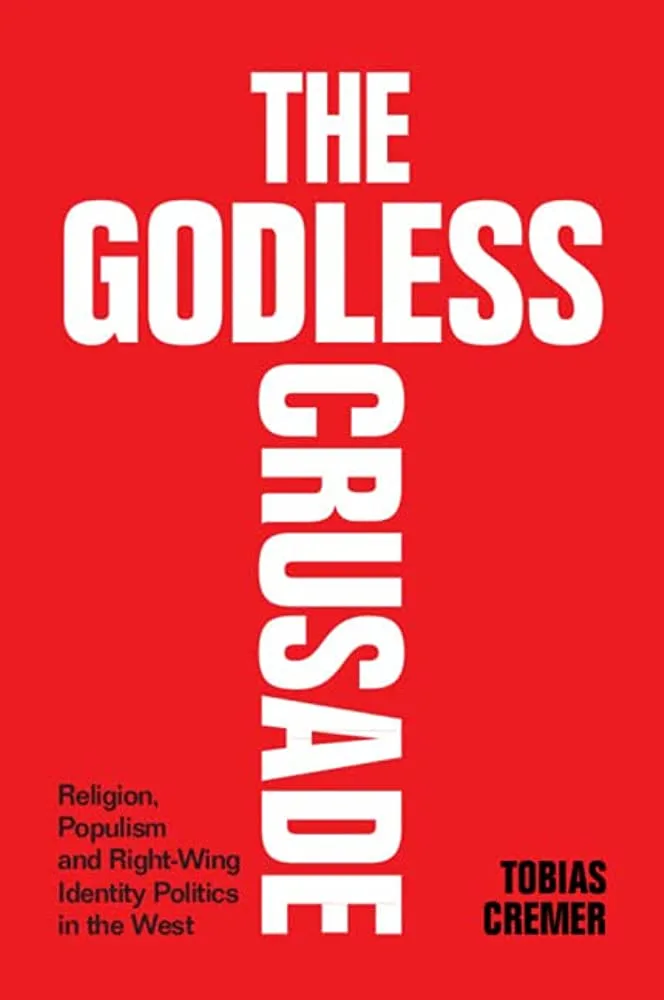
Tobias Cremer, a junior research fellow at Pembroke College Oxford, addressed this in a launch event for his new book The Godless Crusade: Religion, Populism and Right-Wing Identity Politics in the West. Cremer points to the rise of a ripening populism, which has grown past its start as a fringe movement and now has the power to sway votes. Many have begun turning to religious references for guidance, on which he goes to say, “The populist right is just one of the latest manifestations of white Christian nationalism that has played a role in American Society for many decades.”
By examining Germany’s far-right party, Alliance for Germany (AfD), alongside the U.S. political landscape, Cremer explores the multifaceted nature of right-wing politics and its religious intersections.
An intriguing phenomenon highlighted by Cremer is the support garnered by former U.S. President Donald Trump at various stages of his 2020 campaign. Interestingly, during the primaries, he performed exceptionally well among Republicans who never attended church and his appeal diminished when pitted against individuals who actively practiced their faith. This suggests that religious affiliation alone did not dictate Trump’s support base early on.
Instead, Trump strategically emphasized cultural identity issues and matters related to personal faith to rally to find this backing. By strategically stoking identity issues such as the “war on Christmas” and other cultural markers, Trump resonated with specific segments of the population, including those Republicans who rarely attend church services.
“If such intellectual alternative is available then these voters simply are unavailable for the populist right, however if such an alternative is lacking or taken over by the populist right then this religion breaks down,” Cremer emphasized. This is evident in Germany, where the Center-Right Christian Democratic Union (CDU) provides an alternative for Catholics and Protestants, limiting the support for the AfD.
Similarly, in the United States, practicing Christians initially favored candidates like Governor Jeb Bush (R-FL) and U.S. Senator Marco Rubio (R-FL). However, as these alternatives were eliminated, they defaulted to the Republican candidate, Trump.
In Germany, churches have effectively created a social taboo against voting for the AfD by positioning themselves as pro-immigration and excluding AfD politicians from church events. This has made the churches vocal adversaries of the far-right and increased the social costs for church members to associate with populist movements. The same pattern is observed in other European countries, as demonstrated by the “Pope Francis effect” where the Pope’s stance in favor of immigration influenced support among French Catholics.
The rise of right-wing populism has also witnessed a notable shift in priorities among its supporters. Economic, social, and moral concerns that were once significant have taken a backseat, as right-wing populist voters now place a greater emphasis on topics such as immigration, national culture, and national identity. This shift reflects the erosion of traditional sources of group identity in the face of modernization, leading to a crisis of identity and a new cleavage in society. In response, national populists have utilized Christianity as an identity marker, employing its symbols and language to represent their values.
However, it is noteworthy that they maintain a certain distance from Christian values and beliefs. As Cremer aptly states, “Right-wing populists are using Christian symbols… [and] Christian language in the context of this identity politics primarily as insignia of a culturalized Christianism.” This phenomenon highlights the utilization of religious imagery for cultural identification rather than a genuine commitment to religious principles.
The pressing issue of an identity crisis in modern America has necessitated a deep examination of the country within where it originates and how it can be remedied. Cremer’s insightful analysis of the topic sheds light on the complexities and dynamics at play. Ultimately, reclaiming American identity requires navigating the delicate balance between preserving cultural heritage and embracing the inevitable forces of change. It is within this journey that the true essence of American identity, a tapestry woven from diverse cultural threads, can be rediscovered and celebrated.



Comment by David on June 14, 2023 at 6:58 am
I have no idea as to what “American identity” might be. We are not a nation with ethnic commonality, but a country of various cultures. There is no national dress—sorry Texas, your hats, boots, etc. are actually Mexican. Music has great diversity and comes from various traditions.
Religiosity was not so great in early America and likely reached its peak with the enactment of Prohibition after WWI. Today, with a slight majority of Americans having no formal membership in a religious group, it is hard to make the case that religion is still a major part of American identity.
Comment by Tom Thornton on June 14, 2023 at 12:54 pm
This review reads a like a high school summary rather than providing any insight or critical analysis into what the author of this book has written. Just reading the description of the book in this review raises a host of problematic assertions made by the book’s author which apparently the reviewer simply lacks the wherewithal to recognize let alone analyze.
Comment by Jeff on June 16, 2023 at 1:09 am
Tobias Cremer, a junior research fellow at Pembroke College Oxford, addressed this in a launch event for his new book The Godless Crusade: Religion, Populism and Right-Wing Identity Politics in the West.,/i>
So a Brit — a “junior research fellow” at that — gets to define All Things Populist in the USA? And we must take him seriously? ROFL!
Here’s a couple suggestions regarding the study of Christian nationalism.
#1 Read William Federer. ANYTHING by Bill Federer will be enlightening to you.
#2 See John Zmirak’s excellent article “Robert Jeffress is Right: It’s Time to Embrace Christian Nationalism (Correctly Defined)” (https://stream.org/robert-jeffress-is-right-its-time-to-embrace-christian-nationalism-correctly-defined/)
The key is CORRECTLY DEFINED.
Blessings!
Jeff
Comment by Jeffrey Walton on June 20, 2023 at 10:33 am
He’s German, and based here in the United States.
Comment by Mark on June 16, 2023 at 11:27 pm
To understand populism in America, read, listen, or watch anything from Robert Barnes. You’ll find him primarily at vivabarneslaw.locals.com. The pollster Rich Baris is also very helpful. He is at peoplespundit.locals.com.
Comment by David Gingrich on June 20, 2023 at 6:39 am
I guess I fit into the Christian-Conservative-Populist bucket. I don’t recognize any Truth in this review. None.