Over the last several decades, the popularity of religion, marriage, and patriotism has plummeted in the United States. Today, America is fiercely divided over both these issues and others downstream of them. One prominent conservative scholar, however, believes a faithful commitment to important institutions must be renewed.
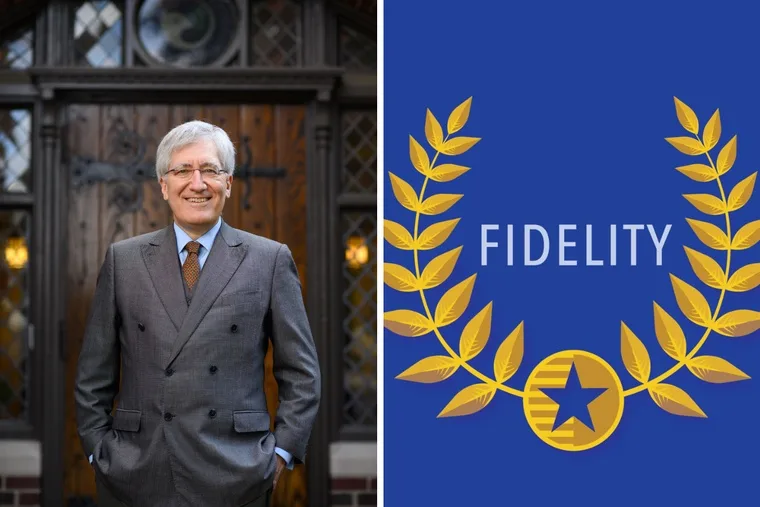
Dr. Robert P. George, McCormick Professor of Jurisprudence and Director of the James Madison Program at Princeton University, recently declared June as Fidelity Month: “a month dedicated to the importance of fidelity to God, spouses and families, and our country and communities.”
On June 1, George hosted a webinar titled “A Call to Fidelity,” launching the month. The webinar featured several scholars and activists, including Yuval Levin of the American Enterprise Institute, Bill McClay of Hillsdale College, Jacqueline C. Rivers of the Seymour Institute, Lila Rose of Live Action, Ana Samuel of CanaVox, Andrew T. Walker of Southern Baptist Theological Seminary, and James Matthew Wilson of the University of Saint Thomas, Houston.
Rivers spoke first, emphasizing the importance of morality to the stability of nations. She particularly emphasized the importance of fidelity to God, citing several historical examples of individuals and groups demonstrating such fidelity amidst injustice. “Our fidelity to God is essential to the wellbeing of the whole nation,” she said.
Walker followed Rivers, also addressing fidelity to God. He noted that “fidelity to the goods of family, community, and nation” ought to be recognized “as goods and ends to be pursued for their own sake. But the love that they’re given is proportionate to the love that they are owed.” A fidelity to God thus must come first, placing fidelity to lesser goods in the proper context. “To know God means that we are going to order our lives under his reign and rule,” Walker said.
The conversation topic then shifted to a discussion of fidelity to marriage and family. Samuel noted recent societal experimentation with alternatives to traditional marriage, but argued that “faithful marriages between one man and one woman confer tremendous benefits to society at large.” She cited various data points supporting her position, noting higher quality parenting, better educational and financial outcomes, better physical and mental health for men, and “an ethos of unity.”
Samuel noted that “in our wounded world, brokenness is often inevitable,” and “with compassionate mercy, we can and we should enjoy painful judgments on particular people in particular situations. At the same time, we cannot sacrifice fidelity to the marriage ideal which is the source of human healing and flourishing.”
Rose also addressed fidelity to marriage, echoing Samuel’s points about the benefits of marriage. Rose, a Pro-Life activist, also noted that “86% of women who have abortions are unmarried,” suggesting that “the solution to the abortion crisis is reclaiming the value of marriage and education on the beauty of marriage, as well as modeling marriage for the world and helping people see its good.”
McClay noted that, when discussing fidelity, “it’s easier to make the case for a marriage than it is for the nation.” America in particular, he said, “is more restless than just the usual Augustinian dose,” and is in fact “in serious decline.” The reason for this, McClay said, is that “we have not showed fidelity to our fundamental principles and our fundamental commitments.”
McClay clarified that fidelity to country does not mean fidelity to whatever one’s country is doing, but rather a fidelity which desires to see the country operate in accordance with “higher values.” This means that fidelity to country is not rejected “because you don’t like the complexion of a particular president,” or even “because of profoundly unjust laws.” Fidelity to country instead necessitates that faithful citizens “stay and work to mend [unjust laws].”
Wilson emphasized the importance of fidelity to local communities, especially the community one was born in. Wilson distinguished between filiative connections, which “are given to us that are natural, that we’re born into,” and affiliative connections, which are chosen by humans. “The many affiliations into which we will submit ourselves,” Wilson said, “are made stronger if we have first strong, rooted filiative connections.” Wilson suggested that filiative connections like communities “make possible a kind of fidelity that many of our other attachments just aren’t capable of,” and rejecting them would be a mistake.
Levin suggested that “fidelity implies commitment and attachment, obligation,” suggesting that true freedom is connected to “obligation and commitment” to formative institutions like family, religion, community, and country. Furthermore, Levin said fidelity “moves us to emphasize and to articulate and to say what we love in the world” instead of merely focusing on what we hate. George concurred with Levin, stating that “Fidelity Month is all about love,” not in a sentimental sense, but “the real thing, the active thing, the thing that moves us to act for the sake of others.”
The various speakers participating in the webinar each presented compelling arguments for faithfulness to God, marriage, community, and country. Reviving fidelity to these important institutions will not solve every problem in our country, but it’s a good start.



Comment by David on June 5, 2023 at 6:46 am
“The typical [abortion] patient, in addition to having children, is poor; is unmarried and in her late 20s; has some college education; and is very early in pregnancy… The latest estimate, from the Guttmacher Institute, a reproductive health research group that supports abortion rights, found that 25 percent of women will have an abortion by the end of their childbearing years.”—NYT (14 Dec. 2021)
Comment by Pastor Mike on June 5, 2023 at 4:30 pm
David. A total of 620,327 abortions for 2020 were reported to CDC from 49 reporting areas. (Abortion Surveillance, 2020, CDC)