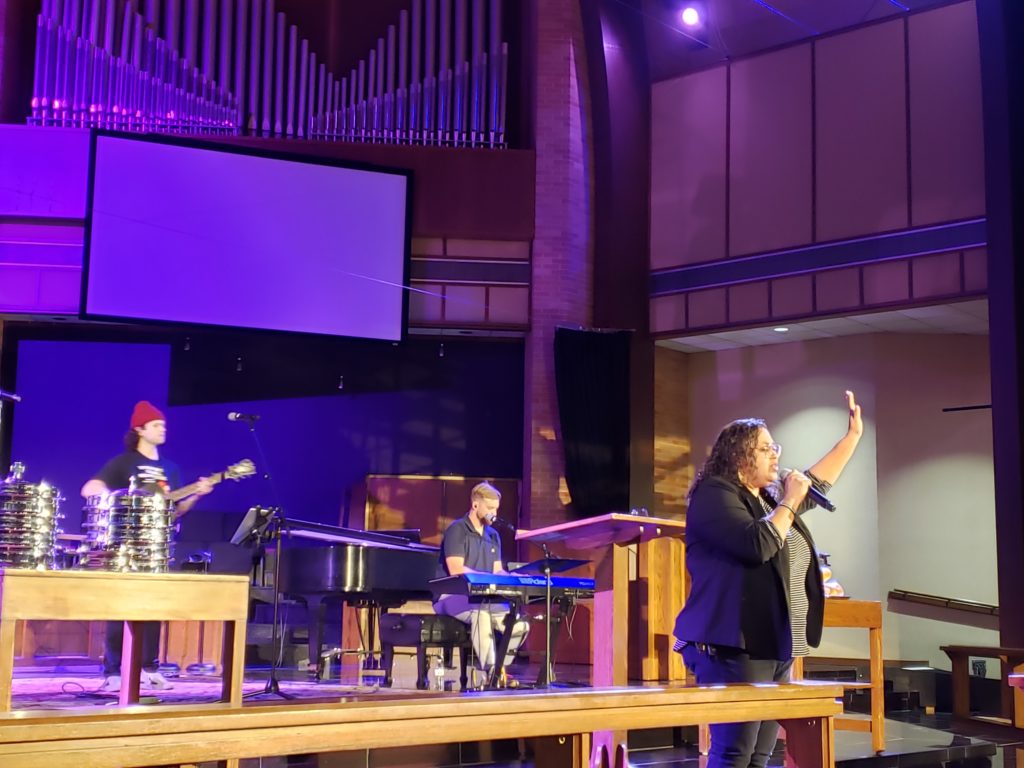
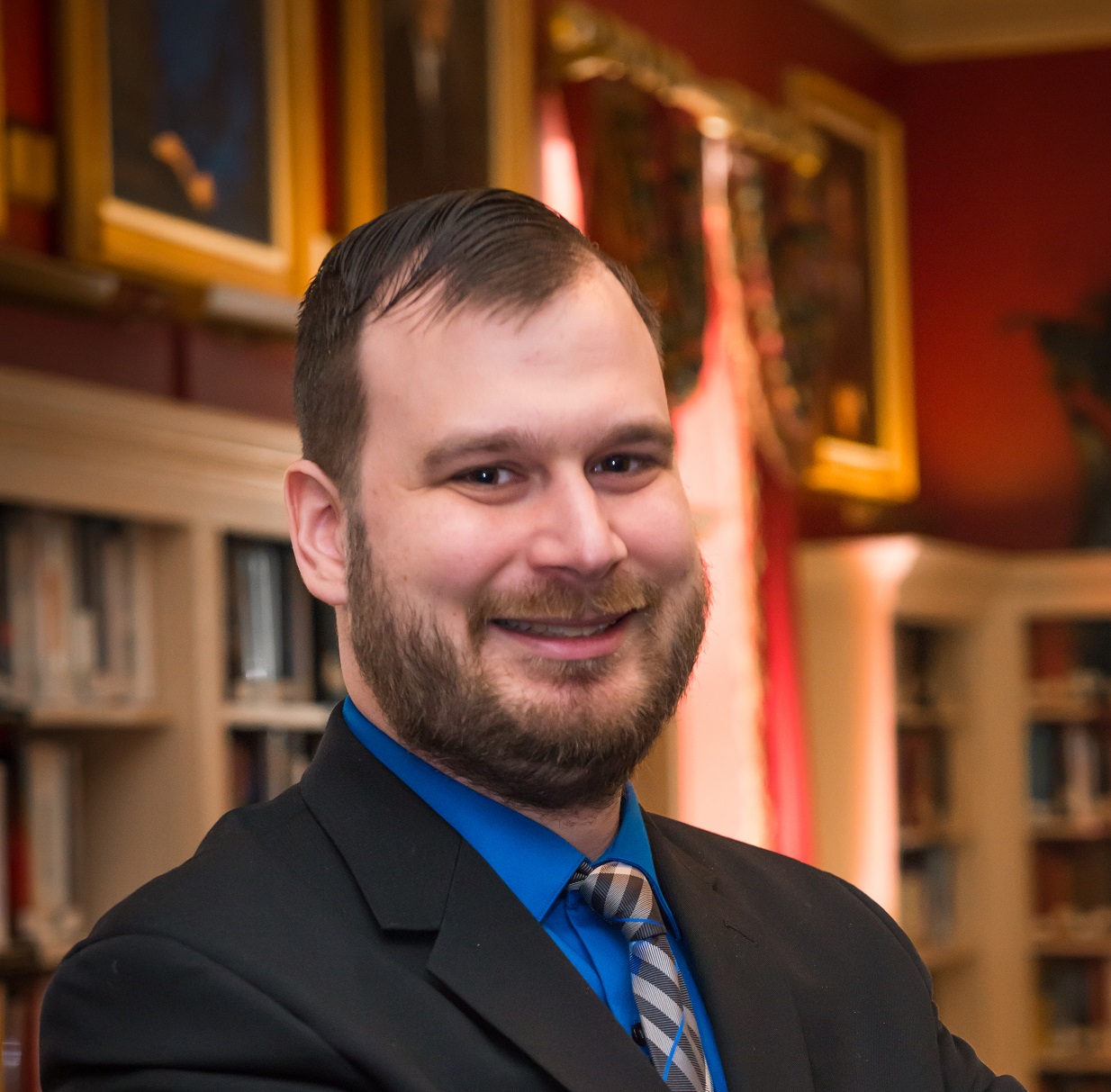
“We’re seeing a new church being born!” Thus declared J.D. Walt, founder and president of Seedbed, last weekend in Waco, Texas. He was speaking to the inaugural session of the Mid-Texas Annual Conference of the Global Methodist Church, meeting January 19-21 under the pioneering leadership of the Rev. Leah Hidde-Gregory. This was the historic first session of any Global Methodist Annual Conference in America. The inspiring teaching, helpful equipping, encouraging fellowship, and individual decisions for Jesus showcased the best of what a Methodist annual conference can be.
The experience was reminiscent of Seedbed’s popular “New Room Conferences” for evangelical Wesleyans, from the selection of Walt as Conference Teacher to the event’s being officially named the “Inaugural Annual Awakening.” Matters like receiving reports and approving a budget took less than an hour and a half. Connecting, inspiring, equipping, and spiritually awakening the people of this new Global Methodist annual conference was treated as the conference’s main “business.”
There were about 600 registered attendees, and about 90 youth at a concurrent youth retreat, which saw many decisions for Christ. Emerging initially from the United Methodist Church’s Central Texas Conference, this Global Methodist annual conference currently has about 90 congregations.
Speakers included two United Methodist bishops who have transferred into Global Methodism: Mike Lowry and Scott Jones. Lowry stressed that his being “Bishop Emeritus” is a retired status and emphasized that the GMC will reconstitute the role of bishops as a teaching office. At a reception, Dean Todd Still of Baylor University’s Truett Theological Seminary announced that Jones, a former professor at Southern Methodist University’s Perkins School of Theology, will teach at Truett this semester. The seminary recently opened a Wesleyan House of Studies for Methodist students. Jones will also relate to emerging conferences in the Southern United States as well as the Philippines, while Bishop Mark Webb will similarly work in the Northern and Western United States as well as Eurasia.
The conference was overwhelmingly positive, forward-looking, and hopeful.
Any hostile observer would have been hard-pressed to find any ammunition for caricaturing Global Methodists as negative, hateful, or grievance-obsessed. The only time I heard any speaker say anything related to homosexuality was when Bishop Lowry, to enthusiastic applause, declared, “This is NOT a church for those who hate LGBTQ people!” Rather, “it is a church for people who love the Lord Jesus” and who are committed to the GMC’s mission statement “to make disciples of Jesus Christ who worship passionately, love extravagantly, and witness boldly.” He added, “we’re not going to get lost in the culture wars.” While there were brief allusions to learning from past experiences, I do not recall any speaker explicitly bashing the United Methodist Church.
There were pastorally appropriate recognitions of the fact that many had experienced deep wounding in their journeys from the UMC into the GMC. This included a time during the clergy worship session when participants were given room to acknowledge their wounds, in a helpful and healing way, fostered by their annual conference now being a safe place for clergy to be open with each other about their brokenness. They saw that they are not alone.
But this inaugural Global Methodist annual conference was not about remaining and wallowing in brokenness.
In opening worship, Hidde-Gregory, the Conference’s President Pro-Tempore, stressed the urgency of every congregation doing the work to “check our foundations,” and consider “what kind of church will we be?” “We have come through too much” to be self-centered and ineffective. Instead, she exhorted Global Methodist congregations to “build a good house” with “a firm foundation,” take inspiration from the church of Acts 2:37-47, truly “love each other,” and avoid low-commitment Christianity. Stressing that “our communities need us,” she declared “we have to make Methodists ‘vile’ again” as they go out to spread God’s love, so that “we can’t wait to overflow and share the love of Jesus with others,” and in our churches offer broken people genuine, deep welcome. Declaring “if you can’t do anything else, you can pray!,” Hidde-Gregory urged every congregation to have a weekly intercessory prayer group.
Walt urged recovery of John Wesley’s teaching on sanctification. He recalled the history of how Methodist commitment to this “second half of the gospel” led to “a first-half-of-the-gospel revival” of many coming to saving faith. He strongly encouraged rebuilding the accountability-focused small groups known as bands, declaring, “We are justified alone, but we will only be sanctified together—it’s a team sport!” Walt reminded us that, per James 5:16, we do not confess our sins to one another in order to earn forgiveness (which Jesus has already accomplished) but rather “that you may be healed.”
Walt encouragingly reminded us that because Christians already know the ultimate end of world history, we should not merely have hope about the future but rather “hope from the future.” He urged sharing stories about ministry failures, which will in turn normalize failure, which will in turn normalize risk.
Break-out workshops taught practical details for effective congregational ministry in various areas. I attended one on Community Engagement, led by Bridget Heins, the Communications Director of the large First Methodist Church of Waco and the incoming president of the Cen-Tex Hispanic Chamber of Commerce. She stressed the urgency to “know your community and its needs” and discussed examples of evaluating what those living around our congregations value, showing up and supporting what matters to them, and building goodwill among our neighbors, all of which can help the church’s mission of making disciples. She also shared from her experience how negative publicity related to homosexuality and/or disaffiliation can be mitigated if your congregations and its leaders have already established a positive community reputation and good relationships with local reporters.
Rev. Ryan Barnett, lead pastor of First Methodist Waco and this Global Methodist annual conference’s executive officer, stressed that they seek to build a movement rather than an institution, and that the structure must be subordinate to the mission. But as a true Methodist, he said that they needed just enough structure “to keep the movement going” and to “prevent the movement running over people.” Barnett pleaded, “please, there is no room for ego, title, or position.”
The conference adopted a 2023 budget with a total projected income of $472,000 and total projected expenses of $363,000. This was based on asking congregations to pay three percent of their income for annual conference expenses plus another one percent for denomination-wide expenses (both of which are below the GMC’s mandatory maximums of five and 1.5 percent, respectively).
This budget and the rules adopted with it highlight major differences from United Methodism. With the Mid-Texas Global Methodist Annual Conference’s roughly 90 congregations and the Central Texas United Methodist Annual Conference’s “approximately 185 churches,” proportionate budgeting would make the United Methodist Conference’s budget about twice as large. But the UMC’s Central Texas Conference budgeting some $2.1 million for 2023 “annual conference” plus “district support” expenses (not even counting other “conference operations” expenses) is well over four times as much as this Global Methodist annual conference’s projected 2023 income!
This makes a major difference for congregations. The treasurer for one told me that in the Central Texas Conference, their required 2022 UMC apportionments were $6,710, while their new Global Methodist Annual Conference’s combined rate of four percent total connectional funding would have made this $1,305. She told me this amounts to “saving about $5,405 a year” that they can use to do more to “help with community needs.” A pastor from another congregation in this conference told me that they went from total 2022 UMC apportionments of $15,300 to total 2023 Global Methodist connectional funding of $8,297.
Barnett even shared that the conference was open to lowering its three-percent rate for denominational funding within the conference “if we guessed too high.” While it was reported that congregations from the UMC’s North Texas and Rio Texas conference are not expected to join this Global Methodist annual conference until the middle of the year, the impending massive influx of congregations (paying at the same or lower rates) will enable the conference to offer significant financial support for overseas mission and ministry beginning in 2024. Connectional funding payments (for which financial-hardship waivers are available) are conducted on an honor system, in which “no one’s coming to audit your books.” What Barnett called “a coalition of the willing” includes no trust clause that could hold congregations hostage.
To prevent the conference hoarding money, the adopted budget report included a rule preventing accumulation of conference reserves that “total more than 6 months of operating expenses.” If that cap is ever exceeded, Barnett said one possibility may be for congregations to simply receive a rebate!
In another unstated contrast with the UMC, the adopted budget report also included a rule that no single congregation will be asked to pay more than $150,000 in connectional funding. While this Global Methodist annual conference does not yet include any congregations large enough for this to be applicable, it offers a safeguard for larger congregations who may later join or grow to that point. Barnett explained this rule’s two-fold purpose: on the one hand, “we don’t want to treat congregations that are growing like piñatas,” but on the other hand, they do not want any congregation to feel overly entitled to dominate the conference.
Barnett summarized the conference’s overall attitude as “we’re not interested in your property or your money—we’re interested in the people in your community who need to know Jesus!”
There were plenty of other differences from a typical American United Methodist annual conference. In his brief Cabinet Report, Pastor Mike Kerzee stressed how Global Methodist apportionment-making is more consultative, and shared their commitment to longer appointments and smaller districts, with the presiding elders (active pastors who currently receive no stipend for their district work) having time to build relationships with each of their pastors. It was powerful to collectively recite the Nicene Creed and sing good worship songs at a Methodist annual conference without the distraction (as in the UMC) of knowing that some of those set apart for spiritual leadership do not actually believe the basic doctrines affirmed.
Other participants described the contrast to their experience of United Methodist annual conferences as “so refreshing” and “more helpful” for ministry. There was no question about the central importance of disciple-making. There were no resolutions of any sort, and I saw no promotion of unbiblical agendas in the small display area.
This Global Methodist annual conference, like the rest of the new denomination, still has plenty of challenges.
Hidde-Gregory lamented how it has been exceedingly financially difficult for many theologically orthodox ethnic congregations to disaffiliate from the UMC, and “we are not where we want to be” in terms of diversity.
However, she also stressed that “we are working hard on it” and looked forward to planting new ethnic congregations. Part of the limited Saturday-morning business session included a report from Pastor Daniel So, presiding elder for Korean congregations. He lamented the lack of Methodist church planting among the Dallas-Fort Worth area’s exploding Korean-American population and appealed for prayer and financial support for ethnic congregations. Rev. So expects dozens Korean-American United Methodist congregations to eventually transfer into the GMC.
On Saturday, the very first individuals ordained as Global Methodist elders in America were notably an African-American woman, a Hispanic man, and a Caucasian new mother in her 20s.
Reaching the next generation was both a major challenge and focus, including of an entire workshop. Barnett pointedly denied the myth that “young people won’t want to come to your church” if it is theologically orthodox, countering, “That’s not our experience at all!” Rusty Freeman, the conference’s director for children and student ministries shared with me that the concurrent “Awaken Youth Conference” offered “tons of fun and fellowship,” “Holy Spirit encounters,” and some “mission moments” when participants “went out and served in the community.” Most excitingly, about 15 youth participants made first-time decisions to follow Jesus Christ, while a similar number re-dedicated their lives to Him, and others felt a call to ministry.
God is on the move!



Comment by David Connon on January 24, 2023 at 7:44 am
The article states: “Stressing that ‘our communities need us,’ she [Bridget Heins] declared ‘we have to make Methodists vile again’ as they go out to spread God’s love.” Is the word “vile” a typographical error?
Comment by John Lomperis on January 24, 2023 at 12:03 pm
Thanks for asking, David. No, it’s not a typo. It’s a reference to a famous John Wesley quote, when he reported how he “submitted to be more vile” by taking his preaching outside of a church building if that’s what it took to reach more people, even though preaching in the fields seemed “vile” to his sense of what was proper. I have added a hyperlink for this context.
Comment by David Connon on January 24, 2023 at 12:39 pm
Thanks, John, for clarifying that. Knowing the context of a quote that is some 200 years old is important.
Comment by Jim Dean on January 25, 2023 at 3:34 pm
It is with sadness that I note the strong emphasis on political correctness and diversity. IMHO that is a large part of what congregants are rejecting about UMC.
Comment by Gary on January 26, 2023 at 8:36 am
Mid-Texas GMC has also launched 12 new churches since Nov 1!
Comment by George on January 26, 2023 at 5:27 pm
I am for outlawing acronyms. After seeing IMHO in a previous post, I read back through to see what I missed. Now I’m laughing at myself. I have no fourteen year olds in my house to ask about these things. So I googled it of course. Still not sure you meant “in my humble opinion “ or “in my honest opinion “. I will say that I can write cursive, unlike most fourteen year olds.
Comment by Taylor on January 27, 2023 at 5:24 am
A church that still uses the language of “love for LGBTQ people” is one that has kept a foot solidly mired in worldly apostasy and is one step away from two feet into it. Many such cases. It’s clear that leaving UMC for GMC at this late hour will do no more to secure these churches’ futures than those PC(USA) churches who left at a late juncture for EPC and ECO, or those Episcopal churches for ACNA.
The only answer is scriptural orthodoxy and a church that is willing to call sin by its name and have real biblical standards for worship and ordination (which rules out female elders).
Comment by Jeff on January 27, 2023 at 10:46 pm
>> under the pioneering leadership of the Rev. Leah Hidde-Gregory
Excellent choice for leader. May GOD bless and favor her work for His Kingdom.
Comment by Teri on January 31, 2023 at 12:13 pm
I appreciate this thorough and uplifting report of the 1st annual GMC. As a psychotherapist who is a Christian, I so appreciate the time and sacred space given to those who needed to process their grief related to this transition. Blessings as this conference moves forward to honor God, operate under Biblical authority, and minister to people.
Comment by The Rev. Dr. Lee Cary (retired UMC clergy) on February 2, 2023 at 11:30 am
Will the IRD ever undertake to address the rapid growth in the US of free-standing, independent, Christian congregations? Or, is that of no interest to its readers?
Comment by Rany on February 3, 2023 at 10:10 am
I enjoyed your article. Thanks. To Taylor’s comment maybe Bishop Lowry could have said something like “ this is not a church for those who hate people of different races or, sexual orientation, etc. ,” and left off the LGBTQ letters. It’s not a sin to be gay, one can’t help how they are born, but it’s sinful as we all know to have sex with the same gender. And why all the hate for those of different races? God made us all in his image, we are all his children. Its time as Christians we remember that and start loving all people and to remember we are all sinful people and welcome all in our churches, many who may be lost and looking for the church who will love them regardless of who, color or sexual orientation.
Comment by Keith A. Jenkins on February 24, 2023 at 8:12 pm
As a retired Elder in the Texas Annual Conference who is StayingUMC, I was sad to see this article perpetuating some of the half-truths used to deride the UMC by many of those who have left to join the GMC, half-truths (and outright lies in some cases) that were used as talking points by many pro-GMC pastors, lay leaders, and even our own bishop here in the TAC to recruit congregations to disaffiliate that never would have otherwise. I have been a UM clergyperson for 47 years, serving in the local church and in higher education across the South and Southeast, and I have never met a faithful, practicing United Methodist who can’t wholeheartedly affirm the doctrine of the Trinity, the divinity of Christ, and Jesus’ resurrection from the dead.
Are there some connected with the UMC who reject these beliefs? Of course there are. Are there some who are now part of the GMC who also do? Of course there are. You just don’t know who they are yet. But neither the UMC nor the GMC should be characterized by the viewpoints of a handful. So, if you really have the integrity that you claim to have, please refrain from slandering your brothers and sisters in Christ in the UMC.
Comment by A. on May 14, 2023 at 7:24 am
a church NOT to hate LGBTQ+???? but that is the first component ——and do not fool yourselves–there will be plenty of gay clergy in the GMC over time—just like before—feeling imprisoned because they are called, and cannot be true to themselves in order to be true to you
wishing you well–realizing that in just a matter of time…a ‘well’ is exactly what you will fall into