Several countries are regressing into egregious religious freedom violations according to an independent U.S. government commission tasked with monitoring the plight of persecuted religious groups overseas.
The United States’ Commission on International Religious Freedom (USCIRF) recently issued an annual report for events covering the year 2021. Their findings show a worsening landscape for international religious freedom and offer recommendations for government policy makers.
Three listings are categorized in the report; a Country of Particular Concern (CPC) is designated when a country is found to engage in or tolerate systematic, ongoing and egregious violations of religious freedom.
Ten countries designated last year by USCIRF (Burma, China, Eritrea, Iran, North Korea, Pakistan, Russia, Saudi Arabia, Tajikistan and Turkmenistan) once again should be designated according to the commission, which also included five additional nations: Afghanistan, India, Nigeria, Syria and Vietnam.
A dozen nations were recommended to be placed on the Special Watch List (SWL). The three that were confirmed last year (Algeria, Cuba and Nicaragua) were once again recommended by USCIRF. For 2022 there were nine new recommendations: Azerbaijan, Central African Republic, Egypt, Indonesia, Iraq, Kazakhstan, Malaysia, Turkey and Uzbekistan.
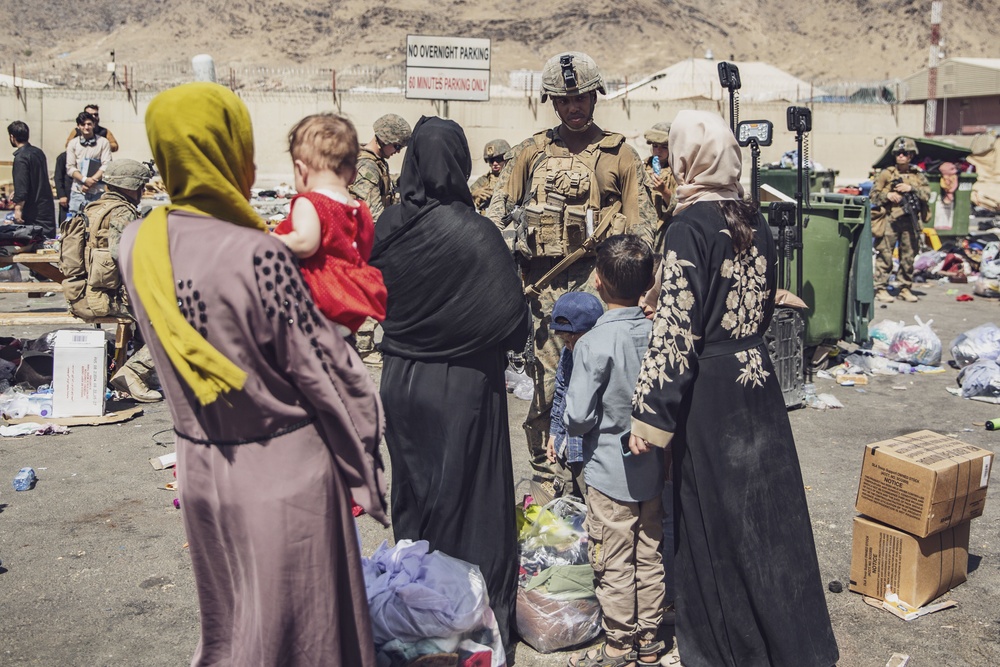
USCIRF officials described the climate within both Afghanistan and the Central African Republic as regressive. Takeover of Afghanistan by the Taliban in August 2021 was among the major events of the year. During the Taliban’s prior rule (between 1996 until they were driven from power by a U.S.-led intervention in 2001) religious minorities suffered severe hardship. Among the major concerns regarding Afghanistan was if the Taliban would again target religious minorities. International religious freedom activists are specifically concerned for the small Christian community within Afghanistan.
Afghan Christians are mostly converts from Sunni Islam and considered to be apostates, according to Lauren Homer of Law & Liberty Trust. Most have been in hiding since the Taliban takeover in August of 2021. Homer says that it may be difficult for religious freedom proponents to engage the Taliban, making any evacuation of Christians difficult.
Refugee sponsorship by faith-based groups and individuals, similar to what Ukrainian war refugees are currently offered, could potentially facilitate more safe departures from the south Asian country, Homer proposes.
The second country that is of special interest is the Central African Republic (CAR). USCIRF recommended that the country be returned to the Special Watch List. The CAR was not listed in the 2021 report although it was recommended to be placed on the SWL by USCIRF in 2020. What factor would lead USCIRF to make this call?
In the view of USCIRF commissioners, the situation within the Central African Republic is deteriorating. Government national security forces along with foreign fighters were involved in a series of events including an assault on a mosque in the city of Bambrai in February 2021 that resulted in fourteen fatalities. Earlier this year the U.N. Independent expert on Human Rights in the Central African Republic Yao Agbeste warned both the government and Russian mercenaires to stop their obstruction of current rights investigations that are in progress in the country.
Yves Kongolo, a CAR native and founder of Virginia-based Blackhorse International, was surprised that USCIRF took this decision based on the visuals he had seen during a recent visit. Kongolo calls for a greater emphasis on the situation in the Central African Republic by the Biden Administration, assessing that a misguided effort to promote state security there has resulted in civil rights abuses.
USCIRF also addressed one of the most controversial decisions made by the U.S. State Department last year. In 2020, Nigeria was designated as a CPC by the Trump Administration. In 2021, the Biden Administration withdrew that designation only hours before a visit to the country by Secretary of State Anthony Blinken with a goal of rejuvenating the relationship. This decision was considered to be appalling by USCIRF when it was announced by the State Department.
In spite of the delisting, conditions on the ground have not shown any sign of improvement across the past year. A report by the International Society for Civil Liberties and Rule of Law that compiled data from January 2021 through March 2022 found that during the period more than 6,000 Christians in the country were “hacked to death” in machete attacks by Boko Haram militants and Fulani herdsmen. This highlights why USCIRF recommends that Nigeria should once again be considered to be a Country of Particular Concern.
The onus is now upon the U.S. Secretary of State to either accept or to reject the USCIRF recommendations, a decision that will be scrutinized following the row generated by the U.S. Administration’s delisting of Nigeria.


Comment by pope francine on May 9, 2022 at 3:45 pm
I’m realizing today that nothing on this site actually has to do with ecumenism.