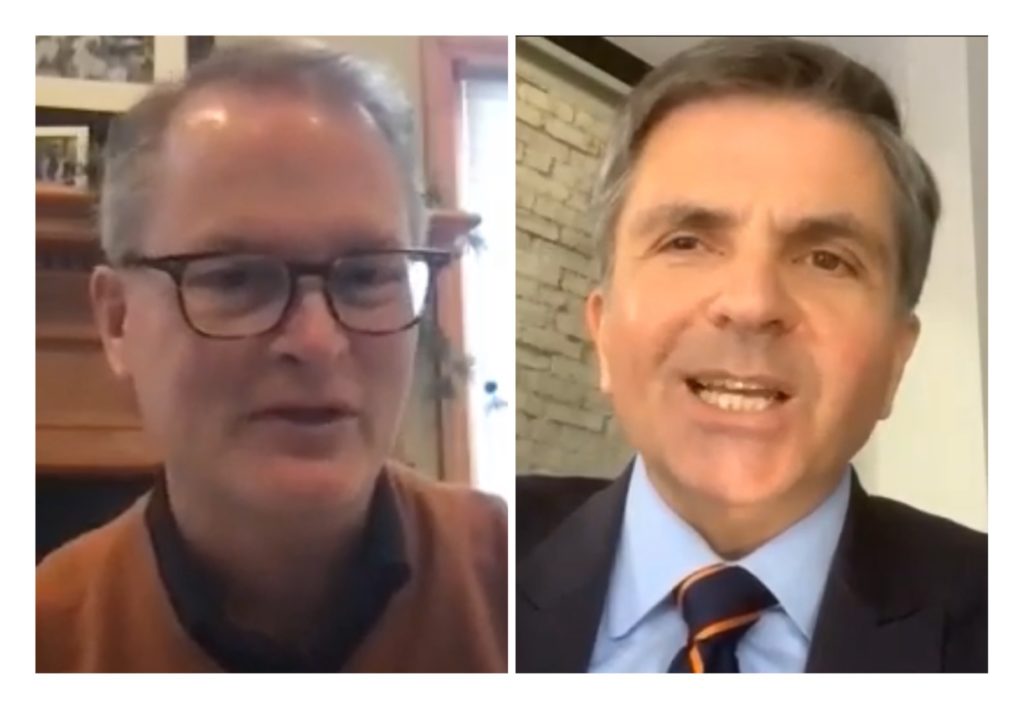
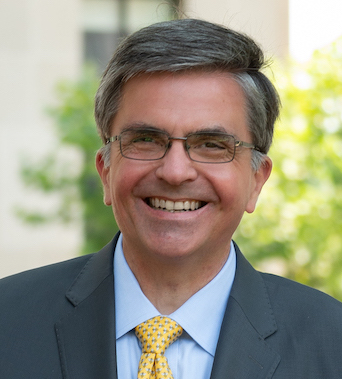
Rev. Adam Hamilton pastors Church of the Resurrection United Methodist in Kansas City. It is the largest congregation in United Methodism. He has long advocated changing the denomination’s traditional teaching on marriage and sexuality. In late 2019 he helped to negotiate the Protocol for Reconciliation and Grace Through Separation that, if approved by the governing General Conference, would divide the denomination. He will remain in the post-split United Methodist Church that will allow same sex marriage. I will be in the new Global Methodist Church affirming traditional teaching. Despite our disagreement, he was gracious to share his perspective from which I learned much. I hope the impending division can occur with this spirit of comity.
Here’s downloadable podcast audio from IRD SoundCloud:
Here’s transcript:
MT: Hello, this is Mark Tooley, president of the Institute on Religion and Democracy here in Washington, D.C. I have the pleasure today of interviewing Adam Hamilton, pastor of Church of the Resurrection, United Methodist outside Kansas City. The church has the largest attendance and membership within United Methodism in the United States. I had the pleasure of first meeting Adam when he was here in D.C. maybe ten or twelve years ago and we’ve stayed in contact over the years. He is, by virtue of his position and talents, very high-profile in conversations within Methodism over its teachings regarding sexuality and the impending possible split of the denomination and helped to negotiate the protocol for dividing the denomination. That was first released in January of 2020, but obviously General Conference has been postponed over the last year and a half due to the pandemic and is now scheduled for August-September of next year. So I’m going to ask Adam a few questions about that, among other topics. So Adam, thank you so much for joining this conversation.
AH: Mark, it’s a pleasure to be with you today. I remember sitting down with you for dinner and enjoyed having a chance to get to know you a few years ago and haven’t had a chance to do that since, so I’m really, really looking forward to the conversation. But I did want to say something first. So I went online to just find out a little more about you – I feel like I knew quite a bit about you – but I didn’t realize that you had written a book several years ago called The Peace That Almost Was. So I bought that book yesterday and began reading it and there were several things that struck me. First of all, it’s a very well-written book. And I’m not very far into it – I’m just a couple chapters into it – but it’s fascinating and well-written and I look forward to finishing the rest of the book. So I just want to say to the folks that are watching here; I know you don’t toot your own horn, so I’m going to do it for you and just say you’ve written a very excellent book that people should read, and it’s fascinating. So thank you.
MT: Well thank you. I’m honored, Adam, and you should mention that from the pulpit.
AH: I may just do that.
MT: Of course that was about the impending division of the United States. We were discussing the impending division of now United Methodism, so what are your latest thoughts on the protocol and what it will look like? Do you favor any amendments to the original language or any other thoughts you have?
AH: First of all, for those who are watching this who maybe don’t know what the Protocol is – You mentioned that it was negotiated in the end of 2019 and released in 2020, and it was a way to break the stalemate in our denomination. In the United States, our General Conference, which United Methodists come together for usually every four years; a majority of United Methodists who are delegates approve removing the language about human sexuality, or at least the restrictive language about human sexuality, from the Book of Discipline. But a minority favor keeping it, and then outside the United States it’s flipped – a majority outside the United States favor retaining that language and actually at the last General Conference made it a little more restrictive. And so the protocol was a way of trying to break that stalemate. And what it did is it negotiated terms by which the more conservative group in the U.S. who wanted to could leave and form a new denomination and also leave room for the most progressive side to leave as well. It allowed them to leave; there would be a certain amount of funds from denominational reserves that would go to help them start their new denomination (the Global Methodist Church). And then once they would leave, the thought was that the United Methodist Church that remained intact would vote to remove the language from the Book of Discipline. So you’d have a more conservative Methodist church and the United Methodist Church remaining. Part of the terms – I’m kind of getting to my response to this – well first of all, I’d say you can’t get excited about it. You can’t get excited about it just like you wouldn’t get excited about a divorce decree or divorce negotiation. To me, it’s always been a painful thing to even contemplate. So I don’t feel excited about it. There are several pieces of it; any negotiation involves people compromising. There are several pieces in it that I don’t like, or that I feel like are not what I would have chosen to have in there. In particular, the one place has to do with annual conferences voting to leave. So the thought was, instead of local churches having to vote, annual conferences would have to vote. Most people were averse to having churches voting because they were afraid of what it would do to their local church. Almost every Methodist church in America is divided on this. Some ten percent to ninety percent; some sixty-forty. But everybody’s divided. Everybody has family members who are lesbian, children who are lesbian, parents, siblings, friends. And so instead of having churches argue about this and vote, let’s have annual conferences vote. I’m not as excited about that, and I think it has some challenges in the future. It looks like, at least from what I’m hearing, maybe six annual conferences might vote to leave. Some say more than that; some say less than that. But it seems like there could be six, if the Protocol was passed. And I think there’s some interesting questions about that. If an annual conference leaves, then those that want to remain United Methodist have to have a congregational vote to remain United Methodist. If an annual conference votes to stay United Methodist, then a local church that wants to leave has to have a vote to leave. And I just wonder in the future – I think of one annual conference in particular – and they’re divided about sixty-forty as an annual conference. Now they probably have the 57 percent that’s needed for an annual conference to vote to leave. But about 40 percent of the people are not going to want to leave, and they may not have a vote in their church to stay United Methodist either. So you’re going to take 40 percent of the churches in an annual conference – and an average annual conference is about 600 churches – so you’ll have about 240 churches who don’t agree with the new position of their denomination when they get swept into the Global Methodist Church if all of this were to pass. And so in my mind, I kind of wonder – what does that look like over the years as you’ve got children feeling called to be leaders and conference delegates and all that, from these 40 percent of churches that don’t necessarily agree with the GMC? That’s not my problem; that’s their problem. But I do think that the thought that any of us have that this is going to resolve the problem and there’s going to be no more conflict is pie in the sky. I don’t think that’s going to happen. I think there’ll be continued conflict, and if you look in particular at the GMC. In the United Methodist Church, I think we will remove the language from the Book of Discipline, and pastors will marry who they want to marry, and annual conferences will decide who they’re going to ordain, and I’m hopeful that that actually creates a peace within our denomination and we begin to focus on mission and ministry, as opposed to spending so much more time arguing about how we interpret the Bible when it comes to human sexuality. You asked about amendments and whether this will even get voted on. The next general conference – we’ve been postponing it twice now because of COVID – from what I can tell, and I haven’t heard anything official about this, but it looks to me like what’s happening in Europe right now and at least some thoughts of what may be happening in Africa – it would be hard to imagine that in the fall of 2022 we’re going to have a general conference as it’s currently proposed. Maybe it’ll happen; maybe it won’t. It’s hard to imagine we’ll use Zoom for that when at least my annual conference has not been great when it comes to having Zoom annual conference meetings or teams. I think it’s going to get postponed again, but I could be wrong about that. If it does happen in the fall of 2022, when it comes to amendments, I personally don’t have any amendments to offer. I have heard people talk about amendments. I have not heard anyone propose, “Here’s an amendment I would make to the Protocol.” There may be some out there or some that come up. I just don’t know of those amendments. It would come to a vote of General Conference, whenever General Conference happens, and I’m guessing there would be some amendments, and then the question is just whether it will pass. And on that I don’t know either. The aim was to bring together conservatives, centrists, and progressives on something everybody could at least stack hands on, even if they don’t agree with all of it. And I think the lead team did that, but I’m not sure where this stands. The thought was it would be voted on four months after it was put together, and now it’s two years later and it could be three years later before we finally get a vote on it. So we’ll see. I don’t know. It’s a good question.
MT: All of the annual conferences that have voted on their Protocol have voted pretty strongly in favor of it. It would seem there’s still some level of wide support and semi consensus behind it, but, as you say, if it is passed it still will be a tremendously messy process, but no matter what is done it’s going to be tremendously messy for the future of Methodism. I’m sure you would agree.
AH: I think that’s true. And Mark, I don’t know which conferences have voted on it. Like Great Plains didn’t have a vote on the Protocol. So are there conferences that you know that have voted on it?
MT: Yes, I believe Baltimore-Washington just voted on it in the last week and it passed by about four to one.
AH: Good, good.
MT: California-Nevada I believe voted on it some months ago, also by a large margin. I think about a half dozen conferences have voted on it and maybe more. [Correction: California-Pacific Conference endorsed the Protocol.]
AH: That’s great. Well, shows how little I’m staying up to times with what’s going on in the various annual conferences.
MT: Well, somebody will correct me after they hear this, but that’s my understanding. Well assuming the Protocol does pass next year or whenever the next General Conference meets and across four or five years, conferences and local churches are voting on with whom they’re going to affiliate, how do you expect the final result? What will it look like? You may think this overly optimistic, from my perspective, but I think the traditional side will have maybe two million in the US. The centrist and progressive side will have maybe four million, and whereas the overseas church will align with the traditional side, but what do you expect?
AH: Yeah, I’d be surprised if it’s that many aligning with the traditional side. You know I think again it depends on how many annual conferences would vote to leave. And again, once annual conferences vote to leave, how many of those churches find themselves really aligned with the with the GMC or not, so you might be right. It could be one third to two thirds in the US, but I’m thinking it’s more like 15% GMC and could be as high as 20% but again, you may have a better finger on the pulse of that than I do. Globally, it’ll be interesting to see what happens if the Christmas Covenant picks up any steam. I think there’s a lot of the churches in Africa who would say we’re traditionalist in terms of our understanding a marriage and we don’t want America imposing something on us, but who also would say we’ve had relationships with the United Methodist Church, we see ourselves as United Methodist. So the Christmas Covenant is an idea born, I think, out of the central conferences saying, “Let’s create a regional plan.” And it’s not opposed to the Protocol. They’re not necessarily, you know, you vote on one or the other. But the idea of the Christmas covenant is that annual conferences or regions – actually the denomination will be divided into regions- the US would have become one of those regions. And again this presupposes, I think, the GMC has left and they’ll form their own denomination. But the US would be a region. You’d have other regions around the world. And there would be a capacity for each of those regions to make certain policies that would be consistent with where the people are there. And so I think if there was a way to make that happen, I think there’d be a number of United Methodists in the central conferences who would say I’d like to stay United Methodist and retain those relationships. Church of the Resurrection, for example, has really strong relationships in a number of African countries, in particular Malawi, which is a provisional conference but we’ve done a lot of work there. And I know Tom Berlin’s church. He’s in Sierra Leone, some of my staff are in Sierra Leone looking at where there are ways we need to come alongside and be supportive. I think a number of annual conferences around the world value that relationship churches that are likely staying United Methodist. So it’ll be interesting to see. I don’t really have a crystal ball to say this is exactly what’s going to happen. I just think it’s likely there’ll be less leaving than what we think. And Lovett Weems shared several years ago – when Dr. Martin Luther King and a group of African American Baptists went to form a new Baptist denomination – the thought was that there would be a huge number of people surging to go join that. I mean, it was Martin Luther King. How would people not want to join that? And instead it ended being a fraction of what they thought they were going to garner to leave. That may or may not be the case with this. I really have no idea. I kind of put that in God’s hands and go, whatever or however this lands, we’re going to be the United Methodist and do what I hope is a great job of being the church. And I know and bless the GMC to do a great job being the church and reaching the people they’re going to reach. And it saddens me to see a split, because I feel like in so many ways we just share so much in common. We are siblings, and it’s like deciding I’m not going to be in your family anymore. And I get it. I understand the challenges. But I also feel like something will be lost for both. I think that something will be lost for the GMC. And something will definitely be lost in the United Methodist Church without the churches that align with the WCA no longer being here, so I agree with that.
MT: Adam, you mentioned potential divisions within the GMC and no doubt they will be there, but presumably there will also be tensions within the post-division UMC. And if I understand your convictions correctly, you would be progressive on sexuality, but orthodox on decree and on traditional apostolic theology. But there will be many in the post-division UMC – there are many now, of course – who would profoundly disagree with you about the creed and will push a far more progressive direction about those tensions within the UMC.
AH: You know Mark, I really don’t think the numbers of people who want to press to set aside the creeds or our doctrinal statements as a denomination – I don’t think there’s very many of those folks. When I joined the United Methodist Church almost 40 years ago, there were a few of those people. I don’t think there’s that many more now. Some of them have already left to form their own churches. I’ve surveyed at our Leadership Institute. Just recently we had a gathering of 707 large church pastors. About 200 of the 400 largest churches in the denomination were represented there, 150 young clergy and laity from the large churches. I surveyed to find out how many of you think we need to be setting aside any portions of our doctrinal statements that we have, the Articles of Religion, and the others in the Book of Discipline. And I think maybe there was one percent who thought we should set aside some things. I will tell you, there’s some things in our Articles of Religion I would set aside. And those things are the anti-Catholic sort of tenor of a couple of those comments and let’s just soften that a little bit, because that was maybe helpful in the 18th century but not so helpful today. And I think almost everybody would agree with that, but I wouldn’t even try to bring that to a vote because it’s just too complicated. I just don’t meet anybody, in every single meeting I’ve been in and across the United States, I’ve yet to have somebody tell me “I want to change our doctrines” or “I want to set aside the creeds” as an important part of a summary of what we believe, and I think we will continue to be evangelical and orthodox in the 18th century Wesleyan meaning of evangelical. Today that word has a whole lot of different meanings depending on who you’re talking to. But that is who we are. When I joined the United Methodist Church, part of what I wanted to do is help people embrace that even more. I wanted people to be passionate about a personal walk with Christ, and how that’s meant to be lived out as we incarnate Christ’s ministry and love in the world around us. You know, this combination of social progressivism – and by that I don’t mean whatever the latest liberal fad is but a concern for justice in the world around us as defined in Micah and throughout the Old Testament – and a deep desire to lead people to come to follow Jesus Christ and put their trust in Him and see their lives transformed by the Holy Spirit to begin a lifelong journey of sanctification. So where people don’t do that today in the United Methodist Church, I think they’ve kind of forgotten who they are. And I love – again this is something Lovett Weems said years and years ago – but he was delivering the opening lecture at St. Paul School of Theology’s opening chapel and he said we have a great gospel. As United Methodists we have an amazing gospel. We have a gospel that has the power to transform lives and change the world if we could only remember it. And I think sometimes people forget some of the essentials of our faith. I don’t think I would die for the United Methodist Church, but I would die for Christ and for those essentials of the faith. So I think we will continue to be that, and I think that’s where every single pastor I’ve talked to wants to be. The historic essentials of the faith and the Wesleyan emphases in the faith are things that matter a lot to us.
MT: And Adam, if the United Methodist Church does divide and the current standards on sexuality are deleted and same sex marriage is celebrated officially in the denomination, what, if any, impact will that have on your congregation?
AH: Removing that language means that local churches and pastors will get to marry who they feel they should with, I think, a definition of marriage that has to do with monogamy, and with faithfulness and celibacy and singleness. All those kinds of things are still a part of how we look at marriage. But there will be local churches that will continue to be churches that say we’re traditionalist, we value everybody, we’re going to welcome everybody, but we’re still going to read the Scripture this way. There’ll be others who are going to be on the progressive side of that and say no, we see this as God’s grace for people who are gay or lesbian. In terms of its impact at Church of the Resurrection I don’t think it’s going to have much of an impact at all. We actually surveyed our congregation after 2019. So in 2019 after General Conference I had some people in our congregation say, “Adam, you don’t understand, the silent majority is not with you, they don’t favor this.” So I said let’s just find out. We had an all-church gathering (I think it was 1,500 people who showed up) – you could join us online or in person – so I assume the people for whom this was an important issue showed up for that. It was pretty good attendance for a church conference or an all-church gathering. And when we took the vote, it was 72% – I’m doing this from memory but I know it was more than 70%, I think it was 72% – who said we favor extending the right for gay and lesbian people to be able to be married in the church. And we’re passionate about Scripture and we understand this as a way of interpreting Scripture like we do with a lot of other things – women in ministry, slavery, and a whole lot of other things. And we recognize and read those Scriptures in the light of the historical context. And 22% said we’re traditional when it comes to marriage, we believe marriage is between a man and a woman, we think that’s the best reading of Scripture, but we understand how other people see this differently. So in both cases, those are folks who are compatibilists. They both said look, this is how we see it, but we value our brothers and sisters at Church of the Resurrection who see this differently, and we can be in the same church with them. We’ve been in the same forever with them. We’re 31 years old as a church and we’ve been in Sunday school classes with them and Bible studies and we all want to love and welcome people and we can disagree on this. And the traditionalists said the same thing. That left about six percent of our people, three percent on the progressive incompatibilist side (and again, that’s Tom’s language, not mine) and the traditional incompatibilist side, three percent on either side, who said on the progressive side I can’t be in a church where everybody’s not going to embrace same sex marriage. And there were three percent who said I can’t be in a church if we’re going to do any same sex weddings here. So in theory, we would lose six percent of our people. My hope is we’re not going to lose even that many. I can’t imagine the progressives saying we’re going to leave because everybody’s not going to see it the way we see it. And I hope that our traditionalists are going say you know what, we love this church and its mission, and we understand how people read Scripture differently, and we’re okay with that. We’re going to stay. But we might lose six percent, and if we lose six percent, I think we’re going to gain another six percent who are going to say that’s exactly the kind of church that I was looking for. Interestingly enough, in Kansas City, there’s not a place I go – I’ll go to restaurants, the museum, I’ll be out shopping, whatever – where I don’t have people who I’ve never met and they come up and say “You’re Adam Hamilton, right? You’re the pastor at Church of the Resurrection?” I’m like, “Yeah.” And they said they just want to say thank you for being a church that stands up for my kid or my sister or my brother or whatever. So it’s interesting in Kansas City we become known as that church, that church that’s going to speak up for people who we feel like have been hurt and marginalized by the church. And so if we lose people over that, then we will. But I don’t think that we’re going to lose very many people. We’ve been talking about it for so long that when it finally happens people are happy to have that over with when the vote happens and we’re ready to go on. And our people, I mean we’re having like the best year we’ve ever had in ministry this last year. It’s been a blast to see people coming to faith in Christ and people who are coming to a United Methodist Church and saying, “That’s the kind of church I’ve been looking for.” Often, most of them are non-religious people, but some of them are folks who are actively involved in other churches but this issue in particular has been one that’s led them to say we want to be a part of a church that preaches Jesus and is serious about the Scriptures and holds on to the orthodox tenets of the faith and welcomes my kid. And there’ll be other churches on the traditional side and again, we need great, I say United Methodist churches, we need great Methodist churches who are going to reach people who are on that more traditional side. I think we have a great approach to the Gospels, and we’ll talk more about that in a second, but when you see the significant decline in people who are members of churches, significant decline in people who are going to church – Barna recently said that they think only one in four Americans are actually actively involved in a church and pursuing their faith as committed Christians. And only 48% of Americans this last year indicated they were members of a congregation. We haven’t seen it that low since the early 1800s. There’s a need for churches like ours as Methodists who have an approach to the Gospel that will reach thinking people and that will emphasize grace and at the same time holiness, and will emphasize the divinity of Christ and his power to work in our lives and having a personal relationship with Jesus that compels us to go out and serve our neighbors. I think we have a really great message. Again, I think there are places where the GMC’s message will be just the right message for some people. And we’ve got some great churches in the GMC or that will go GMC and we have some amazing churches that will remain United Methodist. I think the world is going to need, and the United States is going to need our approach to the Gospel if we’re going to reach people who have turned away from the Christian faith, and there’s a whole lot of them who have.
MT: And then finally, Adam, if you wouldn’t mind sharing a little bit about your own biography, your own spiritual trajectory. You, I believe, started out in the Assemblies of God Church, became United Methodist; your views on Christianity and sexuality evolved I believe about 15 years ago. If you could share some of that and also tell us who have been some of the most influential thinkers and some of those influential books that have shaped your perspective.
AH: Sure, so I was actually baptized Catholic. My grandmother was a very devout Catholic woman and as a baby she insisted I was baptized; my parents didn’t go to church. And so she was the one who taught me to pray the Rosary, took me to mass, we’d go to Friday bingo with the nuns and all of that. And this is All Saints Day when we’re recording this, and when I think about the saints who have influenced my life, she is one of the most profound spiritual influences on my life and I’m so grateful for her. But our parents, they couldn’t really get along when it came to religion. My mom was from the Church of Christ, the sort of no musical instruments version of the Church of Christ. My dad was Catholic and so they just didn’t get along when it came to faith and they didn’t go anywhere until they started having problems in their marriage. By that time I was in third grade and they tried to find something halfway between Catholic and Church of Christ, and they ended up in Asbury United Methodist Church. And that’s kind of who we are as Methodists. We’re that via media that tends to hold together this and that and find a way in between. And so we started going to the Methodist church, did that for several years, dropped out when my parents got divorced. And when I was a freshman in high school I’d started doing drugs and other things and somebody invited me – this man was going door to door inviting people to church. His vocal chords never moved and he asked using an electric larynx did I go to church anywhere, and I said no, and he invited me to his church. I went, and I don’t know why. I know today it was the prevenient grace of the Holy Spirit who was beckoning me when I didn’t understand, and I would’ve told you I was an atheist at the time. So it was there I started reading the Bible my freshman year of high school, read through the entire Bible and gave my life to Christ after reading the gospel of Luke. And as a junior in high school, I felt called to ministry in that Assembly of God church. But I always had questions. My pastor would say, “Don’t ask so many questions; just take it by faith.” And it was like no, that didn’t work for me. I loved science. I loved the intellect. Anyway, when I decided where to go to college, I was looking for a place that would challenge me intellectually and yet still fit with the Assemblies of God and I ended up going to Oral Roberts University, and didn’t realize at the time that Oral was Methodist then, and that the seminary was an approved seminary for United Methodist. So I started my undergraduate degree, and my freshman year in college two of my good friends, my youth pastor and my best friend, the best man at my wedding, were both killed in a terrible accident, and that led to me really seriously asking questions about theodicy, the problem of suffering and how do we make sense of how God is at work in the world. Because the answers I was getting from my Assembly of God friends weren’t very helpful. In fact, they were turning me away from Christ as opposed to to Christ. So I began reading and studying everything I could find on providence and on theodicy, and the most helpful people I was reading were Methodists. And so I thought, I went to a Methodist church as a kid; maybe I should find out what those Methodists believe. I went to the library at ORU and checked out the most authoritative book on Methodism I could find. It was called the United Methodist Book of Discipline. And I started reading that, and I began reading the Historical Statement, the Theological Task, the Theological Statements, the Articles of Religion, the Social Principles, all of these things. And I’m like wow, this is what I was looking for. This church that embraces the intellect, and you don’t have to check your brain at the door of the church when you come in, and this church that at the same time wants you to have a heartfelt experience of Christ, you know the Holy Spirit’s strangely warm heart. And then calling people to actually serve in the world – that if we’re not doing that we haven’t really become true Christians. It’s as James says, “Faith without works is dead.” This idea of justice and concern of the poor; it was like wow, how did I miss that up to this point? And I found myself captivated by this church and at the same time recognizing that even then (this was 1982), Methodism had been in decline for fourteen years. I had just this voice that wouldn’t go away, that I felt was the Holy Spirit, saying I want this church to have a future. And I felt called to be a part of revitalizing whatever little churches I would serve in the United Methodist Church. So my wife and I joined the United Methodist Church in college at ORU and I graduated from there. I was a youth pastor there one year, my senior year in college, then went on to seminary at Perkins School of Theology at SMU, and really had a passion for wanting to revive and renew the United Methodist Church, whatever that looked like. I would tell people that and they would roll their eyes, like you’re just a punk kid, what do you know about this? But inside I had this feeling like God’s not done with this church. And the message was captivating to me. I just felt like we needed to figure out how to do a better job of conveying that to people my age as a college student. When I was finished with seminary, this whole time I had this dream of starting a church for thinking people, and who had turned away from Christ, turned away from the church, or maybe never knew Christ. So after two years as an associate pastor, I started Church of the Resurrection. And the aim was to build a community where non-religious and nominally religious people are becoming deeply committed Christians. And that still drives me every single day. And so over time people are like, “Well, you’ve changed,” and I’m like, “Well, I hope everybody’s changing.” You know Mark, you’ve changed. We’ve all changed. Like, that’s sanctification. We’re all growing. We’re all trying to grow in our understanding of how things work, and sometimes we figure out along the way, well, maybe I got certain thing wrong. I’m sure ten years from now, I’ll figure out I have certain thing wrong today that I don’t realize. So for me, part of this – you know, you mentioned fifteen years ago I changed my position on human sexuality – I’ll just tell you there was a gradual changing that happened. I remember as an associate pastor out of seminary, we had gay members of our congregation, and at that time AIDS was raging. And I’m going to visit this guy who had been very actively involved in the church, and nobody would touch him because he had AIDS. Nobody knew what to do about that. The doctors and everybody put on gloves and they’re like, “You need to put gloves on,” and I’m like no, I’m just going to hold his hand. I don’t want him to die not feeling the press of another person’s flesh, and committing his life to Christ. And when I started Church of the Resurrection, I would have gay people come to the church – I didn’t know they were gay people; they’re just people that didn’t go to church somewhere – and they started coming and they would say things like, I remember this one gymnast from Alabama who was African American. A really sweet guy, a really nice guy, and a much loved gymnastics teacher in our community. And he came to me one day, and he said, “I love this church. I feel like you love me, you care about me, and I love how you talk about Jesus and what he’s like. So I just needed you to know I’m gay, and I left Alabama because I didn’t feel safe in my community where I was at and I came here to Kansas City. And most people don’t know this, I’m not like out talking about it all the time. I just wanted to know, will you still love me? You know I’m gay, will you still love me? Will you still welcome me to this church?” Not any United Methodist would say yes to those questions. And I hadn’t sorted through the theology or how we read Scripture. I just knew the right answer was “I love you and you will be a part of this congregation,” and at that time my answers were always “but,” but I don’t think God wants you to be with somebody else. I think God wants you just to be alone if you can’t change, which I came to believe that not very many people are able to change their sexual orientation. And so I said, you just need to have good friends. But over time, the more stories like this I heard, the more people – there’s something about that that doesn’t seem quite right to me. So it was being with people and hearing their stories and wanting to love them and care for them. And I understand the conservative side will say if you really love them you tell them; you would still love them and you would tell them they need to change or they need to not practice or whatever, but then we’d have people who are married already and they’d come with their kids. They’re raising a family. So it was those experiences, coupled with, you know, I was regularly wrestling with the Bible when it came to questions thinking people who had turned away from the faith had. And a lot of them have questions about the Bible. One that was really a sticking point for many was violence in the Bible. When you read, there’s a number of places in the Hebrew Bible that are just challenging when it comes to violence. And so as I was working through that and reading the best evangelical scholars and others on how do we deal with the violence in Scripture, so much of that had to with how we need to understand the historical and cultural context in which this text emerged in the late Bronze Age. And as we begin to read and understand that, it helps us understand that this is how everyone understood their gods and war at the time was what we find in Joshua. And so maybe this is not telling us so much about God, as it relates to our God’s will, as it’s telling us about how people understood and heard God at that particular juncture in history, not just the Israelites but other people near the Israelites. That opened the door in my mind to be able to say if it’s true that the historical context in which people live who are writing Scripture, led by the Spirit and yet at the same time also a part of a particular cultural and historical setting – if that shows up in Scripture is it possible it shows up in other places? We’d already said that when it came to women in ministry, or slavery, and that was for me a moment in which I remember when it finally hit me, “Oh my gosh, this may actually be how we’re meant to read these other passages on human sexuality.” I thought I can’t tell anybody that; I just have to keep that to myself, because I’m going to have people leave the church, I’m going to have people mad or upset or whatever. It was a couple of years of really continuing to chew on that and try to understand this and thinking carefully. Because I love the Bible, I carry it everywhere, I read it every day, I read more of the Bible today than I’ve ever read in my life, I pray more than I’ve ever prayed in my life. It is the book that shapes my life. But knowing it and loving and reading and studying it – I think I calculated 20,000 hours I’ve spent reading the Bible and studying it – helps me recognize its complexity and appreciate that complexity, and recognize the importance of the work we do in interpreting it. And today on most things I think I’m pretty much the same, I hope I’ve matured, but I think I have the same passion in wanting to lead people to Jesus. I have a deeper faith in Christ than I think I’ve ever had. I think I’m more aware of the Holy Spirit’s work and paying attention to the Holy Spirit’s guidance. I still love leading people to faith in Jesus and having them become disciples, and then discipling them and inspiring and equipping them to go live out their faith in the world. And we teach people to memorize the Bible. We just finished a series on the fruit of the Spirit and they all memorized that. We did a series on Romans and they memorized six passages from Romans as we went through Romans. Those are all things that I’m passionate about. And I look at the passages speaking about human sexuality, in particular about gay and lesbian people, and think those reflect how people thought about human sexuality for a very long time. Just like slavery for a very long time, or women being in ministry wasn’t till the 20th century we finally said women can be elders in the United Methodist Church. Looking at that, I tend to look at those passages in the light of the people that I’ve known, the Jesus that I know, the Holy Spirit’s work in our lives, and say I don’t fully understand this, but I do understand that these aren’t people who are distorted. They’re not people who are perverts. These are human beings who want to love Jesus, they want to love and be loved, and they want to share their lives with somebody. And so as I think about my trajectory, I hope I’m wiser; I hope I’m more fully surrendered to Jesus today than I was 20 years ago. But in terms of my essential beliefs, I don’t think they’ve changed really. I think they’ve matured but I don’t think they’ve changed. So that’s a little trajectory; it may not be what you’re looking for but that’s a bit of what I was thinking. And I want to say that you asked a couple of really good questions and I wanted to just mention those briefly. I know we’ve gone over the time but I was thinking about – you asked where Methodism stands as related to other churches in the United States. And I would say this is true of GMC and United Methodist, but I think our emphasis on uniting together the head, the heart, and the hands. It’s not that everybody else doesn’t do that. I mean Wesley, when people asked him what’s the character of a Methodist, he just said, “We’re just Bible Christians, we’re just the same old, there’s nothing special about us.” And I would say the same is true for us. But I love how we unite the intellect, the heart, and the hands. I love the fact that we have 100 universities and colleges across the country. And they were started because the thought was if we can educate people, they can more effectively serve the kingdom of God. I think a lot of our schools have lost that but I really value this unit of the intellect in the heart and the church that started on Oxford University among college students and like a revival starting at Oxford. That says something about who we are. The guy who wrote A River Runs Through It said we’re Baptists who could read. We have that fervent faith and at the same time we had an intellectual pursuit, and I think the world needs that today. And I think our emphasis on small groups and accountable discipleship – the world needs that and needs Methodists to speak up for that. And the world needs us to be progressive evangelicals and evangelical progressives. And people ask me, “You know, I can’t figure you out. Are you liberal or conservative?” And my answer is always yes, of course. And they’re like, “No, no, which are you – liberal or conservative?” Those are both really good words. To be liberal means to be open to reform and generous of spirit. To be conservative means that you’re conserving things that should be conserved even if people are forgetting them or they’re no longer popular or in vogue. And I think that’s what’s best about being a Methodist is those things. We have a passionate fervent faith, a historic faith in the historic essentials of the faith, and at the same time we’re willing to learn and grow, and a passion for people reading the Bible, give everybody a Bible. Church of the Resurrection distributed something like 60,000 Bibles in the last fifteen years. We want people to be able to read them, memorize them, live them. I think all of that is part of our place to inspire and encourage other Christians to find a message that speaks to today’s times. I love it. I get asked by Pentecostal churches sometimes to come and they want to know, “How are you guys growing? We’re trying, we’re declining,” and I love that they’re asking Methodists about this today. I think we have something really important to offer whether that’s GMC or UMC. But you asked about the authors I’ve been reading or the people who have shaped me theologically or spiritually. So I kind of took that serious one – I thought who would I say, and I’ve got some notes here and just want to make sure I’ve written some of this down. I will tell you, I don’t know what your reading looks like; I’m sure you’re an avid reader. I find any more – on my reading I get asked to endorse about twelve books a year, and that I can actually do, so I read every one of those books all the way through, so I find all of my luxury time reading is spent reading somebody else’s books that they’re getting ready to bring to press. But there’s been some really good ones I’ve read in the last year that I’ve enjoyed. Most of the rest of my reading is related to sermons, so it’s commentaries, it’s biblical texts. But when I think about people who have been really important in my life there are a few of them I wanted to mention. So in the past, if I think of who are the most influential Christian writers – and I know this isn’t what you’re looking for and sounds not at all like what you’re asking – or thinkers, the most influential person is Jesus. And then after Jesus would be Paul, and after Paul would be Luke. And Luke’s gospel and the book of Acts are just really pivotal for me. Then I think about more modern people and I think about Karl Barth. I had a deep appreciation for Karl Barth and the way he approached helping people figure out what evangelical looked like in his time and standing up for historic essentials of the faith. C.S. Lewis wasn’t so much of a theologian but I do appreciate his works and they helped me at a level of just reclaiming the mystery and joy of faith. Especially the Chronicles of Narnia was one of those, but Great Divorce and a number, you know, Mere Christianity was great too. E. Stanley Jones is one of my heroes in Methodism and if you came to Church of the Resurrection you’d see in our stained glass window E. Stanley Jones is up there in the stained glass window. Dietrich Bonhoeffer is another one of those although he focused on your life together and cost of discipleship of course. I think of pastors who really influenced me. Leslie Weatherhead was one of those in England who came out of the Methodist movement. His ability as a pastor to help people think about things like the problem of suffering I think really influenced me; I really appreciated Leslie Weatherhead. Harry Emerson Fosdick and the Riverside church in New York City – there were parts of his faith that were really compelling to me. Alister McGrath, I appreciate how he writes theology and he’s able to digest things in ways that lay people can read. And Miroslav Volf, I consider sort of a friend and colleague at Yale. Brian McLaren’s first book or first one, I remember generous orthodoxy really at the moment I read it. It’s like that’s what I feel inside is that sort of generous orthodoxy. And Stanley Grenz, I’ve read a couple of his books I really appreciated. He influenced; he died a few years back. Anyway, those are a few of the folks that I think have shaped my thinking to some degree.
MT: Well, of course, The Peace That Almost Was – I’m sure it’s had a profound impact.
AH: Well by the time I finish it, it will have a profound impact on my life. Absolutely. John Wesley too, of course, would be one of those that shaped my life. But I do want to encourage people to read your book. I’m looking forward to finishing reading your book myself. And I know you’ve had several that you’ve published. I don’t remember – there was another one about Methodists that came out in like 2012. What was that one called?
MT: Oh, it was The History of Methodism’s Political Witness in the 20th Century.
AH: I have not seen that one yet, but I was excited to get this one I just got. Mark, I just wanted to say to you how I appreciate you and I appreciate you inviting me to join you for this conversation. First of all, I know you’re a really smart guy and I don’t doubt your deep convictions in the faith and appreciate you trying to help. We may not agree on anything – I don’t know what we do and don’t agree on; we’ve never really talked about those things – but I do appreciate your desire to, I was thinking of this in terms of the Lord’s Prayer, to see God’s kingdom come and God’s will be done on Earth as it is in heaven, and I just want to say that to you personally.
MT: Adam, thank you so much. You’ve been extremely gracious, as always. And no matter what happens, I’m sure and hope that we will stay in friendly contact in the years to come.
AH: Sounds great. Thank you Mark.
MT: Appreciate you making time for this conversation and continue to enjoy your country retreat there in front of the fireplace.
AH: I will, and if you would send me the link to that too. I’ll look at posting it tonight on my Tuesday night Vespers.
MT: Absolutely, thanks again.
AH: Thanks Mark; have a good day.



Comment by td on November 1, 2021 at 8:47 pm
Yuck. I am in eastern Kansas. This man has destroyed methodism in our region. Arrogant and elite. Putting in place policies and regulations that work against rural and neighborhood churches. Never having to move from “his church” while everyone else does.
Comment by Anthony on November 2, 2021 at 4:48 pm
A throughly confused man — Adam Hamilton. And, it appears he’s leading a wide-open,-whatever- suits-your- fancy congregation by telling them what their itching ears want to hear. If I’m looking for a church that doesn’t preach Jesus crucified, one that does not preach repentance, and one that “loves” me as I am in my sin – then this would be my place like far too many other liberal, culturally defined United Methodist Churches in America and Europe.
Comment by Lawrence Kreh on November 2, 2021 at 7:47 pm
This interview was both civil and informative. Although I disagree with Adam Hamilton and am active in the WCA, I respect him for his faith journey and his orthodoxy on many basic doctrines. Our greatest need is to address the problems of secular culture in America and to bear witness to the transforming love of Jesus Christ.
Sadly, I think Hamilton’s faith journey has taken him off center, and separation is both necessary and urgent. After the separation, centrists will have to confront a significant split with more radical progressives in the UMC. Our task in the GMC will be to avoid disunity and proclaim what Christianity Today calls “beautiful orthodoxy”.
Comment by Luke Landers on November 2, 2021 at 9:02 pm
Well said, Lawrence. I don’t doubt Adam’s sincerity, but I think he is out of touch. I would like to think that Traditionalists will be affirmed and welcomed in the psUMC, but I don’t believe it will happen. It will eventually become the Simple Plan with Traditionalists being vilified and pushed to the margins.
Comment by Color me cynical on November 3, 2021 at 8:55 am
The tenor of the transcript was nice, and there are some interesting thoughts.
Yawn.
I wish I could find it in my heart to believe what Rev. Hamilton said about many subjects. But it is hard to swallow his belief that somehow the new UMC will be more or less orthodox in its theology and practice. What evidence is there for that to be the case? It sure hasn’t happened in other denominations that have split or changed.
His thoughts about the Christmas Covenant are scary as well.
It is a discouraging read, it seems he thinks that all is well except for a hardcore bunch of bigots and when we get rid of them the church will be fine. And then the very small minority of churches that leave will flounder and everyone is better off for it.
I just want to crawl into a hole and hide until this is over.
Comment by Anthony on November 3, 2021 at 12:07 pm
Luke,
If there is any concern that I’m overstating this, please take a hard look at Mt Bethel United Methodist Church — a self professing, affirming, traditional-orthodox, leading Wesleyan Covenant Association United Methodist Church here in the North Georgia Conference. What this liberal bishop is doing to this church is beyond reproach and more than fully exposes the Great Lie (a conservative bishop’s description) that traditionalists will be welcomed and respected in this emerging psUMC .
——————————————————————————————-
Matthew 7:15-20
15 “Watch out for false prophets. They come to you in sheep’s clothing, but inwardly they are ferocious wolves. 16 By their fruit you will recognize them. Do people pick grapes from thorn bushes, or figs from thistles? 17 Likewise, every good tree bears good fruit, but a bad tree bears bad fruit. 18 A good tree cannot bear bad fruit, and a bad tree cannot bear good fruit.19 Every tree that does not bear good fruit is cut down and thrown into the fire. 20 Thus, by their fruit you will recognize them.
——————————————————————
To accuse Mt Bethel United Methodist Church in a *Civil Lawsuit of not fulfilling the MISSION and MINISTRY of The Church, along with INFLICTING IRREPARABLE INJURY, is tantamount to accusing them as found in the warning words of Jesus.
If Mt Bethel UMC is using property and interests in property for purposes other than the mission and ministry of The Church while inflicting irreparable injury as evidenced by the FRUIT THEY BEAR, then all Christianity stands accused by the North Georgia Conference of the United Methodist Church and its enabling Southeast Jurisdiction College of Bishops.
—————————————————————————
*THE LAWSUIT STATES — “Respondent has used and continues to use property and interests in property for purposes other than the MISSION and MINISTRY of The Church. As a result of the Respondent’s use of the assets held by it in derogation of the trust, Petitioner has suffered and will continue to suffer IRREPARABLE INJURY.”
Comment by Reynolds on November 4, 2021 at 10:54 am
Adam is right on two points. There will be no vote next year. Why? because they don’t want a vote t happen. this gives tehm more time to get rid of orthodox preachers. Also he is right about how many American churches will join GMC. They have a better PR side then orthodox so people will vote not to leave. He is wrong about the long term prospects of psUMC. Once the crazies take over, people will vote with their feet and go find a new church most likely a nondenominational church that doesn’t do politics. psUMC will take the PR of the PCUSA and talk about how their future is bright and they go broke.
Comment by Sky McCracken on November 4, 2021 at 12:35 pm
I suspect that we will all be surprised how the average person in the pew will react/don’t react to a church split(s) – and I say split(s) because it won’t be a neat split in any form or fashion. What happens at the General and Annual Conference level affects churches less and less, support for such is less and less (for many reasons including resources), and while the extremes – mostly clergy, a few laity – are quite vocal, there is a vast majority who has tuned it out, as they tune out a lot of national politics and news. They go to the local church they attend because of affinity and familiarity, and less about doctrinal matters. Peer-reviewed research backs this up. Some conferences may choose one direction, and while a local church might not totally align with it, they will choose to remain because it (a) is much simpler legally and practically, and (b) to most people in the pew, it makes little difference to them.
Similar situation exists in the US South where Boy Scouts are concerned. While it’s “legal,” few scouting troops will have LGBTQ+ leaders because local/rural folks aren’t open to it, but some larger cities are. Even if gay clergy become “legal,” there won’t be a flood of gay clergy into many pulpits, for the same reason there aren’t many women or people of color in predominantly “Caucasian” pulpits: some churches aren’t ready to go there yet, and few bishops and DS’s would want to force that issue and set up a pastor and church to fail. My home church is having fallout from their first female pastor… and it’s in a small college town.
Any fears about the furthering of decline in Methodism won’t/can’t be blamed on the rise of LGBTQ+ folks, anymore than they can be blamed on the doing away with Central Conferences or the ordination of women in 1956 (even though you could correlate the decline of American Methodism to those two events, correlation ≠ causation). And Adam is correct about most UM Congregations outside of some regional peculiarities: I can’t count 10 people I know in a two-jurisdiction radius who don’t embrace the Creeds and the Resurrection of Christ. Are they out there? Sure. Are they out there en masse? No. IN fact, it was a gay Republican man who implored me to put the Creeds back into our contemporary worship service a few years ago.
We have no idea what the vast middle of Methodism will do in the split. But we will all be surprised, and the leaders of the extremes – and the middle – are going to be very frustrated. So is God.
Comment by Anthony on November 4, 2021 at 4:26 pm
IF THIS BALLOT WAS PLACED IN THE HANDS OF EVERY METHODIST IN AMERICA — HOW WOULD THE VOTE TURN OUT?
——————————————————————————————-
To Which Methodist Denomination Do You Wish To Belong?
Please Check ✔️ One
—- The Progressive Denomination (Post-Separation UMC)
1. Believes in a liberal understanding of Biblical Authority, Primacy of Scripture, and Biblical Interpretation in order to offer an alternative vision for people to embrace where Scriptures can be selectively and contextually placed in categories, at the discretion of the reader, essentially consisting of (1) Scriptures that express God’s heart, character, and timeless will, (2) Scriptures that expressed God’s heart, character, and will for a particular time but no longer binding, and (3) Scriptures that never expressed God’s heart, character, or will.
2. Believes in a new understanding of Christian marriage to include same-sex marriage as a right derived from a liberal, alternative vision, and contextual Biblical interpretation perspective for people to embrace —- accompanied by the right to conduct same-sex marriage ceremonies inside the church sanctuaries by the church clergy.
3. LGBTQ+ identified persons welcomed into full-inclusion with their committed sexual relationships affirmed, thus freeing them from the call of repentance for the forgiveness of previously understood sins of sexual immorality —- an alternative vision of God’s love and grace for people to embrace derived from a liberal, contextual Biblical interpretation perspective — while having an undefined position regarding the sexual practices and lifestyles of the heterosexual community outside those of a man and a woman in marriage.
4. Full inclusion of LGBTQ+ candidates seeking licensing and ordination into the ministry who are in committed LGBTQ+ sexual relationships —- as well as being a safe harbor for LGBTQ+ clergy from across the denomination —- while having an undefined position for heterosexual candidates engaged in committed sexual relationships outside those of a man and a woman marriage.
—- The Traditional Denomination (Global Methodist Church)
1. Believes in the traditional Wesleyan understanding of Biblical Authority and Primacy of Scripture in that “all Scripture is inspired by God and is useful for teaching, rebuking, correcting, and training in righteousness (2 Timothy 3:16). The core of the Christian faith is revealed in Scripture as “the faith that was once for all entrusted to the saints (Jude 1:3). Illuminated by tradition,reason, and experience, the revelation of Scripture is the church’s primary and final authority on all matters of faith and practice.
2. Believes in God’s created order for Christian marriage as only that between a man and a woman as Jesus described and emphasized when he said — “haven’t you read that at the beginning the Creator made them male and female, for this reason a man will leave his father and mother and be united to his wife, and the two will become one flesh? So, they are no longer two, but one flesh. Therefore, what God has joined together, let no one separate” (Matthew 19:4-6).
3. Believes in the historic, universal and Wesleyan understanding of the Good News Gospel. Therefore, LGBTQ+ identified persons, heterosexual identified persons, ALL persons welcomed equally into full-inclusion (Wesleyan Prevenient Grace) in order to partake of repentance, conversion, and reconciliation to God preached in Jesus’ name for the forgiveness of sins —- including the sins of sexual immorality —- thus receiving salvation and being born again, being transformed, and being turned from a sinful orientation to a new orientation in Jesus (Wesleyan Justifying Grace) in order to pursue, with the help of the Holy Spirit, holiness and good works for the glorification of God (Wesleyan Sanctifying Grace).
4. Believes in the traditional, historic, universal, and Wesleyan Biblical standards of sexual behavior for candidates seeking licensing and ordination into the ministry as those practicing fidelity in a marriage of a woman and a man or celibacy in singleness.
Comment by Steve on November 4, 2021 at 7:15 pm
Anthony- If the GMC only changed what you have written then I would not have doubts. I agree with everything you wrote under their category and do not support the post-UMC’s progressive move. However, doing away with the education requirement for Elders and moving towards a more congregationalist system is very bad for its clergy. The GMC should invest in better seminaries, such as Wesley Biblical Seminary that offers a scholarship for WCA/GMC members. Lowering the education expectation for Elders will only lower the quality of Elders and drive down their income, including the income of local pastors. Think about it, an Elder in the GMC will not be able to even serve as a chaplain in the military or at a hospital because there is an education requirement for them. The flaws of moving towards a congregationalist system can be attested to by the many Baptist clergy that are now Methodists – there is a lot. They left for a reason. If the GMC only did what you said and also eliminated the trust clause, then it would gain more support.
Comment by floyd lee on November 5, 2021 at 11:36 pm
“We have a gospel that has the power to transform lives and change the world,” said Adam Hamilton. Got it. But then he undercuts & smashes his own claim, saying that 72% of his huge church (just like himself!), favor “extending the right for gay and lesbian people to be able to be married in the church.” That’s a big, oozing, radioactive Mess.
That’s a direct, irreparable negation of what Jesus SAID about marriage in Matt. 19:4-5, and an equally direct, equally irreparable negation of what Jesus DID in 1 Cor. 6:9-11 for the Corinthian homosexuals (as well as other folks) who came to Him in faith.
Jesus has ALL power, we used to say. (Matt 28:18, yes?) But now, we publicly deny that astonishing truth, and solid Tragedy is the result. People remaining enslaved & chained-up in Homosexuality and other sin problems, when they could find genuine salvation, freedom, healing, and deliverance in Jesus. C’mon already!
Comment by Pat on November 6, 2021 at 9:19 am
I also think there is a move to stall the vote in order to remove traditional pastors and replace them in the local church in order to control the vote of the local church if a vote ever takes place. I would love to be wrong by the way. Due to the autocratic tactics being used by liberal bishops in the USA Methodist church, traditional members have left the church, are still leaving the church and others will follow as confidence in the new Global Methodist Church waivers with the continued delay to approve the split as recommended. I am thankful for those traditional church leaders who have fought the good fight, continue to fight the good fight in spite of attacks both personal and spiritual as the end comes near. Our Lord sees, hears and knows how all this will work out. Jesus is all that matters and His Holy word to guide and lead the new church. Praying for a resolution sooner than later.
Comment by Bruce on November 6, 2021 at 9:26 am
Satan is becoming more successful each day. I’ll stick to God’s word in my Bible, thank you.
Comment by Anthony on November 7, 2021 at 10:26 am
Floyd & Bruce,
Bruce, you describe the source of what Floyd points out that the UMC has tragically lost — THE GOSPEL. Satan has been successful in replacing Christ crucified and the gospel with a significantly deceiving substitute secular message across large segments of the UMC. And, he has taken full advantage of a human condition by stroking the egos of Adam Hamilton and his liberal cohorts in spreading this message through their writings, preaching, teaching, lecturing, et al. What a true TRAGEDY this has turned out to be for the United Methodist Church. Failure to lead people to confession, repentance, salvation, transformation, and sanctification through Jesus Christ is a SIN so great as to surpass all understanding.
Comment by Harris on November 7, 2021 at 11:44 am
Fascinating conversation. I have been watching Adam Hamilton closely through this process, and he took a huge step back in his rhetoric after he got burned suggesting that the UMC should leverage its financial power to force the African church into supporting the progressive position on human sexuality.
With his megachurch organized around his cult of personality and the warming glow of his book sales, Hamilton cuts a somewhat unique figure in the UMC, and I don’t doubt he can create a unicorn church in Kansas City. But the vast majority of US pastors don’t have the base of support or charisma to chart their own path. It’s either/or and the idea that local congregations won’t be hopelessly divided over an issue they didn’t ask for is silly.
As for Hamilton, I still can’t figure out if he is sincere or dissembling when he asserts that progressives would be happy to accept traditional compatibilists among their congregations. My own progressive pastors outright hate traditionalists with the fire of a thousand suns and they don’t hide it from the pulpit. I am resigned to the idea that progressive Christianity is in theory, practice and purpose so different from the one I was raised in, it actually constitutes a distinct religion. I suspect Adam Hamilton’s new progressive friends feel the same way.
Comment by Debra on November 10, 2021 at 9:36 am
In reading Hamilton’s comments, I was reminded of this quote from an article by Tim Keller: “And when I see people discarding their older beliefs that homosexuality is sinful after engaging with loving, wise, gay people, I’m inclined to agree that those earlier views were likely defective. In fact, they must have been essentially a form of bigotry. They could not have been based on theological or ethical principles, or on an understanding of historical biblical teaching. They must have been grounded instead on a stereotype of gay people as worse sinners than others (which is itself a shallow theology of sin). So I say good riddance to bigotry. However, the reality of bigotry cannot itself prove the Bible never forbids homosexuality. We have to look to the text to determine that.”
Comment by Rev. Dr. Lee D Cary (ret. UM clergy) on November 12, 2021 at 7:37 am
At some point in the future, ordained UM clergy, including many bishops, will reflect on the demise of the UMC and decide whether or not it was all worth it.
In the meantime, independent non-denominational congregations are multiplying, as the age of religious bureaucracies passes away.
Comment by jerry reingardt on November 27, 2021 at 12:09 pm
Same sex marriage is now the law of the land in America and should be respected as the laws of government we are to abide. The more important decision is whether the church decides if the belief in that doctrine to preach and teach it is acceptable and correct Biblical doctrine and good theology and not that the group in questions should be banned from UMC worship.
Comment by Lee Cary on December 19, 2021 at 10:57 am
Jerry: Would you have ‘respected’ the laws of the land governing institutional slavery in the 1800’s? How about the current laws ref. abortion?
The US Constitution dictates how laws are to be made. But, surely, you’ve noticed how the US DoJ and many state prosecutors are not enforcing them.
Comment by BG on January 1, 2022 at 9:54 am
I have enjoyed many of Hamilton’s books and admired him, but then he threw his support to the progressive UMC. While he may believe that this wing will still tolerate traditional Methodists, my experience shows otherwise.
The one question I have is when the progressive UMC will cross a line that even Adam Hamilton cannot follow. Obviously it is not homosexuality. Will it be abortion? Will it be polygamy? How about pedophilia? No law enforcement or prisons? Jesus was just a man? The Bible is just a bunch of stories? There us is no sin?
If you stay with the progressive Methodist Church, one day you will find out what line you will not cross.
Comment by JohnL on May 6, 2022 at 9:44 am
It is clear that adam hamilton wants to be seen as a gentle, inclusive, pablum preaching, progressive, pretending to include other opinions and convictions, while working full time to exclude any who dare disagree. His ministry has deteriorated over the years from middle-of-the-road, to leftist while pretending not to be.
Any words from his mouth need to be taken with a HUGE grain of salt.
The fact that he STOLE apportionments from the conference rather than HONOR his contract tells you all you need to know about him and his bent liturgy.
Comment by Luke Landers on November 9, 2022 at 12:13 pm
Exactly one year after this interview you have all been proven correct. After jurisdictional conferences with episcopal elections, Traditionalists are being blackballed.
Comment by John Edmund Reuter, Esq, (Ret.) on September 8, 2024 at 4:37 pm
Traditionalists, more to the point, the Triune God’s spiritually-guided Defenders of the One True Faith in this Great Methodist Schism of 2020, are approaching their first Global Conference with clear consciences. We know in our Christian hearts, minds and spirits, that to succumb to the greatest attack on Christianity in over two centuries, the most diabolical theological abberation born of Post-modernity’s Age of Secularism, would be to go along to get along simply for the sake of unity. The grevious LGTBQ+++ heresy in essence destroys the quintessential Theological Truth, and makes a mockery of the Biological Imperative upon which the sine qua non essence of Human Sexuality – male and female; anything other than male and female is delusion, psychosis, intellectualandor moral chicanery or prevarications. To embrace or accept the Post-modern obscenity is a mortal sin. To legitimize and celebrate such an obscenity is to doom Western Culture and those within its ambit to Hell or worse. Repent! 🛐