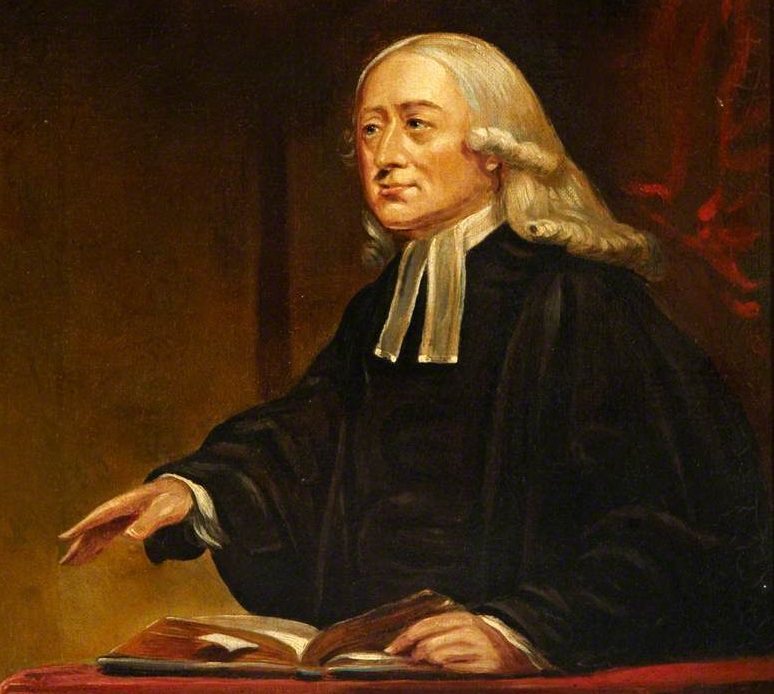
Whatever difficulties Western Christians face, chances are that John Wesley survived worse. Wesley, who helped found Methodism, experienced constant conflict, opposition, and controversy during many of his 87 years for the sake of the Gospel. Contemporary Christians committed to saving souls and promoting justice can take much courage from his story, as chronicled by Jake Hanson in Crossing the Divide: John Wesley, the Fearless Evangelist.
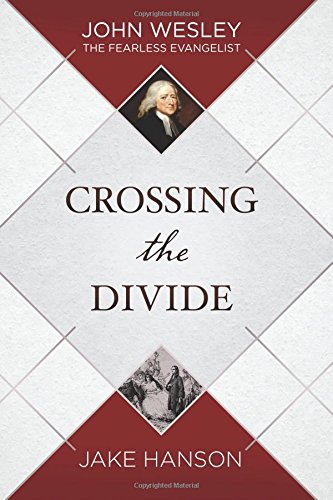
Hanson, himself a preacher, describes Wesley’s struggles – and many hard-fought victories – in his new biography of the 18th century Methodist leader. Crossing the Divide details how Wesley encountered “ecclesiastical divisions, ministerial turf wars, and predicaments” within the Church, not to mention the “poverty, sickness, and spiritual darkness” of his times, according to Hanson.
“John Wesley lived in an age of division, partisanship, and violence of a degree as yet unknown in the West today,” Hanson wrote. “He serves as a model for our generation to not merely lament the difficulties and disputes, but to view opposition as an opportunity to transform a world that is spinning out of control.”
Violent reactions to Wesley’s teaching would likely shock modern readers. Indeed, violent opposition became a part of his life from an early age. Hanson recounts how Wesley nearly died in a fiery blaze at the age of five. The fire was likely started by opponents of John’s father Samuel Wesley, who disagreed with his support for the Church of England.
Later in life, mobs frequently targeted Wesley as he travelled from town to town. He believed their rage resulted from misunderstanding his message, but he remained determined to share the truth with them.
“The angry mobs could often be vicious, chasing Wesley and his companions with clubs, cleavers, or any other potentially deadly instrument at hand,” Hanson wrote. “He was often pelted with stones, smeared with dirt, grabbed by his ‘soft hair’—as one of the rabble once noted in surprise—and chased into houses, which they threated to burn or tear down.”
Opposition came in other forms, too. His colleagues and students at Oxford ostracized him because of his religious zeal. Churches banned him from preaching, forcing him to preach in obscure venues and even outdoors. Yet this proved to be a blessing in disguise, pushing him to reach a wider, unchurched audience than he otherwise would have.
Interpersonal conflict also plagued Wesley. Sometimes theological differences caused these divisions. For example, he contested George Whitefield about predestination, and separated from the Moravians over the meaning of saving faith. Wesley dealt graciously with his opponents, but he also stood by his convictions.
Wesley also experienced his fair share of relational problems resulting from personal conflict rather than ideological differences. Unfortunately, he sometime exacerbated these tensions through his lack of tact, his romantic relationships being the prominent examples. Wesley fell in love with two women before eventually marrying his wife, Mary. All three ended badly. His first two loves spurned him, which left Wesley feeling spited. In turn he overreacted. The first incident resulted in a politicized controversy that forced Wesley to abandon his mission trip to Georgia colony. The second resulted in relational fallout between himself and his brother Charles lasting several years. Finally, his ill-advised marriage resulted in years of strife between himself and Mary. Jealous and temperamental, Mary eventually separated from John.
These conflicts failed to stop Wesley from striving to spread the Gospel. One of Wesley’s greatest strengths was his organizational abilities – his talent for mobilizing a movement. Committed to Christians spurring one another on, Wesley always emphasized the importance of Christians pursuing personal holiness. So he implemented structures like “classes” and “bands” to provide teaching, accountability, and opportunities to study Scripture. While Wesley and his associate preachers ministered in various locations throughout England, creating small groups would enable believers to stay grounded in their faith and grow in holiness. Thanks to this structure, Methodism continued to grow and remained a vital force even after Wesley’s death.
This structure also enabled the proliferation of worship hymns, particularly the thousands composed by Charles Wesley and Isaac Watts. Hymns like “O for a Thousand Tongues to Sing,” “Hark! the Herald Angles Sing,” and “Come Thou Long Expected Jesus” endure as mainstays of English hymnody. Thanks to Wesley’s determination to stand by his convictions, Methodism survives today.
Hanson concluded Crossing the Divide by noting that more than two centuries later, “many continue to follow in the footsteps” of Wesley to evangelize the world. By learning about his life, perhaps more Christians – whether or not they identify as Methodists – will be inspired to do the same.
Crossing the Divide, as a readable biography, provides an ideal summary of John Wesley’s life, work, and theology for the modern Christian. Around 250 pages long (including endnotes), it packs plenty of content into a relatively compact biography. Succinct chapters with subdivisions make it easy to consume Crossing the Divide in pieces. Questions for reflection and original application points by Wesley make the book well suited for personal and group study.




Comment by Nutstuyu on August 17, 2016 at 1:29 pm
Sounds like Wesley’s opponents were much like the #LGBTQRSXYZ agitators today.
#ObeyTheBookOfDiscipline
Comment by Skipper on August 18, 2016 at 10:36 am
I would say he had more people throwing rocks and wanting to beat him. But the law was usually to his rescue. If you speak and act freely today and exercise your Freedom of Religion, you could lose your whole business to the ungodly. Today we have agitators that are right up there with Prophets of Baal! If you really go out and speak the truth today, you should expect considerable persecution. You could lose your job or be put out of the military. Today there are just few Methodists (or others) willing to stand up to the agitators and take the punishment that comes with the territory!
Comment by Dan on August 18, 2016 at 7:09 pm
I don’t believe that Wesley dealt very graciously in his theological dispute with Augustus Toplady. Vituperative is the word I would use to describe how Wesley addressed Toplady.