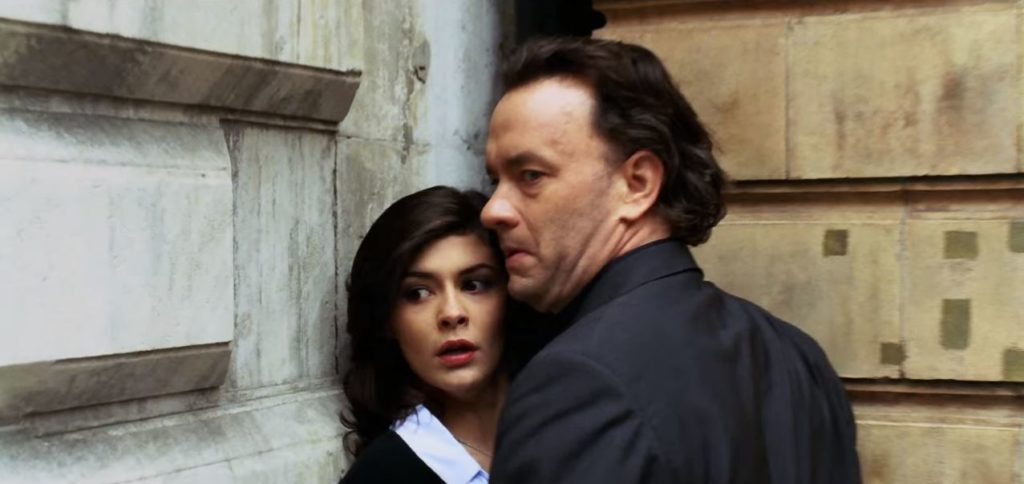
Ten years ago, back in August 2006, blockbuster film The Da Vinci Code was wrapping up its three-month long romp at the box office. Although it received mixed reviews from critics, moviegoers were enthralled with the religious thriller. It earned more than $758 million internationally, according to Box Office Mojo. Before ever even becoming a movie, the original book by Dan Brown spent 136 consecutive weeks (more than two straight years) on the New York Times best-seller list.
The Da Vinci Code followed the pursuits of the fictional symbologist Robert Langdon (played by Tom Hanks) and French detective Sophie Neveu (Audrey Tautou), with the seeming help of Sir Leigh Teabing (Ian McKellen). Prompted by a gruesome murder, they embarked on a quest for answers that led them to uncover a murderous Roman Catholic sect, the secretive Knights Templar, and the Holy Grail.
Among the heretical “truths” they discovered along the way included that Jesus was not God, but a man who was married to Mary Magdalen – the living and breathing Holy Grail. They also found out that Jesus had living decedents continuing through the present day. The Church had been tracking down and wiping out these decedents for millennia, an effort tracing back to St. Peter. Indeed, this was the supposed impetus for the Church’s alleged suppression of women through horrendous means like witch trials.
During one tense scene, Teabing exclaimed: “Jesus must be revealed for what he was. Not miraculous, simply man.”
“Why does it have to be human or divine,” Langdon pondered at the film’s conclusion. “Maybe human is divine. Why couldn’t have Jesus have been a father and still been capable of doing all those miracles?”
Claims like these naturally stirred up plenty of controversy. Christian commentators leveled blistering criticisms at The Da Vinci Code. These barbs ranged from calling the film “theologically seductive” to “an attack upon the core beliefs of the Christian faith.”
Now, with ten years of perspective, perhaps it’s easier to see The Da Vinci Code primarily as a piece of entertainment rather than a coordinated attack to overthrow Christendom. But what still makes the book and film intriguing is that they repackage old heresies, even if for nothing more than entertainment value, providing a case study for understanding false theology. Indeed, this fictional tale helps highlight one common trait among the most lethal Christian heresies: they often hinge on redefining the person and work of Jesus Christ.
In fact, Stephen Nichols used The Da Vinci Code as the launch pad of his 2007 book, For Us and for Our Salvation: The Doctrine of Christ in the Early Church. “If we learn anything from The Da Vinci Code phenomenon, it must be the lesson of the importance of getting the person of Christ right,” Nichols wrote in his introduction. “The early church labored over this question, and they did so in the face of intense challenge. The contemporary church needs to do no less.”
He admitted that the “overwhelming wake of The Da Vinci Code has, like a tropical storm, caused a great deal for damage,” but that it also provided an opportunity. Specifically, he said the film renewed the interest of unbelievers and believers alike in the ancient and fundamental teachings of Christianity, such as the Nicene Creed. Nichols celebrated serious interaction with Christology, for whatever reason.
Spreading a proper understanding of Jesus Christ requires the engagement of informed and thoughtful Christian voices. Southern Baptist Theological Seminary President Albert Mohler expressed as much in an interview with Decision Magazine Executive Editor Jim Dailey about The Da Vinci Code:
This is a great opportunity for Christian witness, because as a result of a Hollywood movie millions of people are going to be talking about who Christ is and why He came. We need to be ready to give an answer to clarify and to point to the truth concerning Christ. We need to be ready to say, ‘The truth of Jesus Christ and His Gospel is far more exhilarating than anything one would find in a conspiracy thriller.’
Confusion produced by phenomenon like The Da Vinci Code says as much about the state of the Western Church as the potency of the heresies themselves. The Church’s social witness must involve preaching biblical truth and spreading basic theological literacy throughout society. Both clergy and laity should be ready to answer critics, skeptics, and seekers alike. St. Peter instructed Christians to be always “prepared to make a defense to anyone who asks you for a reason for the hope that is in you” (1 Peter 3:15).
In whatever form they take, may the rise and fall of heresies provide motivation for the Church to sharpen its understanding of Jesus Christ, redouble its Gospel proclamation, and renew its social witness. These heresies may produce misunderstandings in society, but they also provide the Church fallow ground for planting seeds of truth.

Comment by Patrick98 on August 12, 2016 at 11:03 am
Several years ago I taught a series on heresies. I showed what the heresy believed or propounded, contrasting that with Biblical truth. I also showed how the heresy began, and most importantly, how to recognize it when it pops up again. Heresies often pop up again, and when they do they are often seductive. It is important for Christ’s followers to know truth, so that when lies appear, they appear for what they are – lies.
Thank you Joseph for this article.
Comment by DD on August 12, 2016 at 5:14 pm
The Da Vinci Code claimed that “witches” included female scholars, priestesses, gypsies, mystics, nature lovers, herb gatherers, even midwives. Diane Bass, who claims to be a Christian, included this “data” about herb healers in her People’s History of Christianity: “Women could be burned as witches for inheriting their father’s property or healing a sick child with herbs.” Amazing that a novel is regarded as a credible source of history.