The modern world is not evil; in some ways the modern world is far too good. It is full of wild and wasted virtues. The vices are, indeed, let loose, and they wander and do damage. But the virtues are let loose also; and the virtues wander more wildly, and the virtues do more terrible damage.” -Chesterton
It is unclear whether or not Socrates and Plato agreed on the theory of the forms. The line between the famous tutor and pupil in Plato’s dialogues is blurry at best. What isn’t so blurry is that Socrates did not think philosophy could be written. His elentic dialogues with anyone and everyone were the mode proper to philosophy. To write it down would be to lose the energy of the questioning, the momentum of the moment.
I myself am glad Plato decided to write rather than just talk, but there is wisdom in Socrates’ preference. A conversation allows for ideas to trip over one another. In conversation, ideas get fully fleshed out, because several minds jump on them at once.
The idea of concern today is the nature of God and technology. Brian Miller already had the fun of commenting on Billy Graham’s most recent interview. This is me inserting myself into that conversation, specifically at the point where Mr. Miller concludes:
The point that Graham and Chesterton are trying to tell us is that technology is only good when it is being used to point to something more worthy beyond it. When it becomes the center of our lives and culture we have gone amiss and abused the gifts given to us.
This “going amiss” and “abuse of gifts” has a less subtle name: sin. I have devoted much time and energy into decrying the ways in which the internet has aided in the spreading of lust, yet that is not the worst thing that the internet can do. Lust, so far as it goes, it is actually the least harmful of the seven deadly sins. Classical philosophers (as well as Dante) place the lustful on the edges of hell. Far more problematic is the sin of pride, that is, the sin for which Satan fell from heaven like lightning.
In our age, the names of those who proudly use the internet are well known. Mark Zuckerberg, if Aaron Sorkin’s script is to believed, created Facebook as a revenge stunt, fueled by his own resentment of Harvard’s elitist culture. Even if the facts of the script are in dispute, the film “felt true” in the words of a critic:
The depiction of Mark Zuckerberg, in The Social Network, as a bastard with symptoms of Asperger’s syndrome, was nonsense. But it felt true. It felt true to Facebook, if not to Zuckerberg.
The character Zuckerburg, if not true to the real person, is at least true to the habits facebook cultivates, self-conscious paranoia, hyper-sensitivity to rejection and a distorted sense of value as regards one’s own life.
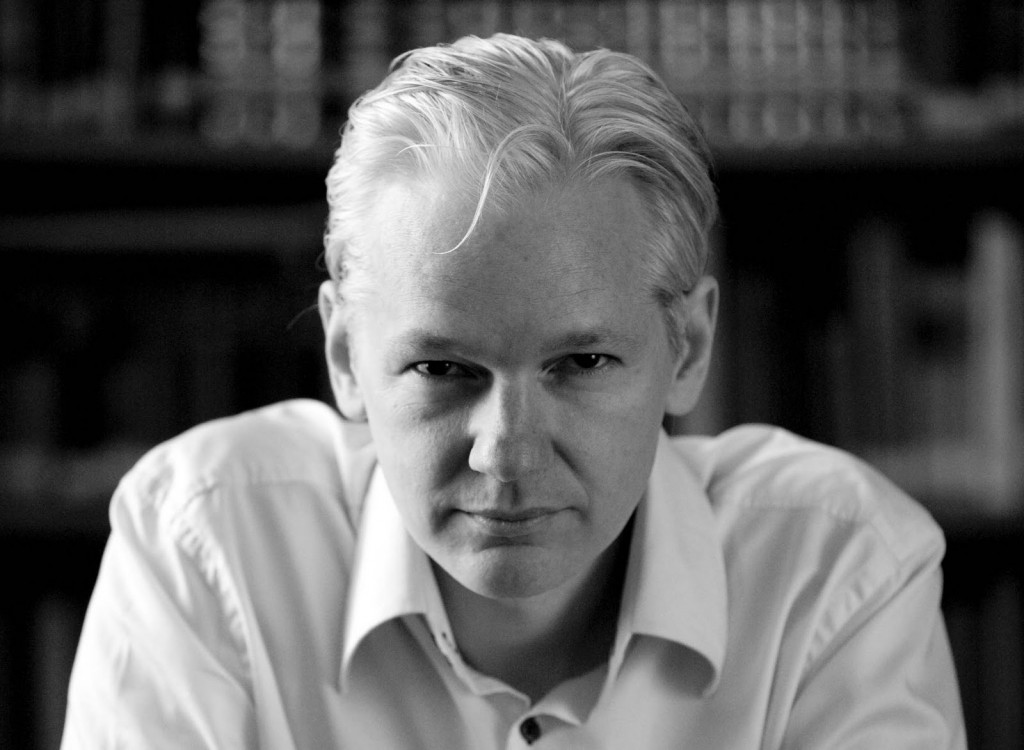
Interestingly, these qualities have returned to the big screen in the recent chronicle of WikiLeaks; The Fifth Estate. In a curiously self-defeating move, Julian Assange (the hero or villian of the film, depending on your biases going in), for fear the movie would make him look paranoid, hyper-controlling and egotistical, wrote a letter to the star Benedict Cumberbatch begging him to not participate in the film, thus confirming the film’s suggestion that he really is paranoid, hyper-controlling and egotistical.
While his wish to make the United States permanently transparent through a steady stream of high-profile leaks has been left unfulfilled, Assange can at least rest assured that his fears about negative propaganda have been unrealized. The film grossed a laughably low amount, and thus rendered my review of it irrelevant.
But the film as an example of Chesterton’s point which began this essay still remains relevant. If Julian Assange is a virtue unleashed, he is justice. The leaks of justice began with the documents about the war in Afganistan. “Civilian casualties” and “friendly fire” are discussed by Assange’s team as he watches leaked video, with a tear in his eye.
When trying to sell the famous “Cablegate” package of leaks to the Guardian, The New York Times and Der Speigel, Assange paints himself and his enterprise as the new standard in truthful journalism. When he presents Wikileaks at a tech conference, Assange casually invites praise for his enterprise, in his description of the informants (and by extension, himself):
But if we could find one moral man, one whistle-blower. Someone willing to expose those secrets, that man can topple the most powerful and most repressive of regimes.
This is the problem with a single virtue being unleashed. Not being tempered by prudence or humility, justice eventually develops a mirror, an awareness of how justice is perceived in the public sphere. The man who becomes justice mirrors the man in Antoine de Saint-Exupery’s fable The Little Prince. The character of the title encounters a man convinced he is the most admirable man in the world. However, his little world is only big enough for him, about the size of a house. Assange falls into the same trap. He knew during Cablegate that he looked like a hero. His paranoia about the release of The Fifth Estate bespeaks a sad reality. The accuser cannot stand to be accused.
*
But while God allows blessing to come from such grand inventions like wireless and mobile devices, Satan has also used technology to cleverly advance his deception. – Billy Graham
I once asked a priest why demonic possessions weren’t more common. He replied that the worst attacks of evil must always come in small batches because that is only as far as God will allow. Millions of people use the internet for lust. Only a small fraction use the internet for pride, but what they have wrought is quite extraordinary. Assange has changed the face of both journalism and security.
Speaking autobiographically, Assange also had a hold on me, for a time. My freshman year of college, the girl I was casually dating left me for the guy in the next dorm room. It just so happened that he was trying to start a chapter of the Kappa Sigma Fraternity on our campus. Using Wikileaks, I found their secret initiation book, downloaded it and showed it to the Office of Student Activities. The point isn’t that Kappa Sigma is somehow good because they are disliked by myself and Wikileaks. The point is that I lost sight of how much damage revenge was doing to me. In trying to take down the bad guys, I was taking myself down instead. Such is the nature of Wikileaks.
Brian Miller is right that: “We must either use machines to pierce the barrier they have created, or we must attempt to show the world glimpses of the beauty that is now obscured.” But there is more to be done.
The gospel exhortation to cut off the limbs by which we sin is a difficult commandment at best. Even taken as metaphor, to turn one’s eyes from unclean images or to turn one’s mind from impure thoughts requires tremendous effort. But, the Lord has also promised “a yolk that is easy and a burden that is light.” Though the internet offers many roads to sin, avoiding sin still falls under the category of a ‘light burden.’ The commandment may be stated thus: If your computer causes you to sin, turn it off. Better for you to enter into the Kingdom of heaven with no electronics than to enter hell with a high score in Angry Birds.”
No comments yet




Leave a Reply