
Should the state ever decide who is Christian and who is not?
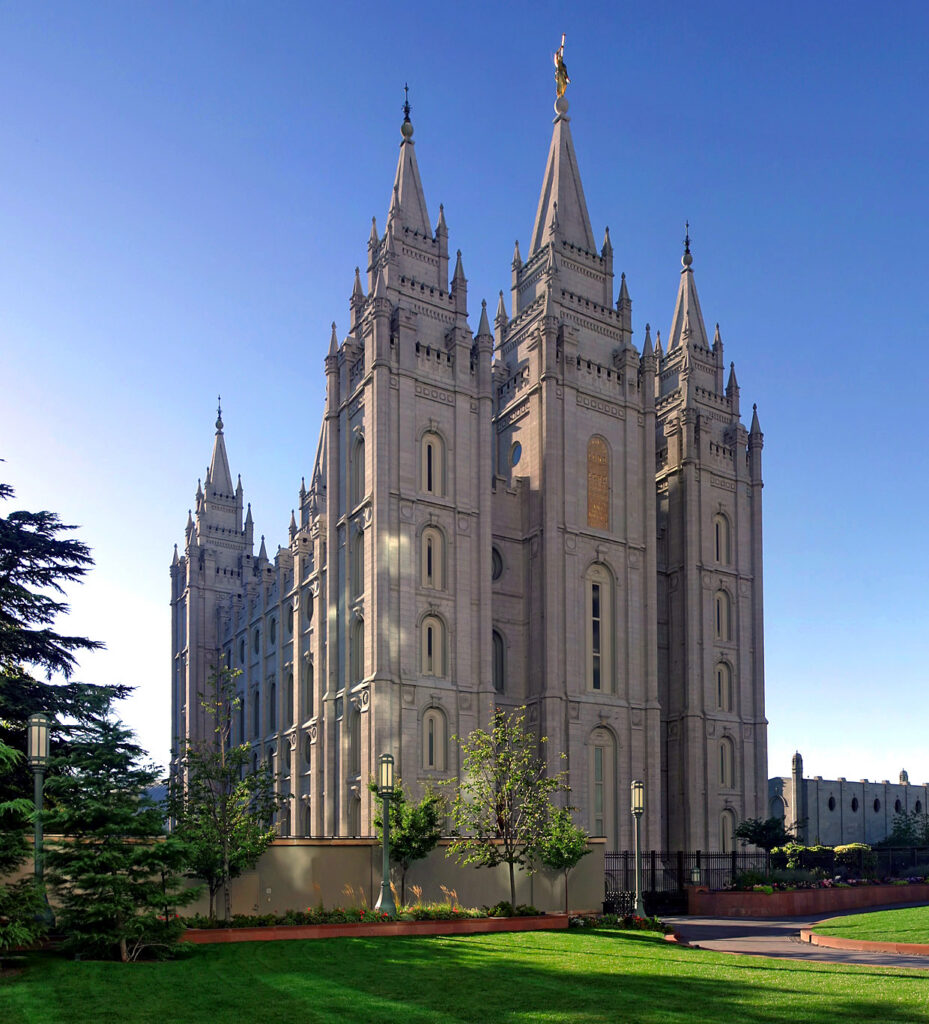
Briefly, the Pentagon seemed to be doing so, creating a new condensed list of religious “codes” for military personnel that labeled some traditions, like Catholic or Pentecostal, as “Christian,” while excluding Mormons. Some Mormon politicians loudly decried the new policy for rejecting Mormons as Christians and by implication supposedly impugning their patriotism.
The latter point was gratuitous since a patriot does not need to be a Christian. More importantly, Mormons as Americans are entitled to equal treatment before the law with everybody else. Whether they are Christian or not makes no difference in their status as citizens, of course.
Obviously reacting to the Mormon indignation, the Pentagon backtracked and created a new list of recognized religious categories without coding any as Christian. There are Catholics, Baptists, Muslims, Hindus, Anglicans, etc. Of course, decades ago, the military just had three major categories: Protestant, Catholic, and Jew.
It’s unclear why the Pentagon briefly flirted with creating a “Christian” umbrella for groups ostensibly qualified. Purportedly it was for administrative simplicity. But it elicited snarly public conversation. Some Mormons felt obligated, needlessly, to defend their patriotism and their self-identity as Christians. Some Christians felt the need to critique Mormons as non-Christians who were presumptuous to claim otherwise.
Some Evangelicals have long felt a special need to clarify that Mormons, whatever their claims, are not Christians. Mormons, after all, have different views about the Trinity, Jesus’s deity, salvation, and the afterlife. They have their own supplemental scripture. Few if any Christian churches, whether Catholic, Evangelical, or even theologically permissive Mainline Protestant, recognize the Church of Jesus Christ of Latter-Day Saints (Mormons) as direct ecumenical partners. Few if any Christian traditions recognize Mormon baptisms as Christian baptisms. Mormon converts to more traditional Christian churches typically are rebaptized.
Mormons counter that they look to Jesus Christ as their Lord and Savior, despite their theological differences. In our wonderful society of free speech and religious freedom, every citizen can debate these topics. Catholics and Evangelicals can critique Mormonism as a different sort of religion. Mormons can make their claims. Everyone can decide where they stand.
But the government really has no role in this debate. Every American citizen is equal before the law. Each citizen’s religious affiliation is legally inconsequential. How religious groups self-identify, and what they teach, is outside the government’s purview. Any religious group can theologically claim anything it wants. And critics can rhetorically fire away at these claims.
The military obviously includes adherents of every major faith. The list of religious categories for the Pentagon had grown to over 211, which became administratively complicated, hence the reduction to 31, including a category for “other.” And apparently some members of the military were dubiously claiming esoteric religious identities to justify special considerations that were becoming burdensome. So, reducing the overall number of listed groups was understandable. Providing a “Christian” umbrella and deciding which groups qualify was never wise.
Unfortunately, this brief episode exposed America’s growing tribalism. Online Catholics and Protestants chimed in with their hot takes about Mormonism not being Christian. These theological arguments are important conversations for Christians but really have little to no public policy relevance. So, what if Mormons are not Christians? It is legally and ideally politically irrelevant.
The insistence by Mormon lawmakers that their kindred are both Christian and patriotic was also irrelevant to the Pentagon issue. Senator Mike Crapo of Idaho tweeted:
The move by the Pentagon to leave The Church of Jesus Christ of Latter-Day Saints off its list of Christian religions is confounding and unacceptable. Regardless of one’s own religious philosophy, you will find Latter-day Saints, whose foundational beliefs are centered on Jesus Christ, among the most patriotic individuals in our country, serving not only in the military, but throughout various government departments and around the world. I join with my colleagues and fellow Idahoans calling on the Pentagon to make an immediate correction.
Senator John Curtis of Utah tweeted:
Latter-day Saints are among the most patriotic, service-oriented individuals in our country. They are also unequivocally Christian—just look at who is in the name of the Church. It is unacceptable for a government entity to characterize a faith in a manner that contradicts the religion’s own foundational tenets. I am working now to ensure a correction is made.
As part of a wider tweet storm, Senator Mike Lee of Utah exclaimed:
The West Point Glee Club performed “Onward Christian Soldiers” on the Ed Sullivan Show in 1954. I’m glad they weren’t asked to sing “Onward Christian Soldiers, Excluding Latter-day Saints” The Pentagon shouldn’t disparage the beliefs of Americans willing to die for their country.
Nobody doubts that Mormons are patriotic and many serve commendably in the military. Whether they are Christian or not is not pertinent to their patriotism or their status as Americans. Mormons and their Christian critics can debate theologically while also sharing fraternity as Americans.
Notably, the brief Pentagon list of “Christian” bodies, while excluding Mormons, did include Jehovah’s Witnesses and Christian Scientists, whom most traditional Christians would also deem outside orthodox Christianity. Alas, Jehovah’s Witnesses are pacifists and unlikely to serve in the military. And the dwindling number of Christian Scientists are chiefly people too old to serve. Still, their inclusion, while excluding far more numerous Mormons, was peculiar.
This Pentagon instigated conversation about Christians and Mormonism came amid rising unease about America’s tradition of full equality for all irrespective of religion. The founder of the Pentagon chief’s denomination, Doug Wilson, advocates a Protestant confessional state in which, for example, Catholic Marian processions would be illegal since, from the churchman’s perspective, they are idolatrous. Self-professed “Christian Nationalists” like Wilson with Catholic integralists, plus some other post liberals, disdain civil religious neutrality and pluralism as a decadent, failed experiment.
Senator Lee was correct when he tweeted: “I can say confidently that the U.S. government has no business recognizing the Christianity of literally every other religious sect that worships Jesus Christ — with one exception.” Lee also specified he was not referring to what “individual Christians might think.”
Individual Christians and every other American can make their own theological judgments. But the state has no role in that conversation, treating all citizens as equal members of the national family.
More from IRD:
Religious Liberty in the Eyes of Evangelicals, Catholics, Mormons, & Muslims
Episcopal Chaplains Sought for ‘Identity-affirming Spiritual Care’



Comment by Thomas on June 8, 2026 at 10:05 pm
Mormons have Christian beliefs, but they have others so distinct, that they can be considered a different religion, even a post-Christian religion. They can be considered Christians in very generic sense. I agree basically with what Mark Tooley wrote about them in this article. I also can`t forget that Mitt Romney would have won more votes for President in 2012 if he was a Protestant, a Catholic or an Orthodox. I am also quite sure that Obama would have lost probably much more votes if he came out as an atheist or an agnostic, since its not politically correct to be non-religious in American politics. I`m not against dialogue with the Latter-days Saints. The Roman Catholic Church and the Southern Baptist Convention have been doing it for some time.
Comment by Qohelet on June 8, 2026 at 10:07 pm
I think the most important point Mr. Tooley makes is that the government has no role in the debate.
Beyond that I don’t believe for a second this wasn’t Hegseth trying to be divisive. He has never been anything other than a culture warrior, and in conflict is his natural state of being.
At least Mormons were still listed as existing. He completely removed recognition from Unitarian/Universalists.
Comment by Glenn Wheeler on June 8, 2026 at 10:52 pm
It’s illustrative of how low America has sunk that a drunkard, womanizing murderer gets to decide who is and who is not a Christian.
Comment by Salvatore Anthony Luiso on June 9, 2026 at 3:21 am
In answer to the question of the title: According to Joseph Smith, in the first vision which he received from God, Jesus told him that the creeds of all the “sects” which Smith was considering joining “were an abomination in his sight”. If the LDS believe that, then it’s no wonder that those sects don’t consider the LDS to be Christian.
That said: I agree with the main point of this article: “the government really has no role in this debate”.
The author, a Methodist, says that “Some Mormons felt obligated, needlessly, to defend their patriotism and their self-identity as Christians”. I wonder: If the Department of Defense had excluded Methodists from the category of Christian, how would he have reacted? Would he have accepted that exclusion? Or would he have objected?
I wouldn’t blame him if he objected, and I don’t blame Mormons for objecting, either–even though I strongly disagree with them.
As to why the Department of Defense created the “Christian” category: I don’t know why, but I have good reason to suspect it has something to do with Secretary of Defense Hegseth’s insistence that the United States was founded as a “Christian nation”, that it still is a “Christian nation”, and that it should ever remain a “Christian nation”.
I also have good reason to suspect it has something to do with his acting as if Christianity should hold a place of highest privilege among all religions at the Pentagon.
I’m a Christian, but I prefer how the Department of Defense regarded Christianity when it was led by men of greater maturity, wisdom, and character.
Comment by David on June 9, 2026 at 7:02 am
I recall the Boy Scouts back in the 1950s had award medals one could earn for religious service. Protestants had “God and Country,” Catholics had “Ad Altare Dei,” Jews had “Eternal Light,” and Mormons had their own medal.
Jesus has a revered place in Islam, but one would hardly call it “Christian.”
Comment by J Matthew Phipps on June 9, 2026 at 7:46 am
I grew up immersed in the teachings of the Mormon Church, but my family also maintained significant Baptist and Methodist influences. Recently, the U.S. Department of Defense (DOD) classified the Mormon Church as a “non-Christian” denomination, igniting public debate and controversy. This decision prompted me to reflect on my own experiences and beliefs, especially as someone who no longer adheres to Mormon doctrine. For context, I sometimes jokingly call myself a “Moodhist”—a blend of cultural Mormonism and Buddhist philosophy.
In this essay, you may understand some of my references, especially if you share some of my experiences, or are on the inside of the Mormon experience.
My departure from the Church stemmed from a complex set of reasons. Despite my personal disagreements, I find the recent outrage over the U.S. government’s change in designation puzzling and worth examining in a broader historical and doctrinal context.
When I was growing up in the Church, members took pride in being a “peculiar people”—a term often used by leaders and members to emphasize distinctiveness from mainstream Christianity. The official narrative was that the Church of Jesus Christ of Latter-day Saints represented the restoration of the original Church of Christ, not merely another Christian denomination. The nickname “Mormon” was widely accepted, and there was a clear doctrinal distinction: within temple teachings, being “Christian” was sometimes associated with outsider groups accused of “priestcraft”. This internal distinction set the Church apart from other Christian sects, both in its own eyes and in the eyes of many outside observers.
In the late 1990s, Church leadership shifted its approach to public relations, aiming to attract a broader base of potential converts by downplaying or revising some of the more distinctive—and controversial—aspects of Mormon doctrine. This included aligning more closely with mainstream Christian rhetoric and practices. For those familiar with temple teachings, this shift was striking, as it sometimes meant altering or omitting doctrines once considered central, referred to by leaders as “plain and precious truths.” In recent years, the Church has even moved to de-emphasize the use of the word “Mormon,” encouraging the use of the full official name instead. These changes reflect ongoing efforts to reshape public perceptions and the Church’s own identity within the larger Christian landscape.
Now, to answer the question: Why did I leave the Church?
As mentioned, my reasons for leaving the Church are numerous and deeply personal. Growing up in the 1970s, I witnessed troubling issues within the Church, including allegations of abuse that have since been the subject of controversy and cover-up. The Church’s history of racist teachings—such as the exclusion of Black members from the priesthood until 1978—was coming under increased scrutiny during this period. Furthermore, the Church’s involvement in political and financial matters raised serious ethical questions for me. After serving in the U.S. Air Force and being exposed to diverse philosophies and worldviews, my perspective shifted dramatically. Upon returning from my military service and later my mission, I found I could no longer reconcile my experiences and beliefs with Church teachings.
I’ve resigned from the Church and no longer ascribe to the beliefs; however, my cultural Mormonism still reacts to events such as the new DOD recognized faith list.
Postscript: I believe that any government agency compiling lists of recognized religions, faiths, or philosophies runs contrary to the First Amendment’s Establishment Clause, which prohibits government endorsement or establishment of religion. Such actions risk undermining the fundamental principle of religious freedom in the United States.
Comment by Wilson R. on June 9, 2026 at 9:43 am
Mormons are more Christian than Christian Nationalists, which is Hegseth’s tribe.
Comment by Thomas on June 9, 2026 at 10:06 am
I have to admit that Pete Hegseth has always been the wrong man in the wrong place. His Christianity is a joke and he can`t hold a candle to some of his predecessors a Secretary of the Defense. Think about John Mattis, for example (who was an independent). President Trump already should have replaced him. “I’m a Christian, but I prefer how the Department of Defense regarded Christianity when it was led by men of greater maturity, wisdom, and character.” I agree totally.
Comment by PFSchaffner on June 9, 2026 at 11:22 am
I suspect that too much is being made of this. None of the commentary even mentions the *purpose* that religious classifications have in the military — which is the authorization and assignment of chaplains. Even the existence of a chaplaincy in the military has always been controversial, and the maintenance of a set of religious providers adequate to serve all members’ needs, within a secular organization, has always been problematic. Various criteria have been used to approve chaplains and to assign them appropriately, none of them entirely satisfactory to everyone, beginning with the original “protestant / catholic / jew,” and burgeoning to 211 categories as of 2017. One can see why efficiency demanded that this be trimmed a bit; and one can even see why it might be desirable to group categories into subcategories like ‘Christian’ — the vital question is which chaplain you’d be willing to have say final words over your battlefield grave.
Comment by Johan on June 9, 2026 at 3:49 pm
A slight amount of historical study reveals that there were multiple versions of early Christianity. When the Roman Empire decided that the proto-orthodox version (leading to the Nicene Creed) was the only version, and proceeded to try to violently stamp out the other versions, eventually people got it in their minds that Christian = Nicene. But that is incorrect. So I would simply say that Mormons are non-Nicene Christians.
Comment by Wilson R. on June 10, 2026 at 12:52 pm
Mormon theology is certainly beyond Christian orthodoxy. But the real problem for Christians is the preponderance of historical evidence that Joseph Smith made it all up. And this conclusion comes from Mormon sources (e.g., the Mormon historian Fawn Brodie, who was given access to secret records in Salt Lake City), not just critics.
Comment by David on June 11, 2026 at 8:53 am
I wonder where Scientology will fit on the spectrum? It seems rather easy in the US to create a religion or a denomination.
Comment by Td on June 11, 2026 at 1:18 pm
Yes, PFSchaffner- exactly. That would be the point of grouping. And respectfully, it would not be appropriate in any way for a LDS chaplain to be assigned to those who believe in the Nicene creed. To be clear here, christian belief was defined by the Nicen creed 1700 years ago. If you or your regious group doesn’t believe in that creed, you aren’t Christian. And yes today that non believing group includes many methodist, lutheran, and presbyterian denominations.
Comment by Wilson R. on June 11, 2026 at 1:25 pm
TD, I can’t speak for Lutherans and Presbyterians, but your claim about the Methodists is dead wrong. The Nicene Creed is right there in the United Methodists hymnal, and United Methodists typically recite that or the Apostles’ Creed in worship every Sunday.
Comment by Eli Jones on June 11, 2026 at 4:04 pm
I appreciate your comments. As a practicing Latter-day Saint, I also found int peculiar that other churches that are frequently listed as non-Christian were included but not the Church of Jesus Christ of Latter-day Saints. From a purely naive viewpoint, I wondered if it had something to do with the length of the Church’s name – it is longer by far than any other “code”, even without the addition of Christian.
I agree with the sentiment that the chief concern here is that the government should not weigh in on theological judgements. Two weeks ago, members of our faith were encouraged by our leaders to spend the second hour of our church worship discussing the constitution and religion as protected by the first amendment. I don’t know if I’m allowed to share links in comments, but I deeply appreciated the discussion two of our apostles shared about religious freedom. One of the main takeaways is that religious freedom should be applied by the government fairly to all religions without favor, and that we should actively promote religious freedom for all creeds:
https://www.churchofjesuschrist.org/study/manual/celebrating-freedom-and-agency/01?lang=eng
Thank you again for the blog post.
Comment by Thomas on June 12, 2026 at 11:49 am
Scientology is a science fiction cult. They don`t claim to be Christians.
Comment by Walter Murphsky on June 12, 2026 at 12:16 pm
Muslims claim to acknowledge Jesus as a prophet, does that make them a Christian belief as well?
There is “another Gospel of Jesus Christ” used in the LDS church, isn’t that alone a disqualifier? Time has qualified the scriptures, time and time again historical text has validated the scriptures, the Book of Mormon has not been qualified by any other sources, no other sources qualify the scrolls allegedly discovered by Smith.
Jim Jones preached out of the Bible, does that mean his theology was sound?
Comment by Skipper on June 12, 2026 at 12:29 pm
A basic Christian belief is there is only one God. It is essential.
Comment by Wayne on June 12, 2026 at 1:22 pm
The Church of Jesus Christ of Latter-day Saints is a CULT. They believe God was once a man named Adam. Adam became God. They believe there is another God called Jehovah and one named Elohim. They believe in more than ONE god. Furthermore they believe the Adam God has a body. That God is not a spirit.
They believe Jesus is not the same God, but another God. That Jesus was born of sexual intercourse between the Adam god and Mary. The believe Jesus is a descendant of Bathsheba, thus approving David’s polygamy. That Jesus was the brother to the devil when he was pre existent. That during his lifetime Jesus was married to Martha, Mary and Mary Magdalene.
They believe the Holy Spirit is an “it” and is called an it and is a fluid.
They believe we are saved by blood of Christ after we do all that we can do. So a Mormon never has assurance of eternal life with Yeshua. So it throws it all back on deeds.
There believe there are 3 layers in heaven. In the top layer you have a celestial marriage and are married forever. The 2nd layer is for other Christians and men of good will. The 3rd layer is for the heathens who never heard anything about the Bible at all.
Comment by Glenn Wheeler on June 12, 2026 at 11:15 pm
Wayne,
And your particular sect of Christianity is not a cult?
Oh no, of course not! All versions of Christianity…except of course yours, which is of course the only correct version…are cults.
Right?
So laughable!
Comment by Dennis C on June 13, 2026 at 11:36 am
No one seems to ask the purpose the new characterization. Perhaps it’s because Chaplains of a certain denomination are selected as Christians to hold service for military members. Should a Mormon preach to Christians who believe in Christ our savior by someone with a different theology? I don’t think so. That happened to me several decades ago. A Mormon was assigned as our chaplain. He did a great job and carefully threaded the needle. But, he should not have to do that and I should have had a true Christian pastor. Patriotism was and is not the criteria.
Comment by Td on June 15, 2026 at 9:34 pm
Wilson- i will not argue your point. My point is that most clergy in those denominations do not believe in or teach the creed. Do you seriously think the UMC clergy that have overturned millenia-old doctrine in faith and morals believe in the objective reality of the trinity, the virgin birth, the resurrection, heaven, and hell?
Comment by Wilson R. on June 16, 2026 at 12:23 am
I am not sure what you mean by “objective realities.” The virgin birth, heaven, and hell are not what most people would call objective realities. They are matters of faith and belief. And yes, every UM pastor I have ever known–starting with my own father–preached and taught from a belief in all of those things.
I presume that your reference to overturning millennia-old doctrine in faith and morals is about LGBT pastors and same-sex marriages. First, you can be a UM pastor and not believe in same-sex marriages. Second, are you seriously suggesting that affirming a same-sex marriage means you don’t believe in the resurrection, heaven, or the virgin birth?
Comment by Skipper on June 16, 2026 at 10:12 am
Christians believe in one God. Mormons believe in many gods. They don’t deny it.
Comment by Glenn Wheeler on June 16, 2026 at 11:50 am
Skipper,
Christians believe in a pantheon of one top deity and two sub-deities.
Comment by Skipper on June 16, 2026 at 5:41 pm
Glen, that’s not right. You are way off base with your pantheon idea. Read the book.