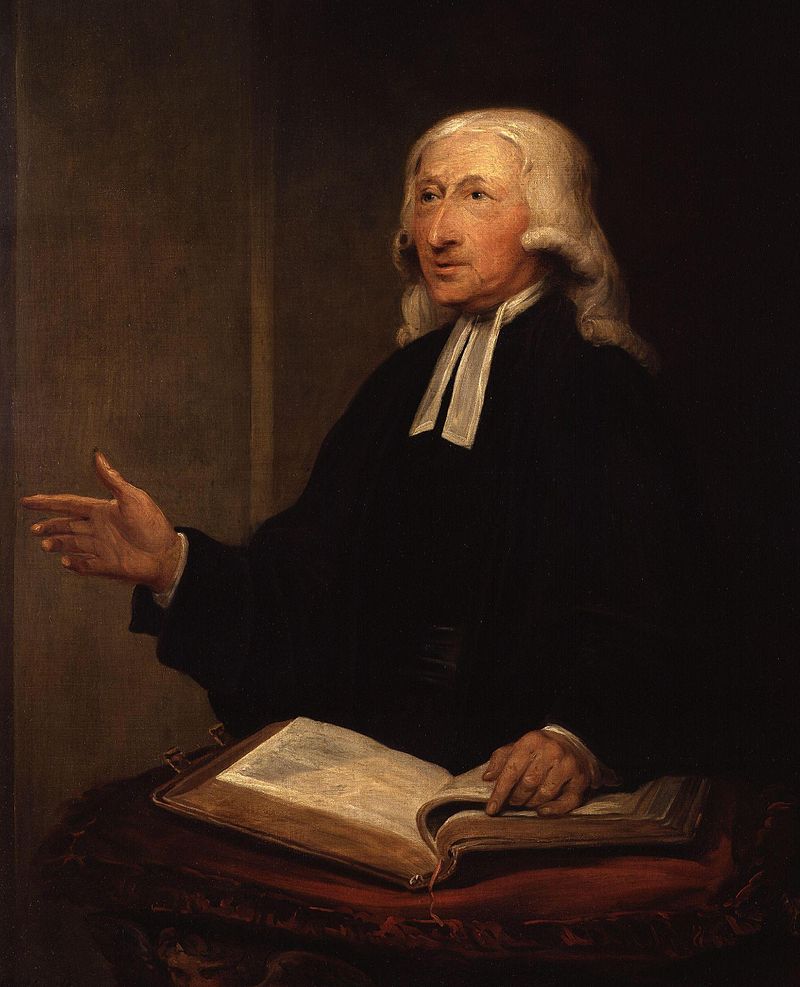
“Entire sanctification, or Christian perfection, is neither more nor less than pure love—love expelling sin and governing both the heart and life of the child of God.” -John Wesley
Wesley included the quote you see above in a letter to Walter Churchey in the winter of 1771. Over the course of his ministry, he had to describe entire sanctification, or Christian perfection, many times.
When we talk about Christian perfection, many people stumble over the word “perfect.” Perfection is seen as a static state in which change, or growth, isn’t possible. It seems contrary to human existence.
Wesley didn’t see perfection this way, nor does Scripture. We can see very clearly that Jesus commands us to “be perfect as your heavenly father is perfect” (Matt. 5:48). So what does this mean?
The perfection that Scripture speaks of, and that Wesley promoted, can be understood as wholeness. We are called to be made whole, to be healed, by God. This wholeness, or healing, makes it possible for us to live the lives that God has called us to, the lives that he meant for us to live in the first place, where sin no longer has power over us, and we are freed to live lives of holy love.
Christ is both the pattern of this perfection, and the means by which we, too, can participate in it. Holiness is Christlikeness.
This transformation is both progressive and instantaneous; there are times when we are learning Christ’s ways and making them our own and other times when God’s free grace changes us. In many ways the proclamation of this grace-filled promise is the reason why the Wesleyan movement exists.
So, in order to dive more deeply into this calling, I want to invite you to a special JWI webinar on May 14 at 7 p.m. (Eastern).
The webinar will include four presentations (15 minutes each) and a time of Q&A where you can ask questions. Joining me (I’ll be covering the history part) will be:
- Dr. Jason Vickers of Baylor University who will outline the doctrine itself
- Dr. Suzanne Nicholson of Asbury University who will outline its scriptural foundation
- Dr. Jonathan Powers of Asbury Seminary who will focus on the practices that lead to holiness, particularly worship
I hope that you will join us! This webinar is for anyone interested in holiness of heart and life. To register for this free webinar, please follow this link.
I hope to see you on the 14th!
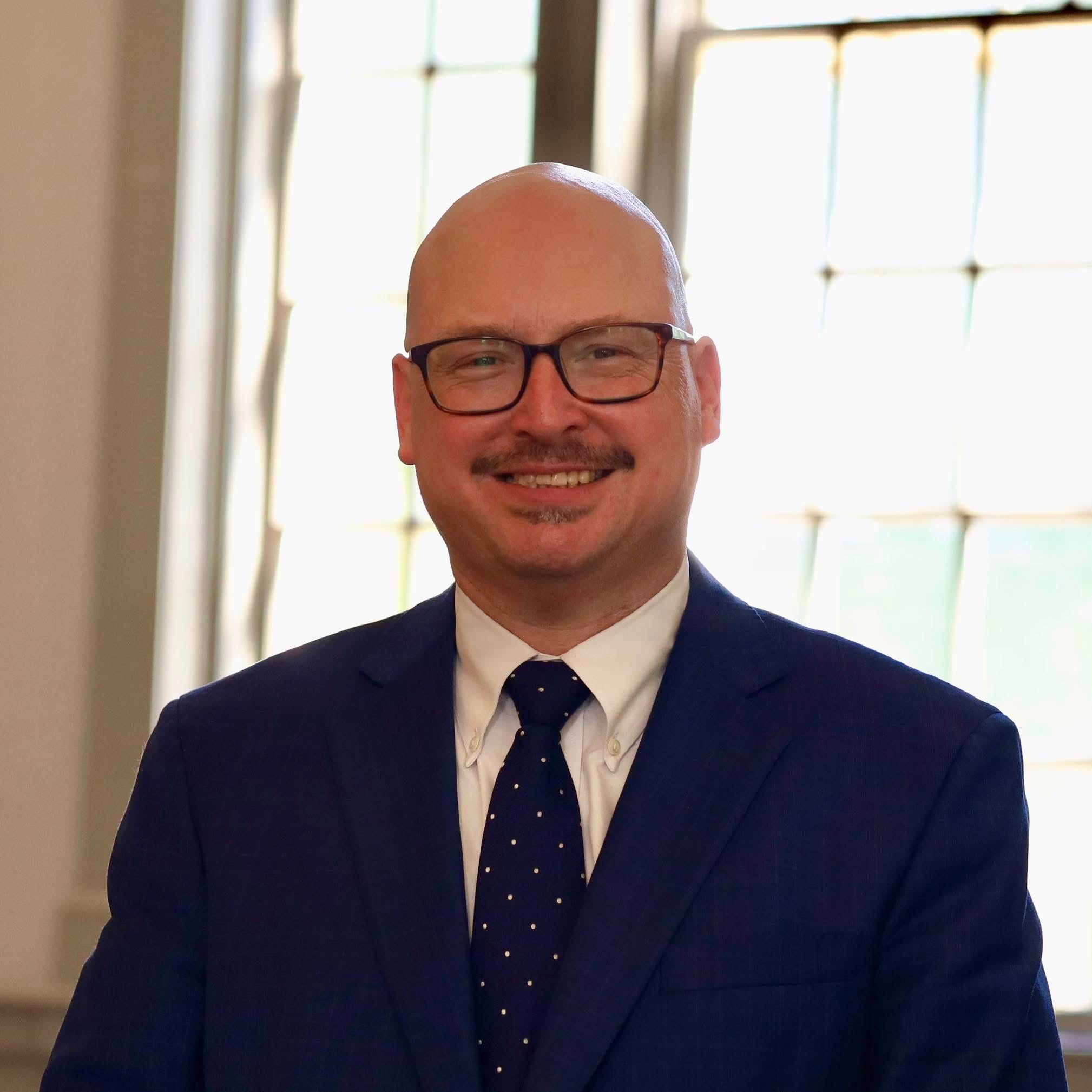
Ryan N. Danker is director of the John Wesley Institute, Washington, DC. This is adapted from a weekly JWI newsletter that can be subscribed to here.
P.S. This ministry is dependent on the gifts of donors just like you and we are behind in fundraising; your help is needed more than ever. Please consider a gift today here on our secure donation page or contact me directly if you would like to discuss other giving options. Thank you for your support!
More from IRD:
My First Year at New Room, and Some Thoughts on Christian Perfection
The Limits of Christian Perfectionism



Comment by Skipper on May 13, 2026 at 10:02 am
Today the United Methodists approve of same-sex marriage and Trans-genderism. Wesley wouldn’t have tolerated this for two shakes of a Billy-goats tail! They have completely forgotten how Methodists are to strive for Christian perfection. I have not seen their basis for supporting this idol worship, but it probably goes something like Jude 3-7, ESV:
Judgment on False Teachers
3 Beloved, although I was very eager to write to you about our common salvation, I found it necessary to write appealing to you to contend for the faith that was once for all delivered to the saints. 4 For certain people have crept in unnoticed who long ago were designated for this condemnation, ungodly people, who pervert the grace of our God into sensuality and deny our only Master and Lord, Jesus Christ.
5 Now I want to remind you, although you once fully knew it, that Jesus, who saved a people out of the land of Egypt, afterward destroyed those who did not believe. 6 And the angels who did not stay within their own position of authority, but left their proper dwelling, he has kept in eternal chains under gloomy darkness until the judgment of the great day— 7 just as Sodom and Gomorrah and the surrounding cities, which likewise indulged in sexual immorality and pursued unnatural desire, serve as an example by undergoing a punishment of eternal fire.