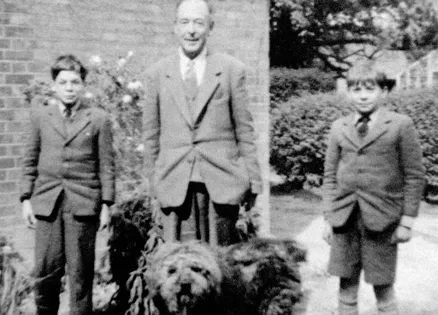

“I myself do not enjoy the society of small children,” C.S. Lewis once expressed. It is hard to picture the British author and apologist without noting his enormous impact on children’s literature. How could the author of Narnia not like children?
Not liking children is common in today’s society. Some even brag about it. But Lewis recognized something important about the sentiment.
“I recognize it as a defect in myself – just as a man may have to recognize that he is tone deaf or color blind,” he wrote.
In other words, it is not a feeling to take pride in but a blight in one’s character. As we approach the National March for Life, we should give thought to the value of children.
Lewis called his dislike a “defect” because he recognized that we live in a world of objective morality and that, in order to participate in a rational world, the value response that we have toward things must be in alignment with the value that is objectively owed to the object. When we cannot do so, there is something deficient in us, our feelings are out of alignment with reality. Children, being full persons, are due a proper value response; when we cannot recognize that value, it doesn’t lessen the value owed to them.
We would recognize this when talking about any other group of people. Very few people would proudly announce that they just don’t like women, men, the elderly, the disabled, etc. If they did, it would extricate them from polite society. What then should people do if they don’t enjoy children? Lewis is an excellent example.
Briefly, this is not condemning people who feel initial discomfort about looking after children. Many people are uncomfortable if they have limited experience. There is a great responsibility in looking after children. But that is eased with time and practice, and it is different from not liking them.
It is, however, necessary to recognize the defect and come to understand the true value of children. Lewis did this well. Of them he writes:
“We must meet children as equals in that area of our nature where we are their equals…The child as reader is neither to be patronized nor idolized: we talk to him as man to man.”
Lewis treated children seriously, not that he wouldn’t have fun with them. But he viewed them as equal to adults in terms of respect due and in terms of seeing them as moral decision makers. He refused to call children “kids”, finding the term condescending.
Lewis too recognized that there is something good about childhood. He treated children seriously but didn’t think forced maturity was good. He notes to one of his child readers that the desire to act as a grown-up led to Susan rejecting Narnia. Lewis also wrote, “When I became a man I put away childish things, including the fear of childishness and the desire to be very grown up.”
Notably, Lewis became an increasingly generous man after his conversion. One way this was shown was in his dedication to respond to all correspondence from his readers. This included all letters sent by children and the collection of his responses, Letters to Children, is a delightful read. Lewis answered these letters with seriousness, offered and requested prayers, gave feedback on writing and art, and encouraged the imaginations of the children who wrote to him. His letters were never condescending.
Lewis wrote about the importance of treating each other with the seriousness that persons with eternal souls and destinies deserve, “This does not mean that we are to be perpetually solemn. We must play. But our merriment must be of that kind (and it is, in fact, the merriest kind) which exists between people who have, from the outset, taken each other seriously – no flippancy, no superiority, no presumption.” He recognized that this was equally true for children.
Lewis wrote, “It’s fun laying out all my books as a cathedral. Personally, I’d make Miracles and the other ‘treatises’ the cathedral school: my children’s stories are the real side-chapels, each with its own little altar.”
Finally, Lewis interacted with children, and when he did so, he engaged unreservedly. He was happy to get on the floor and play with them. Lewis had four Godchildren. He intentionally participated in life events, and not just the spiritual ones. He kept correspondence with them. For his goddaughter Sarah, he not only kept a regular correspondence but paid for her ballet lessons. She was not the only child that Lewis showed similar generosity. He paid for agricultural college for another godchild, drama studies for one of the girls who stayed with him during the war and attempted to teach a neighbor child to read. He would also allow the neighborhood children the use of his home’s pond for swimming.
Lewis would go on to marry Joy Davidman Gresham, but even before doing so would dote on her children. He dedicated The Horse and His Boy to them. Dough Gresham has recounted that his older brother David was a violent schizophrenic, and Lewis went out of his way to care and provide for him as best he could. He called the care that Lewis and his brother gave David, “heroic.” Of Lewis’s generosity to the boy he said, “Jack helped my brother through all sorts of difficulties in education and so forth, When my brother decided to become Jewish rather than Christian…Jack went out of his way to get special pots and pans for him so he could cook his own kosher food and get kosher food from the Jewish shop in the middle of the covered market in Oxford.” Gresham explained that David never displayed gratitude for Lewis’s care. When Lewis and his brother died, the estate was left to Doug and David.
Of his stepfather, Doug Gresham wrote, “I had gone as a child hoping to meet a knight in armor from a fairy tale. I got something far better, a father who understood that what children need most of all is unwavering love.”
Most famously, Lewis took in children during WWII, eleven in total. Mostly young girls. Several have shared the ways in which Lewis would dote on them. One wrote that she was “spoiled” while at his home. He would sneak them food at night; this would have been during rationing and provide them with ways to continue their education as well as ways to make them feel welcome and comfortable. He would attend Mass with the Catholics in his care. He even kept up with some of them after the war. He and his brother would attend one girl’s ballet recitals long after she left their care.
Lewis did not then simply learn to tolerate children but to love them with a monumental generosity. And we can and should learn to do the same. Christ tells us that “whoever receives a child in my name receives me.”
Lewis’s experiences taking in children during the war helped him to write his Narnia series, one of the greatest literary gifts given to children. In it, they are taken seriously, and treated warmly, as characters with depth. His child characters are distinct individuals with distinct personalities and true moral agents capable from a young age of real encounters with the living God and the ability to have real saving faith. They are full, “Sons of the Lord Adam and Daughters of the Lady Eve.” And that is how we should receive them as well.
More from IRD:
Whittaker Chambers on the Blessing of Children
Whittaker Chambers’ Enduring Witness



Comment by David Gingrich on January 27, 2026 at 9:04 am
Lewis is one of the three men I have taken as role models. The other two are JS Bach and Jan Hus. If you don’t know who Hus was, you might enjoy learning.