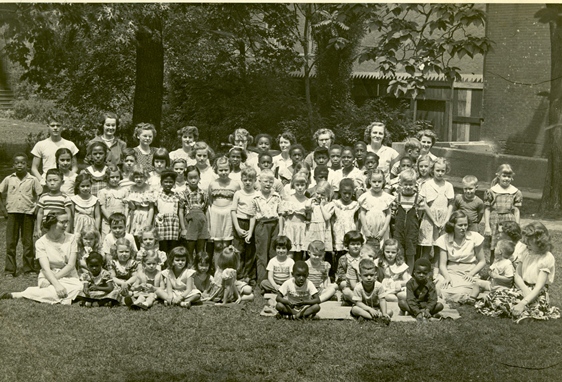

When I was four years old my Mother, who grew up Mennonite but became Methodist by marriage, shipped me to Berne, Indiana, to live with my aunt so I could attend a Mennonite bible school.
Certain that I would not get a proper Christian education in our county-seat Methodist church, my mother determined that I spend five weeks a summer for nine years to gain proper training. This was no “kool-aide and cookies” bible school: we memorized scripture, and that first year it was the Beatitudes, beginning with “Blessed are the poor in Spirit for theirs is the Kingdom of God.”
Later in life, I revisited the curriculum plan. The Sermon on the Mount was fitting for Mennonites; we added more to our memory bank each year until the entire sermon was memorized by the 4th grade.
The Sermon on the Mount did not bother me so much in those early years, but eventually these words of Jesus, along with the sister verse in Luke: “Blessed are the poor…” caused discomfort. I wanted to be blessed, but I was neither financially poor nor poor in spirit. My family was (and is) privileged. My parent’s friends were the best-known families in our town of 2,000 persons. I did not qualify for the blessing, no matter how I tried to explain this verse. What was this about?
If we allow Scripture to permeate our heart and mind, it is bound to affect us. I do remember teachings that God is predisposed toward the poor. When I was turning eleven my mother told me she was giving me a birthday party and I could ask seven friends. One I asked was Gary, who lived with his parents in a shack on the town dump. My mother was dumbfounded and I remember her expressing astonishment over the phone to one of her friends. A couple of years later a friend of my father’s came by to show us his new Cadillac, the first new car I remember after the second World War. I remember the horror my father expressed when I launched into a lecture on the superiority of our old Chevrolet.
But it was my paper route that most affected me. I wrote a book on my life experiences and entitled it—based on the first chapter—A Paper Route Is Good for the Soul. My route, which I acquired when I was 14, was geographically (as well as socially) across the tracks. Homes were more modest there. Streets at my end of town had curbs. Across the tracks, some streets were not even paved. No Methodists lived in that part of town. I had customers like Maude, a crippled woman I helped carry ashes out for on a cold winter day (and then convinced her to subscribe to the paper). Maude lived on $18-a-month welfare ($1 of which went for the paper). The Nelsons lived in a one-room shack filled with diapers and empty beer bottles, which I observed while collecting Saturday mornings while they were trying to find money. Mrs. Elliott ran a Nursing House with rows of beds and spittoons. The smell was unbearable.
In the homes of my customers when I collected, I observed how they lived. I became convinced many of these were the “poor in spirit” people whom Jesus spoke of.
There was also a basement church started by the Wesleyans along my paper route. As a senior in high school, my school superintendent said he needed to talk with our class. Baccalaureate services had been a major part of graduation for many years. Ministers of the five churches of the community—Methodist, Presbyterian, Lutheran, Catholic and Church of God Anderson—rotated as baccalaureate preachers. Now, he said, the Wesleyans had been in town five years and it would be the Wesleyan preacher’s turn. What did we think? Some of my classmate friends objected to including the Wesleyans. I don’t remember the exact language but it was to the effect that the Wesleyans were not respectable; they got all emotional; they would ruin the day. It was our service. Could we not choose whom we wanted? It was a “poor in spirit” moment. I took the other side. Who were we to judge? In the end the Wesleyan preacher spoke and did a good job. I was getting an education.
I went to college at Methodist-connected Taylor University, founded in 1846. In 1888 it had come under the sponsorship of the National Association of Local Pastors and was renamed Taylor in honor of Bishop William Taylor, the populist Holiness missionary bishop. It had been endorsed by the Christian Holiness Association, a group critical of Methodist colleges.
For years, Taylor tried to gain approval as an official Methodist Episcopal college. The University Senate, the accrediting body for the denomination, had always denied accreditation. Their reasons: Taylor was sectarian, in violation of academic freedom. Taylor had low academic standards. This despite the fact that in 1921 the school claimed 61 of its graduates were serving as missionaries; 92 percent of its student body prepared for Christian service (overwhelmingly as Methodist); and 69 of its graduates were pastors in the North Indiana Conference. The school of choice for establishment Methodists in Indiana was DePauw University, where six of its presidents had gone on to be Methodist bishops. DePauw, it might be added, also had the distinction, for a number of years, for being named as one of the top ten party schools in America.
I took my first appointment, the Geneva Circuit, a three-point rural charge in central Indiana, at the same time I entered Garrett Seminary. I functioned in two different worlds, challenged intellectually at Garrett and growing spiritually in the rural churches. We had prayer meetings and Bible studies and two-week revival meetings on the circuit. Some of my ministerial colleagues spoke of having to serve rural churches as a dues-paying obligation (until they were ready for bigger churches). But I saw my churches as a fulfillment of my calling. One of the first songs we sang at Union Chapel was “Victory in Jesus” (of course we used The Nazarene Hymnal). Years later when I served on the United Methodist Hymnal Revision Committee I argued for the inclusion of several of those country church hymns in the hymnal.
I served Claypool Parish, another three-point circuit, and then Ashley-Hudson. In 1967 I was appointed to Elkhart Calvary (discussed in an earlier essay in this series). While there I became involved in the Good News movement which was launched after a pastor, Chuck Keysor, wrote an article for the Christian Advocate. The article, entitled, “Methodism’s Silent Minority,” published in July, 1966, started with these words:
Within the Methodist Church in the United States is a silent minority group. It is not represented in the higher councils of the church. Its members seem to have little influence in Nashville, Evanston, or on Riverside Drive. Its concepts are often abhorrent to Methodist officialdom at annual conference and national levels
Keysor went on to speak of evangelicals, often the “little people,” but the mainstays of many (particularly) country or small-town churches. They are the people who believe in the essentials of the faith: Original Sin, the Atonement, the Inspiration of Scripture. The article created the largest response of any article the Christian Advocate had ever published and within a few months the “silent minority” had organized themselves into a “renewal group” within the church and launched a magazine under the name Good News. Keysor, formerly managing editor of Together magazine, and more recently employed by David C. Cook, would be the editor. He was greatly encouraged by two key persons in the denomination, Bishop Gerald Kennedy of California, who wrote an article in vol. 1, no. 1, and Spurgeon Dunham, editor of Methodist Reporter, a widely read but independent newspaper in the denomination. The first issue of Good News was published in the Spring of 1967, just months before the General Conference that would merge the Methodist Church and the Evangelical United Brethren (EUB) Church in 1968.
For many of us, the 1968, 1970 and 1972 General Conferences were a disaster. The radicalism of the 1960s had alienated many ordinary Methodists. Denominational leaders, captive to the trends of the times and stumbling over themselves to be “relevant,” were either unaware or unwilling to face this turmoil in the pews. Many officials saw the future of Methodism not in evangelicalism, which they viewed as a retreat to the past, but in the radical trends of the time: Death of God, the Secular City, Marxist sociological analysis, and various ideologies of liberation. On one level Good News sought to engage the church theologically. On another, it sought to offer hope for evangelicals in the denomination.
The new United Methodist Church would start life with a new structure, a clean slate, new opportunities and a new beginning. It came on the heels of perhaps the biggest social upheaval the nation had ever experienced. “Social justice” was the biggest motivational driving force. Agencies like the old Board of Evangelism were effectively demoted and folded into a new Board of Discipleship. New social monitoring agencies like the Role and Status of Women and Religion and Race were established.
The Board of Church and Society became the social witness arm of the church. New caucus groups were organized for Blacks, Hispanics, women, young adults, youth, the handicapped, and others. Since I was involved in youth work at the time, I experienced the implosion of youth ministry. In 1967 there were 11 youth staff under the Methodist Board of Education. There were also 15 secretaries, 52 full-time conference directors, and 1,200,000 pieces of curriculum material circulated per quarter.
By 1976, the merged church counted one part-time youth staff, one secretary, and 400,000 pieces of curriculum materials per quarter. Church school enrollment declined from nearly seven million in 1966 to fewer than four million by 1985. In the city where I now live, Kokomo, Indiana, 12 United Methodist churches in 1971 averaged 1,847 in church school. By 2017 the total had been reduced to 317.
Of course, there is more to this story. Evangelical ministries were flourishing. More on this in the next article.
Riley B. Case is a retired United Methodist clergy member of the Indiana Conference.
More in this series from IRD:
A Methodist ‘Croaker’ Surveys the State of the Christian Faith
Mainline Protestantism Tested: Racial Unrest
The Failed Vision of Methodists’ Modernist Elite

Comment by Dan W on November 11, 2025 at 11:15 am
“I functioned in two different worlds, challenged intellectually at Garrett and growing spiritually in the rural churches.”
I can’t argue with that formula. I’m looking forward to Riley’s next installment!
Comment by Steve Hoffmann on November 11, 2025 at 11:20 am
What an encouraging reminder of the foundations of a living, Christ-centered faith. I have really appreciated your writings on your journey within the Methodist church and evangelicalism.