Although the legal conflict over the conscience objection of religious merchants to facilitating homosexual and transgender behavior might seem to have been resolved with the Masterpiece Cakeshop v. Colorado Civil Rights Commission (2018) and (especially with the) 303 Creative v. Elenis (2023) decisions, the conflict still continues, as it did with Jack Phillips for several years after the Masterpiece Cakeshop decision was rendered, only to be resolved last year.
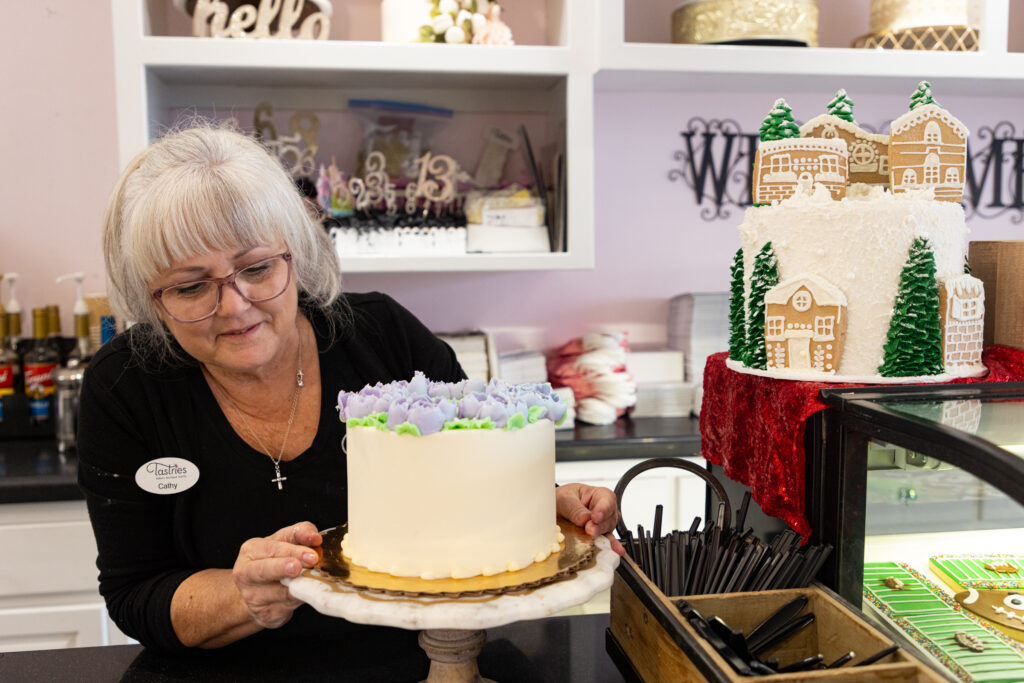
The 303 Creative decision established, as a matter of free speech, that merchants cannot be required to provide products involving their own creative expression advancing ideas that they disagree with. Yet another long running case involves a California baker, Cathy Miller, owner/operator of Tastries Bakery in Bakerfield, California, and threatens to erode the force of the 303 Creative decision. Miller, like Jack Phillips, runs a bakery that employs her own artistic expression in making custom cakes for weddings. But she was sued in late 2017 when she declined to provide a custom-made cake for a same-sex wedding. Somewhat surprisingly for a case arising in California, she won several times in state courts, noting as other harassed religious merchants have, that she sells general off-the-shelf products to everyone, and has trained and employed LGBT identifying individuals. She will not provide products that contain marijuana (now legal in California), depict gory or pornographic images, or celebrate drug use, witchcraft, or violence. Nor will she provide products that express support for same-sex marriage.
Judge David Lampe of the California Superior Court in Bakersfield both declined to issue a preliminary injunction in 2017 requiring Miller to bake a cake for a lesbian wedding, and later ruled that she could not be required to provide such a cake. This writer mentioned the decision in an article on a possible turn toward freedom of conscience in the cultural climate. Subsequently, Miller also prevailed in 2022 in California Superior Court in Kern County. Judge Eric Bradshaw found in her favor. Legal counsel Paul Jonna noted the irony that the case was brought under California’s Unruh Civil Rights Act, which is supposed to protect against discrimination on the basis of race, ethnicity, or religion, yet was used against Miller’s religious beliefs. Although judges in these two California courts have ruled in favor of Miller, California has relentlessly pursued the case, eventually obtaining a ruling against Miller from the California Fifth District Court of Appeal.
The California Supreme Court refused earlier this year to hear the case, although by current jurisprudence and the decision of two California courts. Miller should prevail. The case has now been appealed to the U.S. Supreme Court. Attorneys from the Becket Fund for Religious Liberty, the Thomas More Law Center, and LiMandri & Jonna LLP, representing Miller hold that not only is Miller’s free speech being violated according to the 303 Creative decision, but even the animus standard (easy to avoid by just not expressing hostility) used to find a religious freedom violation in the Masterpiece Cakeshop decision shows that Miller’s religious freedom has been violated. The animus claimed is on the part of the California Civil Rights Department, but is also very evident from harassment by the community. Hostile and vulgar emails and Facebook postings began an hour after she declined the custom cake for the lesbian wedding and have been followed by death and rape threats directed at Miller and her female employees, with an employee assaulted behind the bakery and Miller’s car vandalized and her laptop stolen.
It is also claimed by Miller’s legal team that the Unruh Civil Rights Act has unconstitutional provisions which are “anything but neutral and generally applicable, because it allows the Department and the courts to make case-by case discretionary decisions about what activities to permit or not, and because it treats comparable secular activity more favorably than Miller’s religious exercise [not allowed by the Fulton v. City of Philadelphia (2021) decision]. And because the Department has expressed unremitting hostility towards Miller and her religious beliefs.”
This writer believes that the key question is whether or not the Supreme Court will take the case. If the case is taken, it seems overwhelmingly likely that Cathy Miller will prevail. Both Masterpiece Cakeshop and 303 Creative argue for overturning the California decision. It obviously has been wrongly decided in California according to current jurisprudence and the constitutional doctrines of freedom of religion and speech (incorporated into state law by twentieth century jurisprudence, as noted in recent articles). The supreme court of very liberal California was apparently not willing to apply Masterpiece Cakeshop and 303 Creative to the Miller case. Thus, it falls to the U.S. Supreme Court to back up the landmark decision it made in 303 Creative by taking the case. The odds of being taken for any case appealed are not great – only 1 to 2 percent of appealed cases are heard – and the U.S. Supreme Court has received plenty of criticism for rulings favoring religious freedom over the past decade. No more than the California justices, the U.S. Supreme Court justices may not want more criticism.
The issue of wedding cakes, flowers, photography, etc. at same-sex weddings may seem trivial to some, but it is an issue of enormous importance. The issue is can people be legally required to do or say things they believe to be sinful or evil. It is the same issue as seen in the requirement of so-called “preferred pronouns” to satisfy someone’s claim to be a member of the opposite sex. This is essentially lying. As Rod Dreher never ceases of reminding us, we must not “live by lies.” We should not sin, and we will cease to be a free society if it becomes accepted that the state can require people to live by lies.
Thus, it is crucial that the case be taken, because otherwise the force the 303 Creative decision will be eroded. More and more cases of creative professionals required to act against religious precepts and their consciences will appear, and unless the court wants its 2023 decision to become effectively void, the court will have to hear another case, again under pressure not to uphold First Amendment freedoms. Further, if Cathy Miller truly is a faithful Christian, her only choice will be, like Elaine Huguenin in New Mexico and Barronelle Stutzman in the State of Washington, to close her business, as she will inevitably be faced with demands to act against her beliefs. Four U.S. Supreme Court justices are needed to instruct that the case be brought forward. We can hope and should pray that the court will do what is necessary to uphold religious freedom and free speech, take the case, and overturn the California decision.



Comment by Wilson R. on September 29, 2025 at 12:22 pm
So let me get this straight: On principle, Cathy Miller will not create a custom cake for a same-sex wedding, but if you want an off-the-shelf cake for a same-sex wedding, she has no problem selling you one? If that’s the case, then what principle is she actually defending here? Does making a custom cake REALLY involve such a degree of “creative expression” that her conscience would be violated in way that would not apply to a more generic cake, which still requires experience and skill?
In other words, what real difference does it make if the product involves this squishy idea of creative expression?
Let’s say I run a restaurant, and a same-sex couple wants to reserve a private room for their rehearsal dinner. The only “creativity” involved on my part might be the preparation of the meal, but that’s a stretch. It’s hard to see how you apply a principle here if “creative expression” is the litmus test.
And I’ll just roll this reality-check question out there, using a different example. Let’s say I run a bakery, and someone comes in wanting a custom cake for a reception for a new college or high school chapter of Turning Point USA. And let’s say my moral or religious principles are offended by things the founder of TPUSA said about Black people or women or immigrants. How many here would support my decision not to bake a cake for that group? And how many, instead, would claim that I was persecuting Christians for their beliefs by standing up for my own, very different Christian beliefs?
Comment by Qohelet on September 29, 2025 at 4:26 pm
Their companies should be at risk. These aren’t religious people, they’re the type of hypocrites that the Gospel writer warns us about in Matthew 6:5. They’re picking fights with people to become famous.
303 creative is the perfect example. Their beliefs weren’t being threatened… they didn’t even have any LGBTQ people anywhere near them. They were allowed to bring their case hypothetically as if someone had asked them. So it was a fight entirely of their own making. How can starting fights with random people that weren’t attacking you be defending religion?
Comment by Thomas on September 29, 2025 at 7:06 pm
Wilson R, I think you have the right to refuse offering service to people with you storngly disagree. If a neonazi wanted anyone to make a cake to celebrate Hitler or neonazism everyone probably would support the baker right to refuse his services.
Comment by Glenn Wheeler on September 29, 2025 at 9:30 pm
One thing I have noticed over the years is that, despite their rhetoric, neither the right nor the left in Christianity is truly inclusive. They just have different lists of those it’s ok to exclude.
Comment by Rick Plasterer on September 29, 2025 at 9:56 pm
Qohelet,
Both Cathy Miller and Lorie Smith in the 303 Creative case are Christians.
Pre-enforcement challenges to laws believed to be unconstitutional are not uncommon. No one need have been convicted of violating the law.
Rick
Comment by Qohelet on September 30, 2025 at 6:05 am
Rick
They say they are Christians. Harry Truman said the same thing when he said interracial marriage was unBiblical. A wedding venue in Mississippi in 2019 said the same thing when they turned away an interracial couple, citing their Christian faith. Are we not allowed to critique those points of view?
Public Accommodations laws are supposed to be simple: if you serve the public, you serve all lawful requests . Could you imagine the parable of Good Samaritan ending with the innkeeper saying, actually, you all need to get out I don’t serve Samaritans here because of my religious beliefs?
Miller wasn’t being asked to endorse a marriage. She was being asked to bake a cake. This idea that this is somehow forced speech is a construct of conservative judges and lawyers that they wish they had had 50 years ago before Loving v Virginia.
Still I have more sympathy for her than I do for 303 creative. At least she got sued. In the other case the owner picked a fight that didn’t need to happen, loudly proclaiming her faith to all. I guess she got famous, but I think Matthew 6:5 is clear that the reward is here on earth.
Comment by Wilson R. on September 30, 2025 at 3:02 pm
@Thomas:
It’s easy to pick an example like neo-Nazis on which just about everyone but neo-Nazis (and maybe the ACLU) would agree. It gets more complicated if I turn down a group or person claiming to be Christian, like a TPUSA chapter, whose brand of “Christianity” doesn’t look anything like the gospel to me. If I did that, then suddenly I would get attacked for being “anti-Christian.” And you can well imagine that the attacks wouldn’t just be through the courts.
Suddenly, all the stuff about religious freedom goes away when non-Christian Nationalists claim it as their right.
Comment by Glenn Wheeler on September 30, 2025 at 4:23 pm
Wilson,
You didn’t respond to Thomas’ main point. Would you or would you not support someone who refused to make a cake with a large swastika on it for a Hitler celebration?
Comment by Wilson R. on September 30, 2025 at 9:08 pm
Glenn:
Sorry, I thought it was clear when I said most people would support the right not to bake a cake for neo-Nazis. Philosophically, I tend to think that the marketplace should decide things like this rather than the courts. I should be free not to serve people whose views I find deeply offensive, and the same right should be enjoyed by others. And if people want to boycott me (or reward me) because of my stance, that’s the market speaking. Besides, if someone doesn’t want to bake me a cake because they don’t like my views, I don’t want them baking my cake anyway; I’ll give my business to someone who wants it.
But here’s where my general view runs into a problem. What if I claim, as some Christians still do today, that my religious views are offended by interracial couples, so I refuse to serve them? If a baker is allowed not to make a custom cake for same-sex couples, should a restaurant owner be allowed not to serve same-sex couples who come in for a meal? At what point do my rights cross a line over into discrimination? It’s not as easy a line to draw as we might want to imagine.
Comment by Thomas on September 30, 2025 at 9:41 pm
Wilson R, what is at stake here is the redifinition of marriage. Of course people can`t be descriminated because of their race or ethnicity, but the thing changes completely when we are talking about a new definition of marriage that says its not anymore between a man and a woman, and many people have the right to reject that new definition. Nobody can force a Christian denomination who rejects same-sex marriage, religious or civil, to perform such a ceremony. Concerning the case you mentioned, you would have the right to reject any association with Turning Point USA, and they also would have the right to respect that. They certainly could find other people for these services.
Comment by Glenn Wheeler on September 30, 2025 at 10:13 pm
Wilson,
You wrote that you should be free to refuse for people whose views you find deeply offensive. That’s exactly what these bakers are doing! So what’s your problem with it?
I’ll tell you what your problem with it is: Your gripe is not that these people are refusing cakes. Your gripe is that they don’t approve of homosexual marriage.
That’s the only gripe about it you have. That’s the crux of it. And you wonder why people so easily see through arguments like yours!!!?
Comment by Qohelet on October 1, 2025 at 8:25 am
Be careful Wilson. They’re trying to trap you with their false moral equivalence.
Being offended by two dudes who want a nice wedding when you sell wedding cakes is not the same as being offended by an extremist movement that killed six million Jews and they want to force you to draw a swastika on a cake.
Comment by David on October 1, 2025 at 9:21 am
I do not recall Jesus baking a cake. Perhaps baking a cake is not a practice of religion. How about changing the oil of a limo to be used in a same sex wedding?
Comment by Glenn Wheeler on October 1, 2025 at 11:25 am
Qohelet,
Thanks for proving the point! It’s not about the right to refuse. It’s about you getting to choose the list of things people can refuse for. And you really think people can’t see through that???
Comment by Wilson R. on October 1, 2025 at 12:37 pm
Glenn:
My “problem” is not the one you seem to think. As I mentioned in my last post, the problem is where you draw the line between a general principle (don’t serve those whose beliefs or actions offend your conscience) and how to apply that principle in a consistent way.
It’s not just a problem for me. It is a problem for the courts, too, which is why it wound up at the US Supreme Court and why this fresh case, despite SCOTUS’ attempt to set a precedent, is working through the courts.
The problem is exemplified by the plaintiff herself. On the one hand, she argues she is defending a principle when she refuses to lend her “creativity” to create a custom wedding cake for a same-sex couple. But then she seems to apply the principle inconsistently when she says she would happily sell an off-the-shelf cake to a gay couple–and apparently she would do so even if the couple came in together holding hands and told her they wanted a generic cake for their wedding. If her problem is that she doesn’t want to endorse same-sex weddings, then what difference would it make if the cake is custom-made or generic?
Extending this principle beyond the making of custom cakes, what if this same bakery owner also had tables in her bakery where customers could have coffee and enjoy some cookies or pastries? If a same-sex couple came in, holding hands, and wanted the same coffee and homemade scones that she had just served to a heterosexual couple, should she be able to refuse them on the grounds that their homosexual conduct offended her religious principles?
Since many Christians regard homosexuality as “conduct” and not an immutable quality; and since business owners can refuse service on the grounds of offensive conduct; should, say, a Christian dry cleaner be able to turn away a customer they knew was gay?
I suspect many people who defend the baker’s right would be less supportive of the dry cleaner or other business owner who provided a standard service. And that just illustrates the problem I’m trying to highlight: Where can you draw a clear line?
Comment by Wilson R. on October 1, 2025 at 12:44 pm
@ Thomas:
To you, this is about “the redefinition of marriage” being imposed on you. But the law of the land creates a definition that acknowledges same-sex marriages. Maybe this is as much or more about your refusal to accept the law.
No government is forcing churches to perform same-sex marriages.
Comment by Glenn Wheeler on October 1, 2025 at 2:02 pm
Wilson,
Your comment changes nothing. Your problem is only that the bakers don’t support homosexual marriage.
Comment by Wilson R. on October 1, 2025 at 3:05 pm
Glenn:
For some reason you seem intent on putting words in my mouth. I don’t really have a problem per se with the bakers taking the position they did. (Whether or not I might take the same position under similar circumstances is beside the point.)
As I stated earlier: If someone doesn’t want my business, then why would I want them to have it? I’ll find someone else who wants me as a customer.
But the question remains: If this baker is willing to sell cakes for a same-sex wedding, as long as it’s not custom-made, then exactly what is the principle she is defending?
And my other question still stands: If someone took a similar stand of conscience when a group favored by conservative Christians was the party not being served (e.g., TPUSA), then would religious conservatives defend that business owner the way they defend the bakers? Or would they howl about religious persecution? That’s not quite a rhetorical question, but almost, since I think we both know how the story would play out in evangelical circles.
Comment by Qohelet on October 1, 2025 at 5:50 pm
The false moral equivalence being pushed here is astounding.
Following the logic y’all are pushing, a merchant is endorsing and responsible for the use of their product. Does that apply to all issues, or just gay marriage? Can we start locking up gun store owners now? After all, aren’t they endorsing mass shootings when they sell a mass shooter an AR-15?
None of the examples you are using are a valid comparison to what the baker is doing. She bakes wedding cakes. She’s deciding there’s certain people she won’t bake wedding cakes for. She’s also deciding to make a spectacle out of it so she can become famous and let the world know what a great Christian she is. Again, Matthew 6:5.
Asking someone to make a wedding cake when they do that every day is not the same as asking someone to put a swastika on a cake. That’s compelling speech. If someone came to this baker and asked her to make a cake with a political message about LGBTQ rights, I think she would have the right to decline. But beyond that it’s just a cake. If the cake is in the scope of what she normally would do how is she endorsing the wedding?
So am I arguing that neo Nazis have the right to buy custom wedding cakes? Absolutely. Anything the baker would do for a generic customer is fair game. But she has the right to refuse to draw or write an extremist message. That’s not a double standard.
Comment by Glenn Wheeler on October 1, 2025 at 10:58 pm
OK, “Preacher,” you are a prime example of why people are deserting organized Christianity in droves.
Comment by Different Steve on October 2, 2025 at 3:50 pm
A federal court has ruled in favor of free speech in a fight that was created by an attack by the city of Louisville, Kentucky, on a local photographer.
The city had decided to impose its religious viewpoint and ordered the photographer, Chelsey Nelson, to use her artistic talents to promote anti-Christian same-sex wedding ceremonies “if she photographers and blogs about weddings between one man and one woman,” the biblical standard.
Leftist city officials even had tried to order her to be silent on such issues, claiming that they could forbid her and her studio from explaining to clients and potential clients her beliefs.
The ADF, representing Nelson, called the ruling from the federal court in Kentucky a “victory” for free speech.
Louisville, under the ruling, now will be held accountable for violating the First Amendment.
“Free speech is for everyone. As the U.S. Supreme Court held two years ago in 303 Creative v. Elenis, Americans have the freedom to express and create messages that align with their beliefs without fear of government punishment,” said her lawyer, Bryan Neihart. “For over five years, Louisville officials said they could force Chelsey to promote views about marriage that violated her religious beliefs. But the First Amendment leaves decisions about what to say with the people, not the government.
“The district court’s decisions rests on this bedrock First Amendment principle and builds on the victory in 303 Creative.”
That was an earlier case where Colorado officials tried the same leftist stunt, and failed.
https://thelibertydaily.com/court-grants-christian-photographer-victory-after-city-tries/
Comment by Qohelet on October 2, 2025 at 4:22 pm
Steve this is even more outlandish a case than 303 creative.
“Leftist city officials” did no such thing. Louisville had 20 year old law in place to protect LGBTQ people from discrimination in public accommodations. It specifically didn’t allow signs like “Whites Only” or “No Gays.”
She wanted to use her “Christian” faith as a marketing tool, so she sued the city to be able to put a “no Gay people” blurb on her website. She had never been asked to photograph a wedding or asked to create speech she didn’t agree with. The city only learned of her existence when she sued them.
You’re not a victim when you start the fight. She was never going to be sued, but she wanted to tell the whole world about her bigoted and probably lucrative beliefs, so she made a spectacle out of nothing.
“And when you pray, do not be like the hypocrites, for they love to pray standing in the synagogues and on the street corners to be seen by others. Truly I tell you, they have received their reward in full.” Matt 6:5
Comment by Different Steve on October 2, 2025 at 7:45 pm
a law being “longstanding” doesn’t automatically make it just. Jim Crow laws lasted for decades, even centuries in some forms, and they were wrong. Same with laws banning interracial marriage, denying women property rights, or outlawing same-sex relationships. These laws were similarly challenged in their day. We should not have to police ourselves for fear of persecution under unjust law. Longevity doesn’t equal morality. Seems like you’re on the wrong side of history. Pendulum swung too far, is swinging back.