
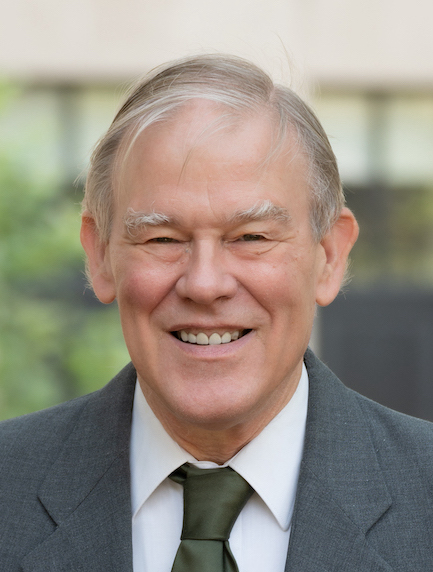
Many battles over the public and even private religious observance have been fought in courts over the past seventy to eighty years, but the moving force in jurisprudence has been the Everson v. Board of Education (1947) decision, which attempted to separate the state not just from any particular religious body, but from religion in general. Timon Cline, Editor-in-Chief of American Reformer, attorney at the Craig Center at Westminster Theological Seminary, and Director of Scholarly Initiatives at the Hale Institute at New St. Andrews College spoke with Garrett Snedeker of the James Wilson Institute on August 21 on how the Everson decision has precipitated the repudiation of traditional religion and morality and the deterioration of the federalist system. He summarized his recent article, co-authored with Josh Hammer and Yoram Hazony in the Harvard Journal of Law and Public Policy, “Everson Must Fall.”
(Editor’s note: Cline advocates for a Christian confessional state and opposes voting rights for women. He is a leader in post-liberal Protestantism, rejecting traditional understandings of religious liberty and legal equality for all citizens.)
Cline said that overturning Everson is part of restoring federalism. He believes that overturning this major decision “will have a salutary effect on other national and political issues.” In this decision the U.S. Supreme Court for the first time made the Establishment Clause (forbidding “establishment of religion”) of the First Amendment apply to the states, as well as the federal government, i.e., “incorporated” it. But Cline believes that this can be shown to be wrong. He said that “national health,” and “constitutional functionality” are important goals in overturning Everson. After the overturning of Roe v. Wade, conservatives need to next aim at “recovering to our original constitutional order.” In the restored order, states will again be able to make judgments on major moral questions. The experiment of “sweeping national uniformity” in significant measure inaugurated by the Everson decision will be abandoned. No longer will moral intuitions be imposed on the nation under the guise of “due process.” The Dobbs v. Jackson Women’s Health Organization decision (2022) was a major step in this direction.
While current polarization leads to fears of “potential national divorce,” “regionalization,” “the great sort,” “Balkanization,” etc., nevertheless Cline believes that nation’s original federalism can successfully handle differences while preserving national unity. To some degree, regional cultural and moral differences have always existed. Some differences, especially today, are “radically different, and even mutually exclusive.” But the last century has involved a project of “universalism, not just abroad, but domestically.” Cline said that under this project “one particular moral vision and its concomitant policies is cast as fit for the entire population, all regions, all states.” The results of this project are “untenable, and we’re seeing fractures because of it.”
The Establishment Clause and the Restoration of Federalism
The federalism that Cline proposes is “the preservation of the native police powers to each republic, to each state over domestic policy.” In the eighteenth century, morality and religion “were inseparable from state identity.” Under the original federalist system, each state determined its morality and religion. Even marriage of people from two different states was unusual. Thus, it was recognized at the founding that a “new ethnogenesis” would be necessary if the country was going to hold together. Cline cited Noah Webster and his project of “American English,” and “American education” as an effort at national unity. The “Constitution was designed to handle all of this.” John Adams wanted to ensure that Congress would not be involved in the religions of the states. The point of the religion clauses of the First Amendment was to keep the federal government out of religious affairs in the states. Presbyterians (Cline’s own faith) were widely suspected of desiring a national establishment of religion and to “take over the government.” But the purpose of the First Amendment was not uniform religious policy, but a “diversity of approaches” by state governments. No state would have ratified the constitution if it thought that a uniform national religion and culture were the objective, and on this federalists and anti-federalists were agreed.
Cline said that Thomas Jefferson’s “wall of separation” of church and state “informs the public imagination,” but is really “misinterpreted.” He said that “it’s been made, in many ways ‘constitutional dogma.’” Jefferson’s letter to the Baptists of Danbury, Connecticut was only saying that the national legislature (Congress) should not be involved in religion. It was to the states that “the free exercise of religion” was left. Jefferson was happy to issue a proclamation for thanksgiving and fasting while he was governor of Virginia, but not as President, as he believed that federal non-establishment precluded him from doing that. Courts in the twentieth century may have implemented “Jefferson’s private dreams about religion, but they forsook his constitutional interpretation.”
The American founding recognized in the common law “a general Christianity” (with which Jefferson “vehemently disagreed”). This was affirmed by the early nineteenth century jurist and Supreme Court justice Joseph Story. But the particularities of religion were left to the states. But today “the interpretation of the First Amendment has been radically altered in this regard.” The way in which the First Amendment has been nationalized to apply to the states “is through an adulterated and incoherent mechanism.” This has led to the purging of religion from “American public life.” This purging has applied even to the “general Christianity” envisioned by the founders as acceptable for government support. While the new religious regime is often thought of as “mandated secularism,” Cline maintains that it is in fact a “bastardized Protestantism.”
Thus, the religion clauses of the First Amendment, which were intended to protect state establishments of religion, have been used instead to establish “uniform national religious policy.” Cline said that “the improper incorporation of the Establishment Clause in particular is the source code of much of our ills.” He pointed out that Justice Clarence Thomas has maintained that the Establishment Clause has basically been “weaponized against the Free Exercise Clause.” Remarkably as well, Cline pointed out, “there’s only one clause.” Even if there are two clauses, it’s strange to have “constitutional provisions that are at war with one another.” This means that the original meaning of the First Amendment’s religion provisions has been corrupted.
Cline pointed out that Justice Thomas maintains that the Establishment Clause is a federalism provision, which cannot apply to the states, even if the Free Exercise Clause can be. James Madison suggested applying the Establishment Clause to the states at the Constitutional Convention “and was laughed out of the room … The founders almost to a man assumed that some form of public promotion of religion was necessary” for the maintenance of virtue. Thus, the maintenance of religion was a “state interest.” State constitutions of the federalist period provided civil protections for people of varying religions, but holding public office was commonly reserved for Protestants. Sometimes it was necessary to affirm the Trinity, or other specific doctrines. Additionally, there were such things as Sabbath laws and blasphemy laws “all according to, evidently, Christian standards.” In the South, there were also “restrictions” of sermons against slavery (later, in the case of Virginia, overturned by the state supreme court). He noted that Joseph Story said that the First Amendment was not intended to “prostrate Christianity.”
Faulty Constitutional History
“Faulty history” about the religion clauses has allowed Supreme Court justices and judges to impose “their own narrative and vision” on the nation. He quoted favorably judge Bernard Meyer of the New York Supreme Court in the Engle v. Vitale case (1962), that ultimately banned school prayer. Meyer “advises against ‘idiosyncratic over-reliance on the writings of individuals,’” and “especially private correspondence like Jefferson’s or Madison’s which have been favored by the courts.” Instead, Meyer believed that courts should use “public consensus documents, like the state constitutions.”
The Everson v. Board of Education decision itself declared that the government may not “aid” religion, whether a particular religion or religion in general. “No tax in any amount” could support religious organizations or activities. It is “curious,” Cline said, that it was thought necessary to incorporate the Establishment Clause, since for generations no state had an established religion. The specific point at issue was whether or not New Jersey could finance transportation to parochial schools, which Everson answered in the affirmative, holding that transportation to schools “benefitted everyone.” Ignoring that the First Amendment specifically mentions only Congress as being incompetent to determine religious policy, the Everson decision declared, Cline said, that “all government is incompetent to determine religious policy.”
Ultimately, the changed religious policy decreed by the Supreme Court was based on a re-evaluation of religion. Justice Hugo Black, the author of the Everson decision, described religion as “the source of all historic strife and division.” No longer was it understood as the source of “creating virtue,” unity, and stability in society. The Everson decision was followed by McCollum v. Board of Education (1948) which outlawed parent approved voluntary religious instruction in public schools. Next, the Supreme Court in Torcaso v. Watkins (1961) declared unconstitutional a theistic but nonsectarian oath of office in Maryland, and the following year teacher led prayer in public schools was outlawed (Engle v. Vitale, 1962). Then in Abington Township v. Schempp (1963) Bible reading and the Lord’s Prayer were declared unconstitutional in public schools. In Wallace v. Jaffree (1985), the Supreme Court ruled that a corporate “moment of silence” was unconstitutional, since it could be understood as encouraging students to pray. The court effectively declared in these rulings that states now must embrace this “successor religion of secularity.” Additionally, states cannot protect religion from “open revilement,” which was “the basis for civil blasphemy laws.” Free speech trumped blasphemy laws, which had been thought to be necessary “for the sake of social and political stability.”
Cline’s remarks on growing conservative dissent from the Everson decision in the years since 1947, and the prospects for eventually overturning the Everson decision will be reviewed in a subsequent article. It can be viewed here.




Comment by David on September 15, 2025 at 11:05 am
Leaving matters to the states does not have a good history. Most states had tax-supported official churches. The last of these was finally abolished in 1833 in the land of the Pilgrims Then there was slavery, Jim Crow, anti union laws (an outgrowth of slavery), etc.
Comment by John on September 15, 2025 at 12:12 pm
Cline overlooks some very important details. First, he neglects the inconvienent truth that while the Founders may have intended for the First Amendment to apply only to federal government, it was clearly in the spirit of a larger belief in separation of church and state that they applied both nationally and locally. Jefferson introduced the Virginia Statute for Religious Freedom, which disestablished Anglicanism as the state church. Madison led the opposition to bill in the Virginia legislature that would have required citizens to pay taxes to support a Christian denomination of their choice. Secondly, he glosses over the actual constitutional argument favoring Everson, effectively calling on his supporters to treat the 14th Amendment as if doesn’t exist in the specific case of 1st Amendment issues, hoping perhaps no one noticed. The problem is that you can’t pull out one sentence from one of the Bill of Rights, decide arbitrarily that the enforcement mechanism of the 14th Amendment doesn’t apply to it and then expect that mechanism to still work properly in other areas. Once we decide the 1st Amendment does apply to the states, then all the Bill of Rights would be likewise challenged in their application. Cline’s proposal would open the door to states passing laws denying freedom of speech, right to bear arms, trial by jury, protection from illegal searches, and cruel and unusual punishment. What’s worse if some of the more recent post-Dobbs state laws concerning abortion are allowed to stand, then it would mean states could also pass laws punishing residents for exercising said rights in other jurisdictions. Imagine for instance if California were to pass a law not only banning the sale, purchase, and carrying of firearms in their own state, but allowing them to prosecute residents who leave the state to purchase or use guns in a state where it is legal. All of this becomes possible only if we go along with Cline’s scheme of ignoring the 14th Amendment in 1st Amendment cases.
Comment by Glenn Wheeler on September 16, 2025 at 12:19 am
John,
I agree with you. But don’t worry about these fringe people. Whatever they might advocate has virtually no chance of being implemented. No one pays them any attention but the Professional Christian class, i.e. the religious bureaucrats.