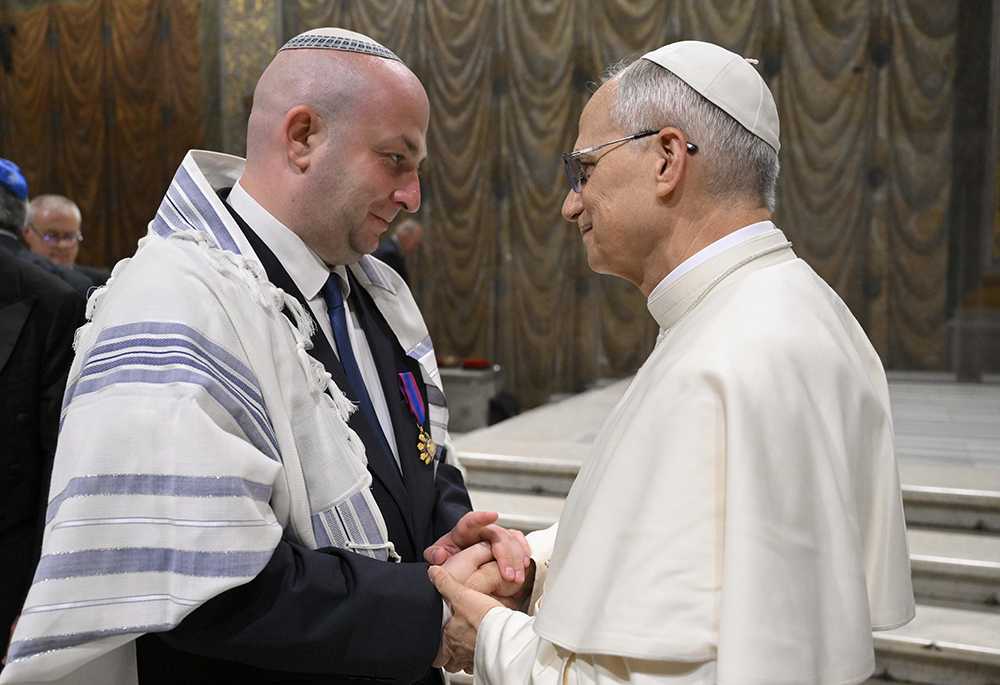

The Catholic Church is a communion of 24 sui iuris churches, all in full communion with the Pope: Armenian, Coptic, Maronite, Melkite Greek, Ukrainian Greek, and others. These ancient traditions preserve their own liturgical, spiritual, and cultural patrimonies while remaining fully Catholic.
But there is no Hebrew Catholic Church. There is no Jewish Catholic “rite.” When a Jewish person becomes Catholic, particularly in the West, he or she ordinarily enters the Latin Church. There is no equivalent of the Armenian or Coptic Catholic Church in which a specifically Jewish Catholic patrimony has been preserved and developed.
This is one reason I find Hebrew Catholics so fascinating. “Hebrew Catholic” isn’t the name of another Catholic Church. It’s how some Catholics of Jewish background describe themselves—a way of saying: I have entered the Catholic Church, but I have not ceased to have a Jewish story.
Christianity did not descend from the sky in Rome. The Scriptures of Israel are our Scriptures. The Eucharist, the liturgical year, the language of covenant and sacrifice, the Psalms we pray every day—all unintelligible apart from Israel. And the Church has become increasingly explicit about something Christians have too often forgotten: God’s covenantal fidelity to the Jewish people cannot simply be erased from Christian theology.
A Jewish person who becomes Catholic is truly incorporated into Christ and His Church through baptism. In Pauline language, the Gentile Christian has been “grafted” into Israel’s cultivated olive tree. But a Jewish Catholic brings another dimension: he or she belongs to the people from whose tree Christianity sprang, and now also belongs sacramentally to the Body of Christ. There is mystery here, and Catholics should resist flattening mysteries simply because they don’t fit onto an organizational chart.
Hebrew Catholics may therefore be something of a prophetic presence in the Church—not because they constitute another rite, but because their existence forces Catholics to remember: Christianity has Jewish roots, and those roots are still alive.
But Catholics who want genuine friendship with Jews need to understand something else: the phrase “Hebrew Catholic” can sound confusing, even deeply unsettling, to Jewish ears.
A friend once explained it with an analogy. Imagine one of our best Catholic friends converts to Islam and starts calling himself a “Catholic Muslim.” Most Catholics would say: you’ve got to pick. Now imagine he goes further—claiming that becoming Muslim actually made him more fully Catholic. We might find that absurd, even offensive.
That, my friend explained, is something like what a Jew may hear when a Catholic convert from Judaism says, “I’m still Jewish. In fact, in Christ I have become more fully Jewish.” Catholics may have theological categories for that statement. But friendship requires recognizing that our Jewish neighbors hear something very different.
Catholics cannot build trust by pretending Christians have always been good friends to the Jewish people. We haven’t. Centuries of Christian contempt, discrimination, coercion, and violence form part of the historical memory Jews bring into these conversations. At the same time, Catholic friendship with Jews cannot depend on Catholics ceasing to be Catholic. The claim that Jesus is the Messiah of Israel is enormous; we cannot deny it without denying Christianity itself. So we have to learn to live honestly inside the tension.
I have enormous sympathy for Jewish Catholics here—some always connected to their roots, others newly embracing a heritage they once kept at a distance amid the resurgence of Jew-hatred. They are fully Catholic and faithful to the Church, but no longer want to deny their Jewish heritage. Nor should they have to. It cannot be easy to feel judged from both directions.
Perhaps I feel this especially as an Armenian Catholic. I can walk into an Armenian Catholic church and encounter the language, music, and suffering of my people, and none of it competes with my Catholicism. My Armenian inheritance has a home inside the Church. There is no comparable ecclesial home for Jewish Catholics. That should make us stop and think.
And yet I understand my Jewish friends too. I love St. Edith Stein—Jewish, philosopher, Carmelite, martyr, saint. Some Jewish friends see her differently: not a Catholic saint with Jewish roots, but a Jew who became Christian—an apostate. I’ve been moved by the generosity of friends who make room for that disagreement anyway.
Moving Jewish-Catholic relations forward doesn’t require smoothing away every theological difference. But friendship requires understanding what our words sound like in the ears of the person across from us. It means allowing Jewish Catholics to be honest about the complexity of their identity while allowing Jews to be honest about why that identity can be painful or difficult for them to understand. We don’t have to solve the tension before we can become friends. We do have to understand why it’s there.
Simone Rizkallah helped launch the Coalition of Catholics Against Antisemitism. The Coalition works to strengthen Catholic–Jewish solidarity, confront antisemitism wherever it appears, and foster principled solidarity with persecuted communities around the world.
More from IRD:
What Christian Zionism means for Protestants and Catholics
Why Candace Owens’ Jewish Conspiracy Theories Violate Catholic Teaching


Comment by Qohelet on September 18, 2026 at 6:41 am
This article seems to be written in good faith so I’ll respond with such. To understand the reaction of Jews to the idea of Jewish Christians, one needs to look to the Protestant world and the history of Messianic Judaism and the “Jews for Jesus” movement.
The reason Jews are so distrustful of the “Jewish Christian” identity is that it traditionally has been very aggressive at trying to convert them. In fact, this is one of the only issues Orthodox Conservative Reform and Reconstructionist movements all agree on: Christian Jews are Christians, not Jews. This is a defensive posture against organizations trying to convert their members.
Your article is more about the beauty and knowledge Jews bring to the Christian church, so you are not part of this contentious history. But it’s important to know it if interfaith dialogue is the goal. The best way for Christians to approach Jews is for us to come seeking knowledge, friendship, and dialogue, but respecting our differences.
Comment by Wilson R. on September 18, 2026 at 12:57 pm
I have long told fellow Christians—partly for the shock value but also because it’s true— that at some level you cannot be a Christian without being a Jew. As the author here notes, Christians regard Jewish scriptures as sacred. They were the scriptures Jesus studied and taught. The two commandments that Jesus called life-giving, and which Paul affirmed, are from Torah. Jesus was a Jew who never stopped being a Jew.
The Church has much to atone for regarding its disregard of the Jewishness of Jesus and the tree on which Christians are grafted—and how that disregard led to centuries of bloody persecution. But one way the Church can begin is by teaching the essential Jewishness of the Christian faith and how Jesus really represents the fulfillment of the Law rather than the supersession of it.