
In its fading days white Rhodesia transitioned to black majority rule by inviting the nonviolent black opposition into the electoral process. United Methodist Bishop Abel Muzorewa was elected prime minister in 1979. But failing to get international recognition, new elections were held with the violent opposition, including Robert Mugabe, a Marxist, who overwhelmingly won power in 1980, precipitating the eventual flight of most Rhodesian whites.
U.S. Mainline Protestant agencies financially and politically supported Mugabe’s Marxist guerilla movement and opposed Muzorewa, even though he was a bishop in a U.S. based Mainline denomination. Such controversies fueled the creation of IRD in 1981, and motivated my own interest, as a teenager, in United Methodist and other Mainline political witness.
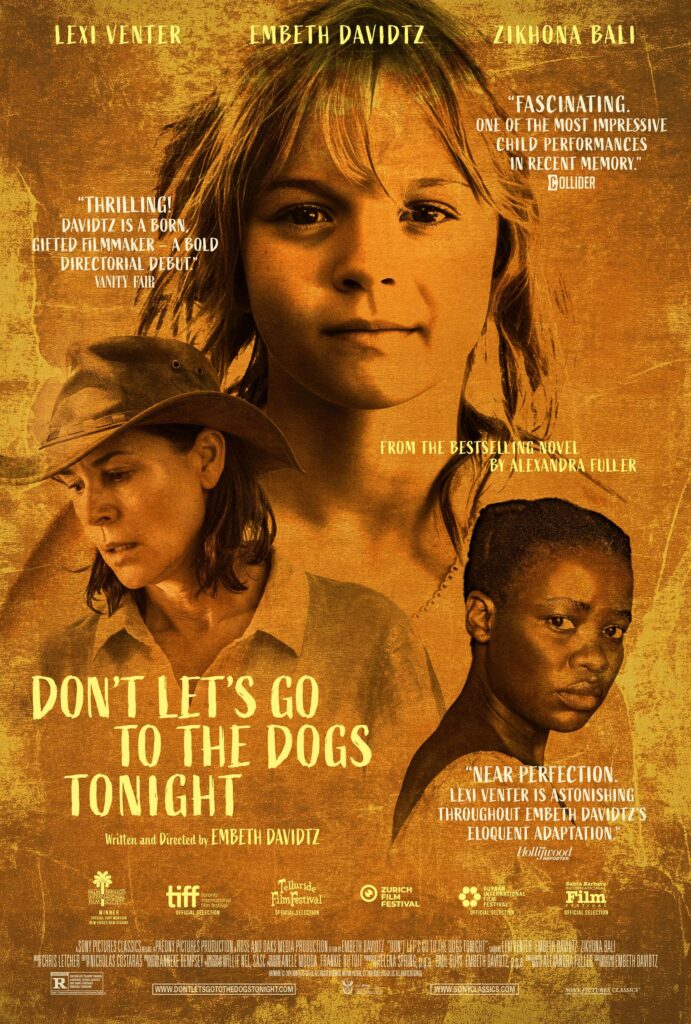
A new film drama, Don’t Let’s Go to the Dogs Tonight, is set on a white-owned farm in 1980 Zimbabwe Rhodesia amid the election. The husband runs the farm and serves in the military, going on periodic patrols. The wife raises their two daughters while also working as a guard in a nearby jail with black inmates. Her elderly parents live in town, to which she and her family travel in an armed convoy. She and her husband drink and cavort with their white neighbors, all of whom hope for and assume Muzorewa’s election win. He is called merely “the bishop.” And their small daughter, who is the film’s focus, explains that Muzorewa is not really African, hence whites support him. Of course, Muzorewa was African although educated in the U.S., where he joined civil rights protests, later returning to Rhodesia where he opposed the white minority regime. The girl’s grandmother urges her black housekeeper to tell all her friends to vote for “the bishop.”
On the farm the whites walk around, even in their homes, with guns, always guarding against black guerrillas. There was a ceasefire for the election, negotiated by the British. But the guerrilla war waged by Mugabe’s China-backed forces, based in Mozambique, and by his titular Soviet-backed ally, Joshua Nkomo, based in Zambia, was brutal and costly. Even Rhodesia’s ally, white controlled South Africa, knowing Rhodesia’s whites were outnumbered by over twenty to one, urged a negotiated peace.
Muzorewa’s majority black government seemed to many a good solution, ending untenable white rule while keeping Marxists of power. Jimmy Carter’s administration was adamant against recognizing Muzorewa, and Prime Minister Margaret Thatcher by necessity agreed, hosting the talks leading to Mugabe’s and Nkomo’s participation in the 1980 election. Lord Soames, son-in-law to Winston Churchill, became Zimbabwe Rhodesia’s temporary governor general to preside over the elections, which were marred by violence and intimidation. Rhodesian intelligence, Muzorewa, and Nkomo urged Soames to disqualify Mugabe’s party because of its intimidation tactics. But Soames rightly feared that an election and peace agreement without Mugabe counted for little. And whites were not realistic to hope for any alternative to Mugabe, who was of the Shona ethnic group, to which 70 percent of blacks belonged. Mugabe won overwhelmingly.
The white farmers in Don’t Let’s Go to the Dogs Tonight are bedraggled (except for white clad croquet players in town) and scrappy. The family’s farm is scraggly, infested by insects and snakes. Black farm hands and servants hover. The black housekeeper is close to the young daughter. A black farm hand warns her that her closeness to the white family is being watched by “the hills,” meaning the guerrillas. She admonishes the little white girl not to treat the black children as her subordinates. But true to the warning, the housekeeper’s throat is slit one night while the white family is away, and she barely escapes death, only thanks to the white family’s return.
Mugabe’s election victory devastates the whites, especially the mother, who suffers a breakdown, trying to chase off black poachers from her farm, and insisting nothing has changed. The husband more realistically sells the farm while it still has value, with plans to quit the country. Mugabe, after becoming prime minister, tried to reassure the whites, even initially keeping Rhodesian General George Peter Walls as armed forces commander. In the film, Walls on television and radio tries to reassure the whites. During the guerrilla war, he escaped assassination by Nkomo’s guerrillas, who shot down a commercial airliner believing Walls aboard. The Soviet-made missile killed the 59 passengers, but Walls and his family were on a subsequent flight.
Despite pleas from Walls, and the guaranteed presence of whites in parliament, including Rhodesian Prime Minister Ian Smith, the white exodus began immediately, with many going to South Africa, Britain, or Australia. The rule of law continued for a while. But inevitably Mugabe acted on his Marxist convictions and tyrannical ambitions. Like Nelson Mandela in South Africa, he was jailed for years for opposing white rule. Unlike Mandela, he was not ennobled by his suffering and did not emerge as an agent of reconciliation. Mugabe seized white farms for distribution to his political supporters. And he went to war against his black rival, Nkomo, whom he imprisoned, killing thousands of Nkomo’s followers who were mainly of the Ndebele tribe. Former Prime Minister Smith stubbornly remained in Zimbabwe, becoming Mugabe’s chief critic, and largely left alone. Zimbabwe’s economy melted. Mugabe, as he aged, became more despotic and corrupt, clinging to power until age 93, when his colleagues finally deposed him.
In the movie’s final scene, as the white family quits their farm, a black farm hand raises his clenched fist, which the little white girl returns with a smile. It signals that white Rhodesia is done. The question is how white Rhodesians, who numbered only 300,000 people at their height in the 1970s, ever imagined they could retain power as such a small minority. Perhaps if they negotiated earlier with moderate blacks they could have reached a more sustainable arrangement for the betterment of all, sparing the country Mugabe.
White Rhodesia fought like the small white minorities in nearby Mozambique and Angola. In those countries, the whites also only numbered 300,000 each but were backed by Portugal’s military, which also fought a guerrilla war for years, before evacuating, leaving Marxist governments and brutal civil wars. The whites justified colonialism as an alternative to Marxism, but colonialism, based on unjust minority rule, ensured Marxist victory. Perhaps the collapse of white Rhodesia and other similar minority regimes is a lesson in early compromise rather than unsustainable defiance.
Don’t Let’s Go to the Dogs Tonight offers a fascinating window into that era, whose impact continues today. Many years after he lost power, I once spoke to “the bishop,” who was attending a United Methodist Council of Bishops meeting in the U.S. He was a short, soft-spoken cleric in white collar, mostly keeping to himself, giving no indication he once starred in dramatic world events. The world had long since moved on.



Comment by Sandy on July 24, 2025 at 10:20 pm
Thank you for this brief history and commentary. What might spur me on, as an evangelical (in its gospel but not nationalistic portrayal) to maintain more than a passing interest in Rhodesia’s history?
Comment by Dan W on July 26, 2025 at 3:07 pm
Rhodesia has been mentioned a lot this year, mainly in relation to current events in South Africa. I’m glad Mark reviewed this, I’ll have to catch it while it’s still on the big screen.