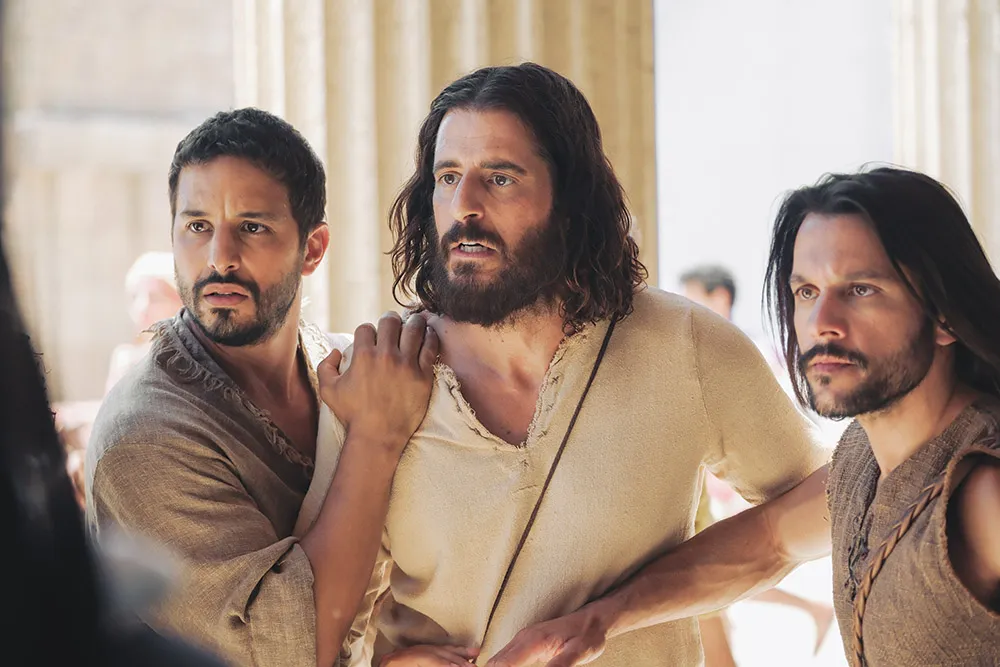
Popular Christian TV show “The Chosen”, which portrays the life of Jesus based on the Gospels, just released the final episode of its fifth season, concluding with the Last Supper. Achieving success and popularity in both Christian and secular circles, “The Chosen” has also faced significant pushback from within the Christian community for multiple reasons.
Joe Cristman of Reformed web magazine The Aquila Report disapproves of any portrayal of Jesus in media, citing the act as a violation of the Second Commandment. Another Christian blog, Growing4life, accuses “The Chosen” of adding to scripture and criticizes the production’s alleged Mormon, Catholic, and LGBTQ associations. Conservative Catholic publication Crisis complains that “The Chosen” undermines the divinity of Jesus and makes him appear too human and relatable.
The critiques are numerous with many concluding that Christians should not support “The Chosen”. There is even a Facebook group titled: “The Chosen: Do Not be Deceived”, which houses various complaints against the show. Other Christians support “The Chosen”, viewing it as a good introduction to Jesus for non-Christians that does not succumb to the normal pitfalls of Christian productions and accepting that the show is not intended to be a word for word translation of the Bible.
As the sacred word of God, the Bible should be taken seriously. Whether someone supports “The Chosen” depends on their conscience regarding the strictness of biblical media portrayals. Hopefully, a framing of the critiques that “The Chosen” faces will inform your opinion on the show.
“The Chosen” Director Dallas Jenkins, son of Left Behind author Jerry B. Jenkins, created the show to portray the story of Jesus in a relatable way for viewers. Never has Jenkins implied that he is trying to directly translate the Bible from text to screen. Despite this, the chief critique of “The Chosen” is for its additions to scripture. The show does feature several characters never mentioned in the Bible and contains dialogue not found in Scripture. To expect otherwise would be unreasonable. There is no viable way to create a compelling show with only dialogue from the Bible because there simply is not enough. “The Chosen” imagines many moments and conversations that are plausible but not explicitly in Scripture. Creative liberties are taken to expand conversations and relationships for the benefit of the on-screen story. These creative liberties take various forms, adding humor, new characters, and new scenes.
In a similar vein, critics accuse “The Chosen” of undermining the divinity of Jesus, making him too human and relatable. Most of these accusations spring from Jenkin’s presentation of Jesus as lighthearted and humorous, often joking with his disciples. Jesus is also shown rehearsing and playing with the wording of his Sermon on the Mount, which some viewed as a reduction of Christ’s divinity. This, along with other instances, have caused people to accuse “The Chosen” of creating a false Jesus who is relatable and funny but fails to address serious topics like sin and repentance. In a broader sense, most of these complaints center on the idea that Jesus should not be portrayed in media because to do so would violate the Second Commandment and result in a poor portrayal of a false Jesus.
Some Christians are apprehensive about the show’s ties to Mormonism. Originally a crowd funded project, “The Chosen” was originally produced by Angel Studios, which is owned by Mormon individuals although not by the Church of Jesus Christ of Latter-Day Saints. “The Chosen” also leased an already built 1st century Israel movie set from the LDS church. Jenkins is also on record stating the Mormons, Catholics, and Christians “love the same Jesus”, with only minor theological differences. Others are apprehensive of Jonathan Roumie, who plays Jesus in the show. Roumie is a prominent Catholic and is also known for his role as Lonnie Frisbee in the movie “Jesus Revolution”. Roumie stated that he can’t live up to the expectations that come with playing Jesus and can only hope to follow His example in portraying “the ultimate role model of humanity”.
When creating the show, Jenkins consults with an evangelical theology scholar, a messianic Jewish Rabbi, and a Catholic priest, which has led to some concern that “The Chosen” is intentionally breaking down religious barriers and ignoring theological differences. Jenkins himself has commented on how he believes God is using the series to break barriers between unlikely people groups.
While accusations abound, there are also reasons why people say you should support and watch “The Chosen”. Foremost among these is simply the fact that it is a well-produced telling of Jesus’ life and the calling of the disciples. Many Christian productions tend to be poorly done and come off as cringe-worthy on screen. “The Chosen” is not that. “The Chosen” is a professional production that has done a very good job creating an engaging show centered on Christianity. Because of this, it has been able to reach a plethora of non-Christians. Most Christian productions are unable to achieve this. Due to this widespread reach, it seems that “The Chosen” has in fact drawn people to Jesus. Critics might claim that it has drawn people to a false Jesus but none can deny that it has caused people to read the Bible, which is a good thing.
Despite the accusations, “The Chosen” seems to strive for biblical faithfulness. Yes, Jenkins and the other creators add dialogue that is not in scripture. However, nothing they have added seems to contradict the Bible. Yes, Jesus might not have said every word that appears in the show. But, we cannot know that he would not have engaged in lighthearted conversation with his disciples. While we cannot search the hearts of Jenkins and the show’s other creators for their true intentions, we also cannot presume that they are different from what they have told the public. The public intention is clearly to portray the story of Jesus with creative liberties for the flow of television.
In the end, whether you support “The Chosen” is a matter of Christian conscience and whether the show remains biblically faithful in your own discretion.



Comment by David on July 9, 2025 at 9:03 am
Too often, Bible pictures and portrayals follow the Victorian notion that 19th century Arab people had a biblical lifestyle. Characters are shown in voluminous gowns, and long hair and beard. Fabric was costly in ancient Judea and only the rich could afford long robes. Recall the soldiers vying for the likely bloodied clothing of Jesus. Indeed, Luke 20:46 speaks disapprovingly of such clothing. Paul speaks disapprovingly of men with long hair (1 Cor. 11:14) which seems odd if Jesus wore his hair that way. A mosaic from perhaps perhaps second or third century CE illustrates how skimpy dress could be for servants.
https://media.gettyimages.com/id/463914861/photo/servants-or-slaves-making-preparations-for-a-feast-mosaic-carthage-2nd-century.jpg?s=2048×2048&w=gi&k=20&c=zPVUg4G-L804CpHyIOQk_v2Vm6CdIlPi_8BRRjFWeAU=
Comment by Thomas on July 9, 2025 at 10:18 am
Creative license is almost inevitable when making series of films about Jesus. Think about “Jesus of Nazareth” and “The Passion of the Christ”.
Comment by Skipper on July 10, 2025 at 11:08 pm
I wouldn’t recommend the Chosen unless someone is very knowledgeable of the Bible. You need to be able to tell face from fiction.
Comment by Sandy on July 24, 2025 at 9:55 pm
I readily recommend viewing “The Chosen” to others and make myself available as a “fact checker” for the viewer who may not be as biblically literate as I am. I HOPE and PRAY that watching “The Chosen” drives people to reading the actual story for themselves. People who read the story for themselves will soon be able to recognize and appreciate the term “creative license”. Let’s stop ignoring the permission that is asked for by use of the term “creative license” and stop insisting that WE are the only ones qualified to do others” thinking for themselves