[Editor’s note: This is the second in a series of brief reflections authored by current and past interns about their experience at the Institute on Religion & Democracy. For more information about IRD’s internship program, click here.]
In the summer of 2024, I interned with the Institute on Religion & Democracy, supported by the Fund for American Studies. At the IRD, I planned events, penned articles for Juicy Ecumenism, and worked on church renewal projects.
My time at IRD not only proved a valuable professional opportunity but also connected me with the history and future of American Christianity.
As an Eastern Orthodox Christian without background in the contemporary crises in America’s Protestant churches, I came to IRD with a bemused interest in the issues that the IRD covers. Despite my initial hesitation, bordering on skepticism, some introductory research and familiarity with the staff made IRD’s work much clearer. The IRD staff is composed not of stodgy moralists but people who love Christ enough to challenge those who brought them to Him.
This understanding made work at the IRD so fulfilling. Criticism of mainline Protestant churches for their social stances came not from hostility but from grief, a grief for the Christianity of previous generations of Americans being supplanted by a new spiritual regime. IRD’s mission, in my mind, is to help faithful Christians remember what was lost, gather what remains, and set out boldly toward the future of Christianity in this country. To young people, this mission signals that all is not yet lost, Christ remains Lord, and that whether it be at a local church plant or in Washington, the Gospel message remains for those willing to hear it.
I also came to IRD at an ideal time to see this mission lived out. The Global Methodist Church had been founded two years prior to my internship, and mass departures from United Methodism continued in full force.
Among my first projects, beyond writing and event work, was to review the list of disaffiliated congregations, primarily in the Rust Belt, and update their contact information. For anyone familiar with Methodist country churches (I previously had not been) it is unsurprising that updated contact information would not be available via the internet. Rather, I resorted to virtually “driving by” the churches using Google Maps. Looking at rural Methodist congregations, I saw the same combination of grief and hope I saw in the office every day: Methodist churches in rural Pennsylvania that had covered up the “United” part of their name with black vinyl tape or scratched the word off of their signage, a mournful visual reminder of what was lost.
Still, there was a potent spirit of hope and renewal. Some joyfully joined the GMC or other denominations, while others preferred to style themselves as independent Bible churches. Having met some of the parishioners at churches like these at IRD programming, there is a palpable desire to continue the work of sanctification whether in a denominational setting or not.
My work at IRD was placed into context by meeting these people. The faithful rebuilding after the struggle with the UMC so well illustrated the outcome of mine and my colleagues’ advocacy, to maintain the role Christianity has played not only in the public square, but also in the lives of so many Americans.
Although I have no personal connection to the American Protestant tradition, my internship at IRD allowed me to understand its value, learn its history, and work to preserve its benefits for the faithful of today and tomorrow.
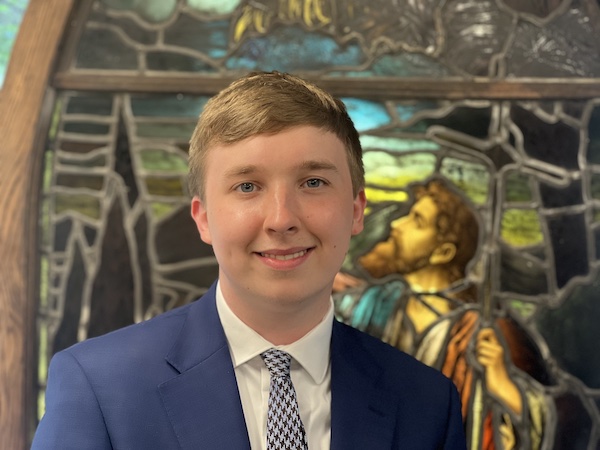
Wyatt Flicker interned with the Institute on Religion & Democracy in the summer of 2024. He attends the University of Delaware where he studies Classics, History, and International Relations, with a minor in Religious Studies. He is interested in the intersection of the classical Christian tradition with modern global politics. Read more pieces authored by Wyatt here.
No comments yet



Leave a Reply