
Most of my attention (and the articles I author) address Methodism, evangelicalism, or the Holiness Movement. But, I do have ongoing interest in matters related to Mennonites, Amish, and the wider Anabaptist movement.
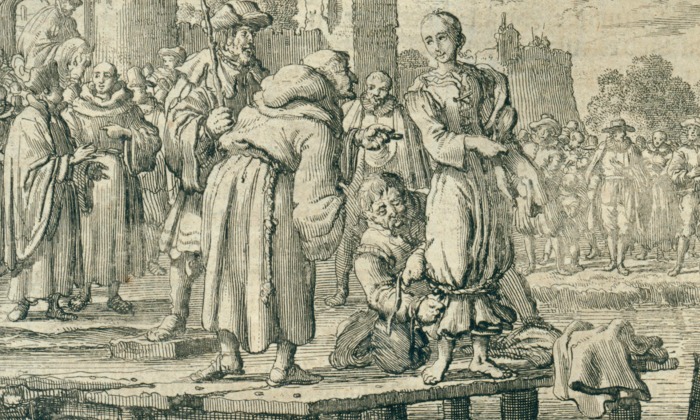
January 2025 marks the 500-year anniversary of Anabaptism. It was in January, 1525, that George Blaurock, a former Catholic priest, was baptized by Conrad Grebel in a “believers baptism.” (ana-baptist – to be baptized again) in the home of Felix Manz in Zurich, Switzerland.
This had great consequence. Believers’ baptism was soon outlawed. Those who practiced it were persecuted and, in many cases, even martyred. Manz was arrested and executed by drowning in the River Limmat. Blaurock was beaten and exiled. As the Anabaptist movement grew and spread, the persecutions continued. These persecutions came not from pagans or other religions but from those who called themselves Christian—Roman Catholics, Lutherans, and Reformed.
Anabaptists challenged not only the authority of the church, but also the authority of the state which supported the church. Anabaptists were developing a “sectarian” rather than a “catholic” doctrine of the Church. Other sectarian groups, such as the Quakers, soon were birthed.
When North America was settled, many Anabaptists, and other sectarians, found a home in the new world. In many cases whole churches or communities migrated to the place where they could worship and live free from state control.
Anabaptists concentrated in places like Lancaster County, PA, Holmes Co., OH, and Adams County and LaGrange County, IN. These Anabaptists, like the Hebrew exiles in Babylon, did not integrate into the culture and religion of the places where they settled, but tended to maintain their religious, and thus cultural, separatist identity. And so in Adams County, Indiana, Mennonites spoke their form of German for nearly 100 years (until the first world war). Amish communities still speak “Dutch” as their first language.
My Mennonite mother, after she married my father, became Methodist in LaGrange County, IN. Or at least her name was on the Methodist books. But as I have often said, while her name was on the Methodist books, in her heart she was a Mennonite, as were all of her relatives within living memory.
She desired that faith, or something like it, for her children. So every summer from age four until eighth grade, I lived five weeks in Berne, IN, with Mennonite relatives while attending the Berne Bible school, a union school (but dominated by Mennonites) with up to 700 students. This was no “kool-aid and crafts” school. This was a memorize Scripture and take courses on the catechism and sing gospel songs, school.
Among the first passages I remember was the Sermon on the Mount. We did the Beatitudes at age 4, then kept adding year by year until we had had the whole sermon memorized by third grade. The Sermon on the Mount is at the center of the Mennonite understanding of the Bible. It was like I was born with the beginning of the Beatitudes, “Blessed are the poor in spirit, for theirs is the kingdom of heaven,” in my genes.
As an insider Anabaptist in those days, I was aware of attitudes which we today might understand to be clannish. My relatives were alarmed to think that the schools might someday be consolidated and would have to take in the non-Mennonites from surrounding townships. The word “Yankee” was a term of derision. I remember wondering who the “Yankees” were and then realized one day the term included the Methodists. But I was acceptable since I was in a Mennonite home.
Of course, my home county, LaGrange Co., IN, was also heavily Anabaptist, but in my mother’s case, if one understands the nature of sectarianism, not the right kind of Anabaptists. They were Amish, or, if Mennonite, Mennonites with caps. I remember my mother saying, “We don’t do caps.” So we remained Methodist. It was mostly my father, the County Agricultural Agent at the time, who got along famously with the Amish. He was naturally friendly, identified pig diseases and apple problems for them and explained other agricultural mysteries. He also knew families and visited their homes. As a result he was even on occasions invited to funerals or weddings, where he would frequently fall asleep since they were long and not even in a language which he understood.
While LaGrange County was a center for Amish and Mennonites, the county seat town of LaGrange, was not. It was Methodist, Presbyterian and Lutheran. This means I was, even as an elementary age student, very much aware of the differences between a town like Berne, with about 2,000 population, a great majority of which were Mennonite, and LaGrange, also with a population of about 2,000 (at that time) but which in culture and religion was typically midwest. In LaGrange we had taverns and pool halls. Kids got in fights and were bullied. Adults smoked cigarettes and cursed openly. The school sponsored dances. If this happened in Berne it was not in the open. During WWII in LaGrange, young men in service wore their uniforms to church where they would be recognized. If young men in Berne were in the service they did not wear their uniforms when in their home town and they certainly did not wear them to services in the Mennonite Church. No one ever asked me who I was in LaGrange but in Berne on a number of occasions I would be asked on the street something like, “And whose little boy are you?” I did not give my name but my grandfather’s and they would nod in approval.
Mennonites had big families. My mother had 81 first cousins on her mother’s side, most of whom were in Berne. One of my cousins married a man whose father made Ripley’s Believe it Or Not, because he had 161 first cousins on his father’s side. I asked him one day how that could be and he explained. His grandparents had 16 children, all from one wife, and each of the sixteen averaged 10 (and one 11).
And so I claim my Anabaptist heritage. For some years I subscribed to the journal, The Mennonite. When I lived in Elkhart, IN, I audited on two occasions classes at the Mennonite Seminary. When I was a student at Garrett Biblical Institute (now Garrett-Evangelical), I took a course on the prophets offered by an adjunct professor, John Miller, the founder of Reba Place, a Mennonite-inspired community. We visited Reba Place to learn about communal living and on one occasion interacted with visiting Hutterites, another of the Anabaptist groups, from South Dakota. I even used the book, Mennonite Your Way, which offered names of Mennonite families who volunteered to take for overnight other Mennonite-related travelers, and went to the West Coast and back one year with one of our children.
There is much more and this will be discussed in part II of this 500th year celebration of the Anabaptist movement, but for the moment I mention several ways I have been influenced by Anabaptists, and how I believe that this important witness within Christendom has a message for us today.
I never owned a gun. This grows out of Anabaptist pacifism. It is a bit more complicated since some of my mother’s relatives, influenced by fundamentalism and evangelicalism, argued the Mennonites were more interested in pacifism than salvation, and even left the church for other churches over that issue. But one does not abandon several hundred years of tradition easily. So, I never owned a gun, and still don’t. Nor have any of my children ever owned guns. My mother had influence when she said guns were for killing people. This means I did not play cowboys and Indians as a child, or fight WWII in the pasture. Actually, I did fight WWII with some of my friends but not if my mother found out what we were doing. One year a relative on my father’s side gave me a play gun for Christmas. Some days after Christmas it mysteriously disappeared. Later I figured: oh yes, we do not have guns, even play guns in the home.
Related to guns is the conviction that fighting is a consequence of the human fallen nature. Therefore redeemed Christians do not fight or bully. In my school kids fought on the playground, or any place else, but I do not ever remember fighting back. I am also horrified at all forms by bullying or the degrading of other people, or cursing them. I remember being horrified by a cheer our cheerleaders led at basketball games. “Two, four, six, nine, who’s the turkey on the line.” This horror carried over to commonly used racial slurs. This, I argue, was primarily not the result of my Methodist Sunday schools, but of my mother’s families’ Mennonite convictions.
We are not to live ostentatiously. As a kid, perhaps even more as a teen-ager, I was very much aware in my hometown of LaGrange, that certain parts of the town were where ordinary people lived, and other parts of town were where more well-to-do people lived. My paper route was across the tracks (literally) where the poorer people lived. For several years I was in many of those homes, usually weekly, when I collected on Saturday mornings. I loved these people and got to know many of them well, but almost none of them were Methodists. My part of town, where Methodists, Presbyterians and Lutherans lived, was different. And there were several streets where the business owners and the doctors and the teachers lived, that were even more “showy.”
But, I also observed, this was not the case in my mother’s home town of Berne where, as far as I knew, all of the homes were modest, at least in many ways. In other ways, not so modest. Every home, or at least it seemed to me, had raised-bed gardens, and flowers, as they were, even one hundred years before, in Switzerland. And, unlike the garden I tended, these gardens did not have weeds. It was as though in Mennonite homes weeds were not allowed. And if so for Mennonites, it was more so for the Amish, including the Amish in my county.
And so today, I believe I am not impressed by mansions and estates, or gardens and yards managed by landscaping companies. That carries over to other parts of life, such as clothing and fashion, but more on that, and other observations I would like to make about the influence of the Anabaptists, in the next article.




Comment by David on January 6, 2025 at 7:13 am
Back in the days when cars had chrome bumpers, the Mennonites of Lancaster would paint the chrome black so as not to be so showy. The Amish, of course, did not own cars. The area had a nickname of the “black bumper country.” Amish and Mennonite vendors with caps for women and bowl-cuts for men can be seen at the Reading Terminal Market in Philadelphia.
Comment by Gary Bebop on January 6, 2025 at 5:04 pm
Thanks, Riley, for an enlightening summary of Anabaptist history, it’s connecting threads to Methodism and Wesleyan-Holiness. Northern Indiana is the cradle of conservative spiritual fervency. Looking forward to reading more.
Comment by Don Gander on January 7, 2025 at 11:34 am
I have roots of both of my parents that are solid in the Anabaptists. I have much to be thankful for.
Comment by Harry Briley on January 7, 2025 at 2:39 pm
Currently Wesleyan in a Baptist church … always enjoy Riley… but even more so with his personal growing up memories.
Comment by Roy Jacobsen on January 8, 2025 at 8:58 am
Riley. You may want to consider the relationship of Ana Baptist spiritual practice with Wesleyan holiness of heart and life. Roy
Comment by Thomas on January 8, 2025 at 9:32 pm
Thank you so much for this article, Mr. Gaines. Unfortunately even the largest Mennonite denomination in the United States, the Mennonite Church USA endorsed recently the blessing of same-sex unions. Fortunately the Lancaster Conference left to start a new church.
Comment by Salvatore Anthony Luiso on January 9, 2025 at 12:18 pm
Thank you for this article. I’m looking forward to the next one.
I have a suggestion. Some Christians understandably assume there is a close theological and historical connection between Anabaptists and Baptists since both believe in and practice credobaptism. I suggest you briefly address the relationship between those two groups, and point out their most important similarities and differences.