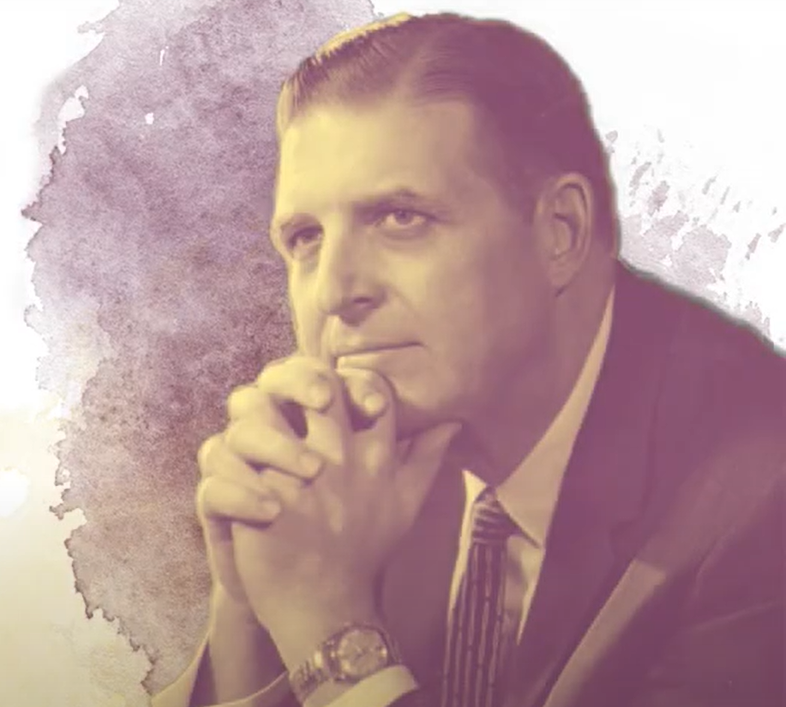

Below are remarks by Dr. Carl F. H. Henry, evangelical theologian and author, prepared for a forum of the Institute on Religion & Democracy in Washington, D.C., on Dec. 10, 1984. I have transcribed these words and made them available to readers in light of their continued relevance.
Does Politics Belong in the Church? Does the Church Belong in Politics?
The longer I observe the historical development of two types of totalitarianism in the modern world, the more grateful I am for our democratic alternative. Islam and the Islamic world consider Muslim religion and politics inseparable; the only question in debate is the identity of Muhammad’s legitimate successor and ruler of the Muslim community. The communist Soviet Union by contrast espouses the absolute separation of church and state.
The New Testament, which is the Christian church’s charter religious document, declares both church and civil government to be divinely willed instrumentalities with distinct powers, spheres and purposes under God. The Constitution, the charter political document of the United States, protects the free exercise of religion while it excludes the official establishment of religion.
While the First Amendment seeks to avoid the political establishment of a national religion or denomination, it does not seek to advance the irrelevance of religion or to promote irreligion. The Declaration of Independence, in fact, recognized that human rights have a theistic basis.
The wall between church and state in America is a serpentine wall, not a rigid, and strictly exclusive barrier. The interaction between church and state, or state and church, is what has led to questions before us: Does politics belong in the church? Does the church belong in politics?
The meaning of the term “church” is not self-evident, and the term “politics” or notion of political engagement also covers a multitude of virtues, vices and ambiguities. By church is now often meant (1) a building used for Christian religious purposes; (2) a locally organized congregation or body of members; (3) a major branch of Christendon; (4) a denomination; (5) a hierarchy or duly constituted leadership that speaks authoritatively for a church constituency or that professes so to speak.The church may therefore be vulnerable to politicization at different levels.
So too the term politics has a multi-level meaning. It embraces governmental institutions, political principles, party organizations and platforms, and political methods and strategy.
Evangelicals were stigmatized from 1950 to 1970 as insisting that religion and politics are alien spheres. This misrepresentation served the cause of nonevangelical ecumenists and critics more than it served the cause of truth or accorded with history. The emphasis “the church should not meddle in politics” held a special meaning acquired in a historical context in which ecumenical hierarchies claimed to speak as the church, routinely championed leftist social theories as Gospel truth, and moreover imputed a divine aura to particular programs and legislative specifics without logically deriving them from scriptural principles. What ecumenical political involvement implied was a program of nonsupernatural social redemption with discernible Marxist tendencies, and the consequent neglect of evangelism and missions as an outmoded task.
When in the late 1970s evangelicals aggressively returned to the political arena, they did not do so – contrary to their critics – by way of an unprecedented American religious incursion into politics. Nor was it simply a matter of duplicating on the right what ecumenists had been doing on the left. Rather, it was in line with public involvement of 18th-century Revolutionary clergy who preached “liberty”, of 19th-century involvement in the abolition movement, and of early 20th-century involvement in the Prohibition movement; it was in line, moreover, with my own plea in The Uneasy Conscience of Modern Fundamentalism at mid-century that public affairs not be left to nonevangelical political forces. Christianity Today recognized from its beginnings the importance of social as well as personal ethics, and of the application of biblical principles to the whole socio-cultural arena, even if its energies were often exhausted in challenging ecumenical conceptions.
Our topic implies that both the church and the state may be the offending partner in the matter of incursion into each other’s spheres.
It was doubtless recent governmental incursions into the ecclesiastical realm, even more than the long-smoldering reaction to the ecumenical front, or a conscious formulation of a comprehensive social and political philosophy, that stirred the evangelical right to bold political engagement. The 1973 Supreme Court decision on federal funding of abortion, the 1978 Internal Revenue Service proposal to impose disputed racial tests on Christian schools, and other disputed federal activities spurred evangelicals to political response. The emergence of the electronic church provided telecasters Jerry Falwell, Pat Robertson, and others a wide opportunity to rally and mobilize evangelical constituencies for political guidance and nurtured the growth of Christian Voice, Moral Majority, and other movements.
The encroachment of government into the church is more subtle than many religious leaders suspect. This naivete is due in part to their welcome for media exposure that enhances personal popularity and organizational visibility. Political incumbents and candidates routinely view church and synagogue as important political constituencies and create a public impression of sympathetic identification by aptly-phrased convention addresses and by posing with ecclesiastical leaders whose flocks misread this association in terms of special access and private influence. The church has reason to beware of Caesar bearing pious political rhetoric.
Glaring politicization of the church was evident in the recent use of black churches not only as voting registration centers but also for promotion in church services of a particular candidate and for the direct solicitation of offerings for political campaign purposes. Only a biased media could have connected the discussion of ecclesiastical politicization with the activity of the religious right while ignoring such direct deployment of churches by the religious left or indulging it as only a matter of campaign style or black culture.
Does the church belong in politics? Insofar as it owns land and buildings the church clearly has civic obligations and should render to Caesar what is properly Caesar’s. As an institution grounded on a divine disclosure of truth and morality, moreover, the church is mandated to proclaim publicly the revealed principles by which Christ the King of kings will ultimately judge nations and states and does so even now. The church as such must also stimulate members to apply scriptural principles with sound reason and in good conscience to current political concerns, in quest of preferred policies and programs promotive of justice and peace. Since God wills the state as an instrumentality for preserving justice and restraining disorder, the church should urge members to engage in political affairs to their utmost competence and ability, to vote faithfully and intelligently, to engage in the political process at all levels, and to seek and hold public office. The church is not, however, to use the mechanisms of government to legally impose upon society at large her theological commitments.
The church must increasingly clarify when obedience to God requires disobedience to the state and, no less, when disobedience to the state constitutes disobedience to God. Politically enhancing media coverage offers a ready temptation to engage unlawfully on the domestic scene in acts of protest against immoral policies abroad. In a world in which deliberate violation, however well-intentioned, readily encourages massive disregard for law, and even invites lawless terrorism if lesser means fail to achieve one’s ends, the refusal to seek change through duly constituted legal processes may be civilizationally costly. The church knows that God is the transcendent source and sanction of law, and the clergy especially ought to know that man is not above it in the absence of a clear scriptural mandate for civil disobedience.
No ecclesiastical hierarchy speaks authoritatively for evangelical Christianity who seek to bring themselves directly under the Bible. Evangelicals countered the atheistic humanist invasion of American political philosophy by affirming scripturally-grounded values. When this was deplored as an attempt to impose Judeo-Christian religion upon a pluralistic society, Moral Majority insisted that it was not a theological movement. Its political strength lay in the insistence that public policy must not erode civilizational values.
The religious right nonetheless accelerated fears of an imposition of sectarian morality in the political arena. This anxiety was deliberately escalated by secular humanists who assume that all ethical norms and prescriptions are man-made constructs, experimentally open and ever-changing. As the evangelical right blended morality and politics, the liberal left insisted that morality and politics not be confused. For the left, tolerance became so much the supreme good that any and all absolutes (other than tolerance) bore the spectre of totalitarian imposition by a fundamentalist Khomeni.
There was, however, another facet to the debate. Some evangelicals, whose concern for moral absolutes is commendable, continued to speak of America in terms of an ideal theocracy or christocracy in political affairs. The American charter political documents, to be sure, do not speak of a value-neutrality or of a self-sustaining morality. At least two things now remain for evangelicals to clarify in a pluralistic society: how to encapsulate in legislation moral values that are not merely sectarian but constitute also the ethical foundation of a viable state, and to identify the political rhetoric most appropriate to a republic in which civil government is the arbiter of neither metaphysical nor theological concerns.



Comment by David on December 3, 2024 at 8:31 am
The late communist Soviet Union by no means had separation of church and state. It was a totalitarian government that controlled all aspects of life. Churches were regulated and carefully overseen.
Comment by drw1 on December 3, 2024 at 1:09 pm
Thanks for posting this. I agree as to their continued relevance.
Comment by drw1 on December 3, 2024 at 1:34 pm
Thanks for posting this. Good read, though I agree with David’s comment as well.
Comment by Alan Towson on December 7, 2024 at 12:13 pm
The church should speak about legalized marijuana, legal pharmaceutical products that potentially affect one’s relationship with God, and legalized gambling.