
Christ taught “…You shall love your neighbor as yourself” (Matt 22:39) and “But I say to you, love your enemies and pray for those who persecute you,” (Matt 5:44). However, espionage involves sinful behavior (lying, cheating, and stealing). It seems that Christianity and espionage are at odds.
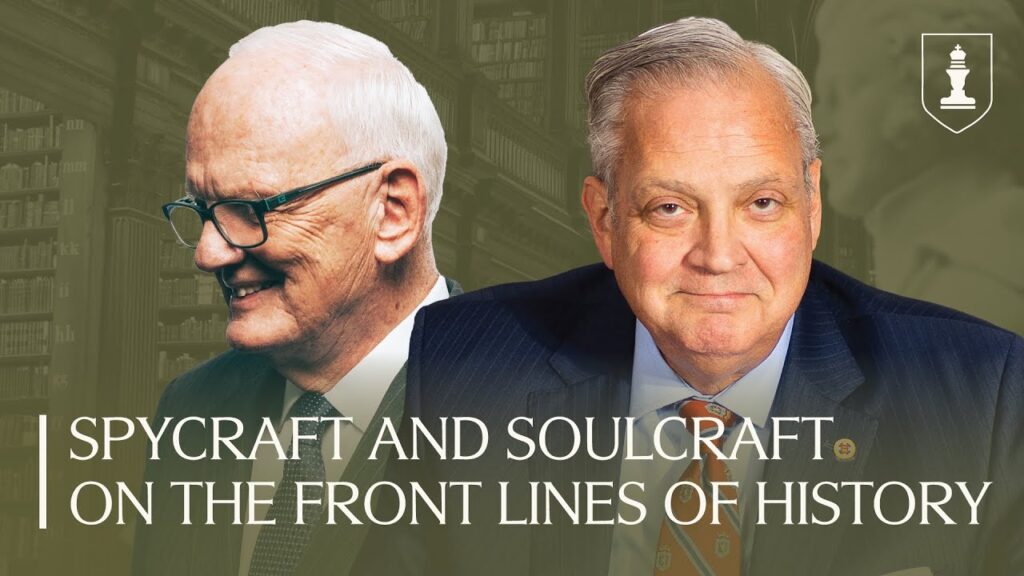
Southern Baptist Theological Seminary President Albert Mohler in April interviewed former Central Intelligence Agency Counterintelligence Chief James Olson for his Thinking in Public podcast to discuss how one could reconcile Christian ethics with spying.
Mohler asked if espionage should be done away with due to moral problems associated with it.
Olson, author of Fair Play: The Moral Dilemmas of Spying and To Catch a Spy: The Art of Counterintelligence, understood the complications but said he did not “see any conflict between what we were doing in our faith or our moral code.” In respect to Just War Theory, he believes it could provide a justifiable cause for a country to engage in intelligence operations.
The former CIA official also referenced the biblical account of the two spies Joshua sent to Jericho as biblical grounds for espionage. The Canaanite woman Rahab lied about the whereabouts of the Hebrew spies to protect them. God blessed her by first saving her and her family. By this precedent, Olson argues that spying does not contradict what the Bible teaches. If the context fits, spying becomes, “not only justifiable, but in some cases necessary.”
Mohler shifted the conversation to the sanctity of human life, stating that, “You cannot kill, you cannot lie, you shall not deceive, et cetera. But…you must preserve life…”
Olson agreed with Mohler’s view of human life but sees espionage as a form of protecting life.
“How many American lives, for example, have been saved on the battlefields against terrorist attacks because we had superior intelligence?” Olson disagrees that he is a utilitarian but admitted his views are close. He reasoned that when the United States government killed Osama bin Laden, it probably prevented another large-scale terrorist attack and enacted justice. Similarly, Olson also mentioned when Khalid Sheikh Mohammed (the mastermind behind 9/11) was waterboarded for intelligence, it potentially saved more American lives.
Past CIA-conducted actions have later received criticism from government officials for abuse of power: alleged torture of suspected terrorists at “CIA black sites,” indefinite detainment without criminal charge at Guantanamo Bay, or improper search of a Congressional computer network.
Olson reminded Mohler of safeguards including Congressional oversight to prevent abuses. He argued that a national Judeo-Christian heritage left an imprint of moral limits the CIA refuses to cross. In contrast, the former Soviet KGB lacked moral restraint and pursued an agenda unfettered by ethical boundaries.
The U.S. has boundaries, laws, and moral limits which leads Olson to proudly believe that “…we are the most moral intelligence service in the world.” Olson asserts that the CIA is “faith-filled” and agents even conducted Bible studies.
Throughout Olson’s career, he relied on God for wisdom, strength, and comfort during the difficult times in the field. Mohler suggested that one would need a great internal compass to navigate themselves appropriately, but Olson clarified “Let’s just call it faith.” He explained that there were times, while on a mission, where he thought he would not make it back to his family. However, according to God’s nature, Olson was in His grace.
“I could literally feel his protective presence. I knew I was not alone,” Olson recounted to Mohler.
On the issue of counterintelligence, the practice of preventing foreign intelligence organizations from interference, Mohler asked of the personal difficulties that follow. As the former CIA chief of counterintelligence, Olson stated that agents can become radically paranoid as they dive deep, “…into a world of deception… illusion… manipulation.” In light of this, Olson enforced a training program which he dubbed Angleton Never Again (ANA). Angleton was the fallen pioneer of American counterintelligence who fell prey to paranoia. The ANA program aids agents in counterintelligence from becoming paranoid. When asked to become the chief of counterintelligence, his wife (also a CIA agent) advised him to accept the offer under one condition, “don’t stay too long.” This piece of advice ended up becoming a part of his Ten Commandments of Counterintelligence, a guide on how to conduct counterintelligence well.
The entire interview is a great overview of reconciling espionage and Christian ethics mixed with personal anecdotes from a professional spy. Olson takes time to answer the common questions associated with the intelligence field and wrestles out fruitful responses through faith and reason.
Not every Christian in the pews could undertake what Olson confronted during his time at the CIA, he admits that God’s grace was his strength. After 30 years in the CIA, Olson and his wife retired. He now teaches at Texas A&M University.
The entire podcast is viewable below via Mohler’s YouTube channel. Downloadable podcast audio can be accessed here.
No comments yet



Leave a Reply