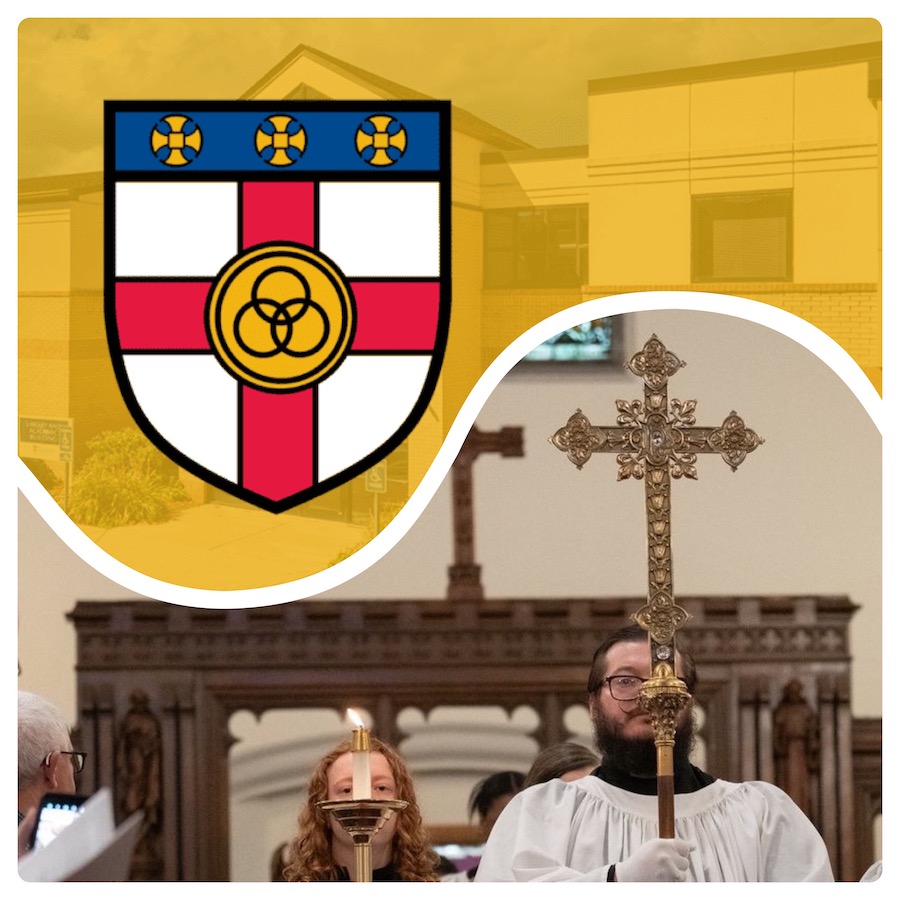

This week a seminary formerly affiliated with the Episcopal Church announced that it is changing its name. Trinity School for Ministry of Ambridge, Pennsylvania will now be known as Trinity Anglican Seminary.
Founded as Trinity Episcopal School for Ministry in 1975, the school dropped the word “Episcopal” on some of its printed materials in 2007. Trinity, which exists as an independent institution, quietly disaffiliated from The Episcopal Church in January 2022 without public announcement. It has been a season of growth for the school, which in early May reported an 89 percent increase in applications over the previous year. According to the Association of Theological Schools, Trinity counted an enrollment of 143 in the 2023-2024 academic year.
The change to incorporate the word “Anglican” is noteworthy for its inclusion in the institution’s name. It comes as other Protestant institutions increasingly eschew such labels as denominational affiliation becomes less marketable and nondenominational Christianity grows.
Examples could include Cornerstone University (formerly Grand Rapids Baptist Bible College and Seminary), Houston Christian University (formerly Houston Baptist University) or the significant number of formerly United Methodist churches that have renamed themselves to a broadly Christian name despite reaffiliation with the Global Methodist Church.
Anglicanism – almost uniquely among Protestant churches in North America – seems to have a brand that some expressly seek out. That differs from, for example, Baptists, who seem to be jettisoning their title from church names even as their ecclesiology has become dominant in American expressions of Protestant Christianity.
How many of us live near a First Baptist Church that has been re-styled with a single-word name, or Baptist swapped out for “Bible” or “Community”?
“By identifying as Anglican, we are not claiming a denomination so much as identifying with the historic, catholic faith which comes down to us through the English church,” Trinity Dean and President Bryan C. Hollon shared in e-mail comments, noting Anglicanism’s catholic ecclesiology. “We are a little more like Roman Catholic and Orthodox christians for whom it seems obvious to include our ecclesial tradition in our name.”
Trinity has carved out a growing niche within the North American realignment of mainline Protestant Christianity. In addition to continuing to educate Episcopalians, the school prepares for ministry students from the Anglican Church in North America (ACNA), the Evangelical Presbyterian Church (EPC) and the North American Lutheran Church (NALC), as well as international students.
Anglicans, Hollon suspects, “care more about historical continuity, and embracing the name is evidence of that.”
I’ve observed several churches – including a few in my own Anglican diocese – that have added the word “Anglican” into their name. Some clergy have noted to me that it made it easier for those searching online – often the first step for church visitors – to find them.
“As a UK colleague of mine says, the parish is ‘what it says on the tin.’ In other words, it’s honest advertising,” former IRD colleague and St. Jude’s Anglican Church rector Bart Gingerich shared with me. “The kinds of folks that would blanch at the Anglican label or, more likely, the patron saint name probably wouldn’t like what we’re offering anyway.”
Gingerich notes that many historic parishes in Virginia, where he ministers, never saw it necessary to add the denominational descriptor, existing in a context of establishment.
“However, we live in a multi-denominational/confessional context, and, in the Anglican world, one marked by conflict over doctrine and morals,” Gingerich adds. Parishes including The Falls Church have expressly added the Anglican name, as have others that exited the Episcopal denomination. That said, some ACNA church plants launched with more generic Christian names have more recently restyled themselves with Anglican in the title.
The Rev. Justin Murff of Incarnation Anglican Church in Williamsburg, Virginia, noted that the congregation, planted as Incarnation Church in 2013, added “Anglican” to the church name in the past year.
“By adding Anglican it gave us a clear identity and we are growing,” Murff explained, noting that “unfortunately we live in an era where many people just didn’t understand what Incarnation meant.”
“We still have a fair number who ask ‘what’s an Anglican?’ but it’s a great starting point for a meaningful conversation.”
Does this line up with what you’re observing? Let me know in the comments section below.



Comment by Gayle on June 5, 2024 at 10:03 am
I don’t know much about the Anglican vs Episcopal issues — but as a recent convert from Methodism to Eastern Orthodoxy, I have seen in my own local Orthodox church a surge of converts from Anglicanism to Orthodoxy. In fact, a local Anglican church held a vote on whether their entire church should become Orthodox, and it narrowly lost, but not only did a lot of individual members convert to Orthodoxy, but the priest did too, and now he is just one more parishioner in my local Orthodox church.
Comment by Corvus Corax on June 5, 2024 at 12:49 pm
Anglicanism reaches a small but under-served niche in American Christianity: Protestant, liturgical, and orthodox.
I come from a Protestant (Methodist) background but I feel a strong affinity for the Catholic and Orthodox Churches. My family would likely find it hard to understand a conversion outside the Protestant tradition. In real life there are cultural, not merely theological, chasms to bridge. At the same time, the informal style of worship found in most conservative protestant churches does not feel sincere or reverent (to me!). “High church” Methodist and Episcopal worship can be found, but I am no longer welcome in the United Methodist Church or the Episcopal Church because I do not believe that [immoral sexual practice] is a sacrament.
Two years ago I joined an ACNA congregation and have felt more or less at home ever since.
Comment by Rob Green on June 5, 2024 at 1:29 pm
I got the heave ho from a Canadian Anglican church in 82 or 83 for 3 brave acts. First. After my donation earmarked for Sunday School and youth didn’t show up in the annual accounting presentation, there, in a public meeting the accounts guy stands up and says: “we ignored designations, and put everything into the general fund and spend it on what we want.” When I pointed out but the tax authorities will probably take a really dim view of that, I was escorted from the meeting.
Second great event was voting against a general and significant pay raise as a delegate to Synod.
My third offense, was having the temerity to bring a Bible into class in the 10-year-old boys Sunday School. After that shocking act, I was ordered to never make contact with any of those kids again.
That was a long time ago and a lot of water has done under the bridge. We trekked through Baptist, Christian and missionary alliance, and Presbyterian churches, until we arrived at non-denominational churches, and I don’t mean Baptist Churches but if somebody removed the word “Baptist” from their sign.
And while I was away those 40 years, to some old friends that were part of the charismatic movement.(Yes, I’m one of those.) I was shocked to find out but the people in power and they have to be Church of Canada made it their goal to seek out charismatic and Evangelical people, punish them and effectively kick them out if they didn’t repent.
But a few churches broke away to join ANIC, the Anglican Network in Canada, which eventually folded into ACNA. My father-in-law who had been blocked by the annglican church of Canada from ordination, was immediately ordained, in his upper 60s in ACNA.
There was a time for that, but I knew that anglicanism was circling the drain, and didn’t hold out much hope that any renewal would occur within the denominations. I was pleasantly proven wrong, and I’m being a cheerleader for ACNA why are we meaning in the charismatic / Evangelical non-denominational church.
Having visited ACNA churches, I have not always been impressed. There’s only a few that serve indianapolis, Indiana, where I am. And one of them ran back into the Episcopal Church fold in the past year.
So the question remains, will I return to the renewed, restored, Anglican church. I was tossed aside in my twenties. Now at 70, I’ve got to wondering.
Comment by Canon Ron Moock on June 5, 2024 at 5:54 pm
Agreed! The Baptist College of Charleston, in North Charleston, SC, was chartered in 1960. In 1990 the Trustees changed to name to Charleston Southern University. And St. Paul’s Episcopal Church, Summerville, SC, became St. Paul’s Anglican when the parish was one of several to leave the Episcopal Church and become the Anglican Diocese of South Carolina, joining the ACNA in 2017.
Comment by Ralph Davis on June 5, 2024 at 8:26 pm
“Anglican” has little or no baggage in the USA, since Episcopal has been the monicer for over 200 years. Therefore when conservative ex- Episcopalians wanted a name…Anglican made sense (unlike in Canada where the mainline uses Anglican.
Comment by David D Wilson on June 5, 2024 at 11:42 pm
I think one of the main reasons Trinity changed its branding from Trinity School for Ministry to Trinity Anglican Seminary is a growing and closer identification with the ACNA and a further distancing from TEC. All of the Bishops and other clergy on the Trinity Board of Directors are now within the ACNA.
Comment by Jay on June 6, 2024 at 12:12 am
As Ralph says, “Anglican” was unclaimed so the conservative ex-Episcopalians (in 1977) became “Continuing Anglicans” and the moderately conservative (in 2006) became the “Anglican Church in North America”. In cities where ACNA cut into TEC market share, about 10 years ago many Episcopal churches began advertising as “member of the Anglican Communion” to both claim Anglican and separate from the ACNA.
The examples Jeff cites are by Evangelical Anglicans who tended to emphasize their evangelical bonafides with Anglicanism being co-equal or secondary (as opposed to England where there is a recognizable “Evangelical party” within the CofE). In terms of ecclesiology, these churches are Anglican, but many would say “pastor” or “presbyter” to avoid saying “priest”. In terms of liturgy, other Anglicans might say their worship looks more evangelical just as high church Presbyterians, Methodists, or Baptists might look too “Catholic” to evangelicals. So are they running towards “Anglican” or just trying to stand out from other “evangelical” churches?
For TSM, it seems more risky. Since 2013 it’s partnered with the North American Lutheran Church (which is about as big as the ACNA) and since 2016 with the Evangelical Presbyterian Church to deliver an ATS-accredited degree for their seminarians. Will these other students mind having an “Anglican” degree? OTOH, none of the other ACNA-approved “Anglican Seminaries” have Anglican in their name, so maybe it’s a chance to gain higher visibility.
TAS (née TSM) has strong management so presumably they studied all these angles.
Comment by Palamas on June 11, 2024 at 5:04 pm
Jay: I’m an EPC pastor (recently retired), and got my D.Min at Trinity. I’m fine with the name change, and can’t recommend the school enough. It’s a terrific place for vibrant, orthodox theological education.
Comment by Kevin Offner on June 12, 2024 at 11:39 am
I think what you write here is spot-on target. It’s definitely a trend for most of the other denominations to drop their distinctive name (as you rightly say, now going with “Fellowship” or “Community” rather than “Baptist,” “Presbyterian” or “Methodist”). Anglicans, like Catholics and Orthodox, have never seen themselves as a “Protestant denomination.” (I wonder: do Lutherans see themselves as Protestants?)
From my vantage point, as I look out over the larger evangelical Protestant scene, the “hot” place for orthodox Protestants to land these days, increasingly, is Anglicanism. It seems if one wishes to not go Roman Catholic or Eastern Orthodox yet still stay committed to tradition and the sacraments, the answer is becoming: Anglicanism.