
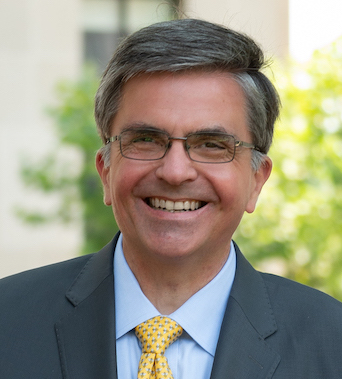
Distinguished New Testament scholar Richard Hays has co-authored a book apparently renouncing his earlier long-held traditionalist views on marriage and sex. A United Methodist and former dean of Duke Divinity School, in 1996 he authored the widely acclaimed A Moral Vision of the New Testament: Community, Cross, New Creation, A Contemporary Introduction to New Testament Ethics. That book affirmed traditional Christian sexual ethics, confining sexual behavior to husband and wife. So, Hays’s reversal has excited comments by critics and new allies.
The reversal is not surprising. Hays is part of a generational cohort of theologians who were deeply influenced by Karl Barth and John Howard Yoder towards a Neo-Anabaptist perspective. To varying degrees, they adopt Barth’s view that the scriptures contain but are not themselves God’s word. And they share Yoder’s view that opposing all violence, including even police and military, is the defining characteristic for authentic Christianity.
This cohort of late 20th century Neo-Anabaptists includes Stanley Hauerwas and Will Willimon. Coincidentally, they all taught for years at Duke Divinity School. And they all started as United Methodist, with Hauerwas later aligning with an Episcopal Church. Willimon was dean of the chapel at Duke University and later became a United Methodist bishop. Hauerwas and Willimon years ago preceded Hays in liberalizing on sexuality. Willimon was born in 1946, Hauerwas in 1940, and Hays in 1948. Their influence was profound on Baby Boomer and older Generation X theologians, clergy, academics, and public thinkers who were Protestant, creedally orthodox, opposed to theological modernism, anti-evangelical, anti-conservative, and left of center politically. Hauerwas and Willimon have specialized in being provocateurs and sometimes rhetorically outrageous. Hays has been more understated and careful.
These Neo-Anabaptist thinkers, with their followers, decried American empire, capitalism, consumerism, and societal conformity. Ostensibly they were more faithfully countercultural. But it’s revealing that on a key issue in which historic Christianity is at odds with contemporary American culture, they have fully conformed. Neither Hauerwas nor Willimon have offered a full explanation of their heterodox views on sexuality. Presumably Hays, with his new 272-page book, The Widening of God’s Mercy: Sexuality Within the Biblical Story, co-authored with his son, who teaches at Fuller Theological Seminary, will offer a fuller narrative of his shift. But does it matter?
Obviously, sexual progressives welcome this shift by Hays. But few traditionalists are likely to be persuaded at this point, having already resisted many years of cultural tides. Instead, traditionalists will see Hays as just one more theologian who remained orthodox when easier to do so only later to adapt to the times. His new book is likely to be the least impressive among his many intelligent and influential works. But his destination is predictable from his trajectory, based on his Barthian stance on scripture and his willingness to discard ecumenical church teaching on the state’s ordination to force through the police and military.
It’s also noteworthy that the Neo-Anabaptist perspective, influenced by Barth, is largely universalist in its soteriology. Its intellectual adherents are not typically concerned about evangelism, personal salvation, or even personal holiness. They are concerned about creating a faithful social ethic as they define it. But its core dogma is not centered around ecumenical consensus. It is focused on the Sermon on the Mount, with its message of nonviolent inclusion, which is admirable but an incomplete understanding of wider divine revelation as the church has traditionally understood.
This Neo-Anabaptist perspective, whose chief thinkers are in their 70s and 80s, is fading. It emerged mostly from Mainline Protestants who wanted a non-conservative alternative to theological modernism. Now, of course, Mainline Protestantism is dying and virtually nonexistent among the young. There are post evangelicals and remnant Mainliners who want creedal orthodoxy with sexual liberalism. But generationally they do not resonate to the neo-Anabaptist message centered on pacifist absolutism, which initially was an idealist reaction to the Vietnam War, much later perpetuated by the reaction to the Iraq War, and its support by evangelicals. Today’s creedally orthodox sexual liberals are much less idealistic and less attracted to pacifist absolutism.
It’s perhaps also true that today’s committed young Christians, in a more secular age, are more interested in a deeper orthodoxy, theological and ethical, even to a reactionary extent, rather than the Neo-Anabaptist accommodations that align with secular progressivism. The role of sexual liberalism in the demographic collapse of Mainline Protestantism is also noticed. The Neo-Anabaptist perspective articulated by Hays, Hauerwas and Willimon appealed to a particular educated Protestant elite, rooted in academia, never large, whose numbers are ever more shrinking.
In his A Moral Vision of the New Testament, Hays declares that the church is “deeply compromised and committed to nationalism, violence and idolatry,” compounded by the “military industrial complex” and the “just war theory…advocating the defense of a particular nation as though that were somehow a Christian value.” He insists that only when the “church renounces the way of violence will people see what the Gospel means, because then they will see the way of Jesus reenact in the church.” Compared with the church’s complicity with violence, he says, “our problems with sexual sin are trivial.”
Opposing “violence” is largely a posture of statement making, especially easy for academics, professional writers, and some activists. Pacifist absolutism, except for perhaps draft resisters in Russia or other challenging spots (Ukrainian Christians presumably are expected to abandon their idolatrous “defense of a particular nation” and surrender to their invaders), demands little of average Christians, certainly in America. It implies sanctification by right opinions. Christianity’s sexual ethic, in contrast, is an exacting demand for ongoing self-denial, in action and thought. There is no form of Christianity, or of any major religion in the world, which thrives through permissive sexuality. Serious religious adherents typically look for exacting personal standards that elevate them from monotonous daily life.
The new book by Hays promises that “traditional rules, customs, and theologies are rethought,” with “a God who changes his mind,” conveniently adapting to the current cultural context. Such fluid theologies and deities have their seasons and then “fade as quickly as the flowers in a field.” But the permanent things stand forever.



Comment by JoeR on April 12, 2024 at 6:09 pm
I serve the Living God, not man. You may think you are wise, The Lord may have another opinion as do I.
Comment by George Brown on April 12, 2024 at 6:45 pm
Since the most ancient of times it seems Satans most effective traps for mankind involve sex and money. Most of the demon gods of antiquity are still worshipped now with various names and behaviors but always worshipped the same way. Sex and money.
Comment by Porter Harlow on April 12, 2024 at 8:36 pm
Mark, thanks for this. Appreciated your analysis of Hays set in the context of Hauerwas and Barth. This was helpful.
Comment by Curtis Nester on April 13, 2024 at 5:59 am
They are not Progressive, they are Regressive (i.e. Liberals) and they will never stop trying to make God a reflection of themselves, instead of seeking to reflect the Light of God in their own lives. Truth isn’t just whatever one wants to believe it is. It is the Word of God as breathed into the writers of the Bible. Truth changes man, not the other way around.
Comment by Salvatore Anthony Luiso on April 13, 2024 at 10:21 am
Thank you for this good article about an important subject. It deserves a wide readership. I hope it has one.
It sounds like you think that at the root of the problem is this: “To varying degrees, they adopt Barth’s view that the scriptures contain but are not themselves God’s word”. If so, I agree with you.
With all due respect, I think I may disagree with you on one point. You say:
“Their influence was profound on Baby Boomer and older Generation X theologians, clergy, academics, and public thinkers who were Protestant, creedally orthodox, opposed to theological modernism, anti-evangelical, anti-conservative, and left of center politically.”
And you also say:
“The Neo-Anabaptist perspective articulated by Hays, Hauerwas and Willimon appealed to a particular educated Protestant elite, rooted in academia, never large, whose numbers are ever more shrinking.”
Hasn’t the influence of these elites had an effect on Mainline churches and also on evangelicals? Not by motivating many Christians to become Neo-Anabaptists, but to become more like Neo-Anabaptists? (I think one can see their influence in how *Christianity Today* and its readership have changed over the years.)
I don’t know if their number “are ever more shrinking”, but I think their influence continues among Protestant “elites”, and, through them, among Christians in general, including evangelical Christians.
Comment by Corvus Corax on April 13, 2024 at 10:30 am
“Opposing “violence” is largely a posture of statement making, especially easy for academics, professional writers, and some activists. Pacifist absolutism[…] demands little of average Christians, certainly in America.”
lol great point here, Mark. Easy to be a pacifist when you enjoy the protection of the most powerful military in the history of man. It’s a little different when an enemy army is moving through your neighborhood block by block and doing the things enemy armies do.
Comment by Gary Bebop on April 13, 2024 at 12:32 pm
Timely, insightful, and succinct summary of Hays & son and the theological nest that produced them. Your comment about “sanctification through right opinions” captures the essence of current novelty.
Comment by Tony Jordan on April 14, 2024 at 1:44 am
Paul and the Apostles, Martin Luther and John Wesley dealt with heresy during their time in ministry. Sadly this is another unfortunate time in Christendom when it appears heresy will win. We are called to remain faithful, continue to proclaim the gospel. Never forget God is God. Theological rhetoric will never change who God is, or God’s desire to transform the world into Gods likeness through Jesus Christ.
Comment by David on April 14, 2024 at 4:30 pm
As someone who briefly flirted with the neo-anabaptist movement in my youth, I now wonder whether Karl Barth, for all his brilliance, might have been the person most responsible for importing an anabaptist element into Reformed theology. Barth was a no-go for evangelicals when I was growing up. That was almost certainly a mistake, as Barth had and still has much to offer. But I wonder now whether too many Christians have lost the ability to separate the wheat from the chaff in his theology. In particular, I wonder whether his christomonism, as it’s been called, might not have led too many Christians in an antinomian direction.
Comment by Doyle T. Brittain on April 14, 2024 at 5:38 pm
They can believe what they want to. Hell ain’t half full yet!
Comment by Joe M on April 15, 2024 at 12:24 pm
One of the best summaries I have read of the currents underneath the steady corrosion of mainline theology. You now see it happening, albeit slowly, at CCCU institutions as well.
I can remember being a member of The Falls Church Episcopal prior to the Great Crack-up. The rector, a fine evangelical, announced he was sure he would have the ongoing support of Bishop Peter Lee. And he did. Until he didn’t. At the time that rector seemed stunned. I imagine he gets it all better now. As does this fine and fair article. Thanks.
Comment by Jeffrey Walton on April 17, 2024 at 10:03 am
Good observation, about Bishop Peter Lee, Joe. See: https://juicyecumenism.com/2022/07/09/bishop-peter-lee/
Comment by Brent White on April 16, 2024 at 9:27 am
You write, “Neither Hauerwas nor Willimon have offered a full explanation of their heterodox views on sexuality.”
I can’t comprehend this fact, yet I’ve looked in vain for evidence to the contrary. I read Hauerwas’s memoir, and he devotes maybe two paragraphs to the subject. And Willimon, who “never had an unpublished thought,” went from apparently accepting the UMC’s written doctrine on the subject to being sarcastically indignant that principled, non-fundamentalist (and non-partisan) Methodists like me were bothered that the UMC was liberalizing on marriage and sexual sin—about which, like it or not, the Bible has much to say.
So I give Hays credit: at least he’s explaining his reasons for the change. Of course, at fewer than 300 pages, one doesn’t expect that the Hayses are even trying to break new ground. We’ll see.
By the way, I rolled my eyes when one prominent religion beat reporter editorialized that people like me lost an important ally who was providing cover for our (culturally) retrograde views.
We lost no such thing! Of course the writer was reflecting the widespread conviction that none of us faithful Protestants has the integrity to believe—even after applying our best exegetical and hermeneutical work to the subject—that scripture, God’s Word, must have the final say, even when it contradicts the “word” of contemporary culture!
Comment by Gordon Hackman on April 25, 2024 at 9:52 am
I spent 20 years in a church environment that was in large part shaped by neo-anabaptist views and the analysis in this article is one of the best breakdowns I’ve seen of the movement. It helps me to understand my own experience in that context, confirms my own observations, and solidifies my choice to leave and reject it. Thank you.
Comment by Randy Horick on May 2, 2024 at 11:21 am
I’m a lifelong Methodist and son of a Methodist minister. I’m uninterested in labels like Neo-Anabaptist and in the opinions of theologians. I read Scripture and commentaries on Scripture, and I think for myself.
If you insist that “Scripture has the final say,” then you cannot avoid siding with those who apply texts without context and who adhere to the literal letter of the law even when it runs counter to the spirit of the law. Whether you’re able to recognize it or not, you align with those who applied scripture to justify slavery and who will not tolerate public prayers by women in the presence of men.
So it is with homosexuality. While scripture forms the base of Wesley’s Quadrilateral, reason and experience count for as much as church tradition. Applying reason and experience, I recognized that I have known that some children were homosexual before they were even old enough even to think about their own sexuality, and then I watched them grow up to discover their identity. I have witnessed the Holy Spirit flowing through LGBTQ persons ministering to others–including my own family on the night that my wife’s parents were murdered. I have witnessed the disconnect between the kind of immorality Paul denounces—with a historical understanding of the way that otherwise heterosexual men in the Roman world practiced homosexuality as a form of dominance and submission—and the loving, stable, monogamous same-sex relationships I have observed among so many neighbors and friends.
Many years ago, I applied my reason and experience to conclude that, for people with an inborn same-sex orientation, it could not be a sin to embrace the way that God had made them, any more than it is a sin for heterosexuals to embrace their heterosexual identity while also affirming their Christian faith. Individual scriptures matter; the weight of scripture matters much more. Individual scriptures command the stoning of disobedient children, but we do not consider ourselves disobedient to scripture by refusing to kill them.
The weight of Scripture, combined with reason and experience, led me to a “Huck Finn moment.” Huck was taught by churchpeople that slaves were something less than fully human, but experience taught him that was wrong. He concluded that if the churchpeople were right, he would accept going to hell. I concluded that, if homosexuality was indeed incompatible with Christianity, as the Methodist Social Principles claimed, then, “all right, I’ll go to hell.”
Full disclosure: I go to church with Richard Hays. I will defend his witness and commitment to the Gospel against all comers. I’d never heard of him before he arrived at our congregation, but I discovered and read his book on the moral vision of the New Testament. I remember he told me that he no longer stood by the chapter on homosexuality; he seemed rather embarrassed by it now. I’m glad he came around to the view that I have held for almost 50 years.
I have mixed feelings about the actions of the 2024 General Conference. In teaching about what it means to live in koinonia as an interconnected Christian community, Paul reminds us to rejoice with those who rejoice and weep with those who weep. I want to celebrate the belated recognition that living openly as an LGTQ person does not mean that one is living against the Gospel. But I have to temper such feelings with the knowledge that many others in the community are hurting, and I am supposed to care for them, too.
I have been willing to work to maintain as much common ground as possible for the sake of the community. But for those who chose to walk away, all I can say at this point is, “Goodbye. I didn’t break fellowship. You did.”
Comment by J W on August 28, 2024 at 12:49 pm
One problem, to my knowledge Hauerwas is traditional on marriage.