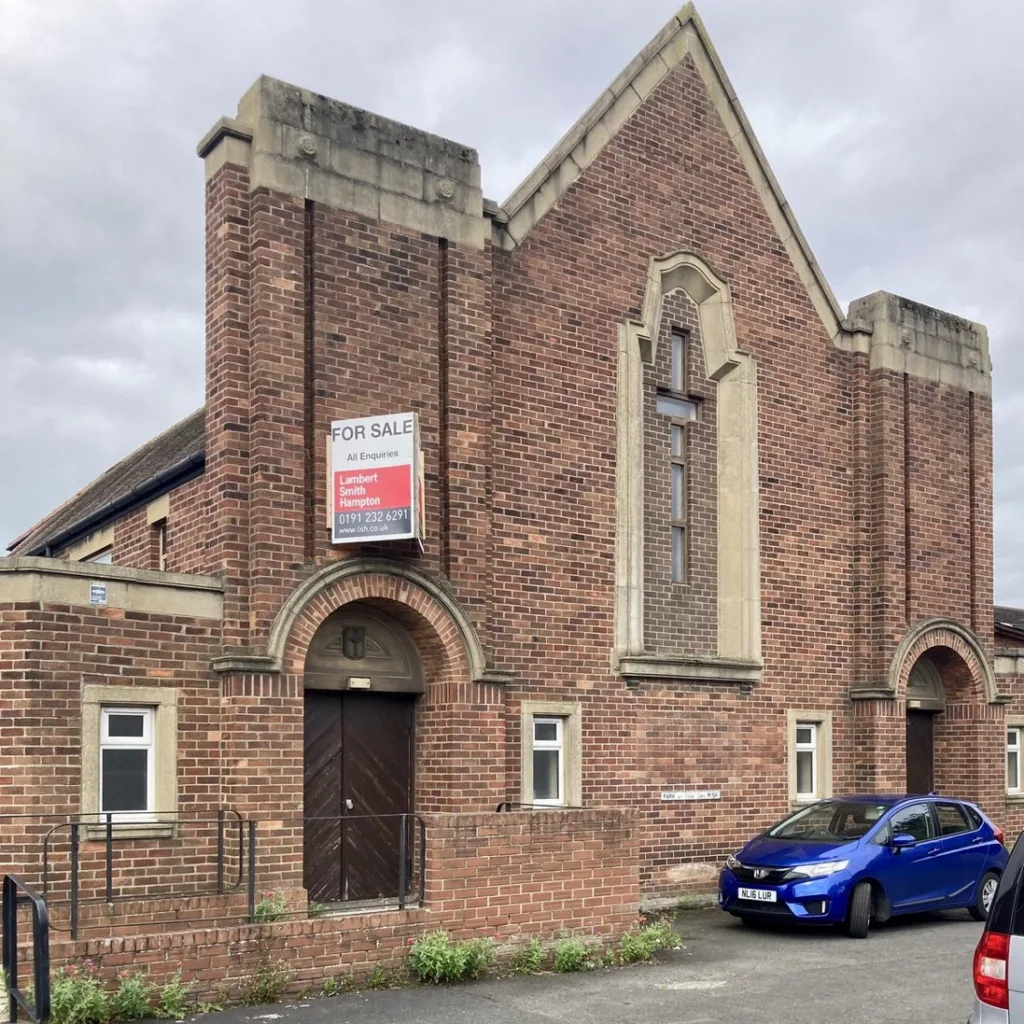

The New Statesman, a progressive British magazine, posted a fascinating lament about the closure of a venerable British Methodist church where the author had been shaped spiritually, intellectually, politically and aesthetically by its Boy’s Brigade and Young People’s Fellowship. He wrote:
For the young, Methodism offered safe space and the prospect of each other. For the old, it offered exactly the same. For all its people, it offered a journey of hope. A form of religiosity without a priesthood, politics without politicians, anarchism without anarchists, when this sort of experience has finally gone, the people will have forgotten some of the arts of democracy while the politicians will have forgotten some of the arts of the people.
The author, noting that between 2021 and 2022 another 178 Methodist churches in Britain closed, observes:
In 1906 there were about 800,000 British Methodists. In 1960 there were still about 700,000, plus a lot of “adherents”. So, right into the postwar period that academics were beginning to call “secular”, the movement was holding its own. Now the number is down to about 148,000 (less than in Fiji) and the Brigade is down from 100,000 to 40,000.
Nostalgically, the author recalls:
The 2021 census reported that Christians are now a minority in England and Wales. Back in the day, everyone knew who the Methodists were or where to find them. At the very least, they could point to a chapel, and nobody was surprised to learn that Nelson Mandela was a Methodist (among other things). Or Rosa Parks. Or Nina Simone. Or Ella Fitzgerald. Or Hillary Clinton. Or Scout Finch, in the novel. Or Clark Kent, in the comics. At home, Keir Hardie was a Methodist, as were four of the Tolpuddle Martyrs. The labour movement enjoyed a long and enduring relationship with Methodism, Primitive Methodism in particular. Margaret Thatcher’s Wesleyan Methodism is another story, but just as strong-minded.
Methodism wasn’t acknowledged by important people in Britain, the author stresses:
Everyday Methodism was unknown to the establishment, including the left, who saw it as a tin-roof organisation prone to pottiness and vulgarity. Yet, as in the trade unions, or the co-ops, mutuals and friendly societies, or the clubs, pubs and welfares, this was a society where men and women could feel more confident in themselves – in ways they would not have felt when dealing with “high-ups”, or bosses, or professional people (all of whose time was money). “Clubs” and “squashes’’, “fellowships” and “sisterhoods”, “packs” and “leagues”, choirs and Sunday schools, communion and “contact” groups – the names said it all in a common round that brought people into regular and informal union.
But, until recent years, British Methodism was shaping hundreds of thousands of people into citizens:
In other words, the Methodist church was a place where what was high and mighty mixed with the ordinary and the day-to-day. We talked about Jesus Christ almost as if he was a member away at university (long hair, at Oxford, probably). Of course, as it was an intensely social organization, the church could amplify all the usual human obsessions. Which is to say that, although we were no big deal, unimportant by most standards and unwelcome by some, it was the nearest any of us would come to running a bit of that complex thing we went around airily calling “society”.
And Methodism was a key element in British civil society:
Intellectuals talk about “civil society” – but here it was for real, run by people who weren’t intellectuals – far from it – and who belonged to much more than a church. In the context of those other forms of associational life, Methodism and the cooperative movement – as William Waldegrave argued in this journal (4 November 2022) – can be placed alongside non-ideological conservatism as one of Britain’s two great contributions to political theory. (He omitted liberalism.)
The author does not reflect on how all the 20th century Methodist attention to social activism, while high-minded, often overshadowed theological and spiritual distinctives, and so contributed to Methodism’s spiritual and demographic implosion in Britain. Ultimately, activist heat can’t be generated without a strongly fueled furnace of faith. But he’s obviously right about the social tragedy of Methodism’s virtual disappearance from Britain. The various Methodist groups have been replaced by more secular and individualistic online outlets far less likely to generate human cohesion.
In America the impact of Methodist implosion is exponentially greater. British Methodism was always important but a smaller minority. Methodism was America’s biggest church for much of the 19th century and the largest Protestant denomination for most of the 20th century. Methodist groups like Methodist Women and the Epworth League for youth, which later became Methodist Youth Fellowship, not to mention Sunday schools and men’s groups, molded and socialized millions of Americans.
American Methodists were woven into and often orchestrated nearly every important aspect of American civil society: Boy Scouts, Girl Scouts, Alcoholics Anonymous, Kiwanis, Civitan, Rotary and Optimist clubs. Methodists were never as prestigious socially as Episcopalians or Presbyterians. But they ran PTAs and garden clubs, served on city councils, birthed and funded endless charitable campaigns, populated nearly every form of political activism. Episcopalians and Presbyterians might predominate on Wall Street and at the country club. But Methodists ran Main Street and the county fair. As the British author noted, Clark Kent, i.e., Superman, was raised by Methodists in Kansas, of course.
With American Methodism’s institutional collapse, there’re no clear successors. It’s unlikely that the religiously unaffiliated will be as civic and community minded. Nondenominational Christianity now prevails in America, whose impact is not yet clear. But these newer churches, for all their entrepreneurial ingenuity, seem less likely to produce builders of broad-based community institutions essential for American civil life.
On Easter Sunday I attended the church of my childhood and young adulthood whose sanctuary was demolished, now replaced with new worship space on the same site within a residential building with controlled rent. The new space is beautiful but does not dominate the neighborhood like the old church with its soaring steeple and half block of sanctuary with Sunday school wing and gymnasium fronted by a green lawn. That church of my childhood and youth included children and teenagers with whom I also attended public school. The congregation’s leaders were often community leaders: the police chief, the bank president, the deputy FBI director, plus schoolteachers and owners of small businesses, all of whom moved seamlessly across the wider civic space. There were no clear boundaries among these arenas. We who were young assumed we would graduate into this space, which would go on indefinitely. The current church is wonderfully still alive, but much smaller, older, and, although admirably involved in homeless ministry and other good works, no longer as societally prominent.
Methodism did not single-handedly build American civil society of course. But it was at the center of it, transcending political, class and, at its best, racial boundaries. As the New Statesman article described about Methodist retreat from Britain: “When this sort of experience has finally gone, the people will have forgotten some of the arts of democracy while the politicians will have forgotten some of the arts of the people.”




Comment by Tim on April 2, 2024 at 7:32 am
Our local Baptist Church and two other non-denominational churches (baptist leaning) are filled with ex-Methodists. They started leaving in the 1970’s and it increased greatly from 2010 to the present.
I asked one of my Baptist friends recently how his church was doing? He answered, “the only problem we have is all these old Methodist are over here trying to run the show.” I answered, “We call those folks our Methodist Missionaries.”
Comment by Gary Bebop on April 2, 2024 at 12:31 pm
Though it may seem incongruous for Methodist prodigals to wind up dominating other church settings, it’s really common of all migrations. Newcomers change the cultures they enter. Why should this baffle us? Ask the Native Americans what happened when emigrants flooded the North American continent. We should expect transformation of incalculable scale as mainliners flood more conservative churches. Some of this transformation will be benign, but much of it will be dismaying.
Comment by Roger on April 2, 2024 at 4:35 pm
HI Mark;
Enjoyed this article and remenisceing back in older days. The Local Small Town Church and another Local Church on a Charge, I attended, with 4 others was like being in Mayberry. We knew each other well. Each Church, had their deep pocket members. The town Church had the Scouts and a Club house for them. Up until the time of joining with the United Brethern was good. Things changed for all these churches. Since disafilalation, a few Baptist have said, they have had a good many of our Methodist town Church join them. A Country Baptist Church is getting many Baptist members who have moved several times say, they are trying to bring Calvanism into the Church. Gone are the days of a Grand Generation that grew up many years ago. John Wesley said, He who has governed the world before I was born shall take care of it, likewise when I am dead. My part is to improve the present moment.
Comment by Dan W on April 2, 2024 at 11:13 pm
I enjoyed reading Mr Colls article in the New Statesman. It reminded me of growing up Methodist in Georgia (USA) during the 1960s-1970s. I thought it was just the UMC that changed, drastically. Now I believe it’s mid twentieth century Western culture that has disappeared. We are approaching the mid twenty first century, so I really shouldn’t be surprised. I do hope we choose to rediscover the fellowship we enjoyed then. MYF and MIF were the Methodist Youth Fellowship and Methodist Intermediate Fellowship. It was in the name! A worthwhile goal for twenty first century Methodists/Wesleyans should be restoring Christian fellowship. If Christians are now a minority in the U.K., it sounds like an exciting mission field. Is Christian evangelism still legal in the U.K.?
Comment by Carl Murphy on April 8, 2024 at 11:57 am
I believe The UMC died when it stopped preaching the Bible and started reinterpreting it. God’s Word does not change because people decided DEI was the way to go. Instead of inviting all in and teaching the Word of God, so that people might turn from their evil ways and repent, the UMC teaches than none have sinned and fallen short of the glory of God. All we have to do is “love”. But love also teaches, it teaches the right way not anyway. When a DS stated that Methodist don’t have a specific time or date when they realized they are Christian I almost fell out of my chair. I guess that you become Christian by osmosis. The UMC seems to me as having left God for the world. I don’t know about you but my God is not “the holy queer one” as was prayed by a seminary student on YouTube. John’s Revelation speaks of a great falling away of people that are deceived. As Peter said, these deceivers came in “unawares”. But they have taken over the UMC in my opinion and as it was shown by the requirements of disaffiliation, it was all about the money and nothing about bring people to the cross.
Comment by David Gingrich on April 9, 2024 at 8:24 am
“We talked about Jesus Christ almost as if he was a member away at university (long hair, at Oxford, probably).”
Perfect description of why Methodism died.
Comment by Jeff on April 10, 2024 at 12:48 am
>> With American Methodism’s institutional collapse, there’re no clear successors. It’s unlikely that the religiously unaffiliated will be as civic and community minded. Nondenominational Christianity now prevails in America, whose impact is not yet clear.
I left the Methodist church for a nondenominational, when the WCA collapsed into a lukewarm mess during the pandemic, although I still occasionally worship at my old UMC (thankfully now a GMC) congregation.
Say what you will about non-denoms and their implied lack of adequate civic and community-mindedness — THE CHILDREN ARE THERE. (Visit the non-denoms and relabeled Baptists in your own community if you doubt that.)
And the children’s presence means that the childrens’ parents are also there. And THAT in turn means that the non-denoms have a fighting chance of remaining viable as we battle the immediate future of post-Christianity.
UMC and GMC alike are graying and have no real clue what to do about it. Study!
~Blessings, there’s a billion soul harvest ripening and we need all the harvesters! ~