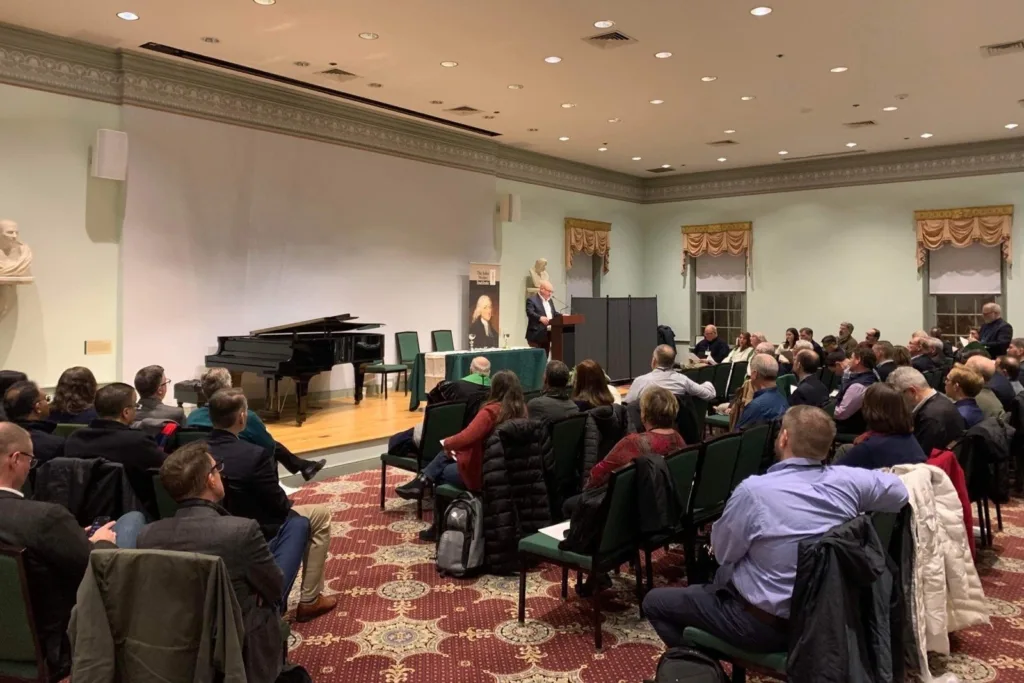
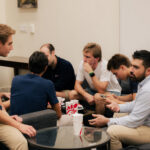
If the spirit of the Next Methodism Summit II is any indication of the health and vitality of the Wesleyan movement, there is much for which to be both thankful and hopeful. The Summit took place in Alexandria, VA, Jan. 19-21, 2024, at the historic Lyceum. It was organized by the John Wesley Institute, where I serve as director. Over 75 scholars and church leaders gathered from across the Wesleyan family. We gathered with the purpose of writing a document describing holiness of heart and life, the promise of God to make us whole—to make us who we are meant to be in Christ by the power of his Holy Spirit.
It’s not uncommon for scholars to gather. They do so at conferences, faculty retreats, or other academic events, sometimes clad in academic robes. These usually involve presentations of some sort and debate followed by more presentations and more debate. One usually finds books for sale, as everyone wants to keep up with the latest resources. Job interviews might take place, book contracts might be signed, and new academic articles often find their genesis in panel presentations. But it is not common for scholars and church leaders to gather with the stated purpose of producing collaborative materials, and in this case, materials designed specifically for formation within the life of the church.
This recent Summit was not the first time the JWI has convened such a gathering. In January of 2022 nearly 60 scholars and church leaders gathered in Alexandria to write the statement that would become The Faith Once Delivered: A Wesleyan Witness to Christian Orthodoxy, published this month by Seedbed. This is an accessible document on the basics of Christianity: God (Father, Son, and Holy Spirit), sin, salvation, revelation, the life of the church, and the culmination of all things, written with the stated purpose that it can be used by everyday people in the church. And so this January, we gathered again to focus on holiness. It was a huge success.
The Summit itself spans three days, beginning and ending with services of Holy Communion on Friday and Sunday. On Saturday, the day begins with a Wesley Covenant Service and ends with a service of prayer and praise. In between these services of worship, the focus of the Summit is working groups, six of them divided by topic to cover the various aspects of the Summit document outline, and two keynote addresses.
After the Opening Communion service, I spoke to the full group about the vision of the Summit and its mechanics. I told a story about something that took place at my church: one of the ministers fell down in front of the whole congregation during the opening procession. Everyone stood there in shock, not moving. Instead of being surprised, and decorous in this case, what we needed to do was just to pick him up off of the floor, which a member of the congregation finally did.
I offered this story as a metaphor for the relationship of scholarship and the church. For too long, many of us have stood in shock watching what’s going on in the church rather than stooping down, as it were, to make things better. While the church has been riled by every wind of doctrine, shaped by the culture rather than shaping the culture, and often left with pop theology lacking the depth that life and its challenges demand, scholarship has stood with apparent indifference, doing what we’re supposed to as academics but not what is needed from scholars in service of the church. Some have done this their entire careers, but not all of us. This is changing. And the Summit represents that change.
I wasn’t taking any shots at scholarship or academic life, because I think they are good things. The life of the mind is a good thing. The opposite, anti-intellectualism, is a corrosive element that ultimately undermines the church’s faithful witness. Anti-intellectualism is anti-Christian. But uniting the pair so long disjoined, as Charles Wesley wrote, “knowledge and vital piety,” is a task that needs continual care and attention. This care is at the heart of the Next Methodism Summit.
As it has been for centuries, catechesis is the answer for a lack of formation in our churches. But for catechesis to take place, faithful and solid materials must be produced to present the Christian faith in its fullness in an accessible way. Accessibility is key, and the writing done at Summit gatherings is intended to be non-academic, even conversational.
Continue reading at Firebrand here.
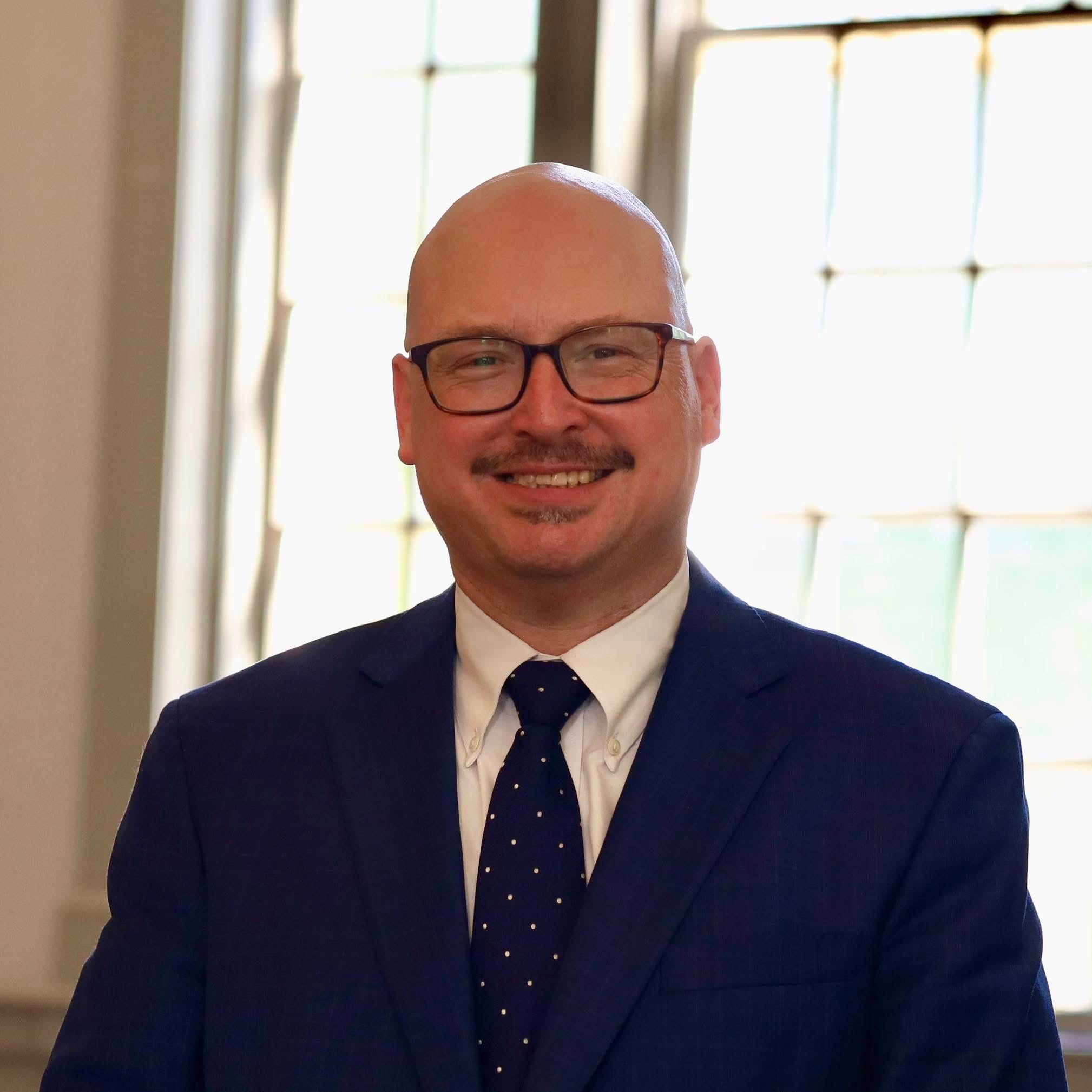
Ryan N. Danker is the director of the John Wesley Institute, Washington, DC and Assistant Lead Editor of Firebrand Magazine.
No comments yet

Leave a Reply