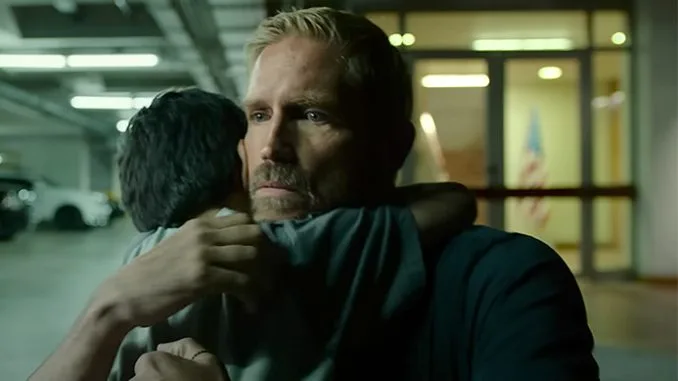

A story centered upon the gritty world of child sex trafficking is among the highest profile films this summer — coming in second in Box Office returns this week.
Sound of Freedom stars Jim Caviezel—best known for his role in Mel Gibson’s The Passion of the Christ. Based on a true story, Sound of Freedom follows U.S. Department of Homeland Security agent Tim Ballard. Throughout his career at the Department of Homeland Security, Ballard locked up hundreds of pedophiles — but he’s haunted by the fact that the child victims are beyond his grasp. The drive to free these children lights a fire within Ballard, so he embarks on a vigilante mission to rescue trafficked children in Central America.
Despite some logical inconsistencies and a lack of frequent dialogue and climatic events, the film uses raw emotion and graphic honesty to expose the exploitation of the innocent. Some critics claim that the film is a recruiting mechanism for far-right conspiracies; however, it ultimately depends on a story, not political or religious propaganda, to drive its message.
Human trafficking is a vile mark of human depravity — Sound of Freedom makes that abundantly clear. Ultimately, Sound of Freedom is a film, so the story takes creative and dramatic measures.
Human trafficking, however, is a complicated and nuanced issue — venturing into the jungle and snatching children out of captors’ hands isn’t usually the answer.
Including both sex and labor trafficking, there are an estimated 27.6 million trafficking victims worldwide. The trafficking industry generates an estimated annual global profit of $150 billion. Family members, spouses, and romantic partners commonly traffic many victims.
Traffickers prey on the most vulnerable—like migration or relocation, substance use, mental health concerns, involvement with the child welfare system, and being a runaway or homeless youth. They leverage their victims’ vulnerabilities to maximize control and dependency. Often, victims won’t seek help or even realize they are in a trafficking situation due to fear, isolation, guilt, shame, misplaced loyalty, and expert manipulation.
Unlike Sound of Freedom’s portrayal, children are often not snatched from the streets. A study analyzing press releases and online media reports from over nine years found that fewer than 10 percent of cases involved kidnapping. While kidnapping situations exist, they are more of an exception than a rule. More often, child traffickers prey on children in socially and economically vulnerable situations — such as children living in poverty, experiencing physical or sexual abuse or addiction. Traffickers slowly recruit these children through trust and manipulation tactics.
Some of the anti-trafficking measures depicted in the film, such as creating a sex island to lure in traffickers or buying children out of sex trafficking to free them, could inadvertently create more demand for trafficking children and worsen the problem, one critic noted. Ballard’s real-life organization, Operation Underground Railroad (OUR), is known for dramatic rescue missions like the ones depicted in the film. While rescue operations do occur, they represent the minority of anti-trafficking work.
More often, anti-trafficking organizations focus on supporting victims, advocating for stronger anti-trafficking laws, and training law enforcement and employers to recognize the signs of human trafficking. Some ministries support survivors in addiction recovery, relationship building, and poverty-fighting.
Sound of Freedom achieves its goal—it uses emotional connection and storytelling to raise awareness about modern-day slavery. However, we can’t jump into a motorboat and travel to the jungle’s depths to rescue children.
So, what’s the answer? The best way to fight trafficking is through education and community involvement. A great place to start is the Polaris Project— an anti-trafficking organization that runs the U.S. National Human Trafficking Hotline and conducts research on modern-day slavery.
We all want to hear the sound of freedom—like the joyful tears of a father reunited with his lost children. But fighting trafficking requires us to do the small things—like volunteering at a community safe-house or educating ourselves and others on the issue. The National Human Trafficking Referral Directory shows volunteer opportunities in your area and across the country. The link can be found here.
The world is full of incomprehensible evil. No one person, organization, or political movement is the answer. However, we can influence change by humbling ourselves, praying, and actively chasing the truth.




Comment by Sabrina on July 21, 2023 at 7:37 am
My takeaway, and sadly, from this article is your lack of empathy for the brave, noble work Ballard has done and is doing. Truly, he is putting feet to prayer and the fact that he has raised such awareness and the whole country (world even!) is talking about this is something! Why try and minimize or even lambast what he has done?! Your snarky “jungle references” miss the mark. One person can and has helped change things and CAN be the answer; Ballard and of course JESUS CHRIST!!!
Comment by Jeffrey Walton on July 21, 2023 at 10:45 am
I read this as a favorable review, with additional context on anti-trafficking for interested filmgoers.
Comment by Brian Evers on July 21, 2023 at 10:53 am
I partially disagree. We need to break the organizations that accumulate and distribute the children in trafficking. That means knocking heads together and putting traffickers in jail. Raise the cost of doing business and put fear into those who pursue the trade. If you just support the victims, all you just do is provide shelter for the castoffs, the used-up, and the extras for the grinder that is the business. Jesus mentioned millstones and oceans for a reason when it came to children.
Comment by Isaac Willour on July 21, 2023 at 1:42 pm
Excellent review. A well-sourced look at an important and unfortunately perennially-relevant topic.
Comment by David Gingrich on July 26, 2023 at 6:38 am
What a poor review of what is perhaps the most important film of our time. Shame on Mainetti. The film is reaching Christians and non-Christians – over $100 million earned at the box office so far. Mainetti would have done better to just say “God’s children are not for sale” and encouraged people to see the film themselves.
Comment by Jeffrey Walton on July 26, 2023 at 1:46 pm
We are in agreement that this film is important. We’ll also publish this review in our upcoming quarterly Faith & Freedom journal.