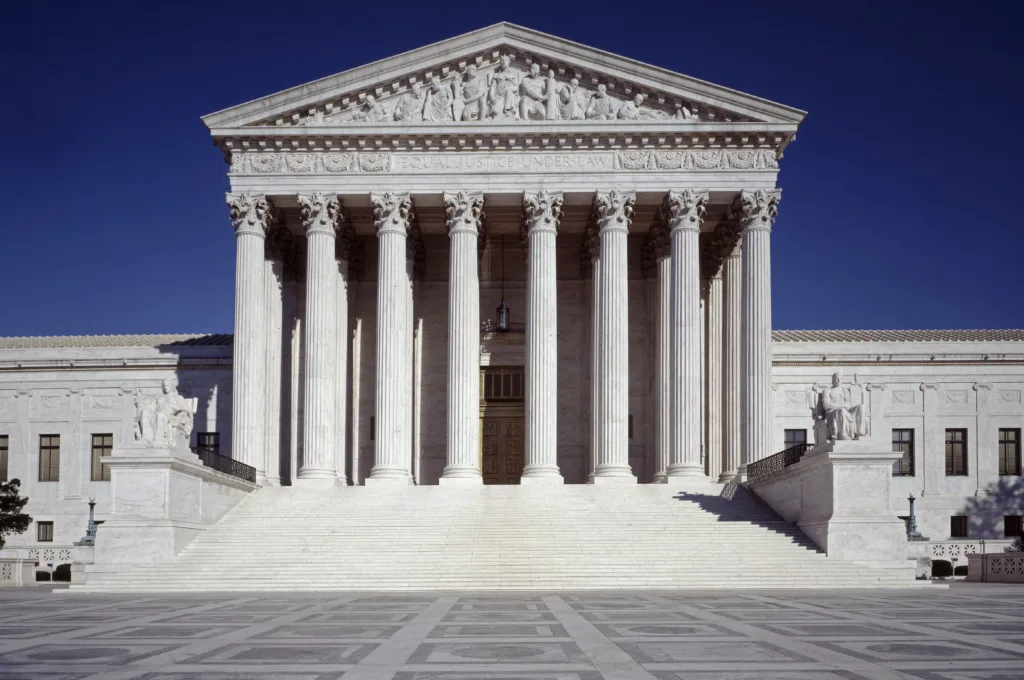

The Supreme Court recently protected religious liberty and accommodations in the case Groff v. DeJoy. A unanimous Court ruled in favor of a Christian postal service worker, Gerald Groff, who sought relief from having to work Sundays, as doing so would curtail his ability to honor the Sabbath. The Court reversed the decision of the Third Circuit Court of Appeals, who rejected Groff’s argument that an employer’s refusal to grant religious accommodations violates Title VII of the 1964 Civil Rights Act. Groff is the latest case in the Court’s recent trend of protecting religious liberty, having approved religious exemptions and accommodations in 303 Creative LLC. v. Elenis, Kennedy v. Bremerton School District, and Masterpiece Cakeshop v. Colorado Civil Rights Commission, to name several cases in the trend.
In Groff, the Court was tasked with reviewing the standard that employers must meet when trying to justify the refusal of accommodating an employee with a sincerely held religious objection to a specific workplace policy. Title VII of the 1964 Civil Rights Act made discrimination on the basis of religion unlawful. However, the statute did not clarify what constituted religious discrimination. In 1968, the Equal Employment Opportunity Commission (EEOC) held that employers are obligated to “make reasonable accommodations to the religious needs of employees” whenever doing so would not create “undue hardship on the conduct of the employer’s business.” Congress responded in 1972 by adopting the EEOC’s understanding of religious discrimination to amend Title VII.
In 1977, the Supreme Court addressed Title VII in the case of Trans World Airlines, Inc. v. Hardison. The Court’s notable holding in Hardison is that “to require [Trans World Airlines, Inc.] to bear more than a de minimis cost in order to give Hardison Saturdays off is an undue hardship.” This holding was adopted by lower courts in future cases surrounding religious accommodations. As long as the employer being challenged can show that accommodating their employee’s religious beliefs would constitute a greater than de minimis cost (pertaining to the minimum), they are not guilty of violating Title VII. The fruit of the Hardison decision was that employees have faced an excessively difficult battle winning their religious appeal against their employer, who only needs to show that accommodation would require more than a trivial cost (whether opportunity or operation costs). The Becket Fund for Religious Liberty revealed that since 2000, the federal appellate courts had denied 84% of religious accommodation requests from various workplace policies.
The Court in Groff revisited both Hardison and the overarching Title VII. Justice Alito, writing for the unanimous Court, cast doubt on the validity of solely relying on Hardison’s “de minimis” passage that was often quoted by scholars and courts. He contends, “In describing an employer’s ‘undue hardship’ defense, Hardison referred repeatedly to ‘substantial’ burdens, and that formulation better explains the decision. The Court understands Hardison to mean that ‘undue hardship’ is shown when a burden is substantial in the overall context of an employer’s business.”
Mr. Hardison was working for a department of Trans World Airlines that was open 24 hours a day, 365 days a year. The Court in Hardison reasoned that due to the tight schedule that Hardison’s job required, granting him leave on Saturdays (for honoring the Sabbath) would impose a significant burden on the company. Alito made this factual observation clear in his Groff opinion to argue that the true meaning of the “undue hardship” clause in the amended Title VII constitutes a “substantial” burden on the employer, not the “greater than de minimis” understanding adopted by the courts post-Hardison.
Applying the “substantial burden” understanding to the “undue burden” clause of Title VII’s protection against religious discrimination, the Groff Court reversed the Third Circuit Court’s decision and remanded the case back to the Third Circuit. The Court, while it overruled the de minimis standard inferred from Hardison, left the context-specific facts of Groff’s dispute to be evaluated by the Third Circuit under the new “substantial burden” understanding of the “undue hardship” clause instead of the overturned de minimis understanding. In other words, the Court clarified the standard for evaluating religious accommodation requests without casting a final judgment on the outcome of Groff’s dispute.
The Court’s ruling does not automatically grant Mr. Groff his religious accommodation. In limiting their decision to reviewing the de minimis standard and not extending their ruling to shoehorning a specific legal outcome, Alito and the Court reaffirmed the Supreme Court’s traditional deference to the lower regarding the factual findings and conclusion of legal disputes. This route of judicial decision-making helps stem judicial activism and promotes the distinction of roles and responsibilities that trial courts and appellate courts should assume.
With that said, while the jury is still out regarding the results of Groff’s appeal, he now has a better chance of prevailing in the Third Circuit. Having previously lost his appeal in that court due to the de minimis standard for undue hardship, the Supreme Court greatly helped Groff and future religious petitioners by holding their employers to a steeper standard of review when they try to justify denying accommodations to its religious employees.




Comment by David on July 12, 2023 at 7:32 am
Christians are under no biblical commandment to observe Sunday as the Sabbath (actually Saturday). Constantine depicted himself with Helios, the sun god, and had a connection with solar worship. In 32
Comment by David on July 12, 2023 at 7:46 am
Sorry for the premature post.
Christians are under no biblical commandment to observe Sunday as the Sabbath (actually Saturday). Constantine depicted himself with Helios, the sun god, and had a connection with solar worship. In 321, he made the day of the sun a time of rest for all except farmers. Churches were designed to at least symbolically face the rising sun.
When people are exempted from working on a certain day, then other employees must take up the slack. There is a question of fairness in this. Some occupations have rotations that might involve working at night. One could decline to work night shifts by claiming to worship the moon by this decision. Most people have times when they would rather not work. This might coincide with a spouse’s work schedule and children’s school attendance.
The hours of work should be made clear at the time of employment and if they are unsatisfactory, an applicant should look elsewhere.
Comment by Tom on July 12, 2023 at 5:32 pm
Acts 20:7.
1 Cor. 16:2.
Comment by David on July 13, 2023 at 6:49 am
Acts 20:7 merely mentions a meal held after dark on the first day. It does not mention what happened for the rest of the day and presumably people engaged in their normal occupations.
1 Cor. 16:2 regards collecting money on the first day. Again, cessation of work is not mentioned.
Comment by Dan W on July 13, 2023 at 6:59 am
Apparently when Mr. Groff went to work for the USPS he was not required to work Sundays. He was terminated when the Post Office began Sunday deliveries and he could no longer take that day off. I hope the lower court rules in Mr. Groff’s favor, not just for religious reasons.
Comment by Will on July 25, 2023 at 8:21 pm
You don’t even know when the Sabbath really is. 🙄