
In recent years, Christians – especially in America – have grappled with the complex personal characters and conducts of many historical figures regarded as heroes. The question is: how should we respond to the sins of our forefathers? One prominent scholar of American churchman and Founding Father John Witherspoon recently suggested careful examination of history is necessary before taking any drastic measures.
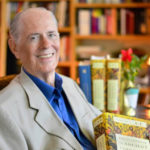
The Rev. Dr. Kevin DeYoung delivered an April 21 presentation titled “John Witherspoon: The Man Behind the Granite” as part of Princeton University’s John Witherspoon in Historical Context symposium. DeYoung is Senior Pastor of Christ Covenant Church in Mathews, North Carolina and Associate Professor of Systematic Theology at Reformed Theological Seminary in Charlotte, North Carolina. His doctoral dissertation on Witherspoon was later published as a book.
“Like so many in that founding generation,” DeYoung said, Witherspoon “accomplished a great deal in many different aspects of his life.” These included Witherspoon’s roles as an author, preacher, teacher, church leader, and political figure.
“It is hard to exaggerate Witherspoon’s influence,” DeYoung emphasized. Though Witherspoon is often overlooked today, DeYoung noted his influence on other Founding Fathers as a teacher and mentor. Witherspoon also signed the Declaration of Independence and Articles of Confederation, and was active in New Jersey’s ratification of the U.S. Constitution.
Also notable was Witherspoon’s role at Princeton (then named the College of New Jersey), where he served as president. In this role, DeYoung noted, “Witherspoon was responsible for virtually everything. Recruiting students, disciplining students, boarding them sometimes. He was charged with raising funds, furnishing the library, doing private tutoring, teaching regular courses.”
By all accounts, Witherspoon was an accomplished and prominent figure in Founding-era America, as well as a devout Christian. He “left a profound mark on this country, on the presbyterian church, and upon [Princeton],” DeYoung commented.
DeYoung noted, however, that this is not all that ought to be said about Witherspoon, asking “whether these accomplishments – and to what degree – they should be rendered suspect, or at least moot, because of the issue of slavery.”
Though Witherspoon spoke against slavery, some records indicate that he himself owned slaves. Because of this, Princeton’s Committee on Naming is considering a graduate student-initiated proposal to remove of a statue of Witherspoon on the university’s campus.
Though DeYoung avoided addressing the controversy surrounding the statue (at the direction of the Committee’s Chair), the symposium at which he spoke was hosted to examine Witherspoon’s life and “complex relationship to slavery and abolitionism” as part of their considerations about the statue’s fate.
DeYoung’s analysis affirmed that Witherspoon’s relationship to these issues was, indeed, complex. Though tax records indicate Witherspoon had 1-2 slaves for several years in the 1780s, no mention of slaves is mentioned on tax records from 1788 until his death in 1794. Given this information, DeYoung suggested it is possible, if not likely, that Witherspoon freed the slaves he previously owned.
DeYoung’s theory is further supported by the appearance of a previously unrecorded “Fortin Witherspoon” on tax documents beginning in 1791. DeYoung noted that freed slaves sometimes kept the surnames of their former owners, indicating a likely identity of this new Witherspoon. A 1794 document also includes the note “neg,” presumably an abbreviation for “negro.”
The historical record is complicated by legal property records listing that Witherspoon had two slaves at his death. Given details of these documents and relevant laws at the time, DeYoung suggested that the two individuals listed were likely not slaves, but indentured servants – a role legally distinct from slavery and resulting in full freedom at the age of 28. DeYoung proposed that these servants joined Witherspoon’s household through his marriage to Anne Dill in 1791, and were freed following his death.
DeYoung also proposed that “we certainly still wish that Witherspoon had moved more quickly to free slaves in his own life and had made the case for abolition with more urgency.” Given the nuances of the historical record, however, DeYoung argued that “if [Witherspoon] does not deserve to be celebrated for his record on slavery, neither does he deserve to be condemned.”
“On balance,” DeYoung concluded, Witherspoon’s various positive accomplishments “outweigh the case for denunciation, which is actually thinner than we might have been led to believe.” Whether one agrees with DeYoung’s conclusion or not, his arguments as a Witherspoon scholar should be taken seriously. He does not shy away from addressing Witherspoon’s shortcomings, but neither does he surrender to popular oversimplifications of those shortcomings.
The underlying motivation of DeYoung’s analysis – the importance of properly understanding issues in their historical context – should also be instructive to Christians. Like DeYoung, we must reject the virtue-signaling induced by jumping to conclusions based on little evidence. Instead, we must seek to carefully articulate the truth as understood only by carefully consuming a fuller diet of information.
No comments yet



Leave a Reply