
For the greater part of the twenty-first century, the western world has been engulfed by the stain of a kind of excessive leftism. This leftism has made its presence known impressing its nontraditional gender messages upon children and in its heightened attacks upon historic Christianity and its moral teachings, among other areas.
Where did this leftism come from, and what exactly does it teach? And how did conservative and Christian defenses of our tradition fail so utterly? Perhaps most importantly, where do we go from here?
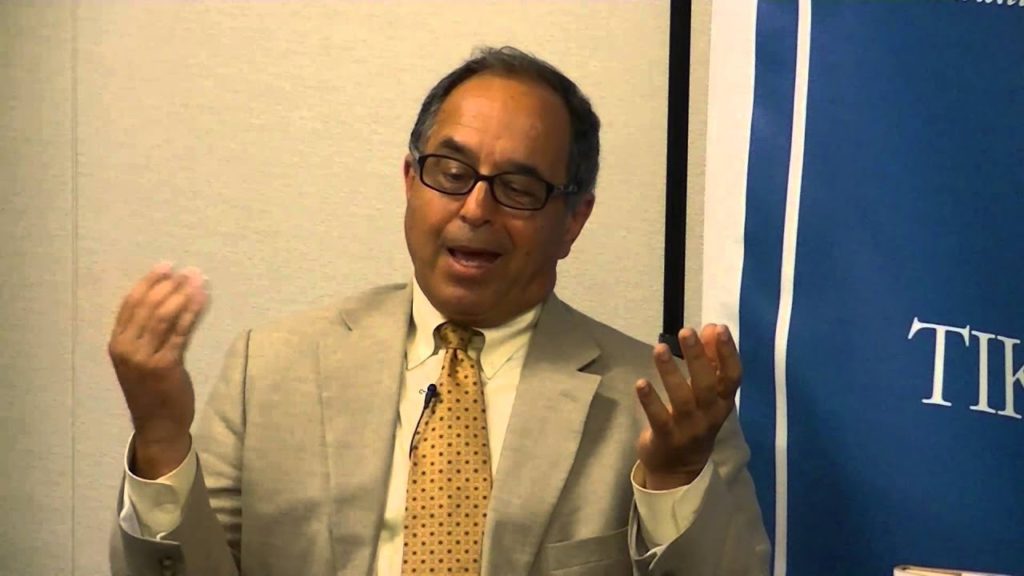
Joshua Mitchell, professor of political theory at Georgetown University, addressed these questions and trends in the 2022 First Things Annual Lecture on March 8, co-sponsored by First Things and the Institute for Human Ecology, which he entitled “By the Sweat of Your Brow You Shall Labor.”
Mitchell, observing the political landscape and drawing from his book, American Awakening: Identity Politics and Other Afflictions of Our Time, noted that “our problem is not relativism. It is identity politics which seeks to transform all human relations, all of our actions, into a righteous crusade to purge the world of sin.”
As Mitchell explained, the failures of fusionist conservatism in the Bush administration paved the way for Obama, whose administration radically changed the way Americans thought about the importance of politics, per Mitchell. In essence, politics became all about what has since come to be known as identity politics.
“Identity politics,” he said, “is a spiritual quest which draws its tropes – the scapegoat, the voiceless innocent victim, irredeemable stain – from Christianity, while at the same time trying to do away with Christianity as it has been historically understood.” The scapegoat of choice? “The white heterosexual male…the American constitution, the heteronormative family,” and “the homophobic church,” among other targets.
Mitchell noted that identity politics was not simply an evolution of progressivism, as some have claimed. For Mitchell, American history has existed in three stages, beginning with “first, the founding period, based on citizen competence; the second, the progressive era, based on expert competence; the third, now politically upon us…based on the politics of innocence and transgression.”
It is this question of competence which motivates Mitchell to decry identity politics so thoroughly. On Mitchell’s understanding, the identity politics narrative holds that “history chronicles the steady accretion of debt added to the ledger of transgressor groups…and the compound interest accrued to innocent victims…which now at the end of history the latter are entitled to collect.”
“The painstaking, yet slow and undeniable development of human competence amidst the struggle of history is of no consequence to identity politics and makes no appearance,” he claimed. “What matters is that the day of the final reckoning has arrived.”
The problem, therefore, is that our “demand” for competence has been overwritten. As Mitchell puts it, “since 1989, America has had no geopolitical rival compelling her to put competence first.” For too long, the west has not been living in the realm of reality.
How then should we restore this reality to our daily lives? Do we find our answers in Christ and sound philosophy? Mitchell thought not. Quoting Plato, he expressed his opinion that “the medicine we most need…is the medicine we will roundly reject.” Who on the identity politics left would take such claims of a divine Savior seriously?
The answer, Mitchell suggests, relates back to the subject of competence, and in particular, restoring the citizen competence of America’s founding period. “To our great dismay, there is no method we can follow to generate competence ex nihilo. If competence is learned at all, it’s through long apprenticeships of the sort that mediating institutions facilitate.”
This highlights the distinction between what Mitchell calls “apprenticeship knowledge” and “method knowledge.” Method knowledge could never replace the value and applicability of apprenticeship knowledge but is at best what he calls a “supplement.” But while “the competence that apprenticeship knowledge develops can be supplemented… there is no substitute for it.”
Ultimately what is needed, Mitchell concluded, is the understanding “that while we are keen to adopt supplements to the apprenticeship knowledge we need to live well, we soberly refuse the addictive highs and lows that are the predictable consequences of turning supplements into substitutes.”
The truth that a practiced knowledge will always be superior to a theoretical knowledge and will always ground its practitioners within the realm of reality could hardly be denied. But restoring reality and defeating the west’s illusions is only half the battle.
If our proclamation of Christ has no place in the war for the soul of the west, then any attempt to restore reality will remain incomplete. By all means, let us resurrect real competence. But such a solution can only be the beginning of getting the west to understand itself again.
No comments yet




Leave a Reply