
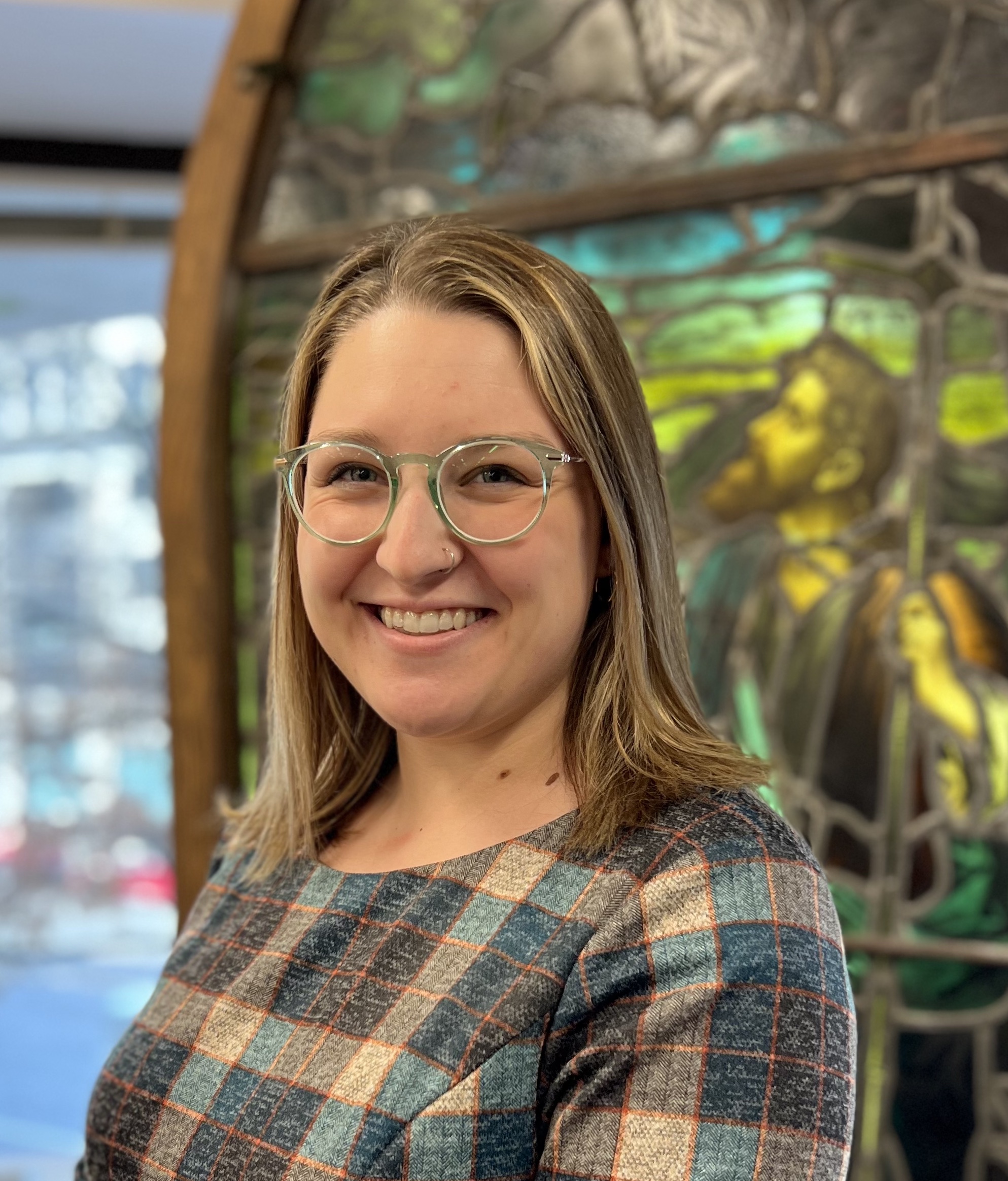
Episcopal Divinity School at Union Theological Seminary Dean Kelly Brown Douglas hosted Episcopal priest Sarah Monroe on the Just Conversations podcast to discuss Monroe’s work against her belief that the church cares more about property than people. Monroe urged working against colonialism and capitalism, instead of evangelism, to better exemplify the gospel.
Union, adjacent to Riverside Church on Manhattan’s Morningside Heights, is among America’s most storied liberal seminaries, where the Social Gospel became prominent early in the 20th century.
In sync with the Social Gospel, Monroe, who’s biography says she is married to another woman, deemphasizes traditional Christian doctrines in favor of humanitarian uplift for the needy, which she believes better points to Jesus.
Throughout the COVID-19 Pandemic, churches nationwide have focused upon how to continue to have church, rather than how to be the church, Monroe said. She founded Harbor Roots Farm to show “resurrection power” in Grays Harbor County, Washington, where 46% of the community is on public assistance and 1 in 25 are homeless.
Monroe cited Christianity’s decline, which is not true globally but is true in much of the United States, especially in the Pacific Northwest. She founded Chaplains On The Harbor as “…a group of chaplains who seek to build a freedom church of the poor by pastoring, organizing, and empowering leadership of poor people in Grays Harbor County.”
Chaplains On The Harbor has goals including:
- Providing spiritual and material support to people in jail and on the streets
- Creating wrap around support toward healing
- Supporting the leadership and expertise of poor people
- Building regenerative community ownership through community-led social enterprise and job creation
Monroe through Chaplains On The Harbor founded the Harbor Roots Farm, where their hiring requirements include: “those who are in recovery from addiction, those returning to citizenship after being incarcerated, someone who has just gotten out of homelessness,” and which they hope will steer people towards Jesus.
Where society would have responded to the community issues by building another prison, Monroe noted, the Chaplains built a farm. They cite the famous saying of Chinese Philosopher Lao Tzu, “give a man a fish and you feed him for a day. Teach him how to fish and you will feed him for a lifetime”.
The goals of Grays Harbor Farm are to reclaim the right to fresh food, to sustainable use of the land, and to an economy that benefits everyone, not just those at the top, implemented by: Providing good living wage jobs with dignity for people in poverty and showing that vibrant and sustainable economic solutions to poverty are possible.
Monroe said there is a deeply spiritual aspect to farming. She said society cares more about property than a person, citing a local church in Grays Harbor County that, at least in her recall, refused to house the homeless because it was too much of a bother.
Christianity is not just about preaching, it is about doing the work of Jesus Christ, Monroe said. It is about remembering “why we come to the altar in the first doggon place” Douglas added. Monroe said the Gospel and the Eucharist matter only because we are remembering a Jesus who was poor. More orthodox Christians would counter that Jesus’ deity and redemptive mission are also central.
Monroe shared her thoughts on better preparing seminary students for ministry and how ministry has transformed her. She suggested that although Christianity is declining, which, again, is true in the West but not globally, people still need the Gospel, but the goal should be simply to be with people rather than converting them to Christianity. For theological education, Monroe suggested learning how to undermine colonization and capitalism by equipping the poor and powerless to take back their dignity and rights.
Poverty is an early and unjust death, Monroe said. For her, the Gospel means “to call for a more just world where life matters, to enact a reality where people have the right for their basic needs to be met.” Unfortunately, there has always been pushback to this belief, she said, that if you do not work for it, you should die. Monroe lamented that this mindset has bled into the church and the foundations of society.
The work of Chaplains On The Harbor commendably reminds Christians that helping the needy is central to the Gospel. But Monroe, in sync with her declining and nearly all white and wealthy Episcopal denomination, seems to forget that the Gospel offers more than just material relief. Globally, hundreds of millions of poor people flock to churches to hear the traditional Christian beliefs that many U.S. liberal Protestants think no longer relevant.
No comments yet




Leave a Reply