Today the big news is that the General Conference of the United Methodist Church (UMC) has been further delayed, once again. Sort of. Partially. Maybe. Like so much in our denomination, it’s all very complicated, and many are having trouble understanding.
So what does it all mean?
General Conference, our global denomination’s supreme legislative authority, was supposed to meet in May 2020, as it does every four years. Among the hundreds of petitions coming before that body was the “Protocol on Reconciliation and Grace through Separation,” a widely supported, carefully negotiated proposal to basically divide our denomination along theological lines.
Then the global COVID-19 pandemic forced the General Conference to be delayed until August-September 2021. That was painful but unavoidable.
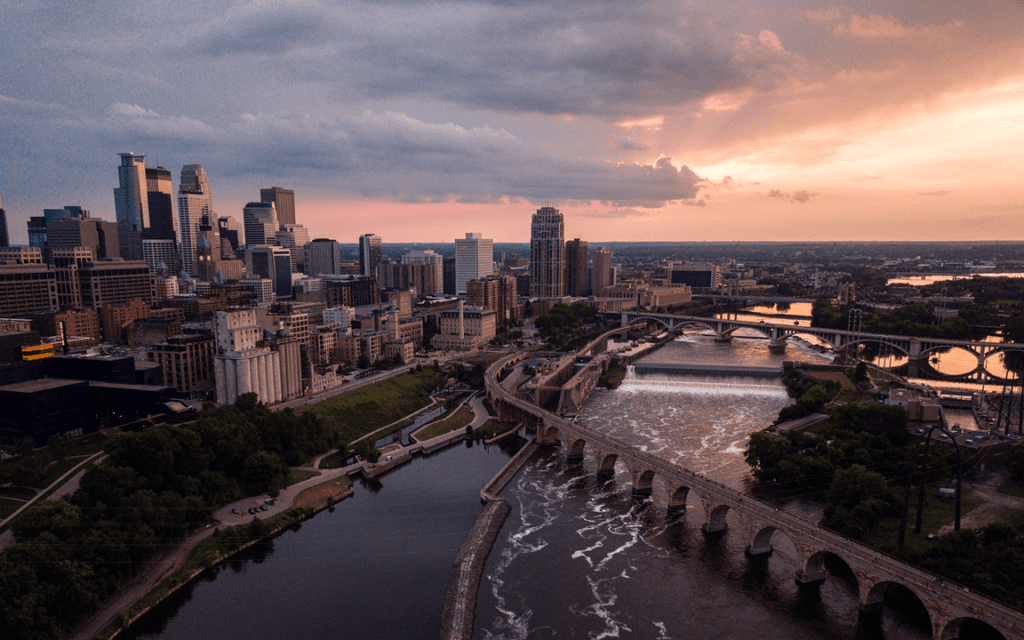
Today, twin press releases announced that the UMC General Conference is being broken into two parts: a one-day virtual gathering on May 8, 2021 and then a 9-day in-person gathering August 29 – September 6, 2022 in Minneapolis, Minnesota, as originally planned. To understand the full picture, see both the call by the Council of Bishops (COB) for a special General Conference and the press release from the Commission of General Conference, as well as the report of the Technology Study Team appointed to research possibilities for long-distance electronic voting.
After much research, this team concluded that long-distance electronic General Conference voting was not feasible —whether delegates individually connected from their homes or met in a limited number of “regional hubs”—without effectively preventing the participation of many non-American delegates. The Commission on the General Conference concluded that with the ongoing COVID-19 pandemic and related travel restrictions, as well as the limited global vaccinations, an in-person meeting could not be had in 2021.
Meanwhile, the COB has called a special General Conference session, with the same delegates, to be held virtually this May 8 to deal with what the Council has judged to be urgent business.
This means that it is likely that many non-American delegates will be disenfranchised on May 8. However, ¶506 of the UMC’s governing Book of Discipline states that only a simple majority of delegates are needed for there to be a quorum, thus making their decisions legal.
The unfairness of this perhaps unavoidable reality is limited by the COB narrowing the business on May 8 to the one agenda item of suspending the rules to allow delegates to vote by mail via paper ballots on 12 top-priority petitions to amend the Discipline chosen by the COB. Then all delegates around the world, including any unable to electronically connect on May 8, would have the opportunity until June 21 to mail in their ballots simply voting either “YES” or “NO” on these petitions.
At first glance, these petitions seem relatively uncontroversial, including some to allow for electronic General Conference voting in future emergencies. Notably, rather than trying to ram through the already-controversial denominational budget changes the COB wants, the COB’s relevant petitions would instead freeze the budget (and consequent denomination-wide apportionment rates) as it was set “at the last regular session of the General Conference.” This prevents apportionment rates from being lowered, but also avoids, for now, fights about re-allocating various parts of the denominational budget.
Per the Discipline, the COB has the right to call a special General Conference on as narrow an agenda as it wants. The General Conference Commission cannot change this agenda.
It is perfectly understandable that many feel very mistrustful of bishops, particularly the very partisan-minded faction of liberal Americans who dominate the global COB. Many of our bishops bear great responsibility for all that they have done to hurt trust, and how little interest they have shown in earning it back.
I certainly share many of the feelings of mistrust and frustration.
But there are important realities to keep in mind.
First of all, the theologically traditionalist portion of United Methodism has become increasingly dominated by Africans. Renewal groups like IRD/UMAction have long pushed for fairer inclusion in our global denomination. So I could not feel good about rushing forward with any major decision-making in a way that would effectively exclude many faithful non-American delegates.
Secondly, this is not the worst-possible news. Delaying more hot-button General Conference decisions later than 2022 would have seemed very suspicious. But this did not happen. When our denomination’s internal theological battles are well over 100 years old, waiting for a single additional year, in these rather extraordinary times, is not that terrible. Though it is certainly frustrating. Also, if the COB had tried to use the special May session to ram through their budget re-allocations, without allowing amendments, that would have been rather heavy-handed. But they did not do that.
Thirdly, in this interim period, our denomination’s official, binding standards on sexual morality remain traditionalist, as strengthened by the 2019 General Conference. As I have explained, from a strictly legal standpoint, there is no moratorium on the Discipline’s bans on same-sex weddings and our ministers being sexually active outside of monogamous, heterosexual marriage. No such moratorium is remotely acceptable to traditionalist delegates like me without anything exchanged in return. I lament our continued problems with regionally uneven enforcement. But it is also true, and a very good thing, that in a great many places, our biblical standards are still being upheld and preventing clergy from engaging in such behaviors, and bringing added screening to filter out ordination candidates who are not committed to living by our biblical sexuality standards.
Fourthly, theologically traditionalist United Methodists must never forget that until a formal separation is finalized, the UMC is our church. Connectionalism to like-minded believers is a deep, core part of our Wesleyan heritage. In this challenging time, we are spiritually obligated to think not only about what is most comfortable for us personally, or even for our own congregation, but also about what is best for faithful United Methodists in other congregations, conferences, and countries. Especially delegates from outside America who have stuck their necks out to challenge the liberalism started in the American church. We must continue standing with those who have stood with us for biblical faith. Let’s continue to rolling up our sleeves to strengthen good ministries and faithfulness in our congregations and conferences, as well as our current denomination.
We traditionalists must also help our more liberal friends to understand that while a few are eager to leave no matter what (on both sides), the vast majority of congregations likely to eventually be in the new traditionalist denomination are not willing to “pay any price” to leave. Instead, most can be expected to remain part of this denomination until the General Conference enacts an acceptable separation deal. Too many liberal United Methodists live in ideological echo chambers, in which they have mistakenly told themselves, “those conservatives are going to leave, soon, no matter what.”
Fifthly, the fundamental need for separation remains. The internal conflict keeps hurting United Methodists across the spectrum. Absolutely nothing has erased our deep, irreconcilable differences. There is simply no way to reconcile the view that a pastor officiating a same-sex wedding harmfully misleads people with the view that a church harms people if it refuses to offer such ceremonies. United Methodists have become starkly divided about some of the most fundamental religious questions, such as the main purpose of the church, the basic nature of salvation, and who Jesus Christ is.
Sixthly, there are a range of possibilities going forward.
Paragraph 14 of the UMC Constitution gives delegates the right to decide, by a two-thirds vote, to expand the business of a special General Conference session. So if delegates invoked this right of theirs, they could potentially expand the business and add the Protocol (with slightly revised dates) as a 13th item to be voted on, without amendment, along with the other 12 petitions from the COB on mail-in ballots. Then the Protocol could take effect as early as July 13, 2021. Note that this is a bit earlier than would have happened if we had stuck with the now-abandoned possibility of voting on the Protocol in late August 2021.
This would allow United Methodists on different sides of our divides to move forward with constructing our own respective churches. In the thirteen months until the August-September 2022 General Conference session, traditionalist pastors, congregations, and conferences would officially form our own Methodist denomination. By the time of the 2022 General Conference, enough traditionalists will have moved on that liberal United Methodists will be able to rush forward much more quickly than anyone thought possible to enact for the post-separation UMC (psUMC) whatever progressive policies they want on LGBTQ concerns, other social-justice priorities, and regionalization.
Additionally, this scenario would more or less guarantee that from this very day forward, any minister who eventually went with the psUMC would not face accountability for violating our homosexuality-related standards, even in conservative annual conferences with bishops committed to upholding the Discipline. Because the Protocol would impose an immediate legal moratorium on any relevant enforcement.
Or we delegates could potentially choose not to expand the business, thus delaying a formal decision on separation until at least 2022.
So then we would have another year of living under the Discipline’s traditionalist standards, with enhanced accountability, increased requirements for screening ordination candidates, and some regionally uneven enforcement.
In that case, the 2022 General Conference session could potentially adopt the Protocol, ideally as the first order of business. Leaders across the spectrum have noted that at that point, it would make little sense to then continue trudging through the hundreds of other submitted petitions. Because this would mean asking the many traditionalist delegates who would expect to soon align with the new traditionalist denomination to vote on setting the internal policies of the more liberal psUMC. But since we were elected to do a job, most traditionalist delegates would, like I do, feel a principled need to stay in our seats and continue voting our consciences on every vote put before us. Then after a couple years of separation and sorting, those in the psUMC would get to enact their desired liberal policies at a 2024 General Conference.
Alternatively, liberal caucuses, bishops, and delegates could choose to abandon genuine compromise with traditionalist leaders to instead push for a winner-take-all-fight at the 2022 General Conference. This route has a long history, repeatedly resulting in the Discipline’s sexuality and accountability standards becoming increasingly conservative. Remember, the much-noted overall liberal gains in U.S. General Conference delegate elections were exclusively among clergy rather than laity, and were offset by the shift of delegates from the USA to Africa and the Philippines. This path would have a great chance of resulting in a 2022 General Conference full of very bitter and chaotic fighting, without many decisive results to show for it other than the Discipline’s traditionalist accountability standards remaining largely in place, perhaps with a few incremental accountability enhancements.
Another hypothetical possibility, which is probably unlikely, is that somehow the 2022 General Conference narrowly liberalizes our sexuality standards and refuses to adopt a gracious approach, as in the Protocol, to traditionalist conferences and congregations who would then feel the need to separate. This is a recipe for the UMC spending years embroiled in the ugly church-property lawsuits the Protocol was designed to avoid. Because of our denomination’s larger size, we could expect these litigation costs to be much higher than they were for the Episcopal Church, which some estimate spent some $40 million in property lawsuits in South Carolina alone, on top of millions more across the country. This route would be much more costly for all sides than the rather meager $25 million (of traditionalists’ own denomination’s money!) that the Protocol would allow traditionalists to keep. A recent U.S. Supreme Court decision effectively allowed one Episcopal Church diocese (their equivalent of an annual conference) to secede from its denomination and keep its property, but state laws vary on such matters.
I hope that the above has been helpful for your understanding of what is really happening with the delay of the UMC General Conference.
Let us continue in prayer for the future, about which I remain cautiously hopeful.


Comment by Brother Thom on February 26, 2021 at 6:14 am
The harm done by further delay outweighs the harm done by traditional charges simply walking away from the UMC. The single easiest route is to begin by withholding all apportionments. I find it morally wrong for traditionalists to continue to financially support the denomination, knowing the money will be improperly used. In this case, traditionalists are unwittingly supporting a bishop appointed in violation of the discipline, and the agencies that support, provide health insurance, and a retirement plans to clergy ordained or appointed in violation of the discipline.
There has to be a line in the sand that traditionalists will not cross. It’s time for traditionalists to use the only power they have left against the liberal bishops controlling the direction of the denomination, and that’s thru halting apportionments entirely until all US bishops sign an agreement to halt appointments and ordination of applicants in violation of the discipline and cease and desist from performing same-sex weddings in the church and those performed by UMC clergy.
The liberal side of the UMC will continue to seek ways to drag this out. There is no financial future for the new UMC post-separation, they know this and I assure you they are discussing their next plan. This is no longer about the denomination to them, this is about power, position, and personal finance.
Take a stand and hold all apportionments until an agreement can be reached.
Comment by David Miller on February 26, 2021 at 2:07 pm
While delays may be unavoidable I am concerned by yet another delay. We Traditionalists have waited two years since the 2019 Special Conference during which Traditional standards were reaffirmed. In these two years many liberal conferences voted to ignore the results and are in open rebellion. My own Bishop, Bishop Bickerton, made it a point to ordain LGBT clergy in defiance of the Book of Discipline. He has also made it clear he will not act on any charges made against LGBT clergy. Any further delay will allow liberal Bishops to further pack the clergy ranks with LGBT members and to effect the laity. Mr. Lomperis, what are Traditional Methodists who live in Conferences in rebellion to the BOD to do ?
Comment by Michael on February 26, 2021 at 2:20 pm
John, what do you think about withholding apportionments?
Comment by td on February 26, 2021 at 4:24 pm
David miller, you pose a very good question. Unfortunately, i think the real answer is that you have a choice between:
1. Staying, praying, building relationships, and laying the groundwork for helping your local church to eventually exit the UMC as a church with its property.
2. Leaving the UMC and finding a church that follows both the nicene creed and its own rules of governance.
Comment by Pat on February 26, 2021 at 4:37 pm
Unfortunately, this decision will expedite the leaving of may traditional Methodists to Bible believing and gospel preaching churches long before the final vote on the separation takes place. More important, their tithes will go with them. I am not so sure that is not the plan all along with the liberal/false prophets destroying the church.
Comment by William on February 26, 2021 at 5:32 pm
Dear Progressive Delegates,
Let’s make a deal. As you very well know, the Traditional Plan passed at the 2019 Special General Conference is the law of the present UMC. Do you want to get rid of this, your hated part of the Book of Discipline once and for all? Then Join with the Traditionalists and vote for the Protocol Plan of Separation as the very first piece of legislation at the 2022 General Conference —- or with a two-thirds vote of us all, add the Protocol as the 13th item to the May, 2021 Special General Conference to be voted on by mail-in paper ballots. Either way, you could be finished with the Traditional Plan, or soon will be at your 2024 post separation UMC General Conference, and rid of us Traditionalists as well in that we’re more than eager to get on with the launch of our already developed Traditional Methodist denomination — a perfect storm win-win proposition for all.
Comment by Steve on February 27, 2021 at 6:37 am
Why is the default traditionalists leaving to form a new denomination? The Traditional Plan passed. Shouldn’t those who do not support the BOD leave? I do not trust the protocol that was negotiated after victory yet those who represented the victors agreed to leave like they were defeated for a 25 million bribe.
Let’s be realistic. The problem that the UMC has today is not addressed in the protocol. It will just follow the traditionalists to the new denomination. Most elders I know at conservative churches are progressives from progressive seminaries, which are most of the seminaries approved by the UMC. They are going to follow their congregations to the new traditional denomination or loose their jobs. The foxes are going to move to the new hen house and slowing start the process all over again.
We need to stop thinking that leaving will solve anything and start focusing on enforcing the BOD with the passed Traditional Plan. Let those who do not agree leave either by their own decision or by enforcing complaints. We can either do that now or later in the new traditionalist denomination. But don’t kid yourself that it won’t have to be done.
Comment by Bob Ford on February 27, 2021 at 7:16 am
When the article reads, “… the COB has the right to call a special General Conference …”, don’t you mean that the COB has the _power_ to do this?
Comment by Ken MacAlister on February 27, 2021 at 8:10 am
The schism will just continue to be delayed for another good reason no one is mentioning. Money & gifts to the church. The left in the church know their finances will be next to nil if the traditionalists split off & go off on their own. They need the money the traditionalists supply & will keep putting off any kind of schism in any way they can with the help of the “leadership” (bishops) because they know this. They’ll keep pushing their Godless insanity in the church while not leaving it & prevent any schism that would see the weekly offerings dwindle to near nothing every Sunday morning in left leaning churches. Whether they like it or not the left in the church are the minority. A loud, vocal minority, but a minority all the same. Minority groups are going to suffer financially just due to their smaller numbers. The left know if they just sit it out & wait they’ll eventually be rid of the traditionalists either through them getting fed up & leaving on their own volition or those who are older passing away. That is the left’s long game. As someone has already said there are two alternatives. Either stay & deal with the left in the church pulling the church away from God & His Word or go to a Bible teaching church that is not part of a mainline denomination where ALL are welcomed, but sin is not condoned, The Bible is truly taught, & topics The UMC will not touch are also taught such as true forgiveness & repentance, God’s character, His desire for us to be holy as he is holy, & the importance & offering of The Gospel. Even if a schism did occur the left would just infiltrate the new traditionalist church like they do every other thing & start the fighting all over again. They’re like the flea in that old Warner Bros. Looney Tunes cartoon looking for a dog while singing, “there’ll be food around the corner for me!”
Comment by William on February 27, 2021 at 10:36 am
At this juncture, what would happen if the Administrative Board of my local UMC voted to end apportionments going to the conference, and declared its independence from the conference and the general denomination based on the fact that the Book of Discipline has been made null and void already by actions, with no consequences, of the liberal wing of the church? What would my bishop, who has joined the non-support and resistance contingency to the Traditional Plan, do? If my church ignored the bishop and continued operating as an independent Methodist church, how would the said bishop confiscate the property if the occupants refused to leave, dismiss the staff if the independent church places them on its payroll and establishes a retirement plan for them, and disband the congregation if the congregation refuses to disband?
Comment by Star Tripper on February 27, 2021 at 12:47 pm
I agree with others that delay is not helpful to the Traditionalists. The Traditionalists won in 2019 but we were mistaken in thinking that was the end of the matter. I listened to a neighboring pastor who is heavily on the Left explain that this was just like Congress in that the war never ends and there are no decisive battles until they win. So delay means that more Traditionalists just leave making the Leftists stronger. Delay long enough and the Left won’t even have to have any amicable separation at all. Oh and forget about the current Book of Discipline being any type of control on these people. The 2020 election and its aftermath demonstrate that rule of law is a facade in the USA.
Comment by Reynolds on February 27, 2021 at 1:09 pm
I think y’all missing the point. The liberals have no money and see how PCUSA and TEC is hurting for money. Their goal is to delay and run out the clock. Bishops are telling local churches to stick it and see what happens. This again runs out the clock. Once the clock runs out you won’t be able to leave without paying a fee which most churches can’t pay. Again look at PCUSA. Only the really rich churches left because they could pay. The deck is stacked against the orthodox. The orthodox leaders sold the laypeople out by having more than a 50% vote. Also, I am not sure if a preacher is against leaving but the lay people are for leaving can the laypeople get a vote. Since the default is those who stay are winners the orthodox leaders screwed themselves and their followers. The game has already been lost before the vote. Orthodox won in 2019 and said hey less lose now and the liberals were like wow you stupid but we go with it
Comment by Gary Bebop on February 27, 2021 at 2:00 pm
Don’t fool yourself with illusions of sneaking your local church property out of The United Methodist Church. Conference officials will change the locks and proceed against you in court. Traditionalist have little leverage beyond the Protocol because they do not hold the administrative high ground (the episcopacy). I say this as one who supports the Protocol.
The future won’t be decided by the comment box. No matter how wrought up. Does anyone know how to growth a church? WCA will not fly if it’s a retirement project.
Comment by George on March 1, 2021 at 5:34 pm
Seems to make sense for a delay. More conservatives will leave for another denomination and older Methodists will pass away as young and more liberal folks will join. This will make it much easier for the bishops to commit Religiouscide. Sad sad sad.
Comment by John Ownes on March 4, 2021 at 4:17 pm
1. Does anyone in the USA know which church’s/congregation’s in each state are going to go with the traditional Methodist doctrine?
2. Does anyone in the USA know which church’s/congregation’s in each state will go with the progressives?
3. How can you divide up assets when you don’t know who wants what???
4. I live in a medium size town in Wisconsin. I believe in the traditional values of the Methodist Church. We have 3 Methodist church’s Close enough for me to attend. But if all 3 decide to go with progressive’s I have no where to go except a new denomination. How many people are going to be forced to do that?
5. Some might say we will receive $25 Million dollars to start new church’s in places where this happens. But that won’t buy or build many church’s?
6. Steve in his comment above is right!! If we won’t enforce the BOD now why would we in these new Methodist church’s!! It won’t be but a few years and we will be Canceled again!!
7. I believe the COB only has the power that the members give them and if they are violating the Laws set in the BOD???? FIRE THEM!!! The Members are the Church not the Bishops!!
Comment by Lee Cary on June 18, 2021 at 8:46 am
When it began, I followed this soap opera out of concern for the UMC’s future.
Now, I occasionally tune in for a laugh.
The old silent-movie Keystone Cop routine adopted by Senior Clergy and Senior Laity.