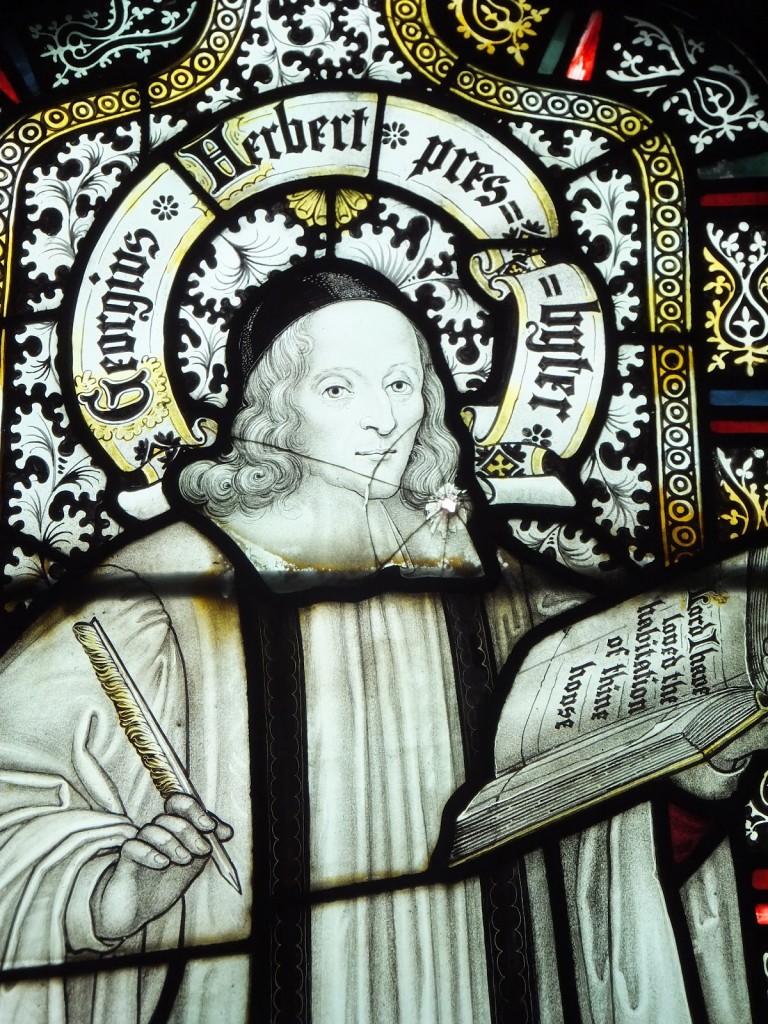
I’ve been honored and pleased with the feedback over the past week from my post regarding George Herbert’s Country Parson and contemporary pastoral ministry. In that time, I’ve gotten the chance to hear reactions both online and in person. There are several questions and criticisms that rose to the surface. I will try to address and clarify a few of them.
“It’s too romantic.”
As one friend observed, “For every George Herbert, there’s a Mr. Collins.” Herbert himself actually agrees. His advice often has a tone of reaction to it. He gets preoccupied by warning of greed, pride, vainglory, sloth, neglect (of both property and parishioners), indulgence, and moral cowardice (especially when facing the local nobility). One would have to guess that Herbert had seen such failures firsthand in the negative examples of other country parsons.
If I had set up a spectrum with “country parsons” on the good end and “celebrity pastors” on the opposite, this would be a devastating criticism. However, I simply used Herbert and his own ideas as a refreshing voice from the past to change perspective on present issues.
“It’s too gloomy.”
No one wants a droopy-drawers pastor, and I don’t think Herbert was recommending the same. However, if the parson is truly coming alongside his flock in their woes and troubles, he’s going to have a constant diet of some sad stuff. Add to that a focus on Christ crucified, which should certainly be a core to all Christian piety. Love requires a forgetting of self and a giving rather than a taking. I picked out these elements since they clashed so much with the common narrative of the giddy celebrity pastor. Herbert’s ascetic way increases the contrast.
On the other hand, as Herbert himself clarified, one needs to have joy and happiness interspersed with the sadness, because Christian have a hope and the crucifixion gave way to the resurrection! Fasting belies feasting. Any priest worth his salt can tell you that a good sense of humor is a necessity for survival and the retention of some semblance of sanity.
Moreover, pastors do enjoy their vocation. It should “click” with them; they find some sort of subjective good in fulfilling the responsibilities of their calling, not just an objective one. This leads to the final two issues.
“People won’t seek out their clergy for fear of being a burden on them.”
This is a good point that was not originally addressed. As I mentioned before, a pious clergyman actually loves doing ministry itself. It is his cross to bear, and it’s his service to perform. In my own experience at least, good pastors have a heart for counsel, confession of sin, teaching, catechizing, taking time out of their day for the spiritual formation, strengthening church members, and the healing of the flock. Sure it’s work, but it’s what they find satisfying. Across denominational lines, clergy generally find themselves annoyed with other things, like administrative duties and congregational squabbles.
So, for clarity’s sake, never be afraid to seek out your clergy for pastoral care and counsel. It’s their job.
“It’s clericalism.”
Since my original piece was on ordained ministry, it wasn’t going to talk that much about a “theology of the laity.” In more helpful terms, I did not talk about the whole picture of the doctrine of vocation. Everyone has a vocation, a unique calling by God to various duties and works by which God Himself works in the world. Every Christian loves his neighbor and worships God through work. This looks different for various vocations.
Part of the priest’s job, according to St. Paul’s own epistles, is to live an upright and godly life—the be a breathing, moving example of the Christian way. In my first article, I was analyzing how different congregations construe the model of Christian living in what they expect out of their pastors. In their very DNA, churches know the man up in the pulpit and altar (or stage) broadcasts a lived Christian faith to the world at large.
A layman, such as myself at this time and most of the Church, is also called to a holy life. He too must live out his faith. No one said otherwise. On the other hand, laymen aren’t defrocked and congregations aren’t necessarily brought to the brink of ruin for significant failings, either. Every Christian is called to a devout life; a few have certain extra responsibilities in that. From a certain perspective, then, clericalism is ruled out.
But Herbert’s high view of holy orders still remains and may make certain folks somewhat uncomfortable. In Country Parson, Herbert writes, “A pastor is the deputy of Christ, for the reducing of man to the obedience of God.” He reasons, “For first, man fell from God by disobedience; secondly, Christ is the glorious instrument of God for the revoking of man; thirdly, Christ being not to continue on earth, but after he had fulfilled the work of reconciliation, to be received up into heaven, he constituted deputies in his place, and these are priests.” In the same section, Herbert also calls the priest a “vicegerent” and called “to do that which Christ did.” The presbyterate flows to and from Christ Himself. Herbert’s poetry belies a similar theme.
For an episcopal polity, the bishop, steward of the King (Jesus), grants authority and power to the priest to preach the word written and administer the sacraments. In this position, the priest vicariously represents Christ to the people and the people to Christ. In the 1559 Book of Common Prayer which Herbert would have used, he would have prayed thus after Holy Communion: “And here we offer and presente unto the, O Lord, our selves, our soules, and bodies, to be a reasonable, holy, and lively sacrifice unto the, humblye beseching the, that al we which be partakers of this holye communion, may be fulfilled with thy grace, and heavenly benediction.” The priest presents himself at the altar as a representative of the whole congregational body, which is a living sacrifice. Similarly, when he turns to feed the people with bread and chalice, the priest freely serves the bounty of Christ’s own sacrifice, His Body and Blood. Thus, the Body of Christ nourishes the Body of Christ.
The parson is but the waiter in all of this. He is a man, but gifted with the power of the Holy Ghost to do his calling. According to Anglican theology, the Holy Spirit revealed things to be this way in Scripture and tradition. For Herbert, God made the Church this way. This wasn’t the result of some political power-grab.
To put it in starkest terms, George Herbert is a traditional Anglican. He believes and acts as such.
That’s why we find the English poet-priest musing, “[The country parson] is in great confusion, as being not only to receive God, but to break and administer him. Neither finds he any issue in this but to throw himself down at the throne of grace, saying Lord, thou knowest what thou didst when thou appointedst it to be done thus; therefore do thou fulfil what thou dost appoint; for thou art not only the feast, but the way to it.”
And that, my dear readers, is why the very nature of Herbert the country parson conflicts with the mirth-salesman of today’s contemporvant congregation. The one pivots primarily on the abstract work of teaching, counseling, and administration. The other centers on the service and mystery of the Altar.




Comment by Jeff on February 6, 2014 at 1:53 pm
I like this.