n January the religious liberty watchdog group Open Doors published its annual list of the worst oppressors of religious freedom in the world. While media attention rightfully focused on the increasingly large number of Islamic-majority nations on the list, one stubborn communist holdout remained atop the ignominious group: North Korea.
According to a North Korean defector, that very separation from the rest of the world requires a North Korean-specific translation of the Bible.
“Without the Gospel, there is no future North Korea,” says Professor Hyun Sik Kim, a Virginia-based academic who escaped the totalitarian state twenty years ago and now works to provide a common language Bible for North Koreans.
The “hermit kingdom” is increasingly unique among its Asian neighbors as an unrivaled persecutor of Christians. According to the U.S. Commission on International Religious Freedom (USCIRF), dissent is not tolerated and few protections exist for fundamental freedoms, including the freedom of thought, conscience, and religion.
“Private religious activity is prohibited and anyone discovered engaging in clandestine religious practice faces official discrimination, arrest, imprisonment, and possibly execution,” The USCIRF stated in its May report.
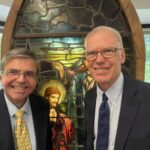
Kim, a research professor at George Mason University, spoke recently at Truro Anglican Church in Fairfax, Virginia. Heavily attended by both Koreans and Americans, the forum served to introduce what the elderly Korean now sees as his calling, the Pyongyang Bible Institute.
“For North Koreans to receive Jesus, a big mental block must be removed,” Professor Kim says, ascribing that block to systemic brainwashing and reinforced hatred of the United States and Christianity over the past sixty years. “Nothing but the blood of Jesus can heal the hatred.”
In addition to these formidable blocks, North Koreans also encounter another obstacle to the Gospel: language. While North and South Koreans share the same spoken language, sixty years of division has resulted in changed writing and contextual understanding.
Traditional written words employed by South Koreans, Professor Kim notes, borrow heavily from Chinese. Not long after assuming power in the North, the Soviet-aligned Kim family began an effort to remove Chinese influences from Korean writing, replacing them with Korean-specific words. The result is that after many decades, the average North Korean struggles to understand South Korean writings.
“Jesus died on a cross” becomes “Jesus died on the shelf” Professor Kim explains, providing numerous examples of the written language changes.
Providing a translation of the Bible in everyday language that North Koreans can read and understand is essential, Professor Kim says. Quoting Martin Luther, the North Korean defector makes the case for an accessible translation.
“One may not ask the Latin language how to speak German… one must ask mothers in the home, children on the street, the common man at the market, and watch carefully how they speak,” Luther wrote. “After that one may translate.”
Citing Pyongyang’s former status as “Jerusalem of the East” following a successful revival movement in 1907, Professor Kim believes the north will again one day be a center of Christian missionary activity. South Korea, Professor Kim notes, is already the second largest sender of Christian missionaries in the world, and is the top sender per capita.
An evangelized North Korea could also serve as a “passport” to reaching Islamic lands, according to Professor Kim. Due to the relationships cultivated through “brotherhood” diplomacy between rogue nations, in addition to sharing difficult living conditions, both North Korea and Islamic countries have commonalities that might uniquely aid North Korean-sent missionaries in the future.
Well known for paranoia in their foreign policy, Professor Kim says that Kim Il Sung’s family was actually capable of significant trust with individuals. As a tutor in the Russian language to a young Kim Jong-Il, Professor Kim was able to travel abroad, including a 1991 trip to Moscow. Approached by a South Korean agent during that trip about the ability to meet with a sister he had been separated from for many years, the tutor was reported by a double agent and immediately ordered back to Pyongyang. Understanding that a return meant certain death, Kim defected.
Instead of the atheist culture commonly portrayed, Kim argues that North Korea is more accurately described as a “heretic cult” of forged Christianity, in which Kim Jong-Il is essentially a “living Christ” and there is no other God.
The North Korean defector describes several aspects of North Korean public life that closely mirror religion in practice, if not in theory. Kim Il Sung’s “Juche” political philosophy is essentially a monotheistic worship of the North Korean leader, according to Professor Kim. Similarly, the dictator’s decrees and words are considered like scripture, while the research center of his philosophy functions more or less as a state church, with the Communist party secretary serving as pastor.
Born into a church-attending family, Professor Kim served in the Korean War where he was shot by – and shot back at – American soldiers. Calling for a volunteer from the audience, the North Korea defector guided her hand to a long groove in his skull, a war wound hidden by his hair, still with him sixty years after the conflict effectively concluded with a cease-fire agreement.
“I was injured after being shot by an American soldier and today I stand here in front of Americans as brothers and sisters in Christ.”
No comments yet


Leave a Reply