
It isn’t easy surviving the high-pressure, high-cost life of Washington D.C as a business consultant or government bureaucrat. So imagine doing it as a young Christian conservative working for a non-profit organization or as a staffer on Capitol Hill. Chances are, you’ve faced some tough challenges since arriving in “America’s Most Stressed-Out City.”
Facts like these drove the Family Research Council (FRC) to gather some of today’s rising Millennial Christian leaders for a panel discussion on “Standing Firm in a Changing America: How to be a Faithful, Young, (Christian), Conservative.”
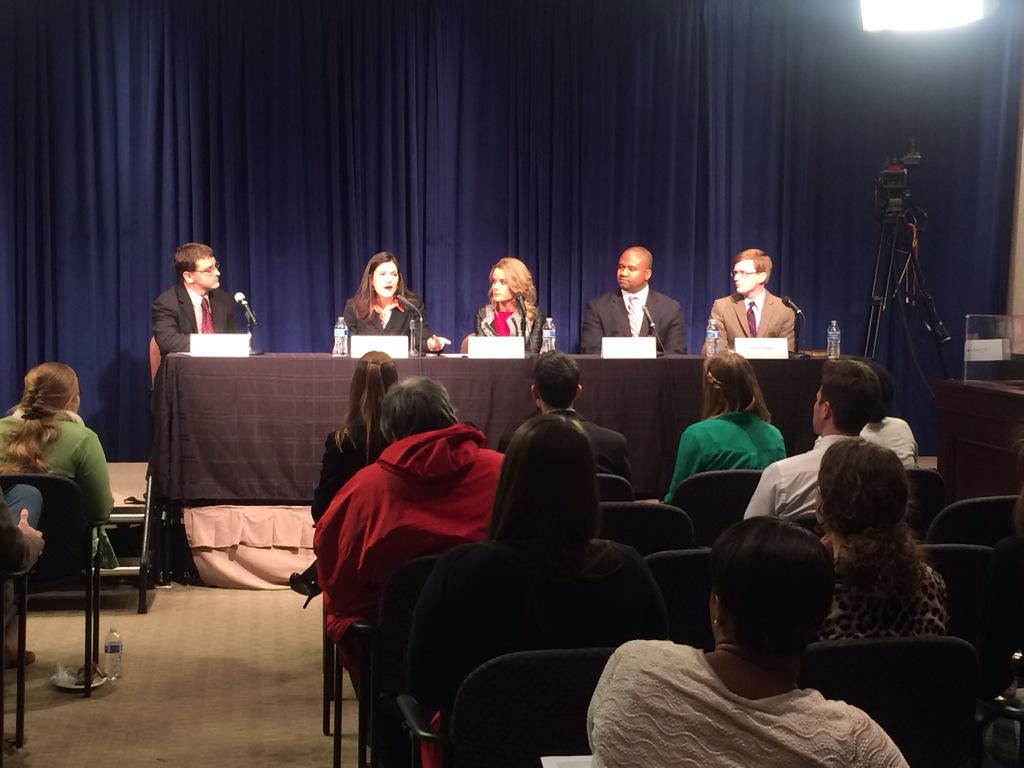
Dr. Nathan Oppman, Lectures and Student Intern Coordinator at FRC, moderated the panel discussion and began by raising the question, “What is the area you feel that, as a young conservative, is easiest to talk about in our current cultural climate?”
Speaking first was Eric Teetsel, the Executive Director for the Manhattan Declaration. Teetsel engages frequently in hostile debates regarding faith, family, and religious freedom. But it is Millennials’ shifting views of government that he finds easiest to tackle. “I’ve seen some polling and there seems to be a general sense among the population that we should be skeptical of government intervention from either side of the party. Maybe my answer would be that people are open to a broader range of possible solutions to policy questions.” D.J. Jordan, who serves as Communications Director for Senator James Lankford of Oklahoma, agreed with Teetsel and shared, “I believe there was a study done last Fall by Harvard and they asked the question to Millennials ‘Which do you believe would be more effective in solving society’s problems: government or activism or community service?’ Community service was heralded more than political activism, which was surprising to me.”
The ladies on the panel took a different route. For Alison Howard, the Communications Director for Concerned Women for America, it is the sanctity of unborn life that is easiest to engage. Though she clarified that easy, doesn’t mean less hostile. Howard explained, “But we have science on our side and stories on our side to share.” Howard offered that, as Christians, redemption is a topic we understand and translates well when talking to hurting women in need of support, resources and divine healing.
Jessica Prol, Managing Editor for Publications at FRC, echoed much of Howard’s sentiments but added that other social ills surrounding women’s exploitation are easier to address because the culture has grown more receptive to the solutions Christian conservatives have offered for years. Prol explained, “I’m starting to see blogs in the New York Times and GQ talking about the problems of porn use or other aspects of sexual exploitation that social conservatives have talked about for a while. But there is now a culture waking up to some of the implications.”
The most intriguing question raised by Oppman came later when he said, “Christian conservatives will often get criticized by progressives, or the Christian Left, if you will. How would you respond to some of the things that they would criticize the so-called Christian Right about? Such as, perhaps, their positions on homosexuality and sex outside of marriage…or their criticism that you’re mean, harsh, uncaring and concerned about dogma rather than people?”
Obviously this posed a tough question for all of the panelists, who each paused before offering their thoughtful responses. Jordan tackled the question first, explaining that he has many friends who would describe themselves as liberal Christians, but he does not focus on the nuances of theological differences. “I’ll just say that there is a whole lot more that we agree on than we disagree on and we try and focus on those things.” He continued, “ I try to win them over on various policy issues the same way I try to win anyone else. I think it’s important to keep the lines of communication open.”
Teetsel took slight issue with Jordan’s previous statement by clarifying that when he talks about the Christian Left, he doesn’t think of “African American Evangelicals in places like Maryland who fought valiantly to try to prevent same-sex ‘marriage’ from being enacted there.” Teetsel explained, “I think instead of white, Midwestern Evangelical weenies who prefer to ameliorate culture concerns rather than stand firm on what Scripture teaches.” To engage in a conversation with the former, according to Teetsel, can be a positive, important conversation about how to prioritize Scripture in public policy. The same cannot be said for engaging with the Christian Left. “It’s very different from the [conversation] Evangelicals for Marriage Equality are having where they are simply twisting Scripture in order to serve an end that they would like to see happen.”
“We have a cultural confusion about what love means. The cultural assumption that to love somebody means that I need to support their actions, even their beliefs,” added Prol who expressed her frustration at the preconceived notions and hate-filled accusations raised by those on the political and religious left. With sadness Prol recalled how it felt to have a gun-wielding liberal activist enter her office building with the intention of killing her and her colleagues. She said, “I don’t understand how we started that war. I think we are holding firmly to what we understand as true and try and present it in a gracious and approachable format and then people are responding and it’s escalating.”
Before concluding, Oppman raised another thought provoking question when he asked, “What causes you to get up every day and go do your job?
For Jordan, waking up and going to work now means having some influence in public policy for the greater good and, most importantly, the job of communicating healthy policy in an easily digestible format for a wider audience. “My career has taken a couple of turns,” shared Jordan. “I started in broadcast journalism. Being in the nation’s Capital, I really got sucked into what’s happening here and I became really concerned about the future of our nation. Not only for myself, but also for my children.”
Prol explained that her advocacy started as a family affair by participating in my first March for Life when she was just nine years old. “I wasn’t able to understand all the signs and slogans that were going on around me, but my parents were really thoughtful and gracious in breaking [it] down appropriately to a child’s level,” said Prol. “They introduced me to issues of justice and compassion that have policy implications. That whet my appetite.”
It’s more personal for Howard, who explained that unlike Prol, she did not grow up in a politically active family. “In fact, the people that come up and say, ‘I love politics!’ actually really scare me,” she joked. “I didn’t know this is where the Lord would have me…but I definitely see how God threaded certain experiences in my life to lead me to care about the things that break the heart of God.”
“My own father was orphaned as a baby. His parents left him in a hotel room.” Howard concluded, “A couple years ago my dad actually gave a sermon where he said ‘thank you’ to his mom just for choosing life and for leaving him somewhere that he would be found. And so those sorts of stories don’t leave you. They mold you.”

Comment by Byrom on February 12, 2015 at 9:12 pm
I praise and thank God for younger people who are believers in Jesus Christ and faithful followers of God’s teachings in the Bible – and I do not mean a “Bible” version that is modified to suit liberal proclivities. I am an “older” guy, age 71, and it warms my heart to see young people bucking the trends of modern society toward depravity. I will even go so far as to argue that the so-called “Christian Left'” is not even Christian. The New Testament clearly warns believers against false teachings, and yet many seem to have embraced them without any critical thinking about what God has said.
Comment by MarcoPolo on February 19, 2015 at 7:04 pm
It is uplifting to know there are concerned young people working to understand their commitments to their faith, and to the greater public.
It’s almost hard to believe that a Liberal activist would wield a gun, but I’m sincerely happy to know that nothing happened to Ms. Prol, or anyone.